Name
2002
  • Homes Not Cars

    09/24/2021 - 11:22 by Anonymous (not verified)
    Original Author
    root
    Original Body

    The Hastings School of Law proposes to build an eight-story 885 space parking garage into a neighborhood already overrun by cars

    by Maggie Gonzalas

    "They are only considering healthy, able bodied middle class students in the planning of this parking lot.." A member of Senior Action Network was speaking loudly into a megaphone while he leaned precariously between his crutches and the steel fence that surrounded the parking lot at Golden Gate and Larkin streets, at a rally held in opposition to a proposed parking lot across from my former apartment building.

    You see, I used to live at Ground Zero of a pending plan by The Hastings School of Law to move in an 800 car parking lot into a neighborhood already overrun by cars - or should I say a neighborhood that is known for the amount of times it's cars has run over pedestrians.

    "This neighborhood has a very high instance of pedestrian fatalities and the Hastings plan does not address pedestrian safety at all." Dave Snyder, from The San Francisco Bike Coalition and Walk SF was confirming what I already knew.

    One of my best and few living friends was seriously injured from a hit and run at that very corner. She later died from complications from those injuries.

    After her passing I knew I couldn't bear to stay in that neighborhood any longer and now as I visit my other elderly friends who still live there, they tell me that they are afraid to ever leave their apartments.

    "Hastings does not care about the seniors or children who would be affected by this parking lot" Glenda Hope from Network Ministries spoke into the megaphone - her slight body shaking with might. "100 religious leaders have signed a letter urging Hastings to drop the parking lot plan, as well, The Mid-Market Merchants Association, The chamber of Commerce and John Burton have sent letters to Hastings urging them to drop this proposal."

    "The Sierra Club opposes the construction of the garage as it encourages more driving, and causes more pollution," A representative from the Sierra Club spoke to the crowd, " If you build more homes not more homes for cars you will solve homelessness rather than causing more problems."

    After the rally at the fence, I carefully and much too slowly crossed the busy Golden Gate Ave to visit my friends at the Madonna Residence across the street. As we sat drinking tea in their apartment, I related the opinions of the people at the rally to my friend Moska, "It seems like poor old folks like us were not even thought about, but that's not unusual, Maggie, folks like us are never really considered. I mean
    what kind of choice is that anyway, "Homes or Cars?"

    Maggie Gonzalas is a very low-income elder and member of POOR's writer- facilitation project which aims to give voice to very low and no-income adults, elders and youth locally and globally"

    Tags
  • I take a deep breath...

    09/24/2021 - 11:22 by Anonymous (not verified)
    Original Author
    root
    Original Body

    Youth Commission Supports POOR/PNN is back in Bidness!!

    by Connie Lu/PoorNewsNetwork Media Intern

    I am a few blocks from the San Francisco Youth
    Commission at City Hall, but its colossal dome shaped
    roof adorned with gold trim can already be seen from a
    distance, as it sparkles against the fresh blue sky.
    As I enter the commission hearing room I notice that
    there are several lights hanging from the ceiling's outer edge that look
    like delicately illuminated white tulips. The
    ethnically diverse representatives of the Youth
    Commission are seated in the front of the room in a
    semi-circle, as they address the various issues of todays
    agenda.

    After several topics are discussed, the resolution
    urging the Department of Human Services (DHS) and the
    Private Industry Council (PIC) to maintain and
    continue the funding of the JOBS in the Media Program
    at POOR Magazine is introduced. The Youth Commission
    is given information about the situation that POOR is
    facing. The JOBS Program is a paid internship that
    gives houseless and low-income people the opportunity
    to gain writing and multi-media skills. DHS and PIC
    are currently withholding desperately needed funding
    from POOR due to trivial discrepancies in the
    difference between class time and work hours completed
    by the interns in the JOBS Program.

    The Youth Commission then opens this topic to public
    comment. The members of POOR Magazine approach the
    microphone. As I rise out of my seat, I take a deep
    breath in an attempt to somehow release the fluttering
    anxiety in my beating heart. I had not planned on
    speaking before the Youth Commission, but Isabel
    Estrada, a Youth in the Media Intern at POOR, was
    there to encourage me to represent POOR Magazine,
    despite my fear of public speaking.

    I move up to a seat in the front row and wait for my
    turn at the podium. As I look over my notes, I am
    unable to sit still. Suddenly, I realize that I am
    next. Before I begin, I swallow the tight knot in my
    throat. I feel like a nervous bottle of shaken
    champagne with a cork that was inhibiting the use of
    my vocal chords. As my mouth opens to speak, I could
    hear and feel my voice wavering with the first few
    sentences that were rushed through. However, I remind
    myself to slow down. I force my eyes to look up from
    my notes to the faces that were no longer intimidating
    to me, as I finished speaking.

    After the last public comment is made, several of the
    representatives of the Youth Commission raise their
    hands in favor of the resolution to urge DHS and PIC
    to fund POOR Magazine, which will result in DHS and
    PIC receiving a copy of the resolution. This matter
    will also be brought to the attention of the Mayor of
    San Francisco and the Board of Supervisors because the
    Youth Commission are their advisors.

    As I leave City Hall, I take another deep breath, only
    this time it was a breath of relief. But at the same
    time, I was also relieved that I was able to defeat
    and break the tenacious grip of fear upon voicing my
    support for POOR. I know that my brief comment to the
    Youth Commission will not solve this entire difficult
    matter, but I feel that through this experience I am
    learning to strengthen voice.

    Connie is a student in the New Journalism/Media Studies Program at POOR where she is learning how to speak her voice.

    Postscript;
    As of the publishing of this piece, DHS/PIC has finally promised to reimburse the wages already paid out to interns by POOR's JOBS Program minus the reimbursement of one person's wage due to an alleged "admin" error by POOR; (read lack of staff, lack of funds,) Due to the extreme financial hardship to POOR caused by this experience, POOR will have to suspend the wages portion of the JOBS Program (but we will continue the training program) and PoorNewsNetwork(PNN), although hurting for funding, will continue to do what we believe in; giving people voice through education, art and media access, in other words POOR is back in bidness, by any means necessary!!

    Tags
  • For All NYC Youth of All Ages.

    09/24/2021 - 11:22 by Anonymous (not verified)
    Original Author
    root
    Original Body

    Its a long letter so take turns
    having younger or older simblings read.

    Your parent(s) may
    want to peek at it too.

    This won't be no fairy tale.

    by Joe B.

    Saturday, May, 18, 2002. Got in office, from covering the 3rd annual Malcolm X JazzArts Festival in Oakland’s, San Antonio Park, 18th Ave. & Foothill Blvd, Oakland.

    But at the same time there was also some annual do-dad at Jack London Square.

    [Exclusive, expensive area]

    But as Ms.Rhodessa Jones, said, "They said its their annual too but I only heard about it today."

    I too think it a bit underhanded planning it on the same day as San Antonio Parks, it makes me go hmmm.

    Lisa, Co-editor and employer is jumping up and down, telling me that New York young folks saw the DOE letter and my response to them and decided to write asking, me what it means or why the separation of parent(s) and child?

    I think there is something DOE does also supposedly protecting children while parent(s) are in one or more of these study, work-training programs.

    I don’t know if this occurs also but you guys and girls from Harlem, Fordham Road, 110th to 125th St. and both side of the Bronx, Manhattan, Queens, and Park Avenue, Long Island, Yonkers, and Long Island or anywhere else in NYC.

    Hip-me to the happenings way out on the Eastside.

    That tron-mail must have flaked up, scattered, or otherwise got lost coming to me but no matter here’s my answer.

    I’m just sad that it took this long in answering. That’s why I always say snail mail too and please write clearly if you snail me.

    What’s seems to be going on Alpha-C, ‘Chi Town, The City, State, and in every inner city-barrio, neighborhood or in Small Towns across America is a breaking down of working and middle class families.

    Remember when Middle America said "Its those people, Black, Brown, Red, Yellow, Mixed, or poor Whites causing the problems?"

    That trickle down theory [ask your folks] has it worked its way up to the dwindling or vanishing middle class, you know white or rainbow folks with blue, white, and pink collar jobs, struggling each year to make ends meet barely making it.

    Maybe now the dirty little secret’s out of the bag.

    America’s like a leaky boat and the holes can no longer be plugged by blaming rainbow people or immigrants for economic problems.

    Could it be how multi national corporations ‘Bottom Line" mentality leaves little room for young parents raising children when working longer hours and harder for less economic gain?

    Children from New York emailed me a few days ago and because of our server being over loaded, human and PC error’s I was not able to receive this mail.

    I got it the old 17, 18, 19, and 20th century way, word of mouth; my editor and employer told me face-to-face of it.

    Before babbling on I want to read this letter that some children in New York sent me.

    It may take a few days to read and understand it because like my column say about me.

    I don’t know, but their are other children all over America and overseas who may have answers to questions and visa-versa.

    This splitting of families is happening everywhere and is no isolated incident there are reasons simple an complex that’s where CBM comes in to play.

    Oh, sorry that means Critical Brain Mass.

    That’s when people come together working on common goals on different parts of questions like jigsaw puzzles coming together to form pictures, person(s), or anything after and the pieces are placed in order.

    It takes time but worth the effort if they fit into each other.

    There are times when grups (grown-ups) don’t have all the answers but think they must at like they do.

    I’m a grown up and I ‘hell-a don’t know the answers.

    What scares, or give me nightmares is thinking most of our socalled leaders don’t have a clue either but tough-it-out bluffing their way through.

    Its still a scary world even when we’re grown, married, have children or not, and work everyday.

    There are lots new broken roots everyday (Broken Families) but some reform, become extended, or blended, be they two mom’s, or dad’s with children or single mother’s and father’s with children.

    A family whether traditional two parent with one or more children or the one mentioned above are not worse case models but alternate kinds of family units many people have not seen but may have lived in and told no one about because of taboo. (not quite right)

    Because of human adaptability and endurance these other kinds of family units are here and will remain until or society place greater respect, economics, and protections for children in any type of family.

    Sorry for the complexity kids - ask your older siblings, relatives, parent(s) or friends I’m sure some of them know and if not their are always library books, internet research, or teachers that can help.

    "Some of you are yawning, don’t read this, entire thing bookmark the site and read it in small bytes ‘oops. I meant bites. …Bye.

    Tags
  • Color Printing By the POOR Press!!!!

    09/24/2021 - 11:22 by Anonymous (not verified)
    Original Author
    root
    Original Body

    HIGH QUALITY NON-CORPORATE PRINTING

    by PNN Staff

    Beeee-uuuUUUUtiful HIGH QUality Color Printing available at Competitive Prices

    POOR Press ( a non-profit project of POOR Magazine) can make all your color copies, brochures, flyers or Books.

    We can work with your design, art work or text, or our POOR Press designers can do ALL your graphic design. Just give us your raw ideas, needs or material and we will turn it into a professional high quality artistic product.

    We can also help you self-publish your books. We offer high volume binding (saddle stitching) and cutting.

    Other Offers; CD burning, slide scans, graphic design consultation and much more!!!!!

    $1.06 per page (on most sizes) - volume discount available- all paper sizes available up to 11x17

    For More information please call (415) 863-6306
    or email: tiny@poormagazine.org

    Please bring your graphic needs to POOR press!!! and thereby help support POOR Magazine, a non-profit community based arts organization dedicated to providing media access, vocational and arts education to very low and no income and adults and youth locally and globally.

    Tags
  • Rebecca's Story - in her own words

    09/24/2021 - 11:22 by Anonymous (not verified)
    Original Author
    root
    Original Body

    The STORY LEADING UP TO THE LAWSUIT

    by Rebecca Barraza-Aanestad

    In 1985 my husband died in San Francisco. His death
    was sudden and unexpected. I had three young children
    all under the age of seven.

    A CPS social worker (Child Protective Services) in
    San Francisco visited my home which at that time was a
    hotel room. A lot of welfare recipient's were forced
    to live in hotel rooms which at that time rented for
    about $200.00-$300.00 per month. Property owners of
    these big hotels in San Francisco contracted with the
    city or county department of social services to rent
    out rooms to families with children that were on AFDC
    (Aid to Families with Dependent Children), at that
    time. I think now it's called TANF or Welfare to Work
    Program.

    My husband had just passed away and I was grieving
    over his death. I allowed my daughter to stay with my
    late husbands mother temporarily. Well, his mother
    took advantage of my situation. Several weeks later I
    heard a knock on my front door and it was a stranger.
    She identified herself as Mrs. Wolff with the
    Department of Social Services in San Francisco. I
    answered the door and told her that my husband had
    just passed away and I was grieving and I didn't want
    to be disturbed. This CPS social worker absolutely
    would not go away. She insisted that I talk with her
    after I told her that I did not want to talk to her.

    After she wouldn't leave, I finally let her in and
    that was a GRAVE MISTAKE, one that I would never
    forget the rest of my life! I allowed her into our
    hotel room and that was the end of that. All I
    remember telling her is that I didn't feel like living
    anymore because my husband was dead and she took that
    to mean whatever she wanted that to mean and she left
    and I guess she went back to her office and typed up a
    report (they're experts at typing up their reports
    that are full of malice and fraud), that said I was
    suicidal and an alcoholic and that my young daughter
    and son had psychological damage from living with my
    husband and his mother and with that information she
    filed a "PETITION" for me to appear in Juvenile
    Dependency Court in San Francisco.

    I was summoned to appear in Juvenile Dependency Court
    on April 1, 1985. I'm positive Mrs. Wolff remembers
    me because I can't forget her nor Judge Gargano in
    Juvenile Dependency Court in San Francisco.

    So, because of my husband's death and my daughter's
    removal from my custody in April 1985; this is what
    started the nightmare of "CPS" "following" my family
    for the past 15 years!! It has been a true
    "NIGHTMARE!"

    How would the judge himself or herself like it if CPS
    took their children away from his or her family?
    Or if the Attorney General had his children taken away
    by CPS or a California State Assemblywoman had her
    children taken away by CPS!? I bet they would get their children back in a
    heartbeat
    wouldn't they? But, because the average layperson
    doesn't have the money or resources or staff to help
    them get their children back.....so many families end
    up in the "Child Protective Services" that work under
    the guise of the "Department of Social Services."
    Today the DSS, law enforcement, schools, and the
    Juvenile Dependency Court System work together.
    They're like intertwined with one another to keep our
    children in the system.

    The DSS (Department of Social Services), and the
    Juvenile Dependency Court System does a disservice to
    the women, children, men, grandparent's, and single
    parent's that end up in the "CPS" Juvenile Dependency
    Court System otherwise known as "The Child Abuse
    Industry."

    They do a disservice for the following reasons:

    A) Parent's cannot afford attorney fees that are
    outrageous in order to get their children back.

    B) Parent's have to depend upon the Juvenile
    Dependency Court Public Defenders who don't even
    know what they are doing and if they do they go
    along with the CPS social workers and judge's
    recommendations just to get you out of court and on
    to their next case because their caseload is so
    heavy and they themselves have no help!

    C) The public defender's are incompetent and fresh
    out of law school therefore they have no
    experience in the juvenile dependency laws.

    D) The Juvenile Dependency Laws are bad and unjust,
    like the Welfare and Institutions Code Section
    300 (Child Abuse and Neglect law).

    E) CPS social worker's are not offering "services"
    to the families under the Adoption Assistance and
    Child Welfare Act of 1980 (Public Law 96-272);
    this piece of legislation was put in place to
    "preserve families" not destroy them and our
    Juvenile Dependency Court Judges' are not following
    these recommendations instead they are terminating
    parental rights and adopting our children to other
    families that are complete strangers to our
    children!

    F) CPS and the Courts are ignoring "reasonable
    efforts" in reuniting foster children with their
    biological parents and, this is in contradiction to
    the Child Welfare Act of 1980!

    G) CPS is allowed to write reports that are full of
    "malice", "fraud", and "hearsay evidence" which
    violates parental and children's rights!
    Our laws clearly allow these officials to reunite
    families with their biological children and to give
    these poor and middle class families reunification
    services and, they are disobeying the laws and the
    Child Welfare Act of 1980. The CPS social workers
    write up their reports based upon "hearsay" evidence
    and they give their reports to the juvenile dependency
    court judges who know nothing about the truth of the matter because how can
    a judge really know the truth just by reading some
    report based upon what someone else says. It's stupid and ridiculous! They
    can't do that and justify themselves. Also, the CPS
    social workers are suppose to give parent's their
    social reports at least two weeks before they go into
    court and I remember back when I used to go to
    dependency court, I never received the reports two
    weeks in advance like I was suppose to and these
    social workers always gave me the reports on the same
    day I went to court. I finally figured out why. It's
    because they don't want parents to have enough time to
    rebuff or attack their reports in order to defend
    themselves in dependency court. Over the past 15
    years I have spoken with countless parents that
    complained to me that they always received their
    reports the same day they went to dependency court.
    And, when you appear in court and read these reports
    that are full of malice and fraud you say to your
    public defender or attorney, "Hey, this is false or
    this is a lie it didn't happen this way or that way or
    this is not what really happened these people are
    lieing and your stuck there in the courtroom with out
    a defense and your public defender or attorney can't
    do a dam thing about it because their stuck between a
    rock and a hard place also. So, the entire "child
    welfare system" is full of malice and fraud and the
    unjust laws allow these social workers to get away
    with such tactics. I call them "tactics" because it's
    a systematic plan and procedure for promoting a
    desired end and, the desired end is to take and keep
    your children in the CPS child welfare system. You
    see I didn't understand these things until my family
    went through the entire "system" over the past 15
    years and, it has been a "horrid and demoralizing
    nightmare!"

    These are just some of the reasons why the current
    system does not work. And, you have all the officials
    and parent's that will agree with me yet, nobody does
    anything about it. They say, "Well, the laws are
    already in place what can we do?" It irks me to think
    that we live in such a great country with such great
    resources and yet nobody wants to change the system!

    And, this is what lead me to start a political group
    called "Parent's Against Child Abuse" in December of
    1989, and later named "Parent's Against The Child
    Abuse Industry" around 1994.

    I had just gotten my daughter back in the late summer
    of 1986, almost one year after she was taken away from
    me in 1985. Then a horrible incident took place in
    May 1987 and all three of my children were taken away
    by CPS in San Jose (Santa Clara County), California.
    Little did I know that this second time was going to
    be the worst time in my life trying to get my children
    back.

    And, it was. My juvenile dependency court case
    started in San Francisco County then transfered to
    Santa Rosa, Sonoma County, and ended up in San Jose,
    Santa Clara County. It's a miracle I didn't end up a
    paranoid schizophrenic diagnosis. Which leads me to
    talk about the "Psychological Evaluations" that the
    dependency courts use to determine whether a parent is
    "fit" or "unfit" to care for their children or should have
    their "parental rights" taken away and dissolved by
    law. Can you
    imagine having a baby that you really love and you try
    your best to raise this child in a healthy way even
    though you don't have a lot of money and maybe your
    living below the poverty level but you still love and
    take care of that baby to the best of your ability
    and......some CPS social worker comes along and into
    your life and accuses you of abusing and neglecting
    your baby for some minor incident or not having enough
    money to buy milk or some dam thing and they initiate
    dependency court proceedings on you and your husband
    for these reasons and then take your baby away based
    on the fact that your poor and don't have enough money
    to pay for the necessities in life! Our CPS system
    should be ashamed of itself for doing this to families
    and destroying life and the American Family Unit as a
    whole! And, I'm here to tell the whole world what
    they really do behind closed doors in those juvenile
    dependency court proceedings. We're suppose to be
    living in a democratic society not a "communistic"
    society but it doesn't make me feel like we are. Take
    for instance President Bush's female advisor, what's
    her name, his assistant in the White House right now
    as we speak, I heard in the news yesterday 4-24-02,
    that she is leaving her position at the white house in
    order to be with her family and raise her 15 year old
    son.....you know why?.....I'll tell you why....because
    she doesn't want CPS to get a hold of her son and run
    her family through the juvenile dependency courts for
    "neglect." How about that one, just another story
    that could turn horrid huh?? I'm protected by my
    First Amendment Right, free speech. I'm not accusing
    her of any wrong doing but the fact of the matter is
    if parent's don't take care of their
    children.......then they can and will have their
    children taken out of their custody. It can even
    happen to a judge, lawyer, doctor, dentist,
    assemblyman, assemblywoman, or just your average
    layperson who makes $5.50 an hour. Nobody is immune
    from this corrupt unjust system that feeds their
    mouths and gets their paychecks off legally stealing
    our children. It's UNJUST and it's CORRUPT.

    Now, this leads me to talk about........
    HOW I LEARNED TO DO PARALEGAL WORK

    After my daughter was returned to my custody in June
    1986, (we moved to San Jose in 1985), I enrolled
    myself into a junior college, De Anza College, in
    Cupertino, California, where they have a wonderful
    Paralegal Program and great staff to support the
    program. I started studying the laws and the whole
    judicial system because by this time I took a great
    interest in the way our laws are decided upon.

    Our laws are put into place by our California State
    Legislators in our State Capitol in Sacramento,
    California. A lot that I have learned is through
    education and educating myself by reading and studying
    our judicial system. That's the only way one educates
    himself or herself. Get off your but and do something
    about the laws if you don't like them. Change doesn't
    come by sitting on your ass and watching TV or going
    to the Movies. If people want change they are gonna
    have to FIGHT for their RIGHTS. Martin Luther King
    Jr., knew this. That's why he
    started supporting the civil rights movement. He did
    something about it.

    So, I enrolled into college and took as many law
    classes as I could to better understand our judicial
    system and functions. Mind you this was fifteen years
    ago. So, over the last 15 years I have been to more
    court proceedings than the average layperson. And,
    over time there have been changes made in the "CPS
    Child Welfare System" but not a whole lot. Which
    brings me now to talk about these recent changes in
    the last seven years. By the way I never did finish
    getting my AA Degree or Paralegal Certificate, but I'm
    three classes away from finishing. Will I ever
    finish? Only God knows at this time....

    Now, I would like to talk about these most recent
    changes in the past seven years. On October 16, 1995
    Ex-Governor Pete Wilson signed AB 1355 into law in
    spite of strong opposition from social workers, law
    enforcement, and the medical profession or psychiatric
    profession among other groups but, I'm here to say
    they didn't win this time! They already have enough
    power and so now some of the POWER was restored back
    to the PEOPLE by and through this piece of
    legislation.

    Also, Ex-Governor Pete Wilson wrote in his signature
    message of the bill, "The child protection system is
    designed to protect children from abusive parents, but
    who protects children from the abuses of the system?"
    Great going ex-governor Pete Wilson. We "thank you"
    and God Bless you and your family even though it's
    seven years later! And, most people don't even know
    that this law exists. Now, you can sue the hell out
    of social workers for "malice" and "fraud" under this
    law. Don't forget first you have to file a claim with
    your County Board of Supervisors in the county you
    live in. The board has the form or the guidelines for
    a person to do this and you have to go to their office
    and pick it up. I advise all people that have been
    abused by this child welfare system to do just that.
    It's great advice.

    Don't allow these laws in our great country to abuse
    your rights nor your childrens rights. That's why we
    have a great judicial system in this country. If you
    don't like your rights being abused, don't shout,
    pout, or scream......just take em to court! Social
    workers love to write in their social reports that the
    parent yelled at them or cussed at them or became
    obnoxious toward them......you don't have to do that
    just file your lawsuit against them for "malice" or
    "fraud."

    So, AB 1355 became law on January 1, 1996. We had
    support from groups, parent's, officials, lawyer's,
    public defender's, and from the public (those people
    that are involved with changing the laws and that have
    lost their children through the CPS System). It was
    truly a MIRACLE that ex-governor Pete Wilson signed
    the bill and it was passed into law. AB 1355 reduces
    the unconstitutional absolute CIVIL immunity of social
    workers to a qualified immunity similar to that which
    protects law enforcement

    personnel. And, you better believe that you can sue
    social
    workers now in State or Federal Court.

    I just finished a Federal lawsuit in which I sued a
    city of San Jose police officer for violating my civil
    rights, unfortunately, the city settled out of court
    with me but I sure wanted to take that particular case
    to a full blown out trial but, when the federal judge
    referred me to the Federal Pro Bono Project here in
    Santa Clara County they couldn't find an attorney to
    take my case so this is another problem people face
    out there in the real world.

    It's always hard to find an attorney that is willing
    to help in the area of Juvenile Dependency Law. Most
    are not well versed in this area of the law. And, the
    juvenile dependency court proceedings are so corrupt
    to say the least that most of the time social workers
    get what they want and that is to remove your children
    from your care and control.

    So, then the State becomes the "Parent" or "Parens
    Patriae" because this allows the State to take control
    of the juvenile and act in the "best interest" of
    child and when the State can do that well we all know
    what happens then. The State can and will put your
    child in a sattelite home and then in a foster care
    home or place your child up for adoption and then from
    there they act up and out so bad that eventually the
    child or children run away from the placement that the
    courts originally placed them in and this starts the
    whole process of the child or children ending up in
    the Juvenile Criminal Court System which is in a way
    connected to the Juvenile Dependency Court System. I
    should KNOW, this is exactly what happened to all
    three of my children. I was FURIOUS to say the least!
    All three of my children got caught up in the
    juvenile criminal system after being in foster care
    for over 10 years and none of them graduated from High
    School! MAD, I wasn't mad I had the WRATH of GOD
    about me!

    Also, I want to talk about the most recent case to
    date. It is the "Calabretta" family lawsuit. It was
    argued and submitted on June 8, 1998 in San Francisco,
    California. The Ninth Circuit Court of Appeals ruled
    in favor of the Calabretta family on August 26, 1999.
    The case is as follows:

    Poor magazine has copy of article from Home School
    Legal Defense Association.

    Which now leads me to talk about the recent lawsuit
    my 18 year old filed on behalf of our family. On
    April 4, 2002, my youngest son filed in the United
    States District Court for the Northern District of
    California his lawsuit against the CPS social workers
    that violated his Constitutional Rights and committed
    torts upon himself, his sister, and his brother. He
    is suing the San Francisco Department of Social
    Services, CPS social worker Mrs. Wolff; the Santa
    Clara County department of Social services, CPS social
    worker Priscilla Merek and Richard Wong; and the
    Office of the Public Guardian and Conservator's does
    1-50; for illegally raiding our home on March 2, 2001,
    in San Jose, California. If these people think they
    are going to get away with committing torts against my
    family I'll have them thinking twice about what they did. We are currently waiting to hear from the United States District Court Federal
    Judge at this moment in time.

    My children don't want their names exposed as you can
    very well understand.

    Thank you for doing this important press interview
    and I'd like Poor Magazine/News to know that you are
    the first to cover this story. God Bless You All!

    Rebecca Barraza Aanestad

    Tags
  • GILT-EDGED BUT OUT-OF-POCKET: Homeless policy in Dallas

    09/24/2021 - 11:22 by Anonymous (not verified)
    Original Author
    root
    Original Body

    Dallas City Council Prioritizes Upcoming Bond Issues, Some Politicians Betray Ignorance of Homelessness

    by Gordon Hilgers/PNN Dallas Correspondent

    Recently, the City of Dallas has emerged in favor of providing millions of hard-to-find dollars to upgrade the areaís animal shelters, but from the looks of it, the Dallas City Council is only now beginning to grapple with the lowest-profile issue of them all. At this point, according to some observers, many council members possess only a general picture regarding homelessness; a complex issue that demands detailed information to adequately address. These observers add that some council members donít even know the City of Dallas runs the Day Resource Center.

    Alan Walne, representative for the affluent North Dallas District 10, for example, asked the Director of the Cityís Department of Environmental and Health ServicesóMary Kay Vaughnóto get information on San Franciscoís homelessness services. Area advocates, however, say they already know first-hand that San Francisco has an abysmal record in dealing with homelessness. Last winter, they add, the National Coalition on Homelessness labeled San Francisco the "meanest city in America" due to heavy-handed tactics handling 15,000 homeless people. Do Dallas politicians want to follow that act?

    "Why would we want to learn from San Francisco?" one advocate asks, citing a headline from a recent San Francisco Chronicle viewpoints pieceówhich was tellingly headlined, "Throw the Bums Out." What this means, she added, is that some council members are coming to the table with unreliable information. What should be pertinent is that cities like San Francisco have shoved the issue of homelessness under the table for so long that now its city government is being overwhelmed: residents in newly gentrified neighborhoods are angry, the cityís homeless are organizing to counter inappropriate government action and a head-on is already in progress. Councilman Walne, by the way, flatly opposes a City run homeless shelter and resource center.

    Meanwhile, the few Dallas area homeless advocates attending budget briefings note that experts who can bring the council up to speed on the nuts and bolts of a growing crisisónamely, the group of homelessness service providers that recently established their mission "to end homelessness in Dallas"óhave been nowhere near the financial wrangling.

    With homelessness in Dallas deep in the throes of a readily acknowledged population explosionóa recent survey indicates that homelessness in Dallas increased by 25 percent this year, though most advocates explain this estimate is too small--homelessness is still a contentious political kickball with or without the input of experts.

    The big issue with homelessness in Dallasóat least right now--is a bond proposal to spend approximately $6 million to build and maintain a City-operated combination day resource center/homeless shelter, but the official opinions regarding the validity and viability of such a project literally run the gamut. During an April 15 bond discussion, for instance, touchy-feely comments such as "I spoke at the Dallas Life Foundation" ran interference for other, more malignant political arguments like "A City-run homeless shelter? Not in my neighborhood!"

    The biggest argument of all against pouring forth citizen tax money for a City-run homeless shelter is that the City of Dallas is running cash-poor. The way some Council members talk, youíd think weíre currently running through a slump that dwarfs The Great Depression, an economy that calls to mind both the fall of the Roman Empire and the Dark Ages. Itís hard living in America right now, weíre told, and we believe it because itís on TV.

    When you look around, however, you canít help but wonder if things are as bad as weíre told. While many average citizens will tell anyone who asks that theyíre having a tough goóand many blame the 9-11 terrorist attacks for the recession--areas such as Uptown continue to prosper. Upscale town homes, condominiums and high rises are going up everywhere, though most Dallasites indicate theyíre having trouble believing anybody can afford them, even if many continue to fill rapidly with mysterious young professionals whoíve somehow managed to accrue salaries far above median income, which hovers at $60,000 a year. Whereís the money coming from for these luxurious salaries?

    And, though rents everywhere are skyrocketingóthe average rent for a 35-year-old atrium apartment in Oak Lawn is hovering around a ridiculous $700 a monthópeople with political influence and resources seem oblivious that the majority of property owners and apartment management companies are getting paid nearly twice as much for the same properties than they were a decade ago. What gives? Whereís that money going, and whoís benefiting?

    Something odd seems to be up, as they say, although people with political connections seem afraid to tell exactly what that something might be. Officially at least, weíd rather look at photos in the newspapers that depict former millionaire dot-comers flying dog-eared cardboard signs along Central Expressway service roads that read, "Will work for latte."

    The upshot? All the money seems to be flowing right out of government and into the pockets of the private sector. Two decades of tax cuts and cries for more have not only underwritten the careers of dozens of "fiscally conservative" politicians, theyíve gutted governmentís ability to fix roads, repair infrastructure or grapple with poverty and governmentís crumbling safety net.

    The numbers are telling: for 2002, Dallas expects a $15.3 million sales tax shortfall, over ten percent below projections. This unexpected revenue loss has already dictated that the City mandate a one percent cut in all City employee salaries. At this point, however, the City has been unwilling to lay off the 200 positions some have recommended. Although cities like Dallas are somehow expected by state and federal politicians to pick up the slack and insure that homeless shelters get built, most on the Dallas City Council seem hard pressed over exactly how to stretch shrinking dollars.

    To make decisions regarding financial priorities ruled by tax-free realities even more complicated for the Council, police and firefighters recently slammed their cards on the table, demanding a double-digit salary hike that has many wondering when the money for thatís going to appear. City officials fear the proposal, if approved, would cost the City approximately $60.8 billionóa figure that hypothetically amounts to 1,000 City run shelters.

    Accordingly, stunning figures like that translate into property tax increases that nobody really wants, officials say. It also likely would force the City to cut other programs, especially aspects of the City budget that have traditionally languished at the bottom of priorities lists: like the Cityís commitment towards ending homelessness. After all, the last time Dallas ran cash-pooróduring the 1980s oil bust--government ignored the homeless.

    Representatives for both police and firefighters, moreover, have done bang-up presentations that established other pressing needs in Council briefings: the numbers weíve seen clearly show we really need to replace a bunch of fire stations that got slapped up fly-by-night-wise 20 years ago and are now too small and are falling apart; and the police meanwhile make a strong case for the construction of a police substation in South Central Dallas to help them combat poverty, ignorance, anger and frustration the old-fashioned way.

    In other words, whereas homeless advocates and the homeless themselves have been begging for a City-run and operated homeless shelter 20 yearsóand $6 million dollars, theyíll add, isnít much--the idea always gets lost in the shuffle because City priorities are "elsewhere." Itís just more fun to plan slinky boutiques than it is to solve ambiguous problems like homelessness that donít have any pat answers. It also looks good when voting time and international dignitaries come around.

    Homeless advocates citywide would like citizens to run that measly $6 million for a shelter right up against the whopping $64 million in proposed City expenditures currently tangled up in what has come to be known as "the Palladium request." Thatís the exclusive hotel and retail complex designed to attract tourists. In plain English, itís a market-driven behemoth local developers hope to construct on a tract located between the cityís new godzillian dollar basketball court and the West End entertainment district. For $64 million, advocates for the other side of the tracks say, the Dallas could build and operate ten and a half homeless shelters.

    Though regular Dallasites probably wonít be barred from the proposed Palladium development, the part of the community that cares about the homeless has its hopes pinned on the possibility local citizens will see through the blurry set of values that allow billionaires to rake in millions of dollars yet deprives the areaís most invisible poor even the opportunity to get out of the rain.

    Local advocates for the poor, however, havenít yet found a voice on the council for their concerns. During budget briefings, for example, Dr. Elba Garcia of District 1 stunningly announced: One reason an animal shelter gets more attention from top levels of City government is that it "received in excess of 300 calls last month" from residents trying to get a little action for stray dogs and cats. A voice on the council is something the homeless really need if things are going to get better, but champions are hard to find in any political situationóespecially if youíre not out there looking for one.

    According to Garcia, the City killed 75,000 stray animals last year. Is it a shot in the dark to suspect that local animal rights activistsóan outspoken bunch if television news reports and boisterous protests outside downtownís Neiman Marcus department store are to be believedóare outraged? Would it be too much to presume that 300 telephone calls a month on behalf of non-sentient animals to various sentient Council members and City departments werenít exactly coincidental? Whatever really happened, itís a truism that animal rights organizations in the Dallas area have learned their lessons well: effective grassroots activism has gotten the ear of the council. In contrast, homeless advocates have been as quiet and politely considerate of the feelings of those in power as, well, church mice.

    One subtext to Garciaís remarks hints at a lesson local homeless advocates and service providers can learn from pet-lover outrage: politicians wonít hear you if you donít talk to them. So far, this lesson has been lost on homelessness service providers who are inured to a status quo that is going to have to change before things get really bad.

    Though most connected to organizations like the Dallas Homeless Consortium, Dallas Agencies Serving the Homeless and the Metro Dallas Homeless Alliance have been forthcoming about reorganizing homeless services in the area, few attend bond briefings. Other than Clora Hogan (publisher of Endless Choices), James Waghorne (DASHís new VISTA volunteer) and a representative for the Veteranís Administration, the briefing, which could have far-reaching effects pertinent to Dallasí oft-disputed commitment towards alleviating homelessness, was literally devoid of prominent spokespeople for the homeless. Where were those folks?

    It may seem odd, then, that perhaps the most strident voice on the Dallas City Council in favor of the construction of a City-run homeless shelter is the District 13 placeholder, Mitchell Rasansky. During the April 15 Council bond briefing, the 65-year-old North Dallas investment banker and real estate investor came out of nowhere, unequivocally in favor of funding a City-run shelter and resource center. Later, Rasansky told reporters, "Homelessness is just a very large problem that all cities have. Itís a social issue that we have to address. This is just as important as getting cultural arts. You know, Cultural Affairs just recently raised $112 million. If we have to trim some other things to get this shelter in order to help some people, then Iím really for it."

    At this point in time, itís Rasanskyóand oddly he represents the most affluent council district in Dallas, a district that has had few serious problems where homelessness intersects with the interests and concerns of his constituencyówho could be the lone voice on the council that is on the record as willing to do whatever it takes to address the issue. "The City of Dallas should be ashamed that we donít already have a City-run shelter as do other major cities," he says. "We have to be able to help these people. Youíre not going to be able to help everybody. There are just people youíre just not going to help. Their guard is downóthat is, itís really down. The issue is not so much building a shelter as staffing it with the right people."

    During a recent interview by Endless Choices, Rasansky spoke gently but with determination to indicate he doesnít have an answer to homelessness, or even the best way to begin finding one. Itís a gesture that fully communicated an unwillingness to profess intimate, hands-on knowledge on subjects he knows only generally, a quality rare in most city politicians. Rasansky, however, is also asking dozens of questions about homelessness. And in some respects, curious fact finding from a politician is refreshingóespecially for homeless advocates and service providers who for decades have sat out council meetings amazed at what they hear from wannabe statesmen, many of whom are intent on getting their way no matter how unenlightened they might be.

    Sitting in his office, a comfortable if cluttered space on City Hallís fifth floor that is about as far away from the realities of homelessness as itís possible to be, Rasansky keeps those questions coming, though theyíre simplistic ones to people whoíve actually been homeless. But in the same turn these are subjects that befuddle and shock those unaware of just how difficult and confusing homelessness can be: Why is the Austin Street Center not located on Austin Street? If I was new to Dallas, would I even be able to find this shelter if itís located on Hickory Street instead of Austin Street? If a shelter is full, do they really turn people away? And if that were true, what would my other choices be? Would I have to sleep on the street or in a parked car? And do you really mean to say that if a man and his wife try to get into a shelter that they have to show their marriage license? How many people actually carry those around with them?

    In so many words, then, Rasansky is eager to demonstrate good intentions: getting to details he believes he needs to make a good case before the council is also effective politicking.

    "I really can't tell you what I think about all the issues coming before the council surrounding homelessness," Rasansky apologizes. "Thatís because Iím not versed in that sort of thing and thatís why we need professionals to help us in our decision-making. Thatís one thing I can tell you." A case in point: "I have a problem with the staff member whoís always picking out a place for the proposed new center. Sheís not qualified to pick out a place for homeless people. Whatís her name? Mary Vaughn? You know, I donít know her, but I do know sheís not qualified to pick out a place to house the homeless."

    Rasansky is more than likely not trying to nitpick Vaughn, who directs the Cityís Department of Environmental and Health Services, but he does express concern that an observer of the April 15 briefing had to point out to Vaughn that directors of three privately run, downtown-area shelters donít release clients to downtownís streets at the sunny hour of eight a.m.óas she professed before the councilóbut as early as five a.m. Those listening to the briefing also mentioned they felt Vaughn had poorly prepared for her advocacy before the council. These are things top-level politicians need to know if they want to do good work.

    Slowly, then, despite tinny moments like Vaughnís, the Dallas City Council is getting a grip on a problem most acknowledge has been ignored far too long. When Vaughn mentioned that there were plenty of additional resources "out there" the City could tap into, Sandy Greyson of far North Dallasí District 12, chimed in: "If there are additional resources to tap into, why havenít we tapped into them?"

    That's a good question. But even though good questions indicate the Council is getting its ducks in a row, the group has a long way to go before effective City policies make a dent in homelessness. When South Dallas councilman Ed Chaney blew up after Vaughn asserted that one particularly good location for a City-run shelter and resource center had been identified in his districtó"Not in my backyard," he counteredóJohn Loza, who represents the Oak Lawn area, indicated heís willing to locate the complex in his district. But the best comment so far belongs to District 4ís Maxine Thornton-Reese: "The only time animals come before people is in the dictionary."

    Tags
  • The Tainted Eye of The Media

    09/24/2021 - 11:22 by Anonymous (not verified)
    Original Author
    root
    Original Body

    KQED sponsors a media salon focused on media images of poverty

    by Connie Lu/PNN media intern

    I enter KQED to attend a media salon focused on images of poverty in the media through large transparent glass doors. I
    am amazed by the surrounding modern office furniture
    and state of the art wide screen TV hanging on the
    front wall of the room. I help myself to the
    refreshments and to my surprise I notice a few bottles
    of wine. Knowing that KQED is a "public" television
    network; I expected a less extravagant atmosphere.
    But aside from my misconceptions, I sit at a small
    dark red table that is square-shaped with four
    surrounding chairs, feeling unsure of what to expect
    now, after my initial inclination was proved wrong.
    But despite this feeling of uncertainty, I am
    comforted by familiar faces from POOR Magazine.

    Lisa Gray-Garcia aka Tiny, Co-Editor with Dee Gray of POOR
    Magazine, is asked to speak first. She shares about
    her struggle with poverty and how POOR Magazine was
    established. She stresses the fact that low-income
    people never get heard in mainstream media. The media
    portrays the homeless as nuisances that are associated
    with drugs and mental illness. However, POOR Magazine
    does not see the homeless as outsiders, outcasts, or
    the "other". This concept originated from Dee and is
    the foundation that POOR is built upon.

    Although I had heard POOR's mission statement before,
    it did not feel redundant to me at all. Each time I
    hear about the essence of POOR Magazine, I am reminded
    of my purpose of being at POOR, which is to empathize
    and find personal connections to the inspiring people
    I write about. POOR Magazine writes in first person
    because the article becomes more real and genuine.
    Through empathy the writer is connected, which gives
    the reader this same mutual experience. I do not see
    those who are struggling with poverty as the "other",
    but as my teachers.

    Participating in the discussion at KQED also reminds
    me of being in Community Newsroom each week at POOR,
    which is where low-income people gather to be heard.
    Both KQED and Community Newsroom consist of people
    meeting together to express upon the issues of
    poverty. However, I can not equate the two. At KQED,
    there does not seem to be this feeling of being
    connected, unlike the closeness I feel when I am at
    POOR during Community Newsroom. The series of
    comments made during the Media Salon seem unrelated at
    times, which gave the impression that perhaps people
    weren't really listening to each other. The comments
    would often not link together in a natural flow of
    discussion, but each point was made like kernels of
    corn that randomly popped at the urge to speak.

    However, at POOR each succeeding comment reflects the
    genuine attention of the listener. Michael Isip,
    Executive Director of KQED, has this same
    characteristic of being a good listener. After
    showing a documentary he is currently working on
    called, "Hope on the Streets" he asks for constructive
    criticism. As several opinions are being expressed,
    he listens intently and writes them down. He felt
    nervous showing his documentary after hearing several
    comments about how the media's portrayal of the
    homeless is tainted. However, Isip is eager to learn
    and shows his gratitude for the suggestions.

    The documentary focuses upon both homelessness and
    mental illness. Through the documentary, Isip hopes
    to convey a sense of hope for the homeless by showing
    personal accounts of success from homelessness. The
    purpose behind his documentary is to break stigmas and
    stereotypes about the homeless because it prevents
    them from asking for help. His goal is to educate
    people about the homeless to increase awareness and
    encourage out-reach to them. The documentary also
    revolves around his strong belief that; "There is no
    such thing as a throw away person".

    The documentary shows the progress of a few homeless
    and the success that is achieved in the end. A
    homeless man named, John Joseph explains in the
    documentary that he used to work on a ship, but was
    then diagnosed with Acute Paranoia Disorder. He was
    afraid of people and would seclude himself. He spent
    four years sleeping in BART stations.

    When Joseph mentions where he sleeps, my memory is
    suddenly triggered to a homeless man I saw sleeping
    against a pole at the BART station last month. I saw
    him quietly sleeping. He was not disturbing anyone.
    His black hat was low and covered his eyes. He wore a
    backpack and a dark green jacket. But as I was
    waiting for BART, I become alert to two policemen
    walking towards him. The two policemen lifted the
    homeless man up from the straps of his backpack. He
    says something that I was not able to make out
    clearly, but he sounded angry.

    I felt as though I could have helped this homeless man
    by waking him up and warning him that there were
    policemen approaching. I worried about where he would
    be taken and the pain he would suffer. I kept asking
    myself why they wouldn't leave him alone because he
    wasn't being disruptive or bothersome, but I continued
    to watch in frustration as he was taken away.

    The documentary then introduces another homeless man
    named Jimmy, who asks a flower vendor named Byron
    Yonandis, if he could help out at his flower stand.
    Byron not only gives Jimmy the job, but he has given
    Jimmy a sense of hope. He expresses his compassion
    for Jimmy, who is now like a brother to Byron. There
    is an incredible amount of trust between them. Jimmy
    says when Byron leaves him in charge of the flower
    stand, he "feels good".

    I was amazed by the love in Byron's heart for Jimmy.
    The empathy that Byron had was not only spoken through
    his words, but also shown through his actions of
    placing a genuine trust in Jimmy, despite the many
    stereotypes against the homeless. As the discussion
    came to an end, I recall images of Byron's face of
    hope as I walk down the spacious hallway to meet the
    cool night sky filled with glimmering stars.

    Tags
  • Ida Patrice McCray

    09/24/2021 - 11:22 by Anonymous (not verified)
    Original Author
    root
    Original Body

    IDA Patrice McCray, Organizer, savior, incarceration survivor,

    Vision of the Goddess and Director of Families with a Future

    by Staff Writer

    Ida dreams and a child is saved..

    With locks of steel that unchain innocence

    otherwise forgotten

    Ida fightin' the keeper

    For the kept

    Unincarcerating

    Unleashing

    The institutional lies

    Tags
  • Disappearing Votes, Disappearing Communities

    09/24/2021 - 11:22 by Anonymous (not verified)
    Original Author
    root
    Original Body

    Electoral Fraud in San Francisco

    by Gretchen Hildebran/PoorNewsNetwork

    Voting should be the easiest thing in the world. It
    is the action that proves that we live in a democracy,
    that our lives are self-determined, not dictated from
    above. Of course the presidential election of 2000
    destroyed that illusion for many. While politicians
    and their groupies peered at poorly designed ballots,
    thousands of people in Florida, the vast majority of
    them African-Americans, were stepping forward to
    testify how their right to vote was denied altogether.
    Their names had been dropped from voting rosters,
    their cars were stopped and searched by the police,
    polling places made them wait for hours or had voting
    machines that didn't work.

    This was the true scandal behind that ìelectionî and
    it was hardly discussed in the media or by elections
    officials. The targeting of certain communities with
    the intent to deprive them of their right to vote is
    an old American practice that is alive and well today.
    And not just in Florida, right here in San Francisco.
    While the district supervisor election of November
    2000 represented to many a huge change in our cityís
    politics, for those who lived and voted (or tried to)
    in District 10, that election was more business as
    usual. The scandal that has emerged following that
    election has focused only on vague ìinconsistenciesî
    that the city has still not investigated. Behind
    these statistical errors is the real story of how
    entire communities are denied the right to
    self-representation.

    The general election of 2000 was a testing ground for
    a change in San Francisco politics. For the first
    time in twenty years, supervisors would be elected by
    district. The candidates would be forced to live and
    run locally, and be accountable to the issues of
    people in their communities, not simply at City Hall.
    In District 10, which encompasses the Potrero Hill and
    Bayview/Hunterís Point communities, twelve candidates
    crowded the ballot.
    Three candidates were recognized in the community as
    contenders. Mayor-supported Linda Richardson had made
    a name for herself at City Hall, most notoriously
    during her stint on the Planning Commission.
    Richardson had the support of big money, evident in
    the $1.5 million rumored to have been spent on her
    campaign. Another candidate, Sophie Maxwell, was well
    known in the community but was more of a political
    unknown. Also running was Marie Harrison, community
    figure and columnist in the Bay View, whose outspoken
    political views were a threat to the politics-as-usual
    that rules from downtown.

    But Harrison wasn't just a candidate in that election,
    she was also on the streets as an observer of the
    Election Day that didnít go by the rules.
    "There were great big discrepancies," Harrison
    explained in a recent phone interview, "Many votes
    disappeared, never came out of their boxes, never were
    counted." Harrison is an upbeat and charming lady,
    and she laughed often as she recounted her experiences
    on Election Day. Under the light tones, her voice
    also reflects deep seriousness about the effects of
    electoral fraud on her community, she continued,"
    What I witnessed was often in blatant disregardî of
    election day laws ñ a cable car blasting
    pro-Richardson messages parked next door to
    various polling places, and signs for the
    downtown-backed candidate were posted on poles in
    front, both of which are violations of the law
    protecting a polling place as a politically-free zone."

    Harrison even recalls seeing Richardson herself
    interfering with poll workers when they were assisting
    a woman who needed to retrieve her absentee ballot
    before she could vote in person.
    Harrison is humorous about these infractions, "Did
    anybody read the rulebook at all?" But she is serious
    about the intent and outcome of other violations that
    were clearly designed to intimidate voters or buy
    votes. Across from a Sunnydale polling place
    Richardson supporters gave free hotdogs to folks who
    would vote their way. Harrison even spoke to several
    people who were paid $10 to vote for Richardson.
    In the weeks leading up to the elections buses arrived at senior
    and public housing to bring people to City Hall to
    vote ñ these ìget out the voteî drives were sponsored
    by the A. Philip Randolph Institute, which was openly
    backing Richardson in the election. As an observer at
    City Hall, Harrison witnessed several seniors who were
    openly intimidated to vote a certain way. When she
    confronted one of the young people working on the bus,
    their response was, "They are paying us and we arenít
    the only ones. We are supposed to bring them here and
    they only draw one line."

    "Seniors and other folks in public housing are
    particularly vulnerable to intimidation and bribes",
    Harrison said, "due to poverty and the ìone-strikeî
    policy of federal housing programs. All it takes is
    an accusation of drug-use or criminal behavior to get
    kicked out of public housing and this threat can be
    effective in influencing voting or discouraging it
    altogether." This kind of harassment on the part of
    campaign workers is enhanced by the general police
    presence that was on the streets of Bayview/Hunterís
    Point on Election Day.

    The net result of these infractions is not lost on
    Harrison, who placed third after Richardson and
    Maxwell in the general election (Maxwell went on to
    defeat Richardson in a runoff election). While the
    absentee voting hugely favored Richardson, the support
    she had built up in her campaign disappeared to a
    mysterious degree in the returns from Election Day.
    Precincts where friends and supporters had personally
    assured her of their votes had returns as low as 5
    votes.

    Harrison's concern about missing votes has been
    confirmed, ironically enough, at the highest levels of
    government. In May 2001, Philip Paris, the acting
    director of the SF Department of Elections, accused
    the former director of allowing 3,600 ballots to go
    uncounted in the November 2000 election. The
    political fallout of this scandal extends to the
    present day and provoked an investigation by the
    office of the Secretary of State of California, Bill
    Jones.

    Jonesí investigation discredited the estimate of 3,600
    missing ballots but discovered that the number of
    ballots distributed differed greatly from the number
    that were counted. In the 21 San Francisco polling
    places checked at random, a total of 705 discrepancies
    were found. This prompted Jones to demand that San
    Francisco recanvass all the votes from that election,
    a process which would not check how people voted, but
    only compare the number of votes cast to the number
    counted in the final tally. The San Francisco
    Department of Elections has refused to authorize a
    recanvass, blaming budget shortfalls. In a statement
    made to the city this February Jones said, ìThe
    explanation for these discrepancies may lie in
    inaccurate record keeping or ballot storage
    procedures. Or, the explanation may involve
    intentional misreporting of election results.î
    A recanvass of the vote would only begin to touch upon
    the questions these ìdiscrepanciesî raise. Such a
    huge proportion of error cannot be attributed simply
    to sloppy mismanagement at the department of
    elections. If ballots are missing, how were they
    taken, and whose interests does it serve to illegally
    effect election day outcomes?

    Beyond the paper trail of missing ballots, commonplace
    violations of election procedure and law that Marie
    Harrison witnessed as a candidate in the
    Bayview/Hunterís Point are rarely reported or
    investigated. Beyond the dubious outcomes of that
    particular election, the overall effect of harassment,
    intimidation and missing votes is voter
    disenfranchisement.

    Mary Ratliff of the Bay View has noted the change
    since the November 2000 election. "Nobody is voting
    anymore," she said sadly, "the culture of voting here
    in the Bayview had been destroyed long ago and we were
    seeing it come back in the last couple years".
    Ironically, one of the best recent turnouts in the
    neighborhood had been in support of Willie Brown in
    1995. Since that election, ìmore people were turning
    out, many people were working hard to get folks
    registered.î Since the 2000 election, however,
    discouragement has prevailed at the polls. Says
    Ratliff," This is the legacy that Brown is leaving us
    with. People are discouraged, depressed and cynical.î
    In the general election of 2001, only District 10 had
    a 22.38% turnout for the vote".

    "Part of the problem is there is no accountability,"
    remarked Harrison, "There is no faith in the system
    anymore, period." When scandals come and go with
    regularity, issues like this one, which cut to the
    core of the rights and disenfranchisement of a
    community, drop out of public consciousness before
    anyone is held responsible. Harrison herself is far
    from discouraged, and is planning another run in this
    yearís District 10 supervisor race: "I do believe that
    our communityís voice counts. There are people who
    donít want to see us voting because if we did, you
    would see some real change around here."

    Tags
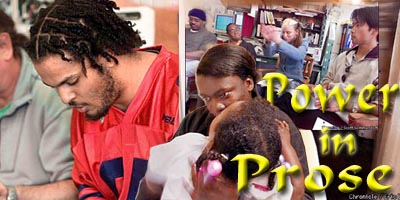
  • Power in Prose

    09/24/2021 - 11:22 by Anonymous (not verified)
    Original Author
    root
    Original Body

    Poor magazine gives voice

    by Venise Wagner

    Power in prose
    Poor magazine gives voice

    L isa "Tiny" Gray-Garcia and her mother, Dee Gray, take exception with the phrase "those people," as in those homeless people, or those poor people, or if only those people got their act together.

    In their minds, this seemingly innocuous phrase divides society and diminishes the humanity of a set of people, particularly men and women who find themselves among the have-nots.

    As founders and editors of Poor magazine, they have decided to tackle this expression and the thinking behind it. Setting themselves apart from mainstream media approaches to covering the poor, the duo reports and writes about poverty, and trains its staff to find the universal "I" in them, as in "those poor people." Hence, we.

    "I stress that people write in the first person so they don't feel separate from the people they're writing about," explains Dee. "They may not have the experience of sleeping in the doorway, but they may have had the experience of being afraid to speak out or feeling like they couldn't speak out." Both experiences, Dee says, are a form of alienation that most can relate to.

    Tiny, Dee and the San Francisco magazine's four staffers and 10 volunteers see themselves not only as journalists, but as advocates, challenging misconceptions about poverty and a system they believe does more to keep people in their place than to help them rise.

    A variety of nonprofit organization and private donations provide support. They also get support from the San Francisco Department of Human Services, which sends a handful of welfare-to-work clients to the magazine's Journalism and Media Studies Program for training. Their budget last year totaled $85,000. This year, they're not sure if they will make it through the end of 2002.

    Tiny, 30, says she and the staff live in constant crisis. Many of the staff are homeless or living in dire situations and constantly struggling to survive. Tiny tries to advise and support them. She and Dee always worry about the operation making it to the next month. In the midst of these crises, they manage to produce an online publication ( www.poornewsnetwork.org ) weekly and a glossy magazine. Mothers was the theme in the last issue. Others include, "hellthcare," "homefulness" and work. They have published four times so far, one a year.

    " 'Poor' usually means we're the subject of the news," Tiny says. "We don't get to shape the news. Until we are heard, there won't be any real change."

    From the time Tiny was in sixth grade to about five years ago, she and Dee shuffled from evictions to squatting in abandoned buildings to living in their car.

    As a single mom, Dee had always struggled to stay afloat, but when she was struck with severe asthma, she was no loner able to work as a social worker. They were evicted from their apartment in Los Angeles. Tiny dropped out of school. They started living out of their car.

    "Mom was an orphan. She had no family," Tiny says. "When you have no family, it's one tier from having no money. In some ways it's worse."

    They trekked up to the Bay Area and, for many years, eked out an existence selling T-shirts and soliciting change for their street performances, which usually involve acting out issues related to homelessness.

    The year she turned 18, Tiny landed in jail. She and Dee had racked up a bunch of unpaid parking tickets, citations for sleeping in their car, driving without car registration and failure to appear at the hearings on those offenses. Tiny calls those crimes of poverty.

    The judge ordered her to perform community service. She hooked up with a Berkeley nonprofit called Community Defense Inc. The man running the operation, civil rights attorney Osha Neumann, asked her what she could do. She told him she could write. He told her to write a piece about being poor. She came back after a few weeks with a piece on the experience of being evicted.

    "It was sort of surprising," Neumann says. "Many people say they can write, and you never know what you'll get. She was an incredible writer."

    She submitted the piece to East Bay Express, which published it. Tiny calls it an intervention, one of a series that would ultimately take her to Poor magazine. "Oh, my God, I was alive," Tiny says. "It was like someone threw me a life jacket."

    She felt the power of being heard and craved more.

    Writing had provided a lifeline for Tiny from an early age. She has kept journals, written short stories and chronicles of her life. Being published buoyed her hopes, but the misery in her life continued. She wanted to avoid welfare - in her mind, then, it carried too much shame. But she broke down and applied.

    She never gave up on writing, though. While in a Berkeley bookstore in 1996, flipping through the magazine rack, it occurred to her no one spoke about the lives of poor people. She got to work, raising money from artist friends and poor friends who sacrificed what they could. She and Dee conducted writing workshops in shelters, community based organizations and advocacy agencies serving poor people. Within nine months, they had raised $2,000 and enough material to publish a 65-page glossy issue of Poor, with color art, poetry and prose - and no advertising.

    It cost $10,000 to print 1,000 copies. They forked over what money they had, and paid the remainder with magazine sales. The latest edition, a run of 3,000 copies published in December, cost $15,000 to produce.

    As always, half the run was distributed free to low-income readers; the rest sold for $3.95 each at Modern Times Bookstore and A Clean, Well-Lighted Place for Books in San Francisco and Cody's Books in Berkeley.

    "We wanted to create a pretty product that yuppies would want to pick up," Tiny says. They also wanted a magazine that would raise the value of poverty issues to the status afforded mainstream magazines.

    When the welfare-to-work program rolled out in 1998, case workers told Tiny she had to get a job, insisting that she apply for a receptionist position. She explained to the counselors her desire to become a reporter, but they kept telling her she didn't have the education. She told them she'd be willing to go back to school. She says she was told that would take too long.

    Tiny developed her own welfare-to-work program. The Department of Human Services signed on. Now, Poor magazine staffers are training welfare recipients basic reporting, writing, graphic design, Web design, investigative reporting and advocacy at a South of Market union hall. It may be the only welfare-to-work training program that focuses on journalism. In the past four years, 15 people have completed the program.

    Amanda Feinstein, a project manager for Human Services, says Poor and its media studies program gives clients skills that transfer to other jobs. Clients have gone to work as a desk manager, an administrative assistant and as a peer adviser for a juvenile-justice advocacy group.

    "They've had some real successes," Feinstein said. "People get hands-on training in computer software and writing skills, which are helpful in a variety of ways, including self-expression."

    From Osha Neumann's perspective, the magazine has a greater social impact.

    "We tend to talk about the homeless as a collective noun, as a definite, generic homelessness or homeless condition," he says. "It's a political act to insist on individuality and humanity of a person. ...Tiny and Poor magazine (are) at the center stage of that battle. Giving voice to the poor is both a literary program and a political project."

    The politics assert themselves at the start of each article. Every Thursday, Tiny and Dee lead a community newsroom meeting at the union hall. All are invited, especially anyone who has lived in poverty. About 105 people have taken part either in meetings or in producing the magazine.

    "The establishment says it's wrong to be poor, and it's something to be ashamed of," Tiny says at the beginning of a recent meeting. The group listens intently. A Poor News Network promotion poster behind her head reads, "Driving While Poor, Part II." The folks at Poor want people to take pride in their ability to survive the toughest of circumstances. During the introduction, Tiny invites people to admit their poverty status.

    Twenty people sit in a cramped circle. The group is a mix of races, ethnicities, ages and economic classes. Some participants are City College students or writers interested in social justice issues. Others are "poverty scholars" whose life experiences have made them experts on the subject. As introductions go around the circle, veteran staff members openly state their poverty roots or status.

    They throw around story ideas, searching for the poverty angle in each one. The first is about coverage of a Free Tibet demonstration that overpowered an affordable housing protest on the same corner. The issue is finding the connection between the Tibetan cause and the affordable-housing movement. The consensus is that society seems to have more compassion for the oppressed in other countries than the oppressed in their own country.

    They eventually map out an angle for the story, which ultimately includes the history of China's takeover of Tibet and draws ties between the Free Tibet movement and the struggles of poor people in the United States.

    And so they jump from one poverty issue to the next: the disabled poor may lose their rights; medical marijuana clubs, which often serve the poor, are being shut down; San Francisco is set to renovate and expand a decrepit juvenile hall, in which many poor youth have been held. Every story gets assigned. In some cases, Tiny lets the subjects of the piece become co-authors of the article.

    Isabel Estrada, 18, a media intern, has two stories in the works. One is a piece examining the "real" story behind the shooting death of Jerome Hooper in Chinatown in February by an off-duty cop. Though she may not be as poor as some of the other interns, she finds her universal "I" in this story. She tells how, as a child, she watched her mother get into a shouting match with a police officer over a parking ticket in the Mission District. He arrested her, and she went to jail.

    "Since then, I'm scared of authority figures than most people, even though I don't do anything wrong," she says. Her distrust of the police pushes her to find answers in the Hooper case.

    She also has been assigned a piece about an Oakland family that is being evicted.

    A week after the meeting, Tiny and Estrada sit in the living room of Javlyn Woods. Woods and her father, Scott Sloan, recount the Byzantine story of how they got to the brink of eviction. Evidently, Sloan's mother owns the property, but the county took guardianship of her estate a few years ago. Now the county wants to evict the family since one of Woods' children got lead poisoning. Graying beige paint flakes off the walls. The stairs outside sag, and the wood floors are snarled and worn.

    Tiny later explains that the interview is more like a conversation, a "crisis dialogue." Before Woods begins her story, Tiny sets the tone with a pronouncement:

    "My mother and I were evicted on and off," she says.

    Woods shows relief, as if she's found kin, someone who understands. After Woods and Sloan tell their tale, Tiny explains how she believes this is a pattern in Oakland: landlords evicting tenants for small reasons or none at all.

    "We'll help you find and attorney and put it in the article that you need a lawyer," she tells Woods. "And we'll picket. We can take action."

    Tiny says later: "That's what we mean when we say media advocacy. Connecting the dots for them and, in this case, for her getting an attorney. It means getting involved in her life as much as possible to solve the problem."

    For more info

    To read Poor Magazine online, subscribe or find out how to donate, visit www.poormagazine.org. Call for the time and location of the weekly community newsroom meetings. (415) 863-6306 or send e-mail to deeandtiny@poormagazine.org.

    Tags
  • Piri Thomas

    09/24/2021 - 11:22 by Anonymous (not verified)
    Original Author
    root
    Original Body

    by Staff Writer

    Resistance Hero*


    A Black/Puerto Rican hero, young Manchild Mixed heritage sun-loved, dark radiant spirit.

    Molded by street smart teachers, deadly and intelligent fate of peers. real life - death lessons behind bars and free.


    Found his voice. Rebellious son, friend, student, poet, lover, one-true soulmate.


    Father, husband, teacher, author, cosmopolitan traveler, status breaker.


      1. He and others on of self rediscovery paths call folks to their best selves, no matter the circumstances or what society thinks or says.


      2. Rips "Your Place Rules " to shreds.

        Invent reinvent their lives from ashes of old rebuilding anew.


        One rare shining soul. A living, breathing an-everyday-people-kind-of... Hero.

        By Joe B.


        Tags
      3. A great Leader is honored through words, sound and art

        09/24/2021 - 11:22 by Anonymous (not verified)
        Original Author
        root
        Original Body

        The Third Annual Malcolm X Jazz Arts Festival is held in East Oakland

        by Connie Lu/PoorNewsNetwork Media intern

        Joseph Bolden, staff writer and photographer for POOR Magazine/PNN,
        and I exit the Fruitvale BART station and after some aimless wandering in the multi-cultural, multi-generational neighborhoods of East Oakland we arrive at San Antonio Park, which was where the 3rd Annual Malcolm X Jazz Arts Festival was being held.

        I look up at the brilliant blue sky. There is not a
        single cloud. The air is cool with a light breeze
        that gently sweeps over the lush green grass where I
        am sitting in front of the main stage. The stage is
        decorated with a huge purple banner that says
        "Malcolm X" written in yellow and outlined in green. There are several stands and booths surrounding the
        outer edge of the park with bold, colorful posters and
        pieces of art translating the words and images of the Great Malcolm X , a civil rights leader who was murdered in 1965.

        The day starts with one of the MC's and performers from the day, Josh Jones explaining that the festival is being held in honor of Malcolm X and his great civil
        rights accomplishments. The festival is also
        dedicated to Yuri Kochiyama, a friend of Malcolm X and
        political activist, who was involved in the civil
        rights movement and became a member of Malcolm X's
        Organization of Afro-American Unity (OAAU). The theme
        of this year's 3rd Annual Malcolm X Jazz Arts Festival
        was "Women's Voices Against the War" because of how
        our country's current situation with war is affecting
        the lives of many women and their children.

        Another MC introduces the next band to
        perform, the Oakland Highschool Jazz Band. The variety of
        instruments being played directly reflects the rich
        diversity that make up this band. There are Black,
        Asian, and Latino musicians playing different
        instruments together. The next
        band is The Josh Jones Ensemble. The style of
        this band is very mellow, yet strong. Their music has
        a jazzy flavor with a hint of funk. The lead singer
        has a powerful voice. Her voice echoes with a deep
        passion of soul as she sings the climax of the song,
        followed by the intense electric guitar solo that
        keeps my head nodding to the funky beat of the
        drummer.

        Throughout this wonderful day there were many youth and elder poets and speakers including The Black Dot Artists Collective, Idris Ackamoor,India Cooke and many more. One of the highlights for me was Rhodessa Jones, an actress,
        singer, and writer who began her presentation by reciting an excerpt from a play by
        Eve Ensler called "Vagina Monologues" which was based
        upon several interviews from a group of diverse women.
        Jones recited the excerpt and expressed the emotions
        of the vagina by saying, "My vagina's
        angry". The monologue itself is dramatically
        delivered with passion. At first I wasn't sure how to
        interpret what I was hearing, but as Rhodessa
        continued speaking I realized the monologue was
        addressing the pain, anger, and power of women.

        As I walk across the grass towards the sidewalk to
        leave the festival, I felt enriched not only with the art, images and words of the featured artists but with the dream that my generation would definitely not forget the important legacy of the great leader Malcolm X.

        Tags
      4. On Bolden's Trail

        09/24/2021 - 11:22 by Anonymous (not verified)
        Original Author
        root
        Original Body

        While writing this
        my site has gotten lighter.

        Is someone improving, wiping
        it out or is it some new improvement?

        by Joe B.

        Ever since Mr. Ken Burn’s Documentary film “JAZZ” I’ve wondered about “Buddy Bolden” an early cornet player and innovator of the then new form of music then know as “SASS” or Ragtime.

        I may be wrong but it was some kind of product or drink that supposedly helped lifted spirits and made the libido act up.

        Ragtime: was simple syncopation, rarely rhythmically complex.

        Right hand danced across piano keys while the left hand supports and never sycopated.

        Ragtime, essentially piano music was hard, bright, cheerfull and machine-like.

        At first it was European in essence, though most practitioners were Black.

        This new (1895) New Orleans born style of music is different in that it was not played exactly as a composer had written it, in the hands of talented player the music escaped narrow boxes imposed by its creator(s).

        From[About Jazz.com & www. Pbs. Org/jazz/ biography/artist id_ bolden _buddy.htm]

        I do the above so as not to be accused of or sued for plagiarism.

        I don’t know if the late Buddy Bolden is an ancestor but to see his and other Boldens popping up gets me wondering the question all the same.

        There’s a half sister maybe a brother or two in New York I’ve never met, a late?

        Grandfather from West Africa who moved back in the late 1950’s or early 60’s I’m really hazy with those parts of my family tree.

        I might visit Africa in a few years, being mono lingual could be seen as “A Lost Hibrid, relative from America” maybe I’ll luck out and American will be spoken but just in case I have to try my true mother tongue not this one my captured and long suffering sister and brothers learned on pain of death to speak.

        He was born September, 6, 1877 Charles, Joseph, Bolden from Westmore and Alice Bolden. He lived, moved alot, had a turbulent life, covered keys on his horn with cloth so others could’nt copy how he played when he fingered his keys.

        I tend to believe this sadly was true given the fact that everytime we as a people come up with inventions, innocations, creative and intellectual solutions they tend to ripped off by Europeans for economic gain and then not attributing.

        In 1907 his health deteriorated and he was committed to a mental institution where he spent the remainder of his life.
        In 1931, December, 23, Buddy Bolden died.

        As you can see the man’s life was rough, tough, hard, and too short. (He was 54 when he died.) Do young bro’s and sista’s have it any better? I still being a moving target beats waiting for “The Blues” to make our neighborhoods into killing fields again.

        We must spread out everywhere for years, create a possitive Diaspora across the planet everywhere.

        April, 29, 2002 - A decade since the Rodney King Verdict setting four policemen free of a public beat-down of one man.

        It wasn’t all about Rodney King, he was the endpoint of a long string of abuse by so called law enforcement making all young Black and Latino’s, families it didn’t matter if a brother, sister were in blue jeans or a three piece suit folks get jacked up for what being being Black, Brown, or Poor White.

        It happened April, 29, 2002.

        We don’t have much so lets not destroy our own neighborhoods - lets go to Beverly Hills.

        (not the gorgeous, brainy, large busty star of flesh flicks and spot lighted stage.)

        But rich strips of land, businesses not owned by us or lived on by us though worked in and on by us.

        Yeah, we don’t forget this shit because [THE SHIT KEEPS HAPPENING!]

        I don’t know about Buddy Bolden being related to Joseph O. Bolden but we’re still ‘livin this out of date nightmare, there is little difference between the Palestinian’s/Israeli conflict and Police, National Guards, units invading Black and Brown ghetto’s and Barrios.

        Both feel like invading/occupying military brought in from outside to damp down situations coming to a boil after years of simmering.

        Few people are armed with weapons of any kind and those with them know to lay low or they're targeted for wounding or killed.

        On a psychic level, a few armed men, women fully outfitted feel they are on "alien soil" [Join The Club] Rainbow folks always feel this way.

        Now we, living in our own neighborhoods become walking paper shadows made alive.
        (practice tarkets)

        A literal concrete jungle and no longer a neighborhood full of adults, children, and families.

        Every Inner City Ghetto, Barrio, and non-white, to Poor White areas become Kill Zones for practicing para law/military forces.

        People, we got to set up-self defence networks, natural food farms with hydoponics, economic and political alternate parties.

        It’s as if the government is participating in a huge die-in and most of the particpant are unwilling pawns in KILL ZONE AMERICRUD, LAND OF BLUE DEATH.

        I don’t know, these cops seem to be harking back or unchanged in seeking targets of color no matter their age.

        Let them do some dying, their mother’s, brother’s, sister’s, and father’s go to their funerals.

        Is that the only languge that is understood by law enforcement Americrude.

        We have to change because law enforcement won’t, we’ve seen their anwer is a primitive stomp your ass into a mud puddle.

        Umm, I think I’ve gotten off Buddy Bolden just a bit.

        All I’m saying is - all you gangs, families, colors, whites, sexes, put our brains together because America’s gone mad dog, foaming for death, either at home or abroad.

        We, the people, all the people must come together and never be divided or reconquered by wrong thinking Evangelical Religious Right Wing, Anti-Alternative Renewable Energy, - Oil Loving Backwards Flowing, Death Dealers in Doom-For-Boon Mad Rats.

        I hope a young woman far away from Belly-Beast America is having a wonderous time.

        I question, what’s happening in Africa and South Africa in general? I’d like to know because, well I’m just curious... Bye.

        Tags
      5. Two People Go Into a Steaming Yoga, One Forgets A Primal Rule.

        09/24/2021 - 11:22 by Anonymous (not verified)
        Original Author
        root
        Original Body

        Birkam Yoga, Is Literally Hot Stuff.

        A hot sauna excercise;
        Why, because
        he has forgotten the ancient teachings of...

        "The Wormy Dance"!

        by Joe B.

        Someone likes me so much that I’m in a $10-10 day introductory offer in Bikram Yoga, located at 1334 Polk Street.

        It’s called the
        Bikram Method, School San Francisco is one of its many locations.

        A young friend badgered me into going for the 10-10 deal at the Funky Door Yoga.

        If any adventurous soul wants to try it be warned eating an hour before this or other exercises can be a sickening experience.

        [www.funkydooryoga.com/ PH: (415) 673-8659].

        I know a little about swimming, weight training and eating minutes, or an hour before exercising but its been a few years, since I’ve lifted 250 to 300 or more pounds, using hands or feet when it was possible.

        My first day is a Wednesday, [remember Wed. my day off].

        Well I ate a tasty, filling mushroom-cheese 3 egg omelet, two slices of toast with butter and jam on the side plus a small glass of apple juice.

        The jam I keep not eating it with toast is part of my willpower.

        It was stupid but I though "what the heck" some twisting, sitting, very slow Tai Chi-like movements.

        My friend who introduced me is not ready but quickly dressed in record time and up Polk Street we trudged with two towels and cold water we would be sharing.

        We signed up, take off our street clothes leaving exercise ones on.
        My second error is the regular short pants worn not active ware cotton or cotton blend shorts. We take clothes, towels, water, and complementary mats upstairs to where the Bikram Yoga students and teacher’s are. Its

        Method is like a dry heat sauna where your movements are slow, deliberate, and methodical reworking of the our body’s internal/ external network into a balanced whole.

        It happened in maybe 30 or 45 minutes I was feeling hot, sweating drips from every pore as we drink water. I really felt like the proverbial boiling frog-getting use to being slowly cooked.

        My breathing is labored, as I go through some of the movements but when tightening the stomachs, chest, and buttocks I had to leave the class feeling queasy. The sauna effects I’m not using to but the young lady hung in there.

        I try again after feeling less ill only after doing other lung, thigh holding moves the feeling of throwing up and this time I knew I’d did a stupid thing eating breakfast like an idiot.

        I stay out until the class is over resting on the bench but I didn’t gather my gear and leave the building – which would be a total wimp-out unless it was a medical emergency.
        A woman said looking at my how my breathing came in quick shallow, to normal breaths that "it’ll get better after getting use to the heat." "I think the three-egg omelet I had for breakfast near 9 am was the problem." I’m glad it didn’t get thrown up but settled down letting the body’s digestive juices do its job and it had lots of fresh water to help it."

        We talked a bit before people started leaving.

        "You should keep a journal, your funny."

        I decided that I’d try this ten-day thing that knows it might be better.

        Me and young women in question left actually I felt like my bones and muscles have jelled and I’m flowing down the stairs without legs so ended my first day in a Bikram Yoga class.
        "Oh, God, nine more days of this heat-yoga stuff because I didn’t say right off the bat no first, well from now on I’ll relearn "The Wormy Dance"
        Everyone should learn how to "Wormy Dance" it’s a survival technique I’ve lost since working for POOR Magazine.

        But after this The Wormy Dance rediscovered.

        To my sensei please forgive me I dishonored you and your school can I come back to the dojo and be more serious about my WORMY-FU.

        Charles Pitts and I had discussed it weeks ago at a celebration at the United Nations in Civic Center.

        Yes, it’s my fault for neglecting the rules of the Wormy Dance… Bye.

        Tags
      6. It's A Thin Line...

        09/24/2021 - 11:22 by Anonymous (not verified)
        Original Author
        root
        Original Body

        Homeless folks and homeless advocates release a REAL homeless services proposal

        by PoorNewsNetwork staff

        When I was little, my single mom and I lived on disability she received for bipolar disease. Though she's a talented writer interpreter and translator, my mom can't work full time and make enough money for us to live on and be able to save in case of an emergency because she has been intermittently plagued with highly debilitating illnesses like fibromyalgia and chronic fatigue syndrome. I just came to understand the meaning of savings and how terrified my mom must be that we don't have any such life savings in case of an emergency. 

        That Eemergency, that always seemed so distant came right before I was to start my last year of high school. Despite a verbal agreement that we would continue paying the same rent at least until I finished high school-- around August of 2000-- the landlady of our San Francisco apartment gave us a notice saying she would be increasing our rent from $1500, a price that we couldn't afford without a roommate in the first place, to $3000 for our two bedroom apartment. 

        She claimed that it was legal under the Costa-Hawkins precedent because we were supposedly subtenants.  This was at the height of the dot com boom when there was a 1% vacancy in SF. After a crazy legal circus and way more anxiety than my mom could handle, we settled.  We had until the next August to leave and she gave us 5,000. The money went to the lawyer and we essentially got left with nothing. 

        With all the anxiety that this precarious situation caused in my mother she again became ill and could not work as much as she needed.  Now we had to look for a house with a past bankruptcy on my mom's credit report and no reference from our last landlady, besides the fact that rents were way too high and we didn't have the money to put down first and last months rent on any place.  If it hadn't been for my grandfather 's and my godmother 's help we would have been on the street.  It really is a thin line between homefullness and homelessness.   

        So for the people faced with such emergencies, through no fault of their own, who don't have families and friends to back them there is the street or the centralized intake system &  For single adults who can't even get into shelters 90% of services are only offered Monday through Friday from nine to five o'clock.  Adult shelters can often consist of one hundred or more people all in one room with one monitor.  And, despite legislation that is supposed to provide service to all those needing in-home support, it seems that no results have surfaced.  This means that if a person is not capable of self-care they are thrown out. 

        As Allison Lum from Coalition on Homelessness pointed out a major problem with the shelter system is the disparity in power between staff and homeless people &the power of writing people up is all in the hands of staff. And there isn't total unaccountability, where the treatment of the people in the shelters is concerned. 

        According to Rebecca Vilkomersen from Homeless Prenatal there are three basic ways to get into a shelter. 1) Case management, which means you follow what the case manager tells you and can get into a shelter from 30-60 days 2) lottery, this is random and can get you a room for one to seven nights 3) coordinator referral, which just isn't working right now. For people with children the only option is a family shelter, of which there are four in San Francisco. 

        Right now there are 150 families on a 3-6 month waiting list in order to get into a shelter.  Once they are there, depending on the situation they can stay for up to 6 months and then they have to sign up all over again. The instability of the current shelter system is especially destructive to families.  Those that don't get into shelters often ride buses all night, go to SRO hotels or stay in abusive relationships in order to keep a roof over their heads.  Under case management there are certain times when a person must be in or out of the shelter. 

        The times are set without regard to a person's work schedule.  A major problem occurring right now is the waste of money on bureaucratic systems that don't really serve any useful purpose.  Right now $500,000 a year is going to an office whose only job is to manage the shelter wait-list. 

        Rebecca notes that there is more emphasis on database collection then on services.   Homeless Prenatal is currently working on a "Know Your Rights Book" to hand out to people in shelters.  If you would like to participate they are asking people to go 995 Market St. on the 9th floor from 3 to 5pm every third Thursday of the month. 

        The press conference to release The Community Homeless Proposal was held on the steps of city hall Wednesday, February 20, 2002.  In response to Supervisor Gavin Newsom's homeless plan which includes extended hours for shelters and drop-ins, the creation of a new homeless department and homeless services advisory board, and interagency coordinating council, a five-year plan and the centralized information system, the community of homeless people and homeless service-providers has introduced The Community Proposal, endorsed by over 40 organizations. 

        While the real experts, homeless people and homeless service-providers, agree that extended hours for shelters and drop-ins are needed we feel that the rest of the legislation would waste money, violate people's rights and in the end would only help to perpetuate the cycle of poverty and homelessness.  According to the experts, 'This proposal is an expensive and desperate attempt to make it look as if change is happening. In reality, it simply creates more bureaucracy at high cost.  None of the components of the proposal would create the permanent solutions that are really needed: such as additional subsidized housing, treatment, child care, education, job training or living wage jobs.

        Finally, as Joyce Miller put it, If homeless people had housing they would not be homeless. It is for that reason that The Community Proposal seeks to build low-income housing while reforming the shelter system until sufficient housing is built. It is time for people to stop seeing homeless people as a separate population that came out of nowhere and that can be thrown in and out of shelters and can be used by this and that politician to win votes.  Homelessness needs to be solved and the only way to do so is to provide homes through a process that involves the real experts every step of the way.

        *******************************************************

        The following is the Executive Summary of The Community Proposal:


        Making A More Effective and Accountable Homeless Program


        The Community Proposal


        EXECUTIVE SUMMARY

        The following is an alternative proposal, birthed from years of bi-weekly or monthly workgroup, council and community meetings, as well as a critical examination of practices in other communities.  It is in response to Supervisor Newsom's recently released plan to create a new Homeless Services Department.  We have serious concerns with that proposal and put forth this proposal in its place.

        CITY-WIDE HOMELESS COORDINATION AND STRATEGIC PLANNING


        Eliminate the Mayor's Office of Homelessness

        In its place, create an Independent Office with at least one full time staff person.  This Office's responsibility would be to provide staffing for the Local Board.


        Change the make up of the Local Board

        To include federal and state representatives, as well as the current local department representatives.

        Two-thirds of the remaining community seats would be held mainly by homeless or formerly homeless individuals (90%).

        10% of the community seats would be for homeless service providers.

        40% ofthe community seats would be for families and 60% for single adults.

        In addition, community seats would be representative of poor neighborhoods throughout the city and reflect the City's homeless population young and old, immigrants and veterans, gay and transgender, disabled, victims of domestic violence, members of the diverse racial and ethnic groups.

        Televise the Local Board meetings on a public access station

        MANAGEMENT AUDIT OBJECTIVES

        To discover and understand the weak links or breakdowns in this large and complex system, a true Management Audit needs to do the following:

        determine who is making what decisions and on what authority

        review enabling legislation (Local Board) for all funding streams and policy making bodies

        sort out who does what among the various coordinating / advisory / intra- and inter-departmental groups

        list community and provider strategy planning sessions

        review contract goals and objectives

        monitor oversight and advisory bodies

        review contract awarding processes

        review program policy, procedure or eligibility changes

        determine who makes changes in objectives and priorities, and on what authority

        determine who oversees and monitors the coordination and integration of homeless programs with treatment, housing, employment and education

        determine who decides what is or is not cost effective, and on what basis.

        MONITORING COMMITTEES

        System-wide Shelter Monitoring Committee


        Develop a system-wide monitoring committee to make unannounced visits to shelters and drop-in centers. The responsibilities of the Committee will include the monitoring of city-funded shelters and drop-in centers for single adults, families and youth.

        Civil Rights and Diversity Monitoring Committees


        Begin implementation of the civil rights and diversity committees as described in the Continuum of Care plan, recently passed as the City's five year homeless plan

        HOMELESS DEATH ACCOUNTABILITY
                   

        Restart the homeless death count immediately, with staff allocated for this effort.


        Reform the Advisory Board to advise the department of Public Health's outreach team, to oversee the data collection, and with input from DPH epidemiologists, to release an annual report in time for the Winter Equinox annual memorial.

        CENTRALIZED LIST OF VACANT CITY OWNED PROPERTIES


        Create a central database of all vacant city owned property. Each landowning city department will report quarterly on property whose original use is no longer needed, e.g. when a school or fire house closes down or moves.

        Create a Community Advisory Board to be appointed by the Board of Supervisors that is made up of non-profit housing developers, architects, Homes Not Jails, homeless or formerly homeless people, and the Mayor's Office of Housing. The Board will determine if the newly vacant property is suitable for providing affordable housing to people who are homeless, or if it should be sold to create a dedicated Fund for the development of affordable housing.  The Local Board will maintain this fund and award contracts for the development of this housing.

        Ensure long-term affordability of all housing developed through this process by developing through a Community Land Trust. Rehabilitation of the buildings will utilize a model that includes wages for homeless and formerly homeless people.

        INTAKE FOR FAMILY SHELTERS


        Reduce services at Connecting Point to a 1-800 number for homeless families, the telephone to be staffed by two individuals, staggered hours, at a community organization.

        COORDINATED STREET OUTREACH WITH INTAKE WORKERS


        We propose an outreach effort, coordinated through the Mobile Assistance Patrol, that will have intake workers from different non-profit agencies and representing different area of service accompany MAP drivers. In addition, we propose that the police stop their practice of ordering homeless people to move on when no law has been violated.

        Tags
      7. I was at V-Day !!!

        09/24/2021 - 11:22 by Anonymous (not verified)
        Original Author
        root
        Original Body

        PNN youth participates and performs in the V-Day celebration

        by Mari/Youth in the Media Intern

        I was casually checking my e-mail on a slow workday, and one of the e-mail's subject line said: Digital Storytelling. The subject line seemed interesting so I didn't erase it. The email basically stated that there was a workshop coming up for youth that wanted to do digital stories on domestic violence, and it was going to be free. So I thought why don't I check this out, it sounds like a good experience. So I called the person who was in charge of interviewing people for the workshop, her name is Amy. She de-briefed me on the workshop, and I got even more excited. I was going to basically make a mini film talking about an issue that is relevant to my community, which is domestic violence.

        The workshop was separated into five days. The first day I met the other youth and the workshop presenters. Everyone seemed nice and friendly. It definitely was a safe space. Then we thought about ideas for our "script". I wrote about my personal story with domestic violence in a poetry format. The next few days we started to work on our digital stories. We had to get pictures to describe what we were saying in our script. That was really hard for me. To get a picture to help explain what it feels like to be beaten or see your parents fighting was just difficult.

        The reason why we were doing this is to get our stories about domestic violence out there. Too many times adults will speak for youth in cases of domestic violence. This time we wanted our voice to be heard! The silent victim now shouting for a survivor's voice to be heard.

        In October, we had an event called Break the Silence, Stop the Violence. At this event we had education, music, spoken word, and presented our stories which talked about domestic violence. It went so well. We raised money for the kids of Claire Joyce (a woman who was murdered by her boyfriend in front of her kids), and educated people about domestic violence.

        A few months passed by, and then I got a message from Amy. She asked me if I could let her show my video at the V-day (a Vagina Monologues event which raises money to help stop the violence against women) opening celebration, and in the Masonic Auditorium lobby at V-Day. Also if she could put my story on the Silence Speaks CD (which is a compilation of digital stories about domestic violence). Of course, I told her yes. To me this was such a beautiful opportunity to share my story with others, which is one of the reasons why I did the digital story.

        A few days passed, and I get a message from Amy again asking me to tell my story written in poetry format on the stage at the Masonic Auditorium. I would be sharing the same stage with Eve Enlser, Gloria Steinem, and many more powerful happy vagina friendly women. I would be sharing my story in front of over 3,000 people. I said yes, but I was so scared. I would be telling a sold out crowd my story about domestic violence. At first I felt why was I the chosen one? Why do I get to say my story? How about all the other people who have stories to tell? At one point, I even thought that I might not even be worthy to tell my story.

        Then I made up my mind I would do this piece for myself and all other young silent victims out there. I did it in the hopes that one-day we can grow up in happy, healthy homes.

        I called my sister, brother, mother, and stepfather to tell them the news. My sister was happy even though I am not sure she understood the whole thing. I think she took it as my Ate is doing something great and she's happy, so I am happy for her. Then I told my Mom. She went crazy. She knew what the Vagina Monologues were because she loves to watch The View with Barbara Walters and they talk about the Vagina Monologues. So, my mom's reaction summed up was basically "MY BABY IS GOING TO PERFORM WITH THE VAGINA LADY!" Then she told my stepfather I was going to be in Vagina Monologues during our conversation. So in the background while I am talking to my mom. All I hear in the background from my step dad trying to talk to my mom saying "Honey did you just say Vagina?" "Vagina What?" "Excuse Me, did you say Vagina?" "Hello, Vagina?" "Vagina What?" "Why are you saying the word Vagina?" Interestingly enough this was the reaction I got from most men when I told them about me telling my story at V-Day. The only difference is that my step dad was the one of the few who could say vagina.

        So the next step was to meet Eve Ensler. I knew of her somewhat before I met her. I knew she had to be a tight woman to write the Vagina Monologues. I found out about her and the Vagina Monologues in an independent bookstore. I saw the word VAGINA on the cover and knew whatever the topic was I just had to buy the book just because the word VAGINA was on the cover. I eventually started reading it and I liked it. I told my self whenever Vagina Monologues comes to San Francisco I must go see it. I never got to see it, which is probably good because I might have been more scared to go on stage.

        On Monday, I walk into the Masonic Auditorium lobby, and walk towards the stage. It a very welcoming, inviting stage. There was red, plush, soft carpet on the stage. There were cameras surrounding Eve too. I was just looking around thinking WOW! I can't believe I am going to be a part of the V-day movement. Then Eve comes to me and hugs me. At this point I was like EVE IS HUGGING ME! I was hugging Eve! WOW! I got to meet Abby who was very nice and classy. Then Eve took my hand and held it. We walked backstage so Eve, Abby, and I could talk. We stepped inside the green room, which wasn't green at all. I told Abby and Eve my story. They both were shedding tears. Eve was holding me. She was very supportive, and protective of me. She is like a very healthy mother to me. Eve told me how did we ever find you? I told them the story. Eve told me also if I wanted her by my side while I was telling my story to ask her. Eve gave me some beautiful advice about life. Then we talked about what we were going to wear and about the Vagina Monologues coming on HBO. Abby and Eve made me feel like that I was the diva of the show, which helped me to be less sacred.

        Next day is the big day; V-Day. Amy comes back and picks me up to go to the Masonic Auditorium. I get to the Auditorium and do my sound check and rehearsal. In the middle of the rehearsal Eve says, "I love you, Mari." Then I say "I love you, Eve." Then Amy and I rush to my house to pick up my costume for that night. Then I go to work and back to the auditorium to start getting ready for V-Day. I go back in the green room, and there is this lady practicing her monologue. I tell her "I've seen you somewhere before." She looks back to see if she has seen me before. I tell her "You live in San Francisco, right?" Then she says "No." I say "You live somewhere in the Bay Area then, right?" She says "Yes, but I just recently moved. You probably seen some of my work." I still am convinced that I have seen her at an event, protest, or action somewhere. (Later, I find out I saw her in A Thin Line between Love Hate, and her name is Lynn Whitfield.)

        I am backstage getting ready with all these other beautiful women. My friend Chyna does my makeup. People keep on asking if we are sisters. (We are not.) I paint my nails. Then I get told to go to the basement of the auditorium to take pictures of the cast. I grab my red boa and head downstairs. The whole cast goes downstairs to take pictures. In the basement, there are all of these paintings of white men all in a row. I told Julia Butterfly-Hill "I hope we don't take pictures in front of these scary paintings." She said, "Oh, I hope we do. Can you just imagine all these beautiful women with red boas taking a picture and all these men rolling over in their graves?"

        We started taking pictures. We were singing about happy vaginas. The person leading the singing was Eve. The lights go off. Then Kathy Najimy starts singing "A boy like that." Eve joins in, but Rita Moreno did not join in. We all go back to the green room for a Powwow before the show starts.

        Then we all were waiting to go onstage. People are running everywhere. Red boas are grabbed, shoes are taken off, and members of the cast go onstage. Eve starts introducing the Vulva choir (the all-star cast). I am in the green room painting my toenails red. I continue to watch the TV in the green room when one of the crewmembers tells me to get ready to go on stage. I grab my boa, and Eve comes backstage to come and get me. She introduces me. I walk onstage to tell over 3,000 people my story about domestic violence, and child abuse. I start crying in the middle of my story. Tears run down my face. I am healing the pain that I have experienced in my life. I finish by saying "You got to stand up and say the cycle of violence will and has to stop with me!"

        I move away from the back and see the Vulva Choir giving me a standing ovation. I walk back to sit on the nice red, fluffy couches that are on stage. I hug others members of the cast. The are so supportive towards. I sit between two strong women Gloria Stienem and Rita Moreno. Rita is about to her monologue "My Angry Vagina" she leans towards me and says "I am gonna make you laugh." Well she did. Rita was onstage and took off her thong. It was so hilarious. I was cracking up laughing.

        It was coming to the closing, so Eve Ensler said thank you to the supporters. She also asked people to stand up if they been victimized, then if they knew someone who has been victimized, then if the violence of women is going to stop with the people who have not stood up. Then there was a live band playing music and the Vulva Choir started dancing and singing. Rita started running around with her thong. Eve and I started dancing together. The show was finally over. Everyone in the cast went back stage and was hugging each other. I went outside to the lobby to find my friends. I hugged all of them. Then these people asked me for my autograph. I was like Ok, but I was thinking are they talking to me?

        So many people are coming up to me and telling me their stories about violence that has happened to them. The story that affected me the most was from this lady. She told me that she had gone to Vagina Monologues and V-day events ever since they first started. Tonight though was the first night she ever stood up when Eve said "Stand up if you violence has ever happened to you." She said my words made her realized that abuse had happen to her. She never before thought her mother hitting her as abuse. That is why I did V-day.

        Tags
      8. In-Home-NoHome-(Un)supportiveServices

        09/24/2021 - 11:22 by Anonymous (not verified)
        Original Author
        root
        Original Body

        by Leroy Moore Jr.

        In Home (Un)Support Service, IHSS

        IHSS what is that

        I don't have a home

        No support on the streets

        I’m caught in the system

        Dot coms moved in my home

        My support system is broken

        Mother in a nursing home

        Father in prison for three strikes Poor, Black and Mentally Ill

        Sisters in foster care

        Nobody cares

        Sleeping with strangers

        I’ve seen all of this and am only a teenager

        You hear me; I donít have a home

        Uncle Sam took away my support

        Hispanic, disabled and unemployed

        One strike and Iím out is this Americaís past time

        What is IHSS

        No roof over my head

        Another night and another one dead

        Can’t afford a loaf of bread

        Do I qualify

        Cause I don’t have a home and

        The INS thinks I lying about my disability

        Pete Wilson thought I was a strain on the economy

        You think I’m crazy

        Your advice is more and more medication

        You don’t understand my situation

        Four jobs under the table and you call me lazy

        IHSS

        Is not in my vocabulary

        Please! English only!

        I’m in shackles in the land of the free

        I have no home

        The US don’t want me

        Disabled in my country equals no opportunity

        Living on the streets in the riches country

        IHSS SSI and ADA

        Uhh I can’t comprehend

        INS LAPD and Prop 187

        Oh yeah know I understand

        No money

        No family

        No community

        I don’t need your pity

        From Mexico to the US

        From the streets to the hospital

        From the hospital to prison

        I’m on the move

        My home keeps on changing

        I’m just waiting

        For a bed in a shelter, SRO or better yet section eight

        Right now I’ll take anything

        In Home STOP!

        I have been kicked out

        I have not been inside for a long time

        Outside, out numbered, outstunned.. out out get out

        Homeless

        Alone

        No green card, no service

        No income and I know the outcome

        ********************

        Open Letter to Gray Davis from Disability Advocates of Minorities Organization (DAMO)

        I’m writing to you to voice our strong disapproval of the recent proposed change in the services of In-Home-Support-Services system! We have received noticed that in Governor Gray Davis’ Proposed Budget Act for Fiscal Year 2002-03 will radically change the In-Home-Support-Services program. As we understand this change, will cut out family members’ eligibility to be care providers and also limit the choices to one caretaker.

        As disabled youth and adults we depend on our families for our special needs, support and as you know historically the family support network has played an important role in people of color communities. Most of the time the family is the only resource in disabled youth and adults, especially low income and people of color with disabilities. To cut this link inside the homes of people with disabilities is an invasion of privacy, family values and leads to separation i.e. institutionalization which equals segregation. This proposed change would unfairly hit families of color and low-income families who have lack of resources to afford a caretaker and have their own cultural norms inside their own homes.

        We all know that people with disabilities live under harsh poverty so why are you taking away the little amount families get to take care their disabled. This proposed change would dig people with disabilities and ourfamilies deeper into the poverty blanket. Please realized that In-Home-Support-Services family member provides are a life or death necessity and should be left up to the families and the disabled community on how and who provides in our own homes! We demand you to keep families together by rejecting this deadly change in the In-Home-Support program.

        Sincerely

        Leroy F. Moore,

        Executive Director/DAMO

        Tags
      9. Hunted in Hunter's Point

        09/24/2021 - 11:22 by Anonymous (not verified)
        Original Author
        root
        Original Body

        Community forum to get JUSTICE FOR THE Children of HUNTERS POINT

        by Connie Lu/media intern PoorNewsNetwork

        The memory of Idriss Stelley continues to fuel the
        sheer and ever powerful driving force behind the
        pursuit of justice that united the many passionate
        supporters who gathered at the Justice for Idriss'
        Community Forum, which served as both an update to the
        shooting of Stelley and as a meeting for a violent act
        of police brutality around Hunter's Point.

        Mesha Monge-Irizarry, Stelley's mother, has been
        fighting this long battle since June 13, 2001 when her
        son was shot over 20 times at the Sony Metreon by
        eight San Francisco police officers, who were fully
        aware of his personality disorder, but obviously not
        trained to handle situations such as this. Irizarry
        has been ignored and lied to by the SFPD, but has
        recently broken through to the SF Board of
        Supervisors, who voted in favor that all SFPD Officers
        undergo a crisis intervention training program.
        However, this is only the beginning for Stelley's
        mother, who continues to seek justice and at the same
        time, support those who have suffered through the
        similar pain of police brutality.

        As Irizarry finishes with updating the current
        situation regarding her son, she introduces the
        mothers from a closely knit neighborhood around
        Hunter's Point, where police brutality has also become
        a threat to the lives of the many children who no
        longer feel safe to play outside. The innocence of
        their childhood will never be the same as it is taken
        away by the very ones who are supposed to protect and
        preserve their safety.

        Susan McAllister, who lives
        in Hunter's Point with her 13-year-old daughter began
        sharing about this traumatic incident as tears formed
        in her eyes and in her broken heart. Her voice was
        shaky and apparently very upset as she spoke to the
        audience that sat surrounding her in a crowded, elbow
        to elbow semi-circle. The walls were made of red
        bricks with layers of mortar oozing out from between
        the bricks. There were also a few windows in the
        front of the room, which brought on sudden relief to
        the extreme sauna of body heat and sweat, as people
        fanned themselves in a desperate, yet futile attempt
        to somehow coax the cool air outside to come in.

        But soon, the heat was forgotten as my attention
        was drawn to listening intently to McAllister's
        emotional account of an unforgettable Martin Luther
        King Day. The police were yelling and holding a
        threatening gun to the head of McAlllister's daughter,
        who was absolutely terrified along with the other
        three children involved, ages 12 to 14 years old. The
        oldest boy, Jerome Brown suffered the most severe
        injuries of a concussion, dislocated jaw, and bruises.

        The police finally answered the parents after
        ignoring their several attempts to find out why their
        children were being treated like criminals when they
        had done nothing wrong. The police say that they
        received a call regarding suspicious men in a red car.
        But, there was nothing found on the innocent children
        or in the car they were in.

        After this traumatizing experience, the children's
        perception of the police will be completely skewed and
        corrupted. They continue to struggle with even being
        able to sleep with ease at night. I did not
        personally experience the terror these children had to
        endure, but at the same time I have realized that a
        uniform does not necessarily symbolize trust and the
        absence of feeling vulnerable.

        At the end of the forum, I truly felt a sense of
        unity after listening to the many personal experiences
        that were shared. By holding hands in concentric
        circles within the room, I realized the power of unity
        to achieve a common goal, as each person around the
        circle said just one word of encouragement such as:
        love, peace, unity, Jesus, courage, hope, justice,
        power, prayer, determination

        Tags
      10. A Day of Protest

        09/24/2021 - 11:22 by Anonymous (not verified)
        Original Author
        root
        Original Body

        Poets, poor folks and advocates erect a house on City Hall in support of the National Affordable Housing Trust Fund.

        by Joseph Bolden/PoorNewsNetwork

        On a warm Sunday in March I attended "The Housing Winter Summit" taking place outside the Polk Street side of Civic Center.
        We are supposed to start at POOR Magazine’s office at ll:00 am. Glad I’ve done my daily Martin De Porres free breakfast and not sleeping in, which is what I would do normally. Usually on Sunday I like to plan my day around doing absolutely nothing. That’s either sleeping, television, listening to radio, or being in Berkeley meeting with my ladyfriend, suffice to say, resting is always a treat.

        The Housing Winter action started at 12 noon, with James Tracy and Willie Warren (Po Poet and activist) from the "Right To A Roof Project, talking softly, strongly and passionately about suffering Veteran’s from VietNam, Desert Storm, getting little but lip service from the country they pledged their honor, blood, limbs, mental stability and lives for. After much heartfelt testimony from several speakers we were then blessed with a Capoiera troupe. Midway through the day a Free Tibet march walked on the other side of the street- we paused to wait them out and give them respect for their resistance. Then on to the Poetry…

        It began with a piece by Jack Hirschman, poet, actor, activist and author, whose stirring, true depiction of struggling street life mesmerized audiences with its deathless prose. Another poet, Nancy Esteva from The Coalition on Homelessness spoke her poem or, should I say poesa, completely in Spanish, and even though it was in another language her emotional content came through clear.

        Then, almost simultaneously, and very quickly, two structures were erected, one was an arch erected from shopping carts, in honor of all the folks who were arrested and had their shopping carts taken away by DPW and the SFPD, and a brightly painted pink house with two sleeping bags inside.

        The Pink house stood as a representational, physical backdrop of the need for housing for all.

        At first I though I having an adverse bummer trip seeing a carnation pink brightly colored structure in the shape of a small house, behind it metal shopping carts suspended in the air by thick metal normally used for foundations in high rise buildindgs.

        I blink at the sight feeling whoosy and and sick again the sun beaming on me - heat hurts.

        Next up was poetry and kinetic sculpture by the performance group The ‘Po Poets` Project including .Junebug, A. Fay, Dharma, Tiny, Mari, and me. Each person did a piece to the theme of Equal Equity in housing, holding signs that read; Will Work For Equity, Will Work for Land and Will work For Justice. At the end we all chant a line, Permanent Housing For All and depart the "stage" There were more poets before the day was over – and then finally, the remaining people "occupied" the Pink House, hoping to also seize the unused land of the Civic Center

        Still feeling the after effects of getting over the flu I wanted to simply get under covers and sleep in my little SRO in the Tenderloin that I am lucky enough to have.

        However, I have one more duty to perform on this Sunday, help someone move out of their long cherished living space in Bay View Hunter’s Point, where they were evicted for no good reason at all and now are homeless.

        That Pink House is still standing, I hope.

        Tags
      11. Dark Ways, Last Days? Are We Prepared To Literally Rise Up Airward?

        09/24/2021 - 11:22 by Anonymous (not verified)
        Original Author
        root
        Original Body

        Is the Slaughter on Either
        sides of Middle East

        the End and Beginning of
        Humankind as we've known it?

        by Joe B.

        Revelation & Armageddon, Ready To Rise Up? I AM.

        For a couple days I’ve been listening to radio, TV, and overhearing conversations on busses about the Middle Easter Conflict between Palestinian Refugee’s and the Israeli Government.

        Bloodshed and the biblical portents or signs this means to all religions globally.

        Me, raised as Roman Catholic cannot help see this conflict like a whirlpool sucking in all nations in the Middle East.

        American made weapons used in this slaughter. [Tanks, uniformed troops even if not an elite trained one, as a occupying force with superior arms going up against children throwing rocks or people with small arms, massacre, overkill, slaughter, and genocide come to mind.]

        The Anti Christ is suppose to be roaming the earth gathering people and power I know he’s not Clinton, G.W. Bush Jr., Cheney, Al Gore.

        On second thought Mr. Gore is brilliant but mega quality charisma is not his strong suit though he may have seen this if not the world changing September, 9-11 tragedy.

        I’m not an agnostic, atheist, [thanks for the assist Ms. Estrada].

        More of a lapsed Catholic who still believes in the tenet biblically and of course just in case the
        "Rapture" [The call of living, ill and dead rising skyward into heaven’s kingdom before tribulations fall on those still on earth who’ll have horrors undreamed but prophesied many holy works besides the holy bible]

        When it looks like or feels "Last Days" time I want and need to be sure that even if I’m not one the lucky ones rising that if I die or survive the coming bloody horrors on earth there's still a chance for me to be enfolded in the lord’s hands.

        Reading the bible is not my favorite activity - science fiction, fiction, adventure, some autobiography and other interests are uppermost but all that pales in comparison to EndWorld, Left Behind scenario’s.

        I speak and believe life extension e-immortality by scientific means however if we human’s are on The Eternal’s time clock [One of God’s days = a thousand years to us].

        I don’t want to be the ultimate unluckiest person or persons ending up in Hades, Satan’s realm eternally tortured.

        Arafat and others trapped in a complex somewhere in the soldier occupied encampments.

        To me its a systematic killing ground.

        Think of the West Bank Occupied over 30 years with soldiers granted car bombs, small arms, and booby trapped areas have maimed, killed, and wounded civilians and soldiers alike but protection turns into terror tactics.

        Tanks, soldiers, weapons, in neighborhoods happened all over the inner cities in America from New York, Watts in Los Angeles, Chicago, Detroit, nearly any and everywhere the population is non-white, speaking another language police may not live in the area but can quickly mobilize to occupy area’s in question for weeks or months at a time.

        In Palestinian Encampments soldiers are an occupying force with the power of life and death, torture, or freedom, and if there is a history of hate between occupation troops and occupants.

        In America the Police’s "To Serve And Protect" is the motto unfortunately in
        our inner cities of America its no longer just people of color, ethnic group, age ranges that are seen as a problem but anyone not warring the uniform are seen as "prey" to hunt, chase, torture, kill, or let go to chase again.

        Even police themselves out of uniform are deemed as "alien" that’s one of many reason’s why police kill brother officers (Friendly Fire) out of uniform and working undercover.

        In America’s suburbs of modest homes, picket fences, children, dogs, cars, and next door neighbors police are seen as protectors, citizen soldiers doing danger and perilous jobs defending the right of the public. (which is at times) hazardous and lethal.

        Just as Firemen/women, in many dangerous kinds of occupations can end in death.

        Israeli’s constant occupation, arbitrary stop-arrest-torture first legitimately for self protect then as an occupying territory where people in their own homes are demonized as the enemy, non entities, and walking targets.

        This sounds awfully familiar to Black, Brown, Yellow, Red, Poor Whites, and Racially Mixed folks, working poor, and houseless persons struggling with the same issue: Being seen and arbitrarily targeted as ciphers (zero’s) on the landscape, our lives in constant peril.

        I could be wrong folks but what is happening way over there is so damn de ja’vu it’s scary (International language key stroke program needed)

        Occupying soldiers in uniforms and plain clothed citizens make it easier to pick targets, except when soldier and citizen’s switch clothes then enemy, friend, or non combatants become murky.

        The West Bank, where homes are destroyed, families and individuals are told to exit their homes and knowing soldier’s do lie make it difficult for an occupied people to leave homes on threat of death.

        Is this the beginning of The Second Coming?" I don’t know but Synagogues, Mosques, Churches, or other hallowed places in Bethlehem, the holiest of cites under bombardment and civilians killed must sadden and anger The Eternal seeing the carnage rise.

        This could give one a Messianic complex or paranoid delusional fantasies but again as a Black Roman Catholic (Woolly hair, Olive skin) hmmm.

        I do hope to be lifted up and not be chosen to suffer the greatest of tests, if and when these Biblical prophecies come true.

        I sincerely pray including my family, friends, strangers, and myself just so if it all does come to pass; my mortality burned away replaced by spiritualized, eternal, infinite, life on a renewed transformed earth can be my due.

        I just don’t want be a lead soul or assistant soul on an endless multi-task job though if God-Goddess, Spirit needs me in that capacity, for an eternity; who am I to say no?

        If I did refuse I’d become assistant demon to the head of Hades or worse

        Supreme Satan the 2nd relieving Satan No. 1 from his job as Head of Evil Incorporated.

        I don’t want that job, The "I’d Rather Rule In Hell, Than Serve In Heaven
        [John Milton, Paradise Lost. (1608 - 1674)] I paraphrase in case it is not an exact quote.

        So, life and death is settled sort of for me, I hope to live a really long life even as this mortal one is shed.

        Tell me if you believe the End Times is coming and if they are what would you do to prepare? ... Bye. ?

        Tags

      Latest

      test