Story Archives

I remember stories

09/24/2021 - 10:42 by Anonymous (not verified)
Original Author
root
Original Body

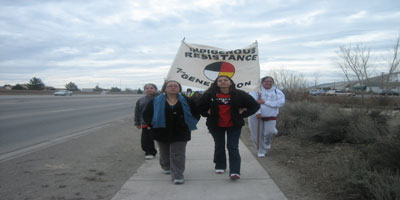
The Longest Walk 2 commemorates the 30th anniversary of the original longest walk while bringing attention to the environmental disharmony of Mother Earth and sacred site issues.

by Mari Villaluna/Indigenous Peoples Media Project

I remember his stories. I remember her stories. I remember my matriarchal stories. I remember my ancestors' stories. I remember the story about Lumang Simbahan (Old Church) in Nasugbu, Batangas. One of my female ancestors forgot her rosary to bring to the Spanish Catholic church that they forced upon my ancestors, and walked back with all her relatives to retrieve the rosary. When they returned to the church, the Spanish burned down more than half of the population inside. A Spanish census said that only 1,000 Tagalogs lived there. Less than 500 Tagalogs survived this attack on their existence. Still to this day, every Friday, people go and light candles and pray upon this sacred site to always remember our ancestors. One of my names is rosary to always remember how my ancestors survived no matter what the colonizers did. I carry this and many other stories with me.

In remembering these stories about my Iroquois and Tagalog ancestors, I have made a decision to walk on the Longest Walk 2. Many reasons have to do with helping, organizing, and doing media for the walk. The main reason is for my descendants. My ancestors were motivated to spark revolution with their oppressors, to make treaties, or to continue their traditional ways because of their descendants. They faced many forced walks. They were removed from their land. They knew they had to figure out and organize better ways for their future generations. I must learn the lessons my ancestors taught so that seven generations from now these stories will continue to be passed down.

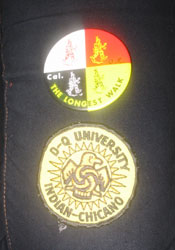
The Longest Walk 2 is the 30 year anniversary of a Native American Rights march that happened thirty years ago in 1978. The walk starts in San Francisco, CA and will end on July 11, 2008 in Washington D.C. This walk will call attention to the issues of environmental protection of Mother Earth, and sacred sites.

From February 9-12, 2008 in the San Francisco Bay Area and at D-Q University there will be events surrounding the Longest Walk 2. D-Q University is the home of the Longest Walk, and is the only off-reservation tribal college in the nation. On Monday, February 11, 2008 the Longest Walk will be holding a sunrise ceremony at Alcatraz Island which will be the start of the Longest Walk 2.

In remembering all these stories, I will pass on these new stories that are being created. From when I was little I was told by my father an Iroquois belief, which is always to consider about the impact of the decisions you make on the next seven generations. In seven generations from now, I hope the same stories are being passed down, and that my descendants can say "My ancestors walked on the Longest Walk 2."

Tags

Remembering Mighty King Kong

09/24/2021 - 10:42 by Anonymous (not verified)
Original Author
root
Original Body

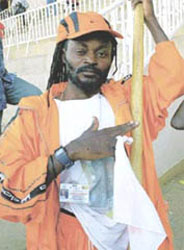
Leroy Moore interviews Anthony Muraya about the life and death of famous Kenyan reggae artist, Mighty King Kong

by Leroy Moore/PNN

Krip-Hop: Give us some of your background.

Anthony Muraya: My name is Anthony Muraya, born and brought up in the Central province of Kenya. I'm the founder and Patron of the Destiny Talented Generation (DTG) Kenya (which deals with identifying, nurturing and promoting talents among young people in remote areas of Kenya.), and owner of the FORTY TWO TRIBES ONE NATION, blog. Also work as a missionary and youth speaker. Newly Married to Lisa Muraya and currently settling in Stockholm Sweden where I plan to pursue my education.

KH: Hello Anthony, I've been tracking Mighty King Kong career by the internet for almost five years and always wanted to contact him. I was shocked to find out about his death! Tell us how did you know Mighty King Kong and the controversy around his sudden illness?

AM: Well, I first heard King Kong through his first album Ladies choice. Mighty King Kong's real name is Paul Otieno Imbaya. Just like many young people in Kenya, the hit song became my favorite. I came to like him even more when I heard about his background- that he was once a street boy and also battling with polio that disabled him. And when I watched him perform, I got even more interested with his life.

Well there are claims that King Kong's death is a result of poisoning. The death is a big loss to the country and especially the disabled and poor people whom he has aggressively fought for and campaigned for their well being.

KH: Mighty King Kong's life was incredible from poverty to musician and before his death he was looking to get into politics. Please give us a window into Mighty King Kong's life from childhood to now.

AM: A good part of his childhood was spent on the streets where he had found his home after the death of his dad (he was only 6 when his dad died) which forced him to drop out of school. Unlike many street children, King Kong knew that the streets were not his real home or destiny. When he realized his talent and how influential it was, he decided to pursue it whole heartedly. As a former street boy, it would take him a lot of courage and determination since it is always tempting for such to go back to their former life. Street "bosses" also keep threatening a "rebel" who chooses transformation to normal life.

When a woman who owned a night club and a disco offered him accommodation, King Kong grabbed the opportunity that would change his life. With time, he practiced his talent at the discotheque, first as a dance performer.

A tender and kind King Kong, he believed that many disabled people would have better lives if they were well represented politically. This faith was the motive behind his ambition and dreams. He also tried so much to uplift the lives of the disabled by encouraging and introducing them to small scale business. He could even spend his money to assist the needy.

KH: I read that he was respected as a street person among the youth. Can you give us some highlights during that time when Mighty King Kong was living on the streets?

AM: Life on the streets is not always so easy but King Kong's entertainment gift and music talent always made the way for him. He would always make people around him feel good. Another reason is that he never despised himself; he was always alert and charming and active. He also found favor with decent-living people because unlike other street children, he never involved himself with stealing or pickpocketting. That’s also one of the reasons a woman who owned a night club trusted him and offered to accommodate him.

KH: What kind of music did Mighty King Kong sang?

AM: He sang reggae.

KH: A couple of years ago many articles reported that Mighty King Kong was in contract deals with a record label that took advantage of him. How did he get out of the contract?

AM: To King Kong, that was the worst mistake that he ever made in his life and because he had already signed the contract, there was nothing much he could do but to wait the contract expiry which lasted seven years. The contract threatened to cripple his music career but he never gave up.

KH: Mighty King Kong was going to represent people with disabilities in the government. When and why did he get into politics?

AM: It is hard to tell when but the fact that his talent opened doors and many chances to meet and interact with politicians might have opened his mind to know that he was best positioned to represent the marginalized community of disabled people in the parliament.

KH: Have things change for people with disabilities in Mighty King Kong's home since his birth?

AM: Any body, even the physically fit, that followed his example would benefit from King Kong's life. He was always enthusiastic in demonstrating practical lessons of success and his positive influence will live on after him. I personally have learnt a lot through his life and I also believe that he wanted to reach a wider audience through politics.

KH: Mighty King Kong's songs are really political. If you can pick out one song that sums up his politics, what will it be? Can you share some lyrics?

Note: (Stay tune for the answer to this question in Part two of this interview)

KH: Did Mighty King Kong face discrimination in the music industry because of his disability?

AM: No. Not because of his disability. To some point, the disability was his uniqueness and was always admired since not many people in his situation pursue their destiny with such determination as his. Piracy, corrupt music managers, producers and show organizers are the only thing that hurts many musicians' work in Kenya.

KH: I read that Mighty King Kong protest about how musicians were treated by producers, radio stations and the whole entertainment industry. Please give us the story behind this protest.

AM: Well, many producers take advantage of musicians especially if the musician is not well established and rich. Nearly 90% of musicians' work fruits go to producers. King Kong was among other musicians who believed in changing the whole music industry.

KH: How will his life, politics and music live on in Africa and beyond?

AM: I think there is a great need for his work to be collected and put together in for theaters.

KH: Mighty King Kong was a supporter of Raila Odinga's ODM political movement. What is this movement about and why was he attracted to it?

AM: The Orange Democratic Movement (ODM) movement was started to fight for a new constitution that the government of the day had promised to deliver within its first 100 days in office. The movement attracted many Kenyans and won the referendum against the government. Mighty King Kong must have been attracted to the movement because much of the constitutional changes that Kenyans demanded in those areas where the common man feels oppressed. Some chapters were also in favor of disabled people. Hon. Raila Odinga is the leader of ODM.

KH: What kind of work did Mighty King Kong do for or with people with disabilities and people living in poverty?

AM:Mighty King Kong has been in the front line fighting for the well being and recognition of disabled people in the nation. He has also involved himself in talent promotion programs and projects.

KH: As a Black disabled music historian, I was looking for Mighty King Kong's CDs here in the USA but had no luck. How can other people buy his CDs?

AM: There is a big need to promote such music to the international market. Many musicians are not financially well to promote themselves internationally. A possible way is being figured out on how to have the music available and reachable for King Kong's world wide fans.

KH: Is there any other disabled musician that is following in Mighty King Kong's footsteps?

AM: Reuben Kigame, a blind gospel music composer and singer was already in music industry before King Kong. Despite being blind He is impressive and sings very good playing the keyboard for himself. He is an influencer, maybe King Kong got inspired of him.

KH: The story of Mighty King Kong is made for a book and movie screne. Has anybody thought about putting this story as a book or movie?

AM: Not as far as I know. Such a move is highly commendable.

KH: How can people help to keep Mighty King Kong's life, music and politics alive?

AM:Keeping his dreams alive would make him most greatful wherever he is. He always believed in talent promotion and encouraging people with disability to believe in themselves and realize their potential.

Sponsoring disabled people to higher education and the political arena would also keep his dreams alive. There are smart disabled people who would do a great job in the parliament.

Fighting piracy was another of his main goals. Piracy has crippled many musicians.

KH: Any last words?

AM:I really would thank people who have a heart for the disabled and the poor and those who love the street children as their own younger brothers and sisters. Many efforts have been made to form a strong force that would voice their needs but lack of resources and trust is slowing down the initiative. The needy know exactly what they need and they would be the best candidates for such works should they be equipped.

Leroy's note: Please tell the family of Mighty King Kong that my heart goes out to them

Tags

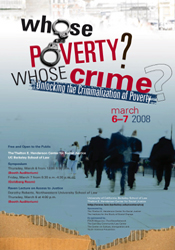
Whose Poverty? Whose Crime? Unlocking the Criminalization of Poverty

09/24/2021 - 10:42 by Anonymous (not verified)
Original Author
root
Original Body

POOR Magazine co-sponsors a symposium exploring the harmful impact of the criminalization of poverty, as well as community-based solutions to this dangerous trend.

by Staff Writer

March 6-7, 2008

Thelton E. Henderson Center for Social Justice Institute for the Study of Social Change

Co-Sponsored by POOR Magazine/PoorNewsNetwork, East Bay Community Law Center, and the Center on Culture, Immigration, and Youth Violence

Sleeping outside or in a vehicle, soliciting employment, convening in a public space and/or suffering in public from a mental illness are citable offenses in the United States. This criminalization of poverty results in more and more poor families, youth, elders, and adults in this country facing police harassment, abuse, and even incarceration for living in poverty. By bringing together an innovative and powerful mix of voices from poverty and race scholars, alternative/activist policy makers, poverty and civil rights attorneys, legal advocates, media producers, activists, artists, and community leaders, the symposium will provide a forum to explore short and long-term legislative and community based solutions to the problem and launch an in-depth look at the harmful impacts of this dangerous trend on poor people and on U.S. society as a whole.

Speakers include:


2008 Robert D. and Leslie Kay Raven Lecture on Access to Justice: Dorothy Roberts, Professor of Law, Northwestern University School of Law Symposium:

Michelle Alexander, Professor of Law, Moritz College of Law, Ohio State University

Rebecca Alexander, UC Berkeley Institute for the Study of Social Change

Gary Blasi, Professor of Law, Acting Director, UCLA Institute of Industrial Relations

Paul Boden, Executive Director of the Western Regional Advocacy Project

Mary Louise Frampton, Director, Thelton E. Henderson Center for Social Justice

James Garrett, Division Dean, Peralta Community College District

Lisa Gray-Garcia, Executive Director, POOR Magazine

Joe Hermer, Professor, Sociology and Criminology, University of Toronto

Juan Herrera, UC Berkeley Institute for the Study of Social Change

Gary Linker, Executive Director, New Beginnings Counseling Center (Santa Barbara)

Carlos Mares, Founder,National Day Laborers’ Organizing Network (NDLON-LA)

Leroy Moore, Columnist, POOR Magazine

Monique Morris, Director of Research, Thelton Henderson Center for Social Justice

Steven Pitts, Labor Policy Specialist, UC Berkeley Labor Center

Martin Reynolds, Managing Editor, Oakland Tribune

Victoria Robinson, Coordinator of the Center for Teaching and Study of American Cultures, UC Berkeley

Jeff Selbin, Professor of Law, UC Berkeley School of Law

Olis Simmons, Executive Director, Youth UpRising (Oakland)

Nicol U, UC Berkeley Institute for the Study of Social Change

Mari Villaluna, Legal and Policy Associate, D.C. Employment Justice Center

Lucie White, Professor of Law, Harvard Law School

Please note:
There is no charge for this event.
The Symposium is wheelchair accessible. For disability-related accommodations please contact csj@law.berkeley.edu or (510) 642-6969.

For details and free registration, visit http://www.law.berkeley.edu/centers/csj/symposia

Tags

Poetry Battle of (All) the Sexes

09/24/2021 - 10:42 by Anonymous (not verified)
Original Author
root
Original Body

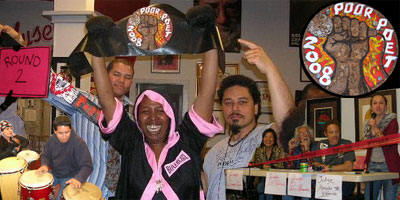
POOR Magazine's first annual poetry battle on Valentines Day featured revolutionary poetry, spoken word art and flowetry.

by Staff Writer

Po' poets and spoken word artists, heavy weights and light weights, undefeated champs and first time performers alike all entered the ring this Valentines Day at POOR Magazine's first annual Poetry Battle of (All) the Sexes. The event, which took place at the Beat Museum in North Beach, was filled with amazing flowetry, spoken word art and poetry.

Thanks to all those who made it a huge success, including ring announcer Jack Hirschman, judges Al Robles, Genny Lim, Paris Alexander and Ananda Esteva, Tony Robles, the Beat Museum, POORPresschefs Amanda Smiles and Joanna Letz, Ace Robles for the beautiful belts and many, many more! As well thanks to all those who attended and helped a very poor POOR Magazine raise some much needed funds!!!

The BIG winners of the night were!

Champion: Queenanndi

2nd place: Leroy Moore

3rd place: Monk

Each winner was awarded a cash prize, handmade champion’s belt and will have a piece published in the Bay Guardian, as well as on POOR Magazine.

Please stay tuned for more revolutionary art and poetry events from POOR Magazine. And, read on for the winner's pieces and more.

Love and hate

by Queenanndi

Love & Hate

I’m about to commentate

Hate is comin’ to tha ring, weighing in at an unknown amount of pounds

Ready to bring on destruction and pain

Puttin’ the little kids out of their homes

Creating victims out of the elderly, addicted to bein’ insane

Oooh, and hate starts frivolous wars

Our childrens’ blood is shedded

While hate’s kids become pampered and spoiled

The hate record looks undefeated, but lovez comin’ to tha ring

Look, now hate done ran and retreated

Love got hate on tha ropes- Bam! Bow! Bam! Bing!

Love IS comin’ wit body blows, and hate can’t block a thing

Now love comes wit an uppercut- Bam!

Put the families back in their homes

Boom! Enough criticizing and criminalizing the poor

Bow! Return tha souljahs and end the war

Now! It’s justice for all- Bam! Boom! Pow!

Cuz hate just got knocked out!

Dreamin’ (of a king)

I would take all the stars out the sky for you

There’s nothin’ in this world that I wouldn’t do…

Yo’ my heart, baby our bond is strong

I know you ain’t gone leave me here to rule alone

Many journeys have been traveled and conquered

But when I feel yo’ Kingman hands that’s my energys’ comfort

I’m digging you man our hearts are on the same level

Make me go to hell and come back wit the head of tha devil

Fo’ so long I’ve felt ya- sorry that I strayed from your powers

Attuned our minds soul connects last longer than flowers

The World Is Ours

Maybe not in ways but in spirit

Go to the other end of earth-now shout!

You know I’m gone hear it

My Baby, sweet as Billy Shears, wiped away my tears n’ fears

For you I’m goin’ five Phantoms down

And comin’ right back up wit yo’ crown- on a platinum dish

If I had one wish

You’d be in tha crowd, feeling and hearing my heart pounding loud

Step to me daddy

I want that kiss from tha king-

But soon as our lips touched- Damn! I woke up from tha dream

QUEENNANDI 08

I’m the BLACK CRIPPLE

by Leroy Moore

I’m the BLACK CRIPPLE

Look at me, look at me

Hear this, hear this

I’ve learned from Heyward’s Porgy

Play on your pity

Just to get that money

I’m the BLACK CRIPPLE

You’ll do me like you did bang, bang Margarett L. Mitchell

I’m an open swore in the BLACK community

Cup in hand

Leaning against the wall

Passersby don’t want to understand

I’m the BLACK CRIPPLE

Gave my body to the US Army

Got shot by the LAPD

But you can’t get red of me

Mainstream think I’m too angry

My own people don’t even notice me

I’m the BLACK CRIPPLE

My spoken word, you can’t handle

You think I’m too radical

Black sisters don’t know what they are missing

My BLACK CRIPPLE body is always erect

Mind masturbation but she can’t deal with the situation

Educated and motivated

Now people are intimidated

I’m the incarcerated BLACK CRIPPLE

Lock down

Lock out

Walking on death row

The State has lost my file

SSI, SSDI and GA

In my pocket is Uncle Sam’s dirty hands

I’m the BLACK CRIPPLE

Rocking your cradle

Yeah, I know what I want but you’re too goddam fickle

Hell yeah, I’m the BLACK CRIPPLE

No, no, no

I’m the PROUD BLACK CRIPPLE

No, no, no

I’m the LOUD PROUD BLACK CRIPPLE

No, no, no

I’m the ANGRY LOUD PROUD BLACK CRIPPLE

No, no, no

I’m the SEXY ANGRY LOUD PROUD BLACK CRIPPLE

Yeah! Yeah! Hell Yeah!

More love poems spit at the battle

Aint got no love for the State

by tiny

D-I-V-O-R-C-E

Will I ever

be free

Can I get a
D-I-V-O-R-C-E

So he’ll stop

abusing me

You see My man is the state

And It all started when we went out on a date

Naw, it actually began many years ago when I was homeless chyle

It was like incest and the abuse was steady and full of lies

But the state was pimping me and I couldn’t get free

criminalizing po folks like me with impunity

but hey I tried to relate

looking beyond all the hate

that’s why me and the state went out on a date

but it went from good to bad fast

when it came to the check

I tried to pay with food stamps , my ebt card and an ssi check

He called me a cheap whore said I was just playing him for a sucker

I said
he was a just an abusive lover

As I reflect I know he was never looking for a soul mate

In fact, i was just another poor mama he could incarcerate

He never tried to see my culture , my spirit , my soul..

But rather he was only on the take

Coming at me with labels of greed, food stamp fraud , child abuse and lies about my fate

He could never relate

He never accepted responsibility for 500 hundred years of repression, colonization, sterilization and hate

So I wrote him a letter- asking for
Some alimony, reparations
and if nothing else

A rebate

He didn’t respond

So I am asking for a

D-I-V-O-R-C-E

We’re through

–no mo

I’ll make my own estate

My own land free from hate

With love and language and culture,no incarceration and manufactured hate

D-I-V=O=R=C=E –

its over

I am finally free

CALLOUS CUSTODY CORRUPTION

(For all single moms that lose their children to court corruption)

BY MARLON CRUMP

I told you, your honor, you devil in a pitch black gown, that I had no time to prepare for this hearing, but you're not hearing me. What I say to you goes out one ear, and quickly out the other:

What kind of a monster are you to callously decide my child's fate, because you say your rule is great?! You just can't give my son to animals like you, by separating him from his sister, or my daughter from her brother!:

You just can't keep ripping my life or their lives away, because your everyday life is the cold color grey. Am I responsible for your refusal to have, and love children of your own?:

That must be your plan, isn't it? You want to rely on Child Protective Services, asshole attorneys, faulty foster care homes, or the police to fulfill your needs, from the time my seed is hatched from my body, until their old enough to be institutionalized by the system, when they're fully grown:

But I got a big plan for you, oh yes indeed, lord, yes I do, indeed. You see, I can only be a one-man Rambo-like soldier equipped with a keen mind, pen and paper, and a bleeding heart, to be valiantly fighting your own demon squad, of this fight so long:
While you keep doing what you're doing to me to other single mothers, everyday, then go home to enjoy a hearty meal, and enjoying Satan's song; I will make you sing to a different tune when we march into your court, in a massive crowd, reminding you how you did us so horribly wrong, then send you back to the bottomless black pit where you truly belong:

A LAWYER TOO HEATED FOR A DEGREE

BY MARLON CRUMP

The word "lawyer" rhymes with liar, every law has a flaw, and it's illusion is a poor person's mental confusion:

I'm not having it, though, for I know myself, my life, and love for my Gifted by God abilities. The power of my mind, my courage, my pen, and my heart equals you into a mortal contusion:

I can cross-examine you, into the abyss of your glorified lies, and represent myself in the court of flaws, by not even uttering a sound from my very own lips. I can dance with you from dusk till dawn, with the truth of argument(s) in front of the judge and jury:

You see, your clients that wear blue that ever so often slew, foolishly assumed that after their warrantless entry into my world, that this was the end of that movie, but I followed up as a motion-pictured, rated R sequel young black man, with a feature film presentation of impossible intelligence, and indestructible fury:

I educated you on how quickly I can obtain knowledge, in just a few short weary years of little resource, to clash with you, while you spent light years of tax payer's hard earned dollars to create weak lies, but not fully prepared of what I can do:

You was certain that the ball was in your court, thinking we would battle at the state level, but I jumped up in the air and stuck my tongue out at you like Jordan, then told you, "No, we're going federal." Your jaws dropped like a whore to her knees, but I made you kneel:

I hope you are lame enough believe that it is all over with, due to mere technicalities. When that mail carrier comes, I want you to open that big brown sealed envelope, and take out that thick wad of white papers, titled: COURT OF APPEAL:

Tags

They couldn't see my beauty as a black woman goddess

09/24/2021 - 10:42 by Anonymous (not verified)
Original Author
root
Original Body

One AFRICAN-AMERICAN WOMan's journey through LOVE, art and Black History month

by Valerie Harvey/PNN

I no longer believe in romantic love. Of course it all sounds nice in the beginning when you first begin dating someone and you're both putting your best foot forward. After three marriages and a few relationships, I have a "bah humbug" attitude toward love at best.

I remember once when a man that I was seeing asked me to make reservations at a very nice restaurant for Sunday brunch. I made the reservations right away. We talked about it a lot and I looked forward to the delicious food and the unbelievable ambiance. My date stood me up! He didn't bother to call me and cancel. I was so angry and upset. I called him two days later and he gave me a very lame excuse. "I had an emergency," was all that he would say.

Needless to say, he was too cheap to pay for the nice restaurant. At least that was my conclusion. But why on earth did he tell me to make the reservations in the first place? He probably wanted to impress me. I guess that he didn't think that I would really make the reservations. Maybe I was wrong about his reasons for not showing up. I felt very discouraged and insulted. He didn't think enough of me to call and cancel, I had to call him. I never heard from him again. Just another example of a man who is trying to show off and has no intention of following through with whatever he has promised.

I also remember a man who wanted to begin a relationship with me. Unfortunately he didn't want to go out in public. I figured that he had to be married or living with someone. He denied it over and over. In fact, he never did admit that he was married or cohabitating. Why else would he be against going out? He wanted to have a date on which he would pick up some takeout food and just come over to my house. I imagine that he didn't want anyone who knew his wife or girlfriend to see us out together, in public.

I believe that both men behaved the way they did due to low self-esteem and lack of self-confidence. African American writer James Baldwin writes, "One can only face in others what one can face in oneself." They couldn't see my beauty as a black woman goddess, because they were unable to see the beauty and the divinity in themselves.

Since Valentine's Day is this month and I am an African-American woman, I would be remiss if I didn't discuss the dating scene for African-American women. It is very bleak from where I sit. Can I even refer to it as a dating scene? I refer to it very loosely, in fact.

Most single black women are not dating. They are either lamenting the fact that they are not dating or they are on the lookout for a suitable dating partner. The pickings are quite slim. Due to the very real shortage of African-American men, there are not enough black men to go around for all black women.

Falling in love is a very lofty goal for women in general and black women in particular. There is a tendency to want to be in love, maybe to be in love with love itself, rather than to be in love with a man. Many black women dream about a "Prince Charming" type of man who will come along and solve their problems. This man does not exist, but that doesn't keep quite a few men from pretending that they are Prince Charming, in order to make themselves seem more attractive.

The difficulty that black women have finding love ties in well with Black History Month. . The lack of self-love within the black community is possibly responsible for the mangled relationships between African-American men and women. Negro History Week was started in order to help African-Americans to recognize our achievements and to love ourselves. Black History Month started as an expansion of Negro History Week, which Carter G. Woodson began in 1926. He was the director of the then-known Association for the Study of Negro Life and History. Woodson chose this week because it included the birthday of Abraham Lincoln and the fraternity Omega Psi Phi ‘s celebration of Frederick Douglass' birthday on February 14. This coincided with "Negro Achievement Week" in 1924. In 1976, the Association for the Study of Afro-American Life and History, changed the weeklong Black History celebration to Black History Month, because of the American bicentennial.

In 2008, Black History Month has evolved. In the San Francisco Bay Area alone, there are countless celebrations occurring all month. There is a cooking class at the Elmhurst Library in Oakland on February 25, 2008. It celebrates the food of our culture and keeping ourselves healthy and well fed in a soulful way. There is also an African film festival on February 28, 2008 at the Pacific Film Archive in Berkeley. It showcases our African heritage.

Iawanza Kunjufu, an equal rights advocate, "Remember, our number one problem is not drugs or crime, but self hatred. Study your history and learn to love yourself." If we in the black community would embrace our blackness and love ourselves, it could lead to successful relationships between black men and women.

Be sure to check out Valerie's first book, Love Lights the Way, a compilation of poems on the subject of love at www.poormagazine.org. To order a copy call 415.863.6306

Tags

The Experience of Losing a Baby

09/24/2021 - 10:42 by Anonymous (not verified)
Original Author
root
Original Body

One mother's memory of losing her infant reflects on the possible closing of St ' Hospital

by Theodora Mays/PNN

As my blurred eyes opened, my head feeling woozy from the anesthesia, I focused on a red-faced doctor whose eyes were filled with tears. He started talking to me, something about the baby's heart rate dropping and a machine for 3 hours. My thoughts slowly started coming back to me and I remembered being rushed into a room and a big plastic object being placed over my nose. The tragic loss of my baby on that night, so many years ago, rushed back to me as I heard about the possible loss of St. Luke's Hospital in San Francisco.

For the last 130 years St. Luke's Hospital, located in SOMA, has provided medical care to poor people and people of color. The hospital's closure is part of the recent string of attacks on poor communities from rich investors, where corporations move services from poor, underserved communities, to richer white areas of the city.

The California Pacific Medical Center (CPMC) plans on "replacing" St Luke's with a series of ambulatory care centers in the south of Market area. These centers would be in Stonestown, Potrero Hill and the Excelsior districts and will not eliminate the need for an impatient hospital nor will they be directly accessible to St. Luke's most needy patients. St. Luke's is the only private hospital South of Market and the only other accessible hospital is San Francisco General Hospital, which is already overburdened.

If St. Luke's closes one half of San Francisco will be left with only one hospital, San Francisco General. It is not easy to get from South of Market to North of Market. Can you imagine having a heart attack in Bayview/ Hunters’s Point or the Excelsior District and trying to get across town in rush hour traffic, especially if San Francisco General is not accepting ambulances?

Last year, St. Luke's emergency room served 28,000 people and 7,000 of these visits were critical. San Francisco General Hospital cannot handle this number of additional visits

"You cannot have an emergency room without intensive care facilities or an operating room. All that is there is a shell intended to deceive the public into believing that an Emergency Room remains," said Bonnie Castillo, RN, and Director of the California Nurses Association, Sutter Division. Sutter, whose headquarters are in Sacramento, is the umbrella corporation that runs all the big hospitals in San Francisco, as well as the rest of the state.

Bonnie Castillo further proclaimed, "We will challenge Sutter with every means we can to preserve this critically needed hospital and Emergency Care Services at St. Luke's."

Hearing about the challenge to save St. Luke's, my mind kept wandering back to that night. To the blurred faces of my doctor and husband and the sounds of their muffled voices that seemed to keep saying something about "3 hours on a machine." I struggled to mumble to my husband for him to call our Bishop, thinking we had 3 hours to reach out to him for prayer. Then I was jarred with the realization that the 3 hours had already passed and our baby was dead.

Had there not been a hospital accessible to me when I went into labor the end could have been far more tragic, both my baby and I could be dead. I kept thinking about this when I heard of the mothers and children leading a Candlelight Vigil marking the closure of the key pediatric unit at St. Luke's Hospital on February 13th. Many families and women with high-risk pregnancies will be deeply affected by this closure.

Jane Sandoval, an RN at St. Luke's agrees, “Sutter is degrading patient care by closing unit after unit at St. Luke's. Do they expect women with high-risk pregnancies to take a cross-town bus? They are abandoning the families who depend on this hospital."

During the past two years, the CPMC has already closed or is "about to close" several services including the Psychiatric Inpatient Unit, Occupational and Physical Therapy, the Workers Compensation Unit and the Neonatal Intensive Care and Pediatric Floor.

Imagining the crowds of women gathering at Valencia and Cesar Chavez with burning candles and remembering my own experience of losing a child, I know that we have to save these hospitals. We must keep St. Luke's alive.

Tags

Taxation Without Representation

09/24/2021 - 10:42 by Anonymous (not verified)
Original Author
root
Original Body

A young voter of color resists.

by Mari Villaluna/PNN, YouthinMedia East Coast Correspondent

Taxation without Representation. This principal is taught to every young person formerly educated in the US, in other words, political voting representation is granted to those who pay taxes. But what about the thousands of so-called “undocumented citizen’s” who pay taxes, yet they can’t vote, and the thousands of poor people of color who are incarcerated, and can’t vote?

As a young voter of color who has been oppressed by our unjust system I headed to the Washington DC Voting rights march, which is the same day as DC’s emancipation day. I saw thousands of people rallied around the right to vote in their Congress. As I moved closer to the stage, I saw Mayor Adrian Fenty speaking about the right to vote. I also saw several other things that were important to voters, promises made to constituents that were casually being reneged on by the recipients of our votes. On the side was a contingent of people holding signs saying “Save Affordable Housing”, “Save Temple Court” and chanting, “Practice what you preach.” I quickly scurried over to find out what was happening.

I found out that the contingent was from Temple Court Apartments in Northwest 1. Temple Court apartments were on the eviction block, and to subsidize the tenants the district planned to give them section 8 vouchers. I spoke with April Hall, a tenant at Temple Court about their demands and what they wanted for their community, “We will not be moved. We voted for him (Mayor Fenty). He said he would stick to the original plan… We want Mayor Fenty to stick to the original plan, no displacement, no relocation, and no vouchers. We want housing to be built for Northwest 1.” I was reminded about the same city planning that happened in San Francisco during the dot com boom, out with the poor, in with the rich.

Soon after, I saw youth marching and holding up signs that read, “Save Youth Court.” I asked Ariana Benjamin about her sign and what Youth Court is, she stated quite simply, “It gives youth a second chance. If we didn’t have youth court we would be in jail.” She stated further, “Youth court is so additive… It saves lives.” I was then directed over to the founder of Youth Court, Professor Chan who teaches at the District of Columbia Law School. I found out that the Youth Court in D.C. was the largest teen court in the nation, and has been in place for 10 years. Youth Court gives many of D.C.’s youth a chance to have the same right every adult gets, a chance to be judged by a jury of their peers. 100% of youth offenders that are tried in a youth court volunteer in Youth Court. After 50 hours of volunteering they receive a recycled computer, and after 50 hours they will receive Safeway gift cards to provide for their nutritional needs.

This reminded me of my own experience with Teen Court while I was in high school. I had previously been tried as an adult for a low-level shoplifting crime, and spent a night in adult jail. Not one person in the adult criminal system asked me why I stole those clothes. If they had asked me why, I might have been able to tell them that I was severely tortured, abused, and neglected. Stealing was the only way I could provide food and clothes for my sister and me. Instead I was treated as a criminal, a criminal of poverty (as I have since learned from POOR Magazine (www.POORmagazine.org). After being reunified with my mother, I started to get involved so that other youth would have a chance. My hope in joining Teen Court was that other youth would get that second chance that I never received from the adult criminal system.

Professor Chan stated what motivates him to do this work, “I don’t get paid to do this, I do this because I believe in justice.” He explained further that they take 60% of the youth justice non-violent cases, and that many in the district government believe that this is a great program that should continue. He then explained to me, that they had just run out of funding today, and were promised by the Deputy Mayor but is not currently being carried out by Mayor Fenty. They are being told by the Mayor’s office, “We are actively looking for the money for this program.” This was after three months of calling the Mayor’s office and reaching nobody. Professor Chan left me with an important question commenting on the closure of this program, “How will this advance justice in this city?”

I noticed Mario Cristaldo speaking to Telemundo talking about the vote and how it relates to building equity for Latinos in the District. Mario was demanding representation from Congress but not just through a vote. I spoke with him further to comment upon what he was talking about with representation, “We demand representation… We clean the buildings, cut the grass, cook the food… We demand to live and stay here.” He then further went on to talk about all marginalized people living in the district, “There is a class war going on, all must work together, Black, Latino, Asian to end the gentrification, the incarceration and displacement of our communities.”

It has been 206 years without a vote in Congress for D.C. residents, even though Congress requires its residents to pay taxes. Within the protest, D.C. residents wanted full representation that does not stop with a vote. Representation includes immigration reform, youth justice, and housing for all.

Taxation without representation is a value that is said to be upheld in this democratic state. Yet thousands are left voiceless within this voting system. Youth who are under 18, immigrants, incarcerated folks, and District of Columbia residents pay taxes but yet are denied participation in the U.S. electoral system. When marginalized folks are even allowed the right to vote, they very rarely have an opportunity with participatory representation in this government. Recently, Delegate Eleanor Holmes Norton spoke on the House floor about why D.C. residents have been denied the right to vote, “As one southern Senator put it, "The Negroes . . . flocked in . . . and there was only one way out . . . and that was to deny ... suffrage entirely to every human being in the District."

So thousands like myself marched on the Capitol, not for a right to vote but for a right to have our human rights met. In the same tradition of resistance carried onto us by our ancestors, we marched. Marching alongside the Temple Court tenants who were organizing to keep their housing, the youth who are fighting to keep their Youth Court program open, the immigrants who are speaking out the right to amnesty to live upon this stolen land, and I knew that this was more about voting. It has always been and always will be about the institutional marginalization that my ancestors and I have gone through. Being evicted from our lands, our own supportive systems and languages attacked and attempted to be stolen from us, and often being treated as an immigrant even though our blood runs through this land.

On April 19, 2007 The U.S. House passed the D.C. Voting Rights Bill, it is now introduced the Senate. The current legislation will not only give DC one vote but also a new vote for the state of Utah.

Tags

Me ponieron una pistola a la cabeza (They put a gun to my head)

09/24/2021 - 10:42 by Anonymous (not verified)
Original Author
root
Original Body

A PNN reportera shares her own story of police brutality.

by Teresa Molina/Prensa Pobre

For English scroll down

Yo recuerdo que una vez yo estaba tomando aire fresco en mi ventana cuando de repente oigo un grito de dolor y me asome para a ver que pasaba y descubrí un muchacho desesperado gritando “¡DÉJENME POR FAVOR! Sus dientes rugían como si estuviera terminando su vida y yo sentí un enorme coraje.

Sentía que mi sangre hervía como agua para chocolate caliente. También sentía impotente y frustrada al no poder hacer nada; lo único que pude hacer fue gritarles que no lo golpearan, que él estaba esposado y no tenían que pisarle su cabeza. Él no podía moverse ni defenderse. Pausaron de pisarle la cabeza y golpearlo y yo pretendí como estaba apuntando el numero de placas de su patrulla y lo soltaron y dejaron ir a su casa.

Él muchacho, todo adolorido volteó y me vio y me dio las gracias. Me sentí contenta porque yo me reflejaba o más bien me identificaba con ese muchacho como si yo fuera su Mamá. Me ha pasado lo mismo también. Hace siete años cuando mis niños eran mas chicos que unos policías llegaron a mi casa a medianoche buscando a mí hijo porque él había tenido una pelea callejera. Pusieron una pistola a me cabeza y me sacaron hasta el pasillo. Mi hija Liliana tenía apenas catorce años, Luis tenía ocho años, Marcos dos años y Jesús dieciséis. Estaban bien asustados porque ellos vieron como ellos pusieron la pistola a mi cabeza y dijeron que pusiera las manos en mi cabeza y empezaron a esculcar mi casa y se llevaron lo que quisieron. Hasta ahorita mis hijos recuerdan con miedo y ya pasaron siete anos y ellos no pueden recuperarse de ese trauma hasta la fecha. Ellos todavía tienen miedo a los policías.

A mí no me gustaría que los golpearan a mis higos como a golpearon ese muchacho. Nadie los defiende ni reclamen sus mal tratos despues.

Yo siempre estoy lista cuando veo que unos policías quieren arrestar a alguien; me fijo que no pase lo mismo porque el abuso policiaco sigue pasando y si uno no esta listo siguen abusando de nuestra gente y de nuestros hijos. Despues ellos niegan el desastre que hacen en la comunidad. Mas que nada, la gente pobre, gente de color son la mas oprimida, mas maltratada, y mas despreciada.

Desgraciadamente la gente pobre trabajadora somos los mas indeseable y somos los que mas contribuimos a la enriquezca de este país; y nosotros cada día mas pobres, mas maltratados. Es por eso que debemos estar listos y denunciar esos abusos y no dejarlos pasar.

Yo pienso que eso pasa porque nosotros nos dejamos que nos atropellen; abusen de nuestros sentimientos solos por el echo de ser pobre. Es por eso que la gente se aprovecha de nosotros. ¡Ya basta de estar tolerando tanto daño! Pienso que esa clase de abusos siempre pasan pero ya es tiempo de pararlos, que nos vean como lo que somos-seres humanos y no animales como ellos nos quieren hacer. El pobre no es malo y no nos vamos a dejar mas. Estaremos listos para defendernos y parar ese abuso y hacer que se nos respete ahora y para siempre. Esto es el consejo que yo les
puedo dar basado en mi experiencia.

Siempre nos sentimos humillados y marginados pero somos muy equivocados; somos gente decente.

Yo entrevisté a un policía y le puso la pregunta de que él piensa de los policías que maltratan a la gente el me contesto que eso pasaba porque la gente no hace un reporte y denuncia esos abusos; que la gente puede hacer un reporte, agarrar el numero de policía y las placas de las patrullas y también que hay leyes para ellos que los castigan y se detienen un poco y el admitió que aunque el no es un policía abusivo, hay policías que abusan de la gente.

Por eso yo hago una llamada a la comunidad que no se queden callados y denuncien esos abusos para que pare el abuso policiaco y tengamos una vida mejor, sin abusos y que sean respetados nuestros derechos y nos vean como lo que somos; seres humanos.

Por lo tanto tenemos que ser respetado y no tolerar mas humillación porque lo merecemos y es la razón que yo no estoy de acuerdo que se violen los derechos humanos. Nunca me voy a quedar callada y siempre voy a estar lista cuando yo vea un abuso en la comunidad. Siempre estaré lista para protestar y defender el derecho de mi comunidad porque a mí no me gusta la injusticia ni el abuso ante nadie y es mi coraje no poder encerrar a esos policías corruptos y abusivos. Pero lo que esté a mí alcance yo lo voy hacer para ayudar a mí comunidad y a mi gente, mi sangre, mis hermanos.

Mi lucha es por ahora y siempre, por vida y con mi gente de mi comunidad.

Hasta la vista

Police Brutality

By Teresa Molina for Prensa Pobre

I remember when I was at my front window taking in some fresh air, when I suddenly heard a painful scream. I leaned out the window to see what happened and I discovered a desperate boy shouting "LEAVE ME ALONE, PLEASE! His screams roared as if he was dying and I felt enormous anger. I felt my blood boil like water for hot chocolate. I also felt helpless and frustrated at not being able to do anything; the only thing that I could do was to shout to them that they did not have to strike him, that he was handcuffed and they did not have to kick him in the head. He could not move nor defend himself. They paused their beating of him and I pretended to write down the plate numbers of the patrol car and they released him and let him go to his house. The injured boy turned around, saw me and thanked me. I felt happy because I identified with that boy as if I was his mother. The same has happened to me.

Seven years ago, when my children were younger, the police arrived at my house at midnight looking for my son because he had been in a street fight. They put a pistol to my head and they moved to me to the corridor. My daughter Liliana was hardly fourteen years old, Luis was eight, Marcos was two and Jesus was sixteen. They were scared because they saw them put the pistol to my head and told me to put my hands in my head and began to search my house and they took what they wanted. Even right now my children they remember that with fear and seven years have passed. To date they have not recovered from that trauma; they still are scared of the police.

I wouldn’t like it if my children were beaten like they beat that boy. Nobody defends them or later denounces their bad behavior. I am always ready when I see that police want to arrest somebody; I pay attention to make sure that the same thing does not happen. Police abuse continues happening and if one is not ready they continue abusing our people and our children. Later they creating a disaster in our community.

More than anything, poor people, people of color are the most oppressed, most mistreated, and most despised. Unfortunately the hard-working poor people are the most undesirable and we are the ones that contribute the most of the enrichments of this country; and us every day, poorer, more mistreated.

This is why we must be ready to denounce those abuses and not to let them happen. I think that this happens because we let ourselves be trampled over; They abuse our feelings just simply for being poor. That is why people take advantage of us. Enough with tolerating this much harm! I think that this type of abuse always happens but it is time to stop them and make them treat us as human beings, and not animals.

The poor man is not bad and we are not going to put up with it any more. We will be ready to defend ourselves and to stop that abuse and to make them respect us now and always. This is the advice that I can give them based on my experience.

We always feel humiliated and marginalized but very we are mistaken; we are decent people. I interviewed a police officer and asked him what he thinks of the police that mistreat people. He answered that it that happens because people do not make a report and denounce these abuses; that people can make a report, write down the number of police and the patrol car plates and that there are laws for them that punish the police.

He admitted that although he is not an abusive police officer, there are police that do abuse people.

It is for that reason I make a call to the community that it does not remain silent and that it denounce these abuses so they do not continue to happen. We need to make sure that our rights are respected and that we are seen as human beings. Therefore we must be respected and not tolerate more humiliation.

I am never going to be silent and I am always going to be ready when I see I abuse in the community. I will always be ready to protest and to defend the right of my community because to me I do not like the injustice or the abuse before anybody. I am angry that we are not to be able to lock up those corrupt and abusive police. But I will do whatever is within my reach to help my community and my people, my blood, my brothers. My fight is for now and always, for life and with my people of my community. Hasta La Vista!

Tags

Black History Unfolding In Front of My Eyes

09/24/2021 - 10:42 by Anonymous (not verified)
Original Author
root
Original Body

Powerful new books by African-American writers are released by POORPress this Black History Month.

by Sam Drew/PNN

I recently had the opportunity to observe a slice of Black History unfold in front of my eyes. I wasn't in an auditorium filled with graduates from a high profile college or in the boardroom of a Fortune 500 company. It happened while I was waiting for a bus at the corner of 40th and San Pablo in beautiful North Oakland on a hectic Friday evening. Black History not only takes place when talented black people rise to the top of their fields, but also when black people resist being criminalized, marginalized and de-humanized by the society at large.

At the bus stop I heard an elderly African American man screaming at the top of his lungs and banging his walking cane on the back of a 72R bus. He kept repeating the phrase "I'm not gonna' let him get away with that!!!" to anyone who would listen as he approached the front of the bus. As the old man got on the bus he began arguing violently with the bus driver over his perceived disrespect. The bus driver quickly grabbed his telephone and called the Sheriffs office to haul to old guy to jail.

But before the news media could get another piece of bad news coming from violent Oakland, a young African American male wearing a black New York Yankees baseball cap put his long sinewy arm on the old guy's shoulder and forcefully spoke "It ain't worth it O.G. It't ain't worth going to jail over. Let it go O.G. He(the bus driver) ain't worth it" The youth began pulling the old man off the bus while telling him he didn't want him to go to jail. When he got the old timer on the street the 72 bus driver closed the door and rapidly drove off in a huff. I had just witnesses refusal to be criminalized. I also witnessed a youthful African-American male defuse a potential violent situation an be a peace maker. I also viewed inter-generational dialog between young and old. With the young extending wisdom and guidance to the elder. And the elder accepting the wise words. This is just the opposite to the image put out in the media about young black males and black people in general. Black history unfolding in front of my eyes.

A revolutionary project of POOR Magazine aimed at penetrating the racist and classist publishing industry, POOR Press Publications has just released 9 new books from mamas, daddies, sons, daughters and grandmothers who have struggled with poverty and racism in Amerikka ( 6 from African American authors!) that exhibit that same spirit that refuses to be marginalized, criminalized or de-humanized .These books touch on themes that are universal but retain that unique Poor Press flavor of resistance.

Bruce Allison's The Land Under Golden Gate Park. is a fantasy about the weird world underneath Golden Gate Park and also serves as a satire on San Francisco politics or as Mr. Allison says "Just have fun reading it!"

Rico Stone Crawford's First, The Last-Featuring Visions is a book comprised of poetry written by the late Rico-Stone Crawford and co-authored by his mother Merilee Crawford. Even though Rico was told at the young age of nineteen he had two months to live, he lived an additional twenty years which gave him time to express his many talents.

Marvin Crutchfield's Paradise Ventures 3 is his 3rd book of gospel poetry. It is mainly about how to get saved by Jesus Christ, because he is the author of light. And, it tells about what will happen if you refuse him.

One Man's Journey into Institutional Abuse Ms a compilation of poetry written by Byron Gafford about institutions all over the world that were built to tear families apart and ruin lives for monetary gain.

Valerie Harvey's Love Lights the Way: A Book of Poetry About Love is a book of poetry about the different types of love, including romance, friendship, love of one's ethnicity and familial love. One of the goals of the book is for people to be more intuned about love in general.

Ruyata Akio McGlothin's (RAM) Another Broken Heart Mended is about the trauma Ruyata went through as a child which lead to his drug abuse which also lead to his recovery. According to RAM "I'm trying to get people away from negative internal dialogue."

POOR Magazine's own welfareQUEEN Vivian Hain's book of struggle, resistance and art; SuperbabyMama - in the life of one poor mama in the USA, focuses on the life of a poor family dealing with racism, poverty and criminalization in the US.

The powerful essays, articles and art of poverty and race scholar and journalist Brother Y's book are included in his first publication entitled, The San Francisco County Jail Cookbook .

And finally, Dale Ray's To Hell and Back is a story of uplifting hope. As Dale Ray puts it, "Your past does not have to dictate your future. Through will power you can overcome your obstacles just like I did!"

To purchase a copy of any of these powerful publications please call POOR Magazine at (415) 863-6306 or to buy them on-line with your credit card go on-line to www.poormagazine.org and click on POOR Press. They will all be available at a table at Whose Poverty Whose Crime - a symposia on the Criminalization of Poverty held at UC Berkeley's Boalt Hall on March 6th and March 7th

Tags

A Model of how Indigenous Societies used to work

09/24/2021 - 10:42 by Anonymous (not verified)
Original Author
root
Original Body

Native American College students at the only off-reservation University are arrested in effort to finally close the school

by Joaquin C./Copwatch LA and Mari Villaluna/PNN Indigenous People's Media Project

"The cops are at DQU!" the text message showed up on my phone just
before I was about to continue walking on the Longest Walk 2, a walk of
resistance by native peoples to bring attention to sacred burial sites
and native movements across the US. I have been walking for the next
seven generations, for my descendants. I pray for them with every step
I take.

On February 22, 2008 at 12:18 p.m. Yolo County Sheriffs arrested three
DQU students with alleged charges of trespassing and served with an
eviction notice. Students have occupied DQU since January of 2005,
demanding the re-opening of DQU and maintaining classes every semester.

DQU is the only off-reservation college in the US. It has been under
threat of closure for several months. POOR's Indigenous Peoples media
project held a rally in support of DQU in February

DQU was founded by Natives and Chicanos to reflect an Indigenous
education that covered all of the Americas. In 2005, the university
lost it's accreditation after the former administration mishandled
school funds.

The night before the arrest, some DQU students arrived to participate
in the longest walk. That same night I met a journalist from L.A. named
Joaquin Cienfuegos and we talked about D-Q University and the Longest
Walk 2 and how they are interconnected. We talked about the importance
of collaborating on media, and how not that often you see the North and
South Natives coming together on a media tip. That night I knew it was
important for him to interview Caske Limon, a DQU Student so Joaquin
could understand the spiritual importance of DQU and its connections to
the Longest Walk 2.

"It's important because it's unique. It highly stresses culture
and traditions. It has more hands-on learning experience and
environment" said Caske Limon, DQU Student. "It's a place for
healing. It's a very sacred place. The name of the school
itself was brought to the school by means of ceremony. They used
to hold the AIM Sundance at the DQ University back in the day" he
continued.

Caske continued to talk to Joaquin about how D-Q University has been as
a used as a model for self determination and sovereignty for Native
people.

"It's creating a prototype, a microcosm, of a better society.
It's giving a visual example of not polluting healthy life and
eliminating diseases by eating healthy" he said. "We want to
revert back to the structure of how indigenous societies used to work."

DQU is very sacred to the students who are currently occupying it so
much so that three of them recently got arrested because they believe
in D-Q University. They believe in the vision of North and South
Natives coming together to learn as their ancestors once did, without
borders but having a epistemic location in a Indigenous traditional
identity.

I was lucky enough to have a conversation with an elder named Dr. Adam
Fournate Eagle, who was one of the Natives to jump over the fence to
reposses the former Army Communications center and started a tribal
college called D-Q University. He talked about Alcatraz Island, DQU,
Longest Walk of 1978, sacred sites, and cracked jokes the whole time.
The words that I remember the most is "Its up to the youth to continue
the struggles that we once fought for." Those youth at D-Q University
are making sure that the next seven generations have an Indigenous
University that uses our ways of educating our people.

For informaiton on DQ you can visit their myspace at: www.myspace.com/dquniversity. To read more about DQ go on-line to
www.poormagazine.org and click on Indigenous Peoples Media Project

--

Tags