Story Archives

Why are you hurting children?

09/24/2021 - 10:42 by Anonymous (not verified)
Original Author
root
Original Body

The Sutter Corporation threatens the lives of children by announcing plans to close down the prenatal unit at St. Lukes Hospital.

by Bruce Allison/PNN

St. Lukes hospital opened its doors in 1870 as San Francisco's second hospital. Its founder, Reverend, Dr. Thomas Brotherton said, "St. Lukes is to be a charitable hospital for the reception of all colors, nationalities, and creeds. Its benefits, refused to none, will be limited only by its means."

Now Brotherton's words echo in our minds as Sutter Corporation announces more closures within the hospital. St. Lukes was taken over by Sutter in 2000, supposedly to save it from bankruptcy. This was not their real intention. From the beginning, they cut staff to the bare minimum. Sutter fought the state over staffing positions, as they sought to decrease the number of nurses per bed to fifteen patients per nurse—below the state minimum. (Four patients per nurse is the state minimum.) Nurse staffing levels at St. Lukes were up to as many as thirty patients per nurse. Sutter did not want to go 15. They had their lobbyists in Sacramento working to raise this.

Now Sutter is planning to shut down their prenatal unit on February 15th. On February 13th, the Senior Action Network (SAN) is organizing a protest. SAN believes the closing of the prenatal unit is immoral and unprofessional. Why is Sutter targeting the ones who cannot fight back? Premature babies need constant attention, so where will these babies go now? SAN will hold a sit-in along with other organizations such as, Planning for Elders in the Central City, Grey Panthers and Health Care for All.

As a senior myself, I realize that the closing of the prenatal unit is the first indicator of future cuts in healthcare that the community cannot afford. It is the beginning of a series of events that will lead to the closing of the whole hospital and eventually for all of Sutter's hospitals in the city. Sutter is planning to close all San Francisco hospitals to open a central hospital on Van Ness between Geary and O'Farrell, which is presently a hotel.

Hospitals threatened with closures include: Presbyterian Hospital, Ralph K. Davies Hospital, Franklin Hospital and Children's Hospital. Sutter is planning to build a gigantic hospital. The Sutter Corporation pays its executives big money to save money, yet they consider themselves a non-profit. They call it 'future revenue.'

On the eve of Valentine's Day
Neo-Natal Intensive Care at St. Luke’s in closing!
This cut is part of a long term plan to close the hospital.

It's time to ask Sutter CPMC Where is the Love?
Community Candlelight Vigil
Wednesday, February 13th
5:00 pm – 7:00 pm
Outside St. Luke’s Hospital
Save St. Luke’s Hospital!

La noche antes de el dia de San Valentine
El tratamiento medico intensive para recien nacidos en St. Luke’s estara cerrando!
Esto es parte de el plan para cerrar el hospital.
Es tiempo de preguntar a Sutter CPMC
Donde esta el amor?
Vigilia Communitaria
Miércoles, 13 de Febrero
5:00 – 7:00 de la tarde
fuera de el hospital St. Luke’s
Salvemos a St. Luke’s!

For more information, www.senioractionnetwork.org

Tags

Black on Black Crime, Black on Black Grief

09/24/2021 - 10:42 by Anonymous (not verified)
Original Author
root
Original Body

A message from Race and Poverty Scholar, Queenanndi

by Queennandi/PNN

Imagine. Just imagine your family having a nice, quiet Sunday dinner at home, peace being the element that brings upon happiness. Now, imagine your home being invaded by "white masked" men who for no valid reason came to kill and terrorize everyone inside the home, and at your feet lies the lifeless bodies of your spouse and children-for what? Skin color? Humanity insecurities?

In amerikkka, being a "hueman" could definitely cost you your life, whether you're a man, woman or child. This brand of hate is powerful, and it does not discriminate-Take a good look at its power. Hatred is a force so strong that a person who hates can, and did teach the person that is "under the wrath" to hate himself.

Instead of the KKK kickin' down doors, spreading the blanket of fear and helplessness amongst blacks, these "white masked" men have been wildfiredly replaced by "black masked" men. Someone who looks like me, but like the Klan, treacherously "lives for our doom." The "black masked" man was taught to turn against his God-given black skin, and his fellow slave. It's a very sad thought to know that we are becoming successful at black genocide than the original man wit the whip to the point where I find myself pondering: Is the whipholder black or white?

I don't have to question this fact- in every plantation (hood) in the united snakkkes; Blacks are the victims of other Blacks' violence at an unbelievably tragic rate. As far as our young'inz, they are as a widespread majority embracing the "blacks in mind" poisoning of the "Go stupid, go dumb" era. Is this a coincidence, or was this brilliantly implemented by "massas' and bootlickas?" Do the math on every level, people!!

The children living on these plantations can't even play in their yards or in front of their homes because of the "black klansmen" that's out shooting us, or mugging our mothers. Our families are forced into downtrodden confinement- eating, sleeping and playing on the floor, in fear that one of our colored oppressors' bullets might find its way to one of our hearts.

Black on black crime, Black on black grief is indeed "stupid and dumb." Wanna go that way...Ugh!! Why not contribute greatness for your nation? Why all this "niggahtivity?" Oh, I see, I see- your opposition tells you that you are ignorant, a criminal, a curse- A NIGGAH! You believed that wholeheartedly!

The same individual who be on tha block, hollin' that "Imma gangsta- imma thug- Imma killah" crap will allow for his enemy to come along and tell him, the so-called "gangsta" that he's less than human and won't amount to nothing, and Mr. hardcore gangsta would fall flat faced for the hype- such foolishness! A "gangsta" let's his foe teach him how to think, fetch, kill, act and anticipate his OWN demise so easily?!?! And when you succeed at your "black genocide agenda," what do you think massas’ gone do wit you?? He's gonna shake you hand (if he feels you're worth THAT much) and tell you: "Thank you for assisting me with the shedding of your folks' blood. However, I saw that you didn't ride with your own people, so what makes you think that I trust you to ride with me? I told you to use, abuse and misuse your woman. You did. I told you to leave your children for dead, you did. Even commanded you to kill off your "homies", some of em' you grew up with...And you did. I told you to hate yourself, that you did more than I thought you would... Now I'm telling you to cut your own throat, self-hating fool! Because we all know that a good fool is what?...A DEAD one!

Now that's a crime for which we are ALL grieving

We ALL gots to stop doing this to one another.

Tags

The war on drugs, the war on terror and the war on the poor

09/24/2021 - 10:42 by Anonymous (not verified)
Original Author
root
Original Body

PNN reports on the DEA racist and classist prosecution of medical cannabis.

by Brother Y?/PNN

I have long held the belief and verbalized on many occasions that the war on drugs, the war on terror and the war on the poor[not to be confused with the war on poverty] are all one and the same. I believe that the United States has a very hypocritical drug culture, and the recent threat of closing down the city's medical cannabis clubs is a perfect example of this country's blatant hypocrisy.

Another example is the treatment of Barry Bonds for his alleged steroid use. On Friday, December 7, 2007 Barry Bonds was arraigned in the San Francisco federal courthouse, on charges that he lied to federal prosecute about using steroids. I arrived to take photos and possibly interview him at 10:30. I was in a hurry to make an appointment and didn't have much time.

When I attempted to take a photo of the courtroom composite sketch a young man who I believe was somehow connected to the case, the artist rudely and abruptly placed a folded newspaper in front of my camera lens and asked me who I was. When I presented him with my POOR Magazine business card he then told me it would cost me $250.00 the same feeling of embarrassment came over me that a poor kid gets when a snooty security Guard snatches something out of his hand in one of those upscale mall stores. Not that I don't think artist should be compensated, but let's face it I'm on welfare. If I had $250.00 on me to spare I would probably spend it on groceries, not a sketch of a wealthy black man being racistly attacked by the system.

There is no forensic evidence connecting Barry to alleged steroid use but after all he is not the great white hope that many were vying would break the home run record of Hank Aaron. Steroid use is very prominent in baseball more so than any other major sport. If all of the pitchers who ever pitched to Barry aren't being probed than neither should he. I firmly believe in " my body my rules."

In college sports and in the minor leagues athletes make little or no money and so there is no incentive to use performance enhancers. If authorities truly wanted to stop steroid use in sports they would end multi- million dollar contracts. Of course this will never happen because the wealthy team owners who make far more than any of the athletes who fill the stadiums would lose income. The second best way to deal with this problem, I feel would be to make steroids illegal in college and minor league sports, adopt a don't ask don't tell policy for major league sports. For those who wish to remain drug free they could stay in the minor leagues and get higher pay for better performance, or just prove themselves in the majors. Of course, this will never happen either because although so called "American freedom" is based on individual freedom the truth is politicians embrace families and families embrace the politicians who tell them the things they want to hear.

Many parents have used drugs but they don't want their children to, so they pressure politicians to make harsher drug laws. Barry Bonds hold your head high black man, and keep you eyes on the prize, After all no one said it would be easy to be a black man in Amerikkka even if you are the home run king, and especially if you're wealthy.

On the very same day of Barry Bond’s hearing, Axis of Love hosted a press conference at noon, mere yards away from the same spot where I was rudely interrupted from taking a photo. The focus of the press conference was the Drug Enforcement Agency’s latest scare tactic to shut down medical cannabis dispensaries. That tactic is sending the landlords of these various facilities property forfeiture letters. It took the DEA 11 years to come up with this plan.

Shona Gochenar, Activities Director of Axis of Love [and as far as I’m concerned the forefront of the medical cannabis movement in San Francisco], coordinated the press conference. "Patient advocates are in a state of medical emergency to try to fend off attacks by the DEA in addition to preparing to care for the critically ill who will die if safe access is shut down. Our cry has never been louder to the judiciary committee of Congress to open congressional hearing and to protect the regulatory system that is already in place," she said to the crowd.

Supervisors Chris Daly and Ross Mirkarimi, as well as police commissioner David Campos, were in attendance of this event and spoke addressing this urgent matter. Also in attendance and speaking on their behalf were representatives from the offices of California State Senator Carole Migden, California State Assemblyman Mark Leno, and San Francisco Supervisor Tom Ammiano.

While I listened to the speakers at the press conference, I began to think about the basis for the government’s attempt to close down medical cannabis facilities, RICO laws. RICO (Racketeer Influenced and Corrupt Organizations Act) laws are nothing new. They were started in the 1970s as a way "to eliminate organized crime by concentrating on illegal monies made from crime through the use of new criminal and civil forfeitures, rather than by the old means of attempting to dismantle the mob by imprisoning gang bosses." (For a more detailed explanation of RICO laws go to http://www.fsu.edu/~crimdo/rico.html)

It is quite interesting that the acronym RICO was chosen in the '70s because at that time the federal government blamed all organized crime on the so called Italian Mafia. Rico is the Italian word for rich and it is claimed that individuals within this crime syndicate were getting wealthy by breaking the law. Later the blame was shifted to so called Central and South American "drug lords," who the government claimed were responsible for all of the illegal drug trade in the U.S.; coincidently rico is also the Spanish word for rich.

Many of the people who will be impacted by this latest technique by the DEA are people of color who speak Spanish, some as a first language, some as an only language, and most are far from wealthy. If the DEA follows through with this action completely, they should also follow through by confiscating military vehicles (Many illegal drugs are smuggled into the country by way of military vessels. and police stations that house police evidence rooms where illegal drugs routinely "go missing."

I have often encouraged patients to try to be as self sufficient as possible and continue to do so especially at this most critical time in our history. This can and does include such measures as learning to make cannabis edibles, concentrates [hash, kief, goo, and tinctures.] and growing your own, provided that you stay within state and local limits and it does not jeopardize housing or other necessities. Proposition 215 only protects us from criminal prosecution at the state and local levels.

For further information on becoming more self-sufficient consult your local phone book for urban gardening centers as well as progressive and liberal bookstores. The following are copies of letters that I have sent to local, state and federal lawmakers and government officials. I encourage you to do not only the same, but to also expand on this modest list of individuals.
..............................................

Dear Mayor Gavin Newsom,

As I'm sure you are aware, the DEA has recently begun issuing forfeiture letters to landlords who rent facilities to medical cannabis dispensaries. This is an issue that will not only impact poor people of color but also many physically, and mentally disabled individuals, as well as, many terminally ill people. I have long held the belief that the war on drugs, the war on terror and the war on the poor [not to be confused with the war on poverty] are all one and the same but not at all for the reasons stated by the federal government In part of your inauguration you stated “ We all know that a job is the greatest weapon against poverty”

Actually wealth is the greatest weapon against poverty, but rather than split hairs with you, I would like to point out that you have also gone on record as stating that the war on drugs is a losing battle, or words to that effect. This latest technique by the DEA to battle in the war on drugs against medical cannabis dispensaries is worse than shooting fish in a barrel, and it is worse than fishing with dynamite, in fact it is like throwing dynamite into a barrel with fish in it. Not only does it destroy the barrel, but it also renders the fish useless. Axis of Love S.F. as well as several other medical cannabis advocacy organizations have urged you to make a statement regarding this matter, and now I do. Not only is America in dire need of leadership that walks it like they talk it, but so is local and state government. You are a good, charismatic speaker but actions speak louder than words, and sometimes speaking is an appropriate action. This is one of those times.

Sincerely


Brother Y?

POOR Magazine Staff Writer

Dear Governor Arnold Schwarzenegger

As I’m sure you are aware recently the DEA has sent forfeiture letters to the landlords of facilities that are rented to medical Cannabis dispensaries located in the City of San Francisco. Not only will much needed revenue for the City and County of San Francisco and the state of California be lost, but also so will the lives of many terminally ill people. Although anabolic steroids were not illegal during your bodybuilding career, you were able to use them in safety, regardless to how many or how few you used. Marijuana was illegal on the local state and federal level yet you were able to use it in safety. How do I know these things? I was and am one of your greatest bodybuilding fans. As Abraham Lincoln the great emancipator once said “ You can fool some of the people some of the time, you can fool most of the people most of the time, but you can’t fool all of the people all of the time.” Now is the time to stand for the people no foolin.’

Sincerely,


Brother Y?

POOR Magazine Columnist

Dear Esteemed Board of Supervisors President Aaron Peskin,

Of course as of now you know of the DEA’s latest tactic of sending forfeiture letters to the landlords of properties rented to medical cannabis dispensaries. The closure of Medical Cannabis Dispensaries will have extremely detrimental effects on seriously ill cannabis patients. I urge you to correspond with the author and sender of these letters to convey that although the DEA and local government do not see eye to eye on this issue, the local government is still a government that must be structured, and have credibility. To this end it would stand to reason one way of demonstrating credibility would be to verify each of these letters individually as well as dismantling the permitting process by issuing rebates, as well as destroying documents that could potentially cause double jeopardy for dispensary owners who thought they were working within the perimeters of the law.

Sincerely,


Brother Y!

POOR Magazine Staff Writer and Medical Cannabis Advocate

Tags

Invasive Species

09/24/2021 - 10:42 by Anonymous (not verified)
Original Author
root
Original Body

A poem by po' poet Dee Allen

by Dee Allen

Quick ecology lesson:

A species of animal or plant

From one ecosystem will transport

Themselves to another, thereby

Introducing themselves to it.

Upon entering their new habitat,

The introduced species will crowd out

Native inhabitants, in a competiton over

Available resources, usually land.

Soon after the introduced species will

Extend their reach into other areas

And repeat the process, which

Places native species at risk.

In addition, the numbers of invaders

Multiply over time;

Then they become a permanent part of the ecosystem.

This lesson applies

To the inner city.

Invaders

From suburban tracts visit its

Concrete canyons, valleys of steel & glass,

Its avenues, its barrios,

Epicentres of non-White culture;

Then flood them with their amassing numbers.

The working class & poverty class are

Driven out, homes emptied.

Cityslaves & bulldozers do the rest.

Arising from out of nowhere.

Shining new boxy Bauhaus rendition buildings,

Affluence, soullessness & non-culture

Cover every street corner.

Monuments to smug, self-indulgent,

Mock-European classiness.

The urban habitat is now a

City of the walking dead, for its true

Heart has already been impaled,

Exsanguinated the moment the

Invasive species gained their collective foothold.

Meanwhile, streets are cleaner, walkable,

Safer, as well-fed, well-dressed

Newcomers sip their wine, eat brie & wheat crackers,

Making themselves at home.

W: 6.15.07

Tags

I remember stories

09/24/2021 - 10:42 by Anonymous (not verified)
Original Author
root
Original Body

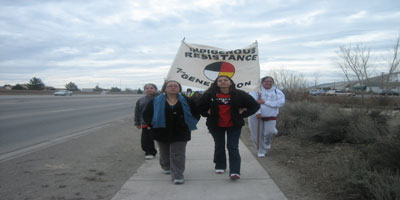
The Longest Walk 2 commemorates the 30th anniversary of the original longest walk while bringing attention to the environmental disharmony of Mother Earth and sacred site issues.

by Mari Villaluna/Indigenous Peoples Media Project

I remember his stories. I remember her stories. I remember my matriarchal stories. I remember my ancestors' stories. I remember the story about Lumang Simbahan (Old Church) in Nasugbu, Batangas. One of my female ancestors forgot her rosary to bring to the Spanish Catholic church that they forced upon my ancestors, and walked back with all her relatives to retrieve the rosary. When they returned to the church, the Spanish burned down more than half of the population inside. A Spanish census said that only 1,000 Tagalogs lived there. Less than 500 Tagalogs survived this attack on their existence. Still to this day, every Friday, people go and light candles and pray upon this sacred site to always remember our ancestors. One of my names is rosary to always remember how my ancestors survived no matter what the colonizers did. I carry this and many other stories with me.

In remembering these stories about my Iroquois and Tagalog ancestors, I have made a decision to walk on the Longest Walk 2. Many reasons have to do with helping, organizing, and doing media for the walk. The main reason is for my descendants. My ancestors were motivated to spark revolution with their oppressors, to make treaties, or to continue their traditional ways because of their descendants. They faced many forced walks. They were removed from their land. They knew they had to figure out and organize better ways for their future generations. I must learn the lessons my ancestors taught so that seven generations from now these stories will continue to be passed down.

The Longest Walk 2 is the 30 year anniversary of a Native American Rights march that happened thirty years ago in 1978. The walk starts in San Francisco, CA and will end on July 11, 2008 in Washington D.C. This walk will call attention to the issues of environmental protection of Mother Earth, and sacred sites.

From February 9-12, 2008 in the San Francisco Bay Area and at D-Q University there will be events surrounding the Longest Walk 2. D-Q University is the home of the Longest Walk, and is the only off-reservation tribal college in the nation. On Monday, February 11, 2008 the Longest Walk will be holding a sunrise ceremony at Alcatraz Island which will be the start of the Longest Walk 2.

In remembering all these stories, I will pass on these new stories that are being created. From when I was little I was told by my father an Iroquois belief, which is always to consider about the impact of the decisions you make on the next seven generations. In seven generations from now, I hope the same stories are being passed down, and that my descendants can say "My ancestors walked on the Longest Walk 2."

Tags

Violence has a long history as a tool of Racism and Ethnic Cleansing

09/24/2021 - 10:42 by Anonymous (not verified)
Original Author
root
Original Body

Race and poverty scholar, Sam Drew reviews Marco Williams' Banished, a documentary exploring the ethnic cleansing that took place in three small Southern towns.

by Sam Drew/ReVieWsFoRtheREvoLuTion

Racism and violence are as American as apple pie. This was painfully evident as I viewed the moving and often disturbing film "Banished" at the San Francisco Public Library.

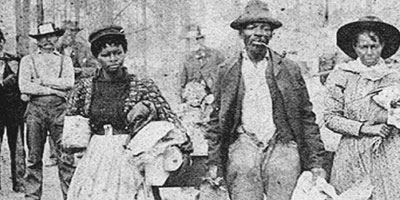
"Banished" documents how three different small Southern towns Foryseth County, Georgia, Pierce City, Missouri and Harrison, Arkansas ethnically cleansed their towns of African-American citizens in the early 1900s. By using violence in combination with the political and legal systems, these all American little towns lynched, killed and physically removed scores of African- American families from their land.

Filmmaker Marco Williams, who himself recalled being chased out of a Boston neighborhood by a mob of angry whites, deftly weaves archival photos in combination with interviews of the decedents of the banished citizens to keep the films narrative compelling and intriguing.

I was often jarred by the juxtaposition between current day Foryseth County, Georgia filled with small town peacefulness and American prosperity compared to the early photos of townspeople filled with violence, hatred and denial of human rights. But this is part of the hidden history that our textbooks have conveniently left out. History that has been banished from our collective minds.

All three of these towns were called sundown towns as in, "N*****, don't let the sun set on you in____" These towns are exclusively white to this date. Some of the films unintentionally funny moments appear when some of the townsfolk are confronted with the truth of their towns' racist past. "Yes, we heard about when the dark Negroes were run out of town!" reminisced one elderly lady with a sincere smile painted on her face like yesterday's makeup.

Another charming moment happens when a corrupt lawyer is confronted about his shameful part in the cheating of African Americans out of their deeds. His face exhibits concern as he disagrees about the harshness of the term ethnic cleansing. The crooked barrister thinks a more politically correct term should be used for the violent purge.

Some of the towns politicians and chamber of commerce types are trying to play slick public relations games and point to new attitudes among their citizens to limit the harm to business interest in the town. But in 1987 hundreds of Forsyth County residents hurled bottles and racial slurs at 75 NAACP marchers challenging the county's sundown status.
Sundown towns are by no means restricted to African-Americans. According to James W. Loewen in his book Lies Across America, "Sometimes Chinese Americans, Mexican Americans, Jews or American Indians have been the victims of sundown policies. Humboldt County, California expelled all its Chinese residents in 1885… Another type of sundown town is more recent. After World War II, new all-white suburbs sprang up around big cities, such as Dearborn, Michigan and Darien, Connecticut two towns notorious for their racial policies."

After the film's screening there was a panel discussion that brought ethnic cleansing up, to date by identifying today's methods to make cities color free. The methods of gentrification ,rents that are unaffordable for poor and working people, criminalization of poverty and youth, redlining, subprime loan thefts and toxic business practices by corporations like Lennar accomplish the same things that lynching and the burning of homes did. One difference is that the modern method you don't have to get your hands dirty.

Banished Will Air on PBS at 10 P.M. on February 19,2008

Tags

The Bayview was their home

09/24/2021 - 10:42 by Anonymous (not verified)
Original Author
root
Original Body

One Bayview Family displaced by Ethnic Cleansing efforts in the Bayview’s Northridge Coops

by Amanda Smiles & Alison Washington/PNN

In the year 2001, when Alison Washington, a single mother of two, moved into her new apartment in Northridge Homes, a housing cooperative located in Bayview Hunter’s Point, she was pointing her compass towards success. A year later she went into business for herself, opening a home based learning center in the downstairs of her apartment. The following year, after the passing of her mother, she transformed her grief into support by starting her own faith based family support service ministry S.O.U.R.C.E., Sisters of Unity Reaching Community Entities, which offered community support services such as toys, backpacks, clothing drives, hot feeding programs, and a local food share program which was operated out of St. James Missionary Baptist Church.

For the next three years Alison cultivated her organization into an essential community resource center, anticipating achieving her Non-profit status forming allies with other Bayview organizations as well as winning sponsorships from larger Bay Area organizations. Alison’s course towards success seemed uninterrupted until, in the fall of 2007, she found herself and her family illegally evicted and homeless - along with being told we have no investment moneies to be returned to us. Where did it go? Is her question!

In 2006 Alison’s home was broken into, with nearly everything stolen and leaving her and her children with close to nothing. Pooling together her resources, Alison managed to resume her life, until 2007, when her home was invaded a second time. Again, they were completely violated . Alison fought to regain the life she had before the break-ins, this time using her meager income to install a home security system, and purchased a dog. The damage was done, however, and Alison began to fall behind in her rent.

After finding herself three months behind in rent Alison was served with an eviction notice and sought help from RADCO Eviction Defense, a rental assistance agency. RADCO agreed to pay Alison’s back rent as well as provide her with a monthly stipend, which would guarantee Alison’s rent in the future. When Alison and RADCO attempted to contact (and pay) her landlord, Office Manager Penny Hall and Assistant Yolanda Newton, they received no response. It wasn’t until the day before Alison’s eviction that Hall and Newton responded to them and rejected Alison’s back rent payments, stating that the eviction would continue. The following day, the Sheriffs arrived at Alison’s house, also trying to advocate for their family, but there was no success. By then, she was given 20 minutes to pack her belongings before being forced out of her home and shuttled a hotel, the first of 15 that Alison has lived in for the next two months after that day.

Alison’s mistake wasn’t falling behind on her rent, however. Instead it was choosing to live in Bayview Hunter’s Point, an area that has been targeted as a high crime community, not to forget very expensive. She also tried to remain in her home thinking changes would come about for the better, but it didn't. They lived in an unsafe/unhealthy unit with many repair work orders, which were never fixed. Leaking windows from the rain resulted into sleeping with mold in the room, wet carpet dripping down through the kitchen ceiling onto the floor. Also broken doors off hinges. These work orders were never completed but we constantly received "Sorry we missed you notices from Maintenance, when they knew on Mondays, there was no one going to be home."

The displacement of poor communities of color does not occur only after housing is built, but is a slow deliberate process that begins years before development. This process, which has systematically wiped out black communities such as the Fillmore, West Oakland, and now New Orleans, occurs in areas where market values are high and land is scare.

“We call it ethnic cleansing, to push people out and not give them anything and no say,” say Willy Radcliff, publisher of the San Francisco Bayview newspaper, “The whole city is pushing people out so rich developers can come in and have wealthy people move in. They squeeze the poor and push them out. It’s happening all over the country.”

There are certain elements involved that are responsible for the assassination of gentrified communities. One of these elements is keeping communities poor, specifically by keeping jobs out of the community while rents increase. In Bayview Hunter’s Point the unemployment rate is at 30% and the city has offered a limited amount of direct services in this area, forcing residents to leave the city in order to survive.

“The jobs have never been up here,” says Radcliff, “There’s a conspiracy to keep jobs out of here so they can get the land. They keep jobs away from black people and if you don’t have a job you can’t live in San Francisco.”

Take the hotly debated T-line for example. Initially the project promised jobs to Bayview residents and was touted as a way to promote employment in the area. When ground broke, however, no neighborhood faces were seen working on the line. Instead, in an area that is primarily black, the majority of the construction workers were white.

Jobs weren’t the only sacrifice Bayview residents made for the line. In exchange for the T-line Bayview residents gave up the 15-bus line, which ran every 15 minutes in and out of the Bayview. The T-line runs chaotically and some residents have experienced waits up to three hours, leaving them stranded without a dependable way to get to work or school.

“I think cutting off the service to that area is a way to strangle the existing community,” says Laure McElroy, a former Bayview resident, “Once they get the people out of there they want then service will get better.”

Violence also plays a crucial role in the displacement of communities, where developers have residents trapped on all fronts. Violence feeds violence and whole communities are killing each other off in desperate and ill-fated attempts to negotiate the poverty in their area. For those families who do manage to survive the violence in the Bayview, moving out of the area is the only option to stay alive. Mass media plays a role in advertising sensationalized numbers about the killings and shootings in the Bayview, ensuring that, while families move out seeking sanctuary elsewhere, no one else moves in until the district is thoroughly “cleaned up”.

Alison and her family was a direct victim of this type of violence when her 22-year-old son was shot at late one night. There was no clear reason why, only that her son and his friend were not dealing drugs. After the shooting and eviction, the family was supported through Victim Services, which has bent over backwards to help Alison in her search for housing.

Alison’s eviction has taken its toll on her and her family, physically, mentally, and emotionally. Alison has been in and out of the hospital due to stress related illnesses and her 10-year-old daughter has undergone trauma that has caused her to miss quite a bit of school. The transitional housing shelter system has been very accommodating by placing her daughter, son, dog, and herself in doors with a one-bedroom apartment.

“I’m reliving these incidents every single day as I press forward and support others through their times of grief and discomfort, even in my homelessness,” she says, her voice cracking under the weight of her story, “When is it going to come to the time of living like a normal family again? As a mom, going back to work, to school, and happy.” We stumble upon challenges daily, and everyone deserves a chance get back up. As I, a “Woman of Faith” have and will always continue to travel with the “Armour of God” my hope is to encourage you all that there is hope at the end of all storms!” So many families have lost their strength to go on.”

Alison’s search for housing has been much like her shelter experience. Alison, who refuses to separate her family, is constantly being faced with housing offers that are not adequate for a three-person family, and who's willing to accept a service animal. The shelter and housing system, which are grounded in the Western notion that adulthood equals independence, has been very accommodating to Alison’s family’s needs, but now as time is running out of this dwelling space, it’s leaving them virtually homeless, as they were in the beginning.

“We are temporarily housed at in a shelter and we thank them from the bottom of our hearts,” she concludes, “But we are due to exit in a couple of days and we have no where else to go.”
Unjust evictions and homelessness has to cease, especially when the individuals are trying to make a difference somehow!

Alison would like to thank the following organizations that have supported her through her struggle: S.O.U.R.C.E. Volunteers, City & County of San Francisco Daly City Krispy Kreme Donuts, Dept. of Human Services, City & County of San Francisco Neighborhood Services, City & County of San Francisco District Attorney's Office, City of San Bruno Marine Corps, Clear Channel Radio 98.1 KISS FM, Darlene's Fabrics, Homeless Prenatal Program, Poor Magazine, RADCO Eviction Defense, Safeway Stores, S.F. Sheriffs Office, S.F.P.D./Operation Dream, Shelter Network, St. James M.B. Church

Alison has recently learned that she and her family must move out of the shelter they are staying in this Thursday. They have nowhere to go, if you can help in any way please call 415.863.6306.

Tags

Workforce Apartheid

09/24/2021 - 10:42 by Anonymous (not verified)
Original Author
root
Original Body

by Tony Robles/PNN

Who gets access to decent jobs and how are folks intentionally excluded from opportunity ? I am constantly asking myself these questions as I work in my capacity as employment counselor for a non-profit organization based in San Francisco. The organization prides itself on uplifting people from homelessness and ending joblessness. I have been working since the age of 16.

A few years ago, I worked at an insurance company. I sat in front of a computer taking calls and sneaking in an occasional poem. I quickly became disenchanted with the complacency of my coworkers. While others were outside fighting for housing rights and against gentrification, my coworkers were sitting at desks eating donuts, sending emails containing long-winded jokes and talking about whom they thought would be the winner of American Idol.

One day the owner of the insurance brokerage decided to walk through the office. I was, as usual, surfing the Internet, daydreaming and writing poetry. He would stop by and make small talk. He was a nice fellow—an Asian Indian man who wore an impressive array of turbans in a variety of colors. Those colors were turquoise and maroon and blue—the colors you’d see on a ’57 Chevy Belair.

As soon as I eyed that turban I adjusted my headset and mouthpiece and when he approached I pretended to engage in a conversation with a client—complete with the “yes sirs” and “No sirs” and “No…thank you so much for calling”. The owner walked by and I went back to my poems and daydreams.

Shortly after I learned that the owner had gotten free tickets for a trip to Africa. This was not uncommon. He received many complimentary items including tickets to the Super Bowl among other things. A major life insurance company that had a long relationship with the brokerage provided the tickets.

The brokerage had employed a number of African-Americans, mainly in clerical positions such as myself, as well as a small number in the capacity of selling policies. Most of the brothers and sisters who were employed at the brokerage were younger. I thought, what a great opportunity for them to visit Africa--should the owner make the offer.

Predictably, he never made that offer. I don’t know if it even crept into his consciousness radar. He extended the tickets to the general sales manager and his fiancée who were making big money. Missed opportunity. The owner and the general sales manager and a couple others from the brokerage spent a week in Africa. When they returned I overheard them comment that people were so poor in that part of the world and that they didn’t have this and didn’t have that. Did they not see anything else?

I thought about the young brothers and sisters working in that place who could have really gained something from a trip like that. .

I have moved on to work in the non-profit world. Same story—lots of brothers living in Single Room Occupancy ( SRO) Hotels and many of them are dependent on something—GA, Workfare—not to mention other things. It is my job to help train them for jobs and to reorient them to the world of work. But what we really do is keep the brothers and sisters in a subservient situation where they do not rise above their situation.

The brothers and sisters come to us for housing and jobs but then what? The non-profit organization is dependent upon the numbers of these brothers and sisters to maintain their funding. We get them jobs as janitors and maintenance people but when it comes to rising up within the organization, it’s hard to get the opportunity.

I tried assisting a 56 year old African-American man in applying for a job as a supportive services case manager in a residential hotel in the Tenderloin. The man lives on GA and I had worked with him when I worked as a tenant organizer for another supportive housing non-profit. He a mature, responsible individual who would be a great case manager. I forwarded his resume to the appropriate department. I followed up the following week on the status. I was told that while they were impressed with his resume, they were not going to interview him because he did not have 3 years case manager experience.

This man had been homeless and had lived in the shelters. He knew the resources and organizations that work with houseless people. He has been without and has survived as a poverty scholar, knowing the system but not letting it beat him into submission. Is this man not qualified to earn a fairly decent salary? Is he not worthy of obtaining a position that oftentimes seems reserved for white 20 somethings who come to San Francisco filled with agendas and a craving for burritos and Thai food? This man can be contributing something to his community…I repeat, his community. He is an African descendent man who is native to San Francisco with a wealth of knowledge. Again, his poverty scholarship and knowledge are a treasure but society just throws it away..

I intend to take up this issue of 3 years experience with the human resources department as soon as possible.

Just like the young brothers and sisters who weren’t even considered for a trip to see Africa, our people are not on the agenda. These non-profits put our people on the agenda as long as our people provide bodies that equate to numbers that justify their further funding. This is the justification for funneling people through the system but not allowing them to rise above it.

I want compensation for the lives that are going to waste. I want compensation for those youngsters that didn’t get a chance to go to Africa and compensation for those youngsters who didn’t get an opportunity to become adults. I want compensation for the brothers and sisters that are dying on our streets and compensation for the decimation of our black community in San Francisco.

I no longer work at that insurance company. In addition to my other non-profit job I am also working with POOR Magazine—an organization that stands for something. My father said that the problem with society is that nobody wants to give up anything. POOR Magazine gives its time and resources—but more importantly its heart and spirit to those without hope. It gives those things freely and constantly—the things that really count. I’ll never go back to insurance.

© 2008 Tony Robles

Tags

Krip-Hop News Interviews Kathleen Kiley

09/24/2021 - 10:42 by Anonymous (not verified)
Original Author
root
Original Body

Leroy Moore interviews the filmmaker of “Half a Soulja”

by Leroy Moore

Krip-Hop: Hello Kathleen, we met online then later in New York. You’re a journalist and a filmmaker. Tell us about your work and this documentary.

Kathleen Kiley:I’ve been a journalist for 17 years and when I started this project in graduate school several years ago, I was interested in telling a story using a visual medium. One of the courses I had taken at New York University was digital filmmaking. As a writer and print journalist, it wasn’t easy for me to learn how to tell a story in pictures, but the experience has been very fulfilling. I had no prior documentary film experience.

KH This documentary started out as a project for your graduate degree. How did it evolve to what it is today?

KK:

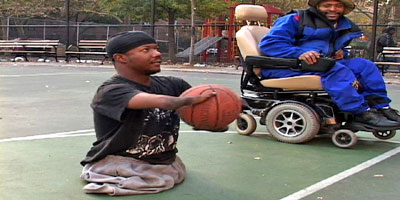
My writers’ group Urban Myth, of which I’ve been a member for over 10 years, came up with the idea of showing short films at Tribeca Film Center in New York City in 2001. At the time, I was working on the Soulja project at school and this pushed me to create a short film. I got very positive feedback at the screening; viewers wanted to know more about Soulja, whose real name is Bryon Breeze, Jr. I never imagined it would have taken several years to complete, but when you’re dealing with a person’s life and all of its twists and turns, a documentary can take a long time.

KH: When you saw Soulja on the street in his wheelchair for the first time what did you think?

KK: Not knowing Soulja as I do now, it was hard to look at him – because he was so different looking – and because I assumed he had a hard life. I wondered what would happen to him. My feelings weren’t of pity, but I found it incredible, and still do, that in the United States -- one of the wealthiest countries in the world -- we have people like Soulja struggling to make ends meet by panhandling – he calls it “work.” That’s a tough way to make a living, no matter what you call it.

KH: Describe Soulja, his work, his passion and why his story is good for the big screen.

KK:Soulja gets up early in the morning and is often on the corner of 60th and Madison, in mid-town Manhattan, by 6 a.m. He hates traffic. When he isn’t driving, he commutes by bus and train – about a 2-hour commute each way – that’s if there are no delays on mass transit and the subway elevators are working in New York. If one elevator is broken down, a person in a wheelchair has to get back on the subway and go to another stop, way out of his or her way.

What drives Soulja is a desire for a better life and the vehicle he’s chosen is music. He comes from a line of musicians and artists. His father was a gospel signer and his grandmother taught piano to many gospel singers throughout her life. On his mother’s side are teachers, which I think is where he gets his interest in speaking to children and motivating them to achieve their dreams.

Why do I think this is a good story for the “big screen?” Good question. I think his story has all the elements of a good story: a passionate desire to achieve on a road beset with obstacles. He’s a contemporary hero that the audience will end up cheering for as he overcomes obstacles, many of which are imposed by society and the system. I think many people can relate to him.

KH: Was this your first time working with a person with a disability?

KK: Yes.

KH: As an older, White, non-disabled woman, how did you connect with Soulja, Hip-Hop and his disability?

KK: I think in the beginning – from the outside – it probably looked like an odd relationship. I use that term because you do develop a relationship with your characters, hopefully a good one and trusting one. I look back and laugh because Soulja would mention rappers, such as DMX and 50 Cent, and I would say, “Who?”

And he would say, “You don’t know them?” -- as if to say, what planet was I living on? Now I know about many of the rappers and what’s going on in the industry. (But I’m pretty old school; I’m a fan of Grandmaster Flash. Great lyrics and social commentary.) So although I didn’t know Soulja’s world in the beginning and I’m a white, non-disabled woman, I did connect with him. When I first met him he said, “Until you open the book and read the first chapter, you be you and I be I.”

We make judgments based on a book cover or image. And this story is about breaking perceptions and being visible. Often visibility is based on what those in power see at the time, whether it’s political, financial or cultural power. Soulja’s story is about shattering the rules of visibility.

I don’t know if I connected with Soulja’s disability. I can never image what it’s like to be born without all the features that make an “able-bodied person” able or that allow us to function in a world designed for “able-bodied people.”

I don’t know if I’m oversimplifying a complex subject, but I relate to Soulja as I would any person I like. He’s charming, he has a lot of drive and he is curious about the world.

Looking back, perhaps I was more comfortable with Soulja than some people might have been. I grew up with a grandmother who was deaf and her son, who lived with her, was in a wheelchair all his life. Deaf and disabled was not how I perceived them – they were simply people I loved and enjoyed spending time with.

KH: This documentary has been in the making for seven years. How did you keep it going and do you think it is a good time to release it?

KK: I’ve financed the project to date. Last year, Nancy Abraham, president of the Alexander Abraham Foundation, provided me with an injection of funds. It was good timing because I needed the funds to finance shooting the end of the film. Also, Michael Patrick Kelly, the producer on the film, come on board about 2 years ago, and he’s put in considerable time without pay. In addition, Barbara Morris, a co-producer along with myself, ran around with me in the beginning to film some of the early portions. Barbara also gave me funding last year and helps me with marketing.

We’re at a good point to put together a work-in-progress so we can show it to the likes of HBO or a film distributor. HBO has expressed interest in the film so we’re putting together something and getting ready for the IFP market in September, an invitation-only event that brings together filmmakers and producers.

KH: Do you think your film will break new ground in the area of the film and music industries?

KK: Well, look at what you’re doing with your Krip-Hop work. I think that is groundbreaking work, bringing together singers and musicians who are disabled. In the same way, I think this film will shatter misconceptions about people who are disabled and the abundance of talent that isn’t heard because the barriers to entry are high – I’m talking about national distribution.

KH: Tell us what is Soulja’s biggest goal right now?

KK: Getting his music ready to present to Quincy Jones. When he went to Georgia in 2006 to go to a Tony Robbins event, he was brought up on stage and one of the things Tony promised him was a meeting with Jones. So this could be a career maker for Soulja and his artists.

KH: When is the movie coming out?

KK: End of this year, given that we get distribution.

KH: If you can say in one sentence the theme of the movie what would it be?

KK:“Born with a design to fail, we prevail.” – Soulja
I think Soulja summed it up for me recently with his quote.

KH: What have you learned from doing this documentary?

KK: I’ve learned so much from filmmaking and I still have a long way to go. And I’ve also begun to understand the issues surrounding people with disabilities. And I’ve just scratched the surface on this subject as well.

KH: Did you run into any negativity in your suggestion of having a person with a real disability being the star of the movie?

KK: None yet. We’re just starting to see people with real disabilities play roles in movies, rather than have an actor “fake it.” And because this is a documentary, these are real people with disabilities in this film.

KH: After the film is out there, will you keep in contact with Soulja?

KK: Absolutely. We’ve become friends over the years.

KH: Who’s the target audience and how are you going to reach them?

KK: I’d like to say it has universal appeal to all age groups and demographics, but I know industry executives will hammer me for a core group. I think the HBO crowd and urban theatergoers, as well as younger people who are interested in new music. I would like to get a major distributor behind this film, which will help with visibility. We’ve been lucky with getting press without asking and I’m not pushing for it until we’re close to completion.

KH: What do you think about the representation of people with disabilities in the movies and Hip-Hop industry?

KK: Leroy, you seem to be working to change people’s perception in the Hip-Hop industry of disabled musicians. Kudos.

In the film industry there is some interest in positively or, shall I say wholly, representing people with disabilities, especially in documentaries like “Murderball” and “The Collector of Bedford Street.” The first is about athletes in wheelchairs and the second about mental disability. But, by and large, we have a long way to go in that area, especially in understanding the disabled as whole people, or fully-rounded characters, with all the virtues and flaws of others, not just as symbols of inspiration for able-bodied people to use to feel better.

The word “disability” covers a lot of ground. There’s a good web site with listings of all kinds of films with disabled characters: www.disabilityfilms.co.uk.

KH: How many characters are in this movie?

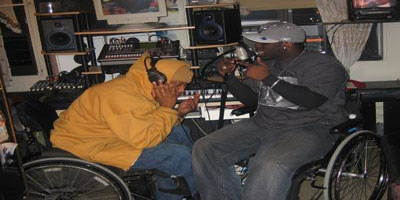
KK:There are many, because Soulja knows so many people, but the story centers around four main characters, including Soulja. When I first met Soulja, he wanted to bring together the Urban Casualties, three rappers who are handicapped. They all met in Washington, D.C. and when Soulja moved to New York to create a better life and work in the music industry, two of the Casualties remained in D.C. Wild and Cookie, have had their share of troubles, and so it’s taken this long to get everyone on the same page. Soulja was the motivating force behind it: He knew if he didn’t push for it, despite all the difficulties going on in their lives, it might never happen. So he rented a van and drove down to DC to bring them up to New York, where they recorded five songs in a professional studio this past October.

KH: Will there be a soundtrack?

KK: Yes. There are so many wonderful singers and musicians who don’t know how to break into the industry. I think this film will highlight some new and up-coming talent.

KH: Tell us one of the highs and lows of shooting this documentary.

KK: One of the highs was seeing Soulja bring together the Casualties. It was dramatic because it was a great reunion and it gave them such hope to keep going. There’s a song they sing -- “Tomorrow Ain’t Promised to Ya” -- and in their world, they have a sense of that. They’ve seen so many of their peers die young, mostly from violence, and so they know tomorrow is but a dream.

I think one of my low points was when I got sick in December of 2006 – I’m better now – I knew we were filming the end of the film in 2007 and I wondered how long it would take for me to get better and whether I would have the energy to follow through. Glad to report I did.

KH: How much input did Soulja have in the direction of the movie?

KK: We gave Soulja a camera to record his point of view. He has a good eye and it’s interesting to see what he shoots and how he sees the world. So this will influence how we edit the film, which we’re now in the process of doing.

KH: How did assemble your film crew? And how did they react to Soulja?

KK: We never had a problem getting people interested in this film. When we’ve put out a query for shooters and editors, we’re often swamped with replies. We pay them, but it’s not a lot of money.

KH: What kind of support did you receive and by who?

KK: I’ve been lucky in getting a producer, Michael Kelly, who wouldn’t take any pay. And again, I’ve had some good filmmakers, such as Michel Negroponte, shoot some segments, at rock bottom rates, or they didn’t charge at all. I have to add that working in the documentary community has been a wonderful experience – very supportive.

KH: Are you going to do another documentary and is there going to be a part two?

KK: I don’t know about another one. I hear the first one is easy because you’re so naïve about the process. I like filmmaking. If this one were successful, I would think about another one, especially if another good story comes my way.

Krip-Hop News: Any last words?

Kathleen Kiley: Thank you for your interest in this film and I love how this film has connected me to people I would have never met, such as yourself.

A Krip-Hop book featuring this interview and more will be out in November 2008.

Tags

Hip-Hop Artists with Disabilities Drop Knowledge

09/24/2021 - 10:42 by Anonymous (not verified)
Original Author
root
Original Body

Leroy Moore previews his upcoming publication, which will feature the interviews and photos of disabled hip-hop artists from across the world.

by Leroy Moore

BOOK SUMMARY:

Krip-Hop: Hip-Hop Artists with Disabilities Drop Knowledge will be a book of interviews Leroy has conducted with Hip-Hop artists all over the world with pictures of the artists. It will also contain a collection of essays on the topic of Hip-Hop industry and artists with disabilities that have appeared on websites and in Black newspapers. At the end of the book there will be resource pages of different merchandise, websites and contacts of disabled Hip-Hop artists. Krip-Hop will be one hundred and fifty pages and will be completed by the Winter of 2008. Krip-Hop will be the first of its kind and will bring a voice that has been left out from the hip-hop arena and the publishing world. Krip-Hop will also add to the growing industry of Hip-Hop Journalism Krip-Hop will have 5 chapters: The Birth of Krip-Hop, Krip-Hop Goes International, Krip-Hop Trivia, Krip-Hop Journalism and Krip-Hop resources.

OVERVIEW:

Krip-Hop: Hip-Hop Artists with Disabilities Drop Knowledge will be the first of its kind! It will bring the words, rhythm, voice and politics of disabled Hip-Hop artists from around the world into one book. This book is the continuation of Krip-Hop Mixtape Series that started in 2006 and has put out two mixtapes so far. Leroy Moore has spent more then ten years researching music history when it comes to musicians with disabilities from blind Blues singers of the Blues era to Hip-Hop artists with disabilities from the US all the way to Africa. In the new age of technology and the internet, Leroy has used this technology to connect with disabled musicians from all over the world, collected CDs, DVDs, books and other merchandize from disabled musicians that many times can’t be found in book or record stores yet. All the artists have a common story of being rejected from the music and publishing world. Leroy lets the artists flow in his interviews that he started to do over the internet in 2006. These collections of interviews and essays shows that Krip-Hop is a movement that has always been there but not recognized by mainstream Hip-Hop industry but has been spreading fast through the underground.

Krip-Hop Projects from Mixtape Series, Krip-Hop Newsletter, and Krip-Hop Radio show to this new book venture is trying to educate the music industry and our general public that musicians with disabilities have been around and are making history. This book also breaks the common myth in the music industry that musicians with disabilities are not marketable. Krip-Hop: Hip-Hop Artists with Disabilities Drop Knowledge can and should be used as an educational tool for the music industry, journalism and the disabled community.

ABOUT THE AUTHOR

Leroy Moore is a disabled journalist who started Krip-Hop Mixtape series. He has lectured on race and disability in the US, UK, Holland and Canada and has a column on Poor Magazine and Hip-Hop Journalism Association websites. His media works includes radio shows on San Francisco progressive stations KPFA 94.1 FM KPOO 89.5 FM and Bayview Village Voice 104 FM programs. Leroy has created Black Blind Blues Krip-Hop workshops for youth and adults and has a library of rare CDs and DVDs from disabled musicians from all over the world.

For more info go to www.leroymoore.com drop me a line at sfdamo@yahoo.com Look out for Krip-Hop.com website and our short documentary.

Tags