Story Archives

Indifferent Institutions

09/24/2021 - 10:42 by Anonymous (not verified)
Original Author
root
Original Body

One woman's struggle for justice in a sexual assault case at City College in San Francisco

by Sam Drew/PNN

I tried to make my voice sound as upbeat, pleasant and non-threatening as I possibly could when I asked a San Francisco City College official about the college's handling of a recent sexual assault case. The response was measured and bureaucratically remote as representative of Affirmative Action icily explained, "That's a police matter you’ll have to get in touch with them."

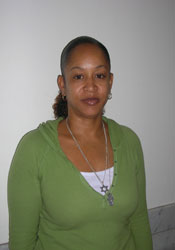
I decided to call City College after meeting with Sandra Thomsen, a former student whose life was turned upside down after she reported an attempted sexual assault by a teacher. Instead of receiving care and respect, she was made a pariah for protesting the way her case was being handled by the school.

I made a second call to the office of the dean. This time the official said that if a student disagrees with the college’s findings they have the right to file a complaint. He went on to let me know about the improvements that have been made to assist students who report sexual assault. But when I asked him about Sandra's case his openness changed as he quickly responded, "I can't comment on that case."

Well, I can comment on her case. Sandra's problems began while she was working to acquire her AA degree in Criminal Justice. "I wanted to get a degree in Criminal Justice to inspire the youth," she said.

"I was weak in Geometry so a math teacher offered to tutor me," she continued, "He said we would have to go back to his place to study...that is where he attempted to rape me." Her eyes filled with sadness and rage as she remembered how she was treated after reporting the attempted assault

"I reported the incident to Affirmative Action and then I went to the Chancellor, later they sent me a letter saying that they hired an investigator but they couldn’t substantiate my charges," she said.

Sandra still keeps the letter with her other papers about the case. But this denial of justice only spurred Sandra on to push harder for the truth. Due to her complaints to the Chancellor’s Office, Sandra was put on disciplinary probation, and eventually was suspended indefinitely for speaking out at a meeting of the Chancellors.

Despite each of these setbacks, Sandra is still positive about her case. She has always been a champion of the underdog and dispossessed. Her passion for the neglected was born out of her own hardships.

"I have a past, I came out of the Foster Care System and later got into juvenile hall...I then got involved with gangs [and] spent six years at Chowchilla Prison for involuntary manslaughter. I didn’t do it but I was convinced to take a polygraph test. I was young and wasn’t educated about my civil rights, But I've changed my life," she said passionately. Sandra was scheduled to graduate in the Spring of 2008 with a high G.P.A. before she was suspended.

Sandra is not just thinking about her own case, but also the many other women facing similar hardships. "A lot of other students on campus mention that instructors have done this to them too, but there is no support for students on campus," she said.

According to the 1992 study, Rape in America by the National Victim Center in Virginia, "College age women, 18-24 years old, are more likely to be raped than at any other time in their adult life...many women do not come forward because they feel embarrassed or wrongly blame themselves."

Without a victim friendly reporting system and sensitive and caring administrations, those brave enough, like Sandra, to report sex crimes will continue to suffer as victims of an overloaded bureaucratic monster.

"Sandra's indifferent treatment by the administration is the reason why on campus student run organizations like the Betty Shabazz Family Resource Center, the Multicultural Students Organization and OurStories Club are so important, because they actually understand the needs and serve students like Sandra who need support" said Tiny co-founder of POOR Magazine and former student at City College.

Although Sandra has found support in other organizations and community members, she is still fighting for the right to be heard as a victim and demanding justice in her case.

Sam Drew is a poverty scholar and staff writer at POOR Magazine for more of his powerful work go on-line to www.poormagazine.org. To support Sandra please call POOR Magazine at (415) 863-6306

Tags

Don't Run/No Corra-Una campana educativa de emergencia

09/24/2021 - 10:42 by Anonymous (not verified)
Original Author
root
Original Body

Este articulo es el comienzo de Don't Run/No Corra una campana educativa cuyos lideres son los del proyecto Voces De Inmigrantes en Resistencia de la Prensa POBRE (POOR Magazine, en ingles) que esta respondiendo a los incrementos drasticos del criminalizar de comunidades migrantes/inmigrantes locales y nacionales.

This article is the beginning of the Don't Run/No Corra public education campaign led by the Voces De Inmigrantes en Resistencia Project of POOR Magazine in response to the drastic increase of the criminalization of migrant/immigrant communities locally and nationally.

Este articulo es el comienzo de Don't Run/No Corra una campana educativa cuyos lideres son los del proyecto Voces De Inmigrantes en Resistencia de la Prensa POBRE (POOR Magazine, en ingles) que esta respondiendo a los incrementos drasticos del criminalizar de comunidades migrantes/inmigrantes locales y nacionales.

This article is the beginning of the Don't Run/No Corra public education campaign led by the Voces De Inmigrantes en Resistencia Project of POOR Magazine in response to the drastic increase of the criminalization of migrant/immigrant communities locally and nationally.


by Guillermo Gonzalez/Voces de Inmigrantes en Resistencia

For English scroll down

Mi familia y yo estamos en EEUU ahora, precisamente en la area de la Bahia, anos despues de nuestro arduo viaje desde El Salvador, para perseguir el supuesto Sueno Norteamericano. Tengo 25 anos. Estoy en la escuela para ser un maestro y ala vez trabajando con POOR Magazine como un escritor del personal y maestro del proyecto Voces de Inmigrantes, que le ensena periodismo y organizar a monolingnes obreros inmigrantes de bajo ingreso.

En todas partes de mi vida trabajo para devolverle algo a mi comunidad. Mis maestros en la Universidad me predican sobre como debo dar las gracias a este pais por darme el permiso de estar aqui. Me dice que este pais es tan bueno hacia mi por darme una visa estudiantil. Pero el sentido de aprecio es dificil tener ahora por el hecho de la recien crecida de correriras de trabajadores pobres, estudiantes y familias por toda la area de la bahia, que curiosamente empezaron antes de las marchas del Dia Internacional Del Obrero 1ro de mayo en honor de todos los trabajadores y en solidaridad con la lucha de los obreros inmigrantes

"Estas correrias son como un acto brutal de venganza y criminilizacion por ICE hacia los inmigrantes por marchar el 1ro de mayo" dijo Tiny, periodista y editora social de POOR Magazine/PoorNewsNetwork, y autora de Criminal de la pobreza: Criandose sin Hogar en America.

Empezando con las correrias de una cadena be bien conocidas taquerillas, con localidades desde San Jose a San Francisco, con el asusto hacia los padres en la escuela primaria Oakhurst en el Este de Oakland, culminando en una correira en la escuela secundaria Berkeley, esta semana pasada ha causado inmigrantes ha vivir en terror, aunque muchas de estas ciudades son "ciudades santuarias."

El asunto es que no estoy preocupado sobre le que me va a pasar en cuanto se venza mi visa, porque se lo que agencies como ICE me pueden o no me puedan hacer si alguna vez me enfrentan. Reconozco mis derechos civiles y libertades aun no siendo ciudadano estadounidense. El problema es que no soy el objetivo de agencies de inmigracion, porque saben que nosotros aprendemos en la escuela sobre cuales son nuestros derechos, no, ellos despiadadamente perjudican a los trabajadores migrantes que no tiene defensa cognitiva en contra los enfrentamientos agresivos y tactiles hostiles.

Desde que empezaron estas correiras mas y mas, toda mi familia vive en temor que un dia un agente los enfrentar y seguramente los deportara. Despues que haremos? Mi familia, tanto como muchas familias inmigrantes, ni pueden funcionar economicamente sino es que todos juntos estemos trabajando para sobrevivir. Si mi papa o mi mama son deportados, Quien triara las ganancias hacia casa para apoyar a mis hermanos y a mi? Quien los dara de comer, dar un hogar, protegernos? pa que servir� mi visa estudiantil? La realidad que se asentar� es que mi hermano mayor y yo no dejareamos que destruyeran a nuestra familia. Encontrarnamos una manera de hacer suficiente dinero para mantener a nuestros hermanos, y hay que ser realistas no es tan sencillo como para que un inmigrante sin una educacion pueda ponerse un traje, caminar hacia Wall St. y encontrar un trabajo. Estareamos forzados a cometer crimines para sostenernos, asi perpetuando el ciclo y los esteriotipas que perjudican nuestra comunidad.

Para todo problema hay solucion. En este caso es la educacion. Como una comunidad tanto de inmigrantes y ciudadanos consientes, es urgente que trabajemos juntos para informar a la comunidad inmigrante sobre sus derechos. El hecho es que cuando enfrentado por un agente de inmigracion la �nica cosa que uno debe proveerle a ICE es su nombre, nada mas. Si el agente de ICE empieza a interrogarlo a uno sobre su direccion a domicilio, o la fuente de ingresos, o aun si preguntan por documentos de inmigracion (si un es documentado), todo lo que tiene que decir uno es que desean irse. Tenemos el derecho para declarar la quinta enmienda (the Fifth Amendment) a cualquier pregunta acerca de nuestro estatus legal en este pais. La cosa mas importante en recordarse cuando enfrentado por un agente, uno no debe ponerse panico, y pase lo que pase uno no debe coger. Ninguna agencia gubernameltan puede de fuerzas entrar a una propiedad privada sin un permiso. Si en cualquier momento un oficial de la ley, desea entrar un lugar de residencia o negocio, uno tiene derecho a demandar que se marchen y regresen solo si tienen un permiso.

Estos son nuestros derechos como residentes en esta nacion, tantos ciudadanos, y inmigrantes, el gobierno no tiene derecho ha infringir estos derechos. Asi es que, el verdadero Sueno Americano es la realizacion de nuestros derechos del constituto.

Guillermo Gonzales es reportero con la Red de PrenzaPobre y un maestro y facilidor-escritor con el proyecto de Las Voces de Inmigrantes en Resistencia. En la revista POBRE, que ensena periodismo, organizar de medios de comunicacion, y provee el acceso para las voces de obreros migrantes monolingnes de bajo ingreso en la area de la bahia

La campana educativa Don't Run/No Corra es patrocinada por POOR Magazine/Prensa Pobre, La Raza Centro Legal/ SF Day Labor Program,Mujeres Unidas y Activas, SF/LCLAA,Contra Costa Municipal I.D. Task Force,Concilio Latino,Contra Costa Faith Works. Si quisiera copatronzinar favor de comunicarse a deeandtiny@poormagazine.org

Oprima aqui para mantener el volante de Don't Run/No Corra folleto. (en ingles y espanol)

Oprima aqui para mantener el folleto Luchando Por Justicia (inSpanish) (in English)(en ingles y espanol)


The Article in English

My family and I are in the US now, the Bay Area to be exact, years after our arduous journey from El Salvador, to pursue the so-called American Dream. I am 25 years old. I am in college to become a teacher while also working with POOR Magazine as a staff writer and teacher of the Voces de Inmigrantes project, which teaches journalism and organizing to mono-lingual low-income immigrant workers.

In all parts of my life I work to give back to my community. My teachers in college preach to me about how I should express my gratitude to this country for allowing me to be here. They say that this country is so good to me for giving me a student's visa. But the feeling of gratitude is difficult to have right now as I hear about the recent spate of raids on poor workers, students and families all over the Bay Area that oddly enough began right before the May 1st International Workers Day marches in honor of all workers and in solidarity with the struggle of immigrant workers.

"I think it is very strategic that all of these ICE raids happened right before and after the May 1st marches," said Cesar Cruz, teacher, activist and author of Revenge of the Illegal Alien. I spoke with Cesar after I heard about the families who were afraid to pick up their children from an elementary school because they were warned by the school's principal that there were ICE trucks parked up and down the block in front of Oakhurst elementary school in East Oakland

"These raids seem like a brutal act of retaliation and criminalization by ICE to immigrants for marching on May 1st," said Tiny, journalist and co-editor of POOR Magazine/PoorNewsNetwork, and author of Criminal of Poverty: growing up homeless in America.

Beginning with a raid on a well-known Taqueria chain (El Balazo) with branches located from San Jose to San Francisco to the scare on the parents at Oakhurst Elementary school culminating in a raid on Berkeley High School, this last week has caused immigrants to live in terror, even though many of these cities are "sanctuary cities."

The fact of the matter is that I am not worried about what happens to me after my visa expires, because I know what agencies such as ICE can and cannot do if they would ever confront me. I am aware of my civil rights and liberties even though I am not a US citizen. The problem is, immigration agencies don't target students like me, for they know that we learn what our rights are at school, no, they ruthlessly target the migrant workers who have no cognitive defense against the aggressive confrontations and hostile tactics.

Ever since these immigration raids have been happening more and more, my entire family lives in fear that one day an agent will confront them and surely enough deport them. Then what will we do? My family, just like many immigrant families, cannot function financially unless we are all working together to survive. If either my father or my mother get deported, who will bring the money into the household to support my siblings and I? Who will feed us, shelter us, protect us? What good will my student visa be then? The reality that would set in is that my older brother and I would refuse to see our family be destroyed. We would find a way to make enough money to shelter and feed our siblings, and let's face it, it's not like any immigrant with no education can just put a suit on and go to wall street and get a job. We would be forced to turn to crime to make ends meet, thus perpetuating the ongoing cycle and stereotype that plagues our community. This happens all to often to families just like mine. Families that get dismantled because immigration takes one of our members away.

To every problem, there is a solution. In this case it is education. As a community of immigrants and conscious citizens alike it is urgent that we all work to inform the immigrant community about their rights. The fact is that when confronted by an Immigration agent, the only thing that one must provide to ICE is a first name, nothing else. If the ICE agent starts interrogating about an address of residency or a source of income, or even if they ask for immigration papers, all one must say is that they wish to leave. We have the right to plead the fifth amendment to any questions regarding our legal status in this country. The most important thing to remember is that when confronted by an agent, one must not panic and no matter what happens one must not run. No government agency can forcefully enter private property without a warrant. If ever any law enforcement official wishes to enter a place of residency or of business, one has the right to demand that they leave and return only if they have a warrant.

These are our rights as residents of this nation, citizens and immigrants alike, the government does not have the right to infringe on these rights. So perhaps the real American Dream lies in the realization of our constitutional rights.

Guillermo is a reporter with PoorNewsNetwork and a teacher and writer facilitator with The Voces De Inmigrantes en Resistencia Project (Voices of immigrants in resistance) at POOR Magazine, which teaches journalism, media organizing and provides media access for the voices of low-income, migrant workers in the Bay Area.

The Don't Run/No Corra public education campaign is co-sponsored by POOR Magazine/Prensa Pobre, La Raza Centro Legal / SF Day Labor Program, Mujeres Unidas y Activas,SF/LCLAA,Contra Costa Municipal I.D. Task Force,Concilio Latino,Contra Costa Faith Works, Justice Matters. If you would like to become a co-sponsor please email deeandtiny@poormagazine.org

Click here to download the Don't Run/No Corra flyer. (in English and Spanish).

Click here to download Luchando Por Justicia leaflet (in Spanish) (in English)

Tags

A Real Life Rocky

09/24/2021 - 10:42 by Anonymous (not verified)
Original Author
root
Original Body

Stories from the worker front.

by Tony Robles/Special to PNN

I sit at my desk watching the rain fall against the window. Just a few minutes ago I saw a man wrapped in a suit made of garbage bags. The man even fashioned a stylish looking hat made of those bags. I look out at the scene below the office here at 1095 Market Street while the sirens blare in the distance. A lot of people are hurting; a lot of people are suffering right now. I wonder where some of them slept last night. I wonder if some of them slept at all. In all honesty, I sometimes wonder what good I am doing in this job as employment counselor. I sometimes ask myself, "What the hell am I doing here?" I sometimes feel like a guy whose sleepwalking in some kind of mist, haphazardly looking for something to grab onto.

As I sit I hear a voice.

"Hey Tony...what�s happening mane�?"

I look and see the smiling face of Roger Rodriguez-Ispuria, tenant at the Hamlin. Roger is one of those guys who are always smiling. He is a graduate of the Maintenance Work Crew Program. He comes in looking sharp as always�silk shirt the color of butterscotch candy with matching shoes and slacks.

"What�s happening Roger?" I ask.

Roger smiles, his eyes radiating through thick glasses.

"You know...the same old thing."

He sits down and asks me to update his resume. He has changed phone numbers about 4 or 5 times within the last 2 months and I gladly update his phone number.

"I need to find a job" he says, "I've been on a lot of interviews."

We sit and talk and I wonder what keeps him smiling.

When Roger joined the maintenance work crew, I had doubts that he would make it. He didn't seem focused and I thought he would quit. Weeks went by and his attendance was good. Rodolfo, the crew leader, was pleased with Roger�s work and after 10 weeks, Roger received his certificate of completion. I put together a graduation announcement for Roger, complete with Puerto Rican flag and conga drum�an homage to his Boricua heritage and passion for music.

Roger is a musician�he plays congas and timbales at local clubs. He comes in to the Employment and Training office looking for work on Craigslist. He has been on many interviews for maintenance, driver, and janitorial positions�but hasn�t been hired.

"Things are not coming through," he says.

I look at him. The one thing that does come through is his smile. It would be great if everybody could have a smile like Roger. I keep looking for it as Roger keeps looking for that job.

Tony Robles who will be a featured contender in POOR Magazine's upcoming Poetry Battle of (ALL) the Sexes on Valentines Day is a contributor to PoorNewsNetwork's on-line magazine and radio broadcast, as well as an employment counselor for Community Housing Partnership, a revolutionary poet and "talk-story-teller", tenant organizer, working class skolah, Pinoy-African-Irish river which runs deeper than the delta and nile combined, good son of James and Flo, dedicated father of Lakas, y papichulo de tiny

The Poetry Battle of (ALL) the Sexes will be a benefit for POOR Magazine held on Valentines Day at the Beat Museum in North Beach�On this day normally equated with cutesy hallmark cards, flowers and candy, challenge your partner (or future partner) to a battle of spoken word, hip hop, poetry and/or flowetry in the ring! For more information or to register please email deeandtiny@poormagazine.org or go to http://www.poormagazine.org/index.cfm?L1=news&story=1903&pg=1

Tags

Next time around I will be your mother

09/24/2021 - 10:42 by Anonymous (not verified)
Original Author
root
Original Body

PNN chronicles the complex story of the IDRISS STELLY FOUNDATION.

Part 1 in a series.

by Marlon Crump/PNN

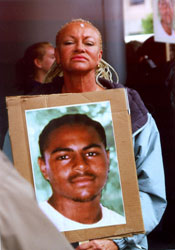
"Idriss was a beautiful baby boy. At age 4, he was mad at me, and said Mom, you better watch out, because next time around, I will be your mother."

I listened intently as mesha Monge -Irizarry lovingly remembered her son Idriss, whose life was brutally stolen by the San Francisco Police Department.

"When he was 20, I bought our home in the Bayview Hunter's Point," she continued. "Kids from Double Rock came to challenge him, curious about what a 220 pound Black man with a huge Mastiff/pit-bull dog named Nanok was up to, asking where he was from...Idriss responded, "Hang on for a second," ran inside and came back out, with a folding table, two chairs, and a chess game. Soon enough the kids would come regularly and knock on our door, asking Where is E? I want to learn how to play chess!"

Listening to mesha recall fond memories about her son, I couldn’t help thinking about my own past and the many struggles I've endured throughout my entire life even before my own arrival here to the Bay Area, in San Francisco from my native hometown of Cleveland, Ohio.

Luckily I met mesha, one of the most incredible, compassionate and monumental women in the world two years ago. It was during one of the most difficult periods I've ever been through in my life. I had just experienced a brutal encounter with the San Francisco Police Department and had begun to seek counseling and treatment for Post Traumatic Stress Disorder, as well as, police accountability for their unjust treatment.

During my search, a friend told me about the Idriss Stelley Foundation (ISF). I immediately called. I'll never forget the first thing mesha, the founder and director of the organization, said to me, "I am so very sorry that happened to you, Marlon, we will do everything to help you. That's a promise!"

Since then mesha has become one of my dearest, closest friends and the ISF continues to help and support me in my mental health struggles.

The Idriss Stelley Foundation is the one of the very few non-profit grass roots organizations based in San Francisco that courageously addresses the deep, painful issues surrounding police brutality.

The Foundation has changed many lives and effectively raised public awareness about police brutality, racial profiling, police violence against seniors, people with physical and mental health disabilities, and especially unjustified use-of deadly force.

My interview of I.S.F, mesha, and Idriss Scott Stelley, himself (in spirit) was going to be a very special interview.

I decided to do this important interview because the mainstream media has only written Idriss up as just another young Black statistic killed by a hail of police gunfire. I, along with the entire staff of POOR, strongly oppose this misconception and feel that the truth must be told. Most who never really knew him only remember how he died, but I felt that it was time for the correction.

My family of POOR Magazine, predominately Tiny aka Lisa Gray-Garcia, Leroy Moore, and Jewnbug (who was very close to Idriss) knew mesha better than anyone in our family, including myself. Idriss's heart was totally devoted to his family and friends, even up to the very day his life was stolen from him, by numerous San Francisco Police Department Officers, from the Bayview and Mission precincts, and the TL Police Task Force.

(I will explain this terrifying account, later, in the true summary version, from Parts II-III of this story) Ultimately, everyone that picks up a newspaper, turns on his or her television or radio or logs in to the internet news needs to know how just precious Idriss Stelley really was.

It was an extremely painful for me and for POOR Magazine, (a grassroots organization that fights 24-7 against the evils of poverty injustices, and re-framing KKKorporate Media News) to interview mesha about her non-profit grassroots foundation, its history, and its organizational construction on the very blood of Idriss Scott Stelley.

I arrived at mesha's home in the Bayview Hunter's Point community, on December 3rd, 2007. After a warm welcome of hugs and kisses, from meshá and Idriss' pet dog, Nanok, I began her interview, on I.S.F's mission statement, history, and the successful impact it has on everyone in BVHP, and possibly the universe.

Instead of a story, The Idriss Stelley Foundation deserves a mini-series, as there is just far too much of this organization's history that has been, overlooked, misunderstood and ignored by KKKorporate Media, and media in general.

While Alex Haley, author of (space)Roots which was introduced as a television series, that exposed the whole callous origins and aftermaths of the inhumane slave trade, in 1977; POOR re-introduces The Idriss Stelley Foundation Story, thirty years later, exposing failed proper procedural protocols, and training in law enforcement's response with unjustified use of deadly force, towards people with psychiatric breakdowns.

This is totally ironic, the concurrence of Idriss' birth and the television worldly launching of Roots... From a metaphorical perspective, between the two, there are so many root causes of hidden, neglected, and ignored evils that exist within this universe that many care to acknowledge.

meshá Mongé-Irizarry was born December 5th, 1947, in the Pyrenees Mountains, the Basque Nation. The Basque Country Basque Euskal Herria is a cultural region in the western Pyrenees Mountains at the border between France and Spain, extending down to the coast of the Bay of Biscay (Cantabrian Sea).

Her mother, Suzanne Mongé, was the head of a health organization, while her father René Mongé, was the editor of Social In formations Magazine, in Paris, France. Mr. Mongé was also a playwright.

meshá was the Director of Hayward Emergency Domestic Violence & Homeless Shelters when her child was killed. In 1968, meshá was the treasurer of National Union of French Students (U.N.E.F), during the socialist revolution uniting the Labor and Student movements, crushed by General De Gaulle in two weeks.

In 1975, following her arrival in San Francisco, California, she was the program director of various community organizations, Women Inc, La Casa De Las Madres for Battered Women , Shanti, A.I.D.S Services for people with H.I.V, and Lodestar, post-incarceration H.I.V services for women, diagnosed with the deadly virus.

mesha's resume proved to be even more extensive, as she holds various degrees and licenses in Public Law and psychology . She's even trained law enforcement officials and sheriff deputies, in the areas of mental-health, for twenty years. From the tender age of 14 to this day, she has been involved with progressive social issues.

"I taught Idriss that it is NEVER too early to commit to social justice." said mesha with a vibrant sunny smile, as she began to summarize the Birth of Idriss Scott Stelley.

To Be Continued in The Idriss Stelley Foundation Story Part II.

Tags

Gangs, Drugs and Denial

09/24/2021 - 10:42 by Anonymous (not verified)
Original Author
root
Original Body

A ReViewForTheREVolution of Gangs, Drugs and Denial- a recent POOR Press publication.

by Marlon Crump/PNN

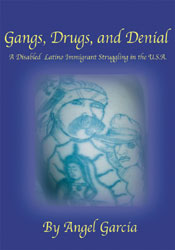
"I felt the cop's hard boot hit my neck, I heard the wind pass as he lifted back and swung his foot onto my neck and upper back, I tasted the warm blood drip down my mouth..."This gripping passage from Angel Garcia's recently published memoir, Gangs, Drugs and Denial is just one of many where he shares his life's pain, stories and struggles openly and honestly.

In his powerful, candid memoir Angel confronts his struggles with immigration, disability, drugs and gangs. Angel tells his harrowing life story, one filled with sexual abuse, rejection, trauma, addiction and police brutality- things no human should ever have to experience.

Yet, Garcia has succeeded in defeating these demons by gracefully reconstructing his life story. Angel joined POOR Magazine's Race, Poverty and Media Justice Institute earlier this year in his own pursuit of happiness and peace, as he overcame overwhelming odds, trials, and intense tribulations to write and publish this memoir.

Just reading the first couple of pages of this intense, attention-grabbing autobiography, the reader becomes immediately engulfed in Angel's life story. He begins by describing how at age 14, he gained the courage to flee his native country of Pe'ten, Guatemala to escape the inhumane abuse he suffered at the hands of relatives.

Through the pages of his book, Angel re-lives the pain of losing his mother at a very young age, the abuse he suffered and the brutality he witnessed on the streets in San Francisco's Mission District. He tells how he was schooled by OGs (Original Gangsters) and the veteranos (veterans) about life on the streets.

During the struggle to save his very life and sanity, Angel desperately sought soul salvation, reunion with his mother, and support in his later years, as he overcame drugs, violence, poverty, rejection, system oppression, callous characterization, and police brutality.

Though there are millions worldwide that have lived through similar heartbreaking stories of violence, rape, and trauma, unlike most Angel was able to resist self-destruction and suicide. In the end his strong determination led him on the road to his own recovery and self-healing. And, ultimately made him into a positive role model for others.

Despite being born with Cerebral Palsy and continually told that he would "never be able to succeed in life," Angel’s unseen strength and Catholic faith in the Virgin de Guadalupe of faith, luck and protection- a work of artistry in the fantastic tattoos on his arms and the cover of his book- helped him recover.

Angel's story is truly an inspiration to anyone who’s battled or battles the demons that Angel continues to conquer today.

This autobiography is far more than just a mere title. It's a journey into a life of inspiration, of voice that refused to go unheard, a tortured spirit that refused to remain unseen, and one man who ultimately needed Gangs, Drugs, and Denial to be re-born into the man that today is Angel Garcia.

For more information on Angel Garcia and to order Gangs, Drugs and Denial, please go to http://www.poormagazine.com/static/angel/index.html, call 415-863-6306 or write to POOR Magazine 1095 Market Street #307 San Francisco, CA 94103

POOR Press is a non-profit publishing project of POOR Magazine that is dedicated to publishing the books, cds and zines of very low income and or houseless youths, adults and elders in the Bay area.

Tags

Another World Is Happening NOW!

09/24/2021 - 10:42 by Anonymous (not verified)
Original Author
root
Original Body

Join POWER, St. Peter's Housing Committee, POOR Magazine,SOUL, and many more organizations and folks as they hold a vigil at Diane Feinstein's House in solidarity with displaced peoples in the Gulf and all over the world on the National Day of Action sponsored by the USSF this Saturday, January 26th 3-5pm 2460 Lyon at Vallejo in San Francisco.

by tiny/PNN

What is Access, What is Action? How do we truly include all voices in strategy building so we can also create models of long-term change?

I reflected on these questions as POOR Magazine poverty, race, disability, youth, migrant and indigenous scholars prepare to collaborate with other organizers locally and globally at the upcoming National Day of Action on January 26th 2008, a day of shared resistance of peoples in poverty the world over, an action sponsored by the US Social Forum.

My reflections brought me back to July 2007, and another story I wrote called, Another World or Another Mistake? - which attempted to document the phenomenal struggle that POOR Magazine poverty, race, disability and youth scholars faced when we traveled to Atlanta to collaborate with other media justice organizers on the Ida b Wells Media Justice Center at the US Social Forum.

"Another world of media production is possible!" was our quixotic motto; a world of media production not bought, sold and controlled by the same folks who always write, translate and produce our stories, the stories of poor folks of color locally and globally. We would establish a space like POOR has in San Francisco where media production is collaborative, where normally top-down structures of media making are shared and horizontal. Suffice to say, the creation in Atlanta of these other worlds of media production required a cross-organizational, cross-movement struggle we didn't expect. The space we were assigned, despite clear and year-in-advance requests to the contrary, wasn't accessible or safe; most of our time in ATL was spent trying to acquire a pace we could actually use for the inclusive, indigenous circle of revolutionary media production that we strove to create, that is necessary to have all voices heard and understood.

I wrote my first piece in the heat of the moment, immediately upon our return to the Bay Area, and although that piece stands as a testament to our disillusionment with certain facets of the ATL experience, the reality is that POOR's struggle in the Media Center detracted our attention away from the many positive things that flowered there.

The USSF was a very powerful event of strategy building, a tremendous logistical community-building coup for the "scattered left," and a meeting of people, organizations and popular fronts that could never have taken place in quite the same way were it not facilitated in quite the way it was.

Therefore as POOR Magazine scholars prepare to join POWER, St Peter's Housing Committee and other Bay Area organizations at a vigil at Dianne Feinstein's house in solidarity with the Green Ribbon Campaign which was launched by activists fighting for affordable housing and Reconstruction for Black and working people of New Orleans and throughout the Gulf Coast, on the powerful National Day of Action on January 26th I want to share with readers some of the powerful work that was presented at the USSF in July, and will be highlighted across the globe on the upcoming National Day of Action.

Beginning with some of the most grassroots organizing projects such as Direct Action for Rights and Equality who is doing performance art at the flea market in Providence, RI to protest gentrification and express solidarity to stop the demolition of public housing in New Orleans and Domestic Workers United who is launching a state legislative campaign for the Domestic Workers Bill of Rights with a press conference and convening of domestic workers in New York City�

To the Georgia Citizens Coalition on Hunger and Project South who are organizing a poor people's caravan through historic sites in Atlanta, ending in a Poor People's Assembly, and The National Network for Immigrant and Refugee Rights who are holding a press conference at their national conference the week of January 18th in Houston, Texas, and the New Orleans Folks and Black Workers for Justice are also requesting that organizations do actions targeting Louisiana Senator David Vitter, the Senate Banking Committee and the Senate in general to stop the destruction of public housing and demand passage of the Gulf Coast Recovery Act, SB 1668.

And, New York City AIDS Housing Network is organizing an action for the right to housing for people living with AIDS, Portland Jobs with Justice is doing street theater in the mall on the Colombia free trade agreement, Power U Center for Social Change, is organizing a naming ceremony and a reclaiming land away from corporate developers in the Historic Black community of Overtown, (Miami, FL,) or Southwest Workers Union who are organizing a march to the Alamo calling for Human Rights for All in San Antonio, Texas. All of these powerful groups of resistance fighters will be joined by several hundred more organizations that will hold press conferences in cities in Cuba to the Philippines

When POOR Magazine finally did acquire a space in Atlanta (by any means necessary) we were able to create some truly revolutionary media collaborations and relationships with poverty scholars across the nation such as Jim Anderson from Buffalo, New York, who is organizing to fight the closure of community hospitals in the US and Jay Toole, a woman dealing with shelter abuse in New York City. As well as media relationships such as Free Speech TV, Paper Tiger TV, Alternet and Race, Poverty and The Environment

As we continue to resist the ongoing repression of globalization, neo-liberalism, criminalization and displacement it is urgent for us to truly collaborate, listen and respect each others work and resistance. Another world is happening, and to ensure we are all part of the effort we must ALL see , hear , be a part of or link up with all the crucial organizers, and poverty scholars from the rest of the planet many of whom were at the USSF, who were and are doing truly revolutionary things, and in fact actively taking part in the creation of this crucial "World" we all know must happen, can happen and is happening.

For more information about the USSF schedule of action go on-line to www.ussf2007.org If you are in the bay area please join the Vigil at Diane Feinstein's House on Saturday, January 26th @ 3:00 pm 2460 Lyon at Vallejo in San Francisco. To read more of POOR Magazine's poverty , race and disability scholars written by folks who experience these positions first-hand go on-line to www.poormagazine.org

Tags

Where has all the money gone?

09/24/2021 - 10:42 by Anonymous (not verified)
Original Author
root
Original Body

An open letter to California Nations Indian Gaming Association from the DQ University Student Body.

POOR Magazine's Indigenous Peoples Media Project Sponsors a press conference and Action demanding support for indigenous education from Billionaire
Gaming interests on the brink of Propositions 94-97

by DQ University Student Body

Dear California Nations Indian Gaming Association:

We are writing as representatives from the only Tribal College in California to offer our powerful endorsement of your attempt to garner votes for Propositions 94-97. We know that your intention is to support tribal educational opportunities for native residents of California but as of yet you have ignored our requests for funding and support.

DQ-University, California's only Tribal University was founded in 1971 after the federal government gave 640 acres of land to a group of Native Americans and Chicanos whose goal was to start the nation's first indigenous controlled university outside of a reservation. When DQ-U opened its doors it represented the first time diverse groups of native people of the continent of North America successfully worked together on a project, despite language and cultural difference.

In 1978 DQU became Indian-controlled and set down its path of not only becoming a university for all indigenous and native people, but also an important gathering place for Indian cultural days, spiritual unity conferences, youth and elder gatherings, Powwows, ceremonies, festivals, concerts, and other events. In addition to graduating many Native American and Chicano students who have gone on to work in public, private, and tribal sectors. DQU has been a viable source of higher education for individuals who would otherwise have no access to the brighter future that indigenous education can provide..

In 2004, DQU lost accreditation through the Western Association of Schools and Colleges (WASC). In the midst of a financial crisis and $270,000 in debt, the school was forced to close. DQU students arriving at the campus for the new term were unaware of the crisis. Armed with the determination of attaining their education and loyalty to DQU, the students formed an occupation of the campus and here they wait for the re-accreditation and opening of their university.

The gaming industry brings in approximately $7 billion a year in revenue. The students and allies of DQU challenge CNIGA and the gaming tribes of California to follow through on promises to use gaming revenue to fund educational programs and support DQU. CNIGA's website claims, "Indian tribes are using gaming revenue to build house, schools...to fund the health care and education for their people," however, CNIGA has consistently ignored DQU's pleas for financial support.

If education is indeed a priority for gaming tribes than surely higher education is part of that equation. DQU offers higher education at an accessible location and reasonable tuition for all native peoples. DQU's curriculum is centered around empowering indigenous people and educating a generation of youth to look at, analyze, and solve the problems facing native peoples today.

DQ-University asks that CNIGA agree to honor their commitment to education with a minimum budget of $3-5 million per semester to ensure that DQ has sufficient funding for the reconstruction of the existing dorms and buildings, general operating expenses, purchase of new computers, educational supplies and equipment for specialized programs and the employment of qualified educators and staff. In addition to financial support, we request one or more individuals from the staff or board of the gaming tribes assist DQU with rebuilding the infrastructure and restoration of the integrity of the school. DQU’s goal is to reopen as a 4-year accredited university and become eligible once again to receive federal financial aid. It is our intent to be known as the ‘Haskell of the West’.

Propositions 94, 95, 96, and 97 promise to add an additional 17,000 slot machines to California's casinos and generate approximately $1.5 billion a year more in revenue. DQU and its allies will not endorse these propositions unless CNIGA and the top four gaming tribes of California, agree to support DQU and the education of native people throughout California. If CNIGA does agree to support DQU then DQU and it's allies will officially endorse Props 94-97.

In addition to the requests above, DQ-University asks for your financial support as we strive to set a precedent to transform DQU into a ‘green’ campus. As the only Tribal college in the state of California, we can be the model for self-sustaining campuses by utilizing alternative energy through solar and wind power. We also request funding for our Indigenous Permaculture Program, including organic gardens where we will grow and reap the benefits of healthy foods as we learn techniques of sustainable living; techniques and practical skills that we will take back to our communities and tribes. It is also essential for us to revitalize Indigenous culture and tradition, and to study at a tribal college where our diversity is celebrated.

Please join United Native American's Inc, members of the Lucy Moore Foundation and POOR Magazine staff at a press conference and rally at the Capitol Steps in Sacramento on Friday, February1st at 1:00 p.m.

www.myspace.com/dquniversity.com

Tags

El Amor A Nuestra Familia Nos Hace Muy Fuertes

09/24/2021 - 10:42 by Anonymous (not verified)
Original Author
root
Original Body

A PNN reportera shares her struggles as a domestic day laborer in the United States.

by Gloria Esteva/Prensa Pobre

For English, scroll down.

La casa era hermosa. a pesar del aspecto de abandono que proyectaban una fachada vieja y desgastada.“Esta muy sucia pero voy a ayudar un poco” dijo la dueña de la casa. Ella era una anciana de aproximadamente 65 años que de repente empezó a toser, llevándose las manos a la boca. Trate de apoyarla.

Despues de algún tiempo, reaccionó su semblante se veia palido como la cera y con mucha frustracion: me dijo que primero limpiara todos los adornos de los muebles que estaban acomodados alrededor del cuarto de su sala. ¡Eran demasiados! Pero dije, “manos a la obra” porque no quería que se me fuera el tiempo en solo limpiar sus adornos. La casa estaba demasiado sucia y yo quería avanzar lo mas que pudiera.

Una vez que acabe de limpiar los adornos, ella mostró una lista de cosas que su hija quería que yo hiciera. ¡La lista era larga!

Lavar perfectamente los baños

Limpiar la cocina

Lavar los platos

Lavar la ropa

Pasar la aspiradora

Limpiar los cuartos

Limpiar los vidrios
y al final, limpiar los adornos de la casa, que era bastante grande.

Empecé por limpiar la sala. Estaba demasiado sucia, en casi todo el lugar habia mucho polvo y cosas amontonadas en el piso. Ella me dijo que limpiara todos los muebles con un aerosol para muebles y que tratara de frotarlas mucho para que se pusieron brillosos. Despues pidió que yo siguiera con la cocina por que estaba muy cochambrosa. Habia trastes sucios por todos lados. La estufa parecia como si cada intento de usarla terminaba en una quemazon. EL horno parecia el taller de un mecanico, Obviamente el lugar no se había limpiado en muchísimo tiempo. Segui limpiando hasta que termine con la mayoria de la lista.

Cuando miré la hora ya habían transcurridos 6 horas. La señora me dijo que estaba bien, que ya podría irme pero solamente me pagó por 4 horas. Le dije que eran 6 horas pero ella me dijo que “solo quedamos con cuatro y es lo que te pago.”

Salí muy agotada de la casa, con mucha hambre pero sin un centavo disponible para comprar comida aunque sea unas galletas. Lo que me pagaron era para completar la renta.

El sueño y cansancio invadían mi cuerpo pero trate de mantenerme despierta porque quería pasar por el hospital donde estaba hospitalizado mi nieto hace muchos días. Me tocó cuidarlo por las noches despues del trabajo.-Mis pies se negaban a desplazarse como si les hubiera atado un par de plomos. Mis intestinos rugían en mi estomago.

Me dirigí al cuartito de enfermeras para ver si había café o galletas. Me daba mucha pena pero era mas fuerte el hambre. Recuerdo mucho esta etapa de mi vida. Parecia que no podria soportar tanta hambre, explotación, cansancio y la tristeza por el dolor que mi nieto tenia que vivir por su condicion de nino con leucemia. Pero el hecho de que el sintiera que yo estaba alli, por lo menos acompanandolo, me fortalecia. El mejor premio era ver su carita y sus brazos tendidos hacia mi al verme llegar. Esta imagen siempre me acompanara y sera parte de mi fortaleza.

A nosotros los pobres se nos complica todo. Alguien en un entrenamiento de ventas dijo que mientras más pobres somos más complicaciones tendremos y que más nos vamos alejando de las oportunidades. Ésta persona tiene razón, solo que no dijo quienes nos arrebatan estas oportunidades. Que abismo tan grande existe entre los trabajadores y los acaparadores. Nosotros no tenemos más que nuestro trabajo. Un esfuerzo tan grande que produce las riquezas en el mundo, que es tan mal pagado.

Nosotras las mujeres que hacemos trabajo doméstico estamos aisladas y dispersas; esto hace que sea más difícil organizarnos. Porque cuando somos abusadas por el patron ya sea que paguen poco o nos den mal trato, nos encontramos solas frente a estos empleadores. Aunado a esto estamos en desventaja porque no sabemos nuestros derechos.

Ahora yo sé cuales son nuestros derechos en este país. Aunque los conozco estoy en desventaja. Se nos aplica el salario mínimo como si el trabajo requiriera el esfuerzo mínimo. Ademas hay otras desventajas: Por ejemplo si se vives en la casa del patron nuestro tiempo nunca es respetado. Para cualquier otro empleado el tiempo extra comienza alas 8 horas, para nosotras comienza a las 9 horas seguidas o 45 a la semana, esto da mas cabida a la explotacion.

Platicando con otras personas que encuentro en el autobús o en BART me comentaban que les pasa lo mismo. Una de ellas me recomendó que no trabajara más de las horas que me contrataban y que no hiciera el trabajo tan a prisa. Con tiempo me di cuenta que el trabajo doméstico no se debe cobrar por hora sino por lo sucio que este el lugar.

Una compañera me contó que ella fue contratada para cuidar un niño. A la semana le designaron la limpieza de la casa. Despues de un tiempo compraron un cachorro y también le toco cuidarlo, darle de comer y banarlo. Hasta querian que les sirviera de peluquera para el perro. Por si esto fuera poco, con el tiempo nació otro bebe, y también tuvo que cuidarlo sin que se le aumentara un centavo el sueldo.

Entreviste a Luz Maria, de México. Ella menciona que una patrona con la que vivio, la mantenia a su dispocision las 24 horas del dia. No importando si fuese de dia o de noche. Ella tenia que atender al bebe y hacer los quehaceres de la casa, por solo $30.00 al dia. Cada vez que Luz quería dejar el trabajo, su patrona la amenazaba con llamar a inmigración. Esto la retuvo por mucho tiempo en esa esclavitud.

Es difícil saber exactamente cuanto debemos cobrar. Hay lugares donde pagan $10 otros donde pagan $30 por hora. No hay un estándar fijo de precios. Uno acepta el trabajo por necesidad y no porque el precio sea justo por nuestro trabajo.

Afortunadamente por mi carácter comunicativo conocí a muchas personas y organizaciones que me han ayudado a saber mejor como funciona las leyes, los derechos y las reformas que tiene el trabajador en este país. Sobre todo, que esta vigente porque las leyes aquí cambian en cada periodo presidencial.

Durante mi estancia en este pais he percibido que el no nos toman en cuenta como trabajadores, no existe ningún derecho para nosotros. Nos encontramos indefensas antes los abusos de los empleadores. Algunos intuyen la situación migratoria de las trabajadoras y deciden abusar de esta situación, otros simplemente se roban su esfuerzos y las amenazan con reportarlas con la migración.

Yo creo que estos hechos no ocurren solo ahorita; vienen ocurriendo desde que los colonizadores blancos decidieron atacar a los indígenas que eran dueños de estas tierras. Despues le siguio el trafico de esclavos y posteriormente la explotación de tantas razas de inmigrantes. Todos ellos se han visto obligados a desempenar los trabajos pesados que los explotadores nunca han hecho. La immigracion y la explotacion a la que somos enfrentados es solo el resultado de las invaciones y el saqueo de nuestros paises.

Love for Our Family Makes Us Very Strong

The house was beautiful, in spite of the aspect of abandonment that projected from an old and worn away facade. "Is very dirty but I am going to help a little" said the owner of the house. She was an elderly woman around 65 years of age that suddenly began to cough, bringing her hands to mouth.

I tried to help her. After some time, she reacted, her appearance seemed pallid like the wax and with much frustration she said to me that first I needed to clean all the decorations of the furniture that placed around the living room. There were too many things to be done!

But I said, "Hands to work" because I didn’t want to spend too much time cleaning the decorations. The house was too dirty and I wanted get ahead as much as I could. Once I finished cleaning the decorations, she showed me a list of things that her daughter wanted me to do. The list was long!


Clean the bathrooms perfectly

Clean the kitchen

Wash the clothes

Vacuum

Clean bedrooms

Wash windows and finally, to clean the rest of the decorations of the house, which was quite large.

I began to clean the living room. It was too dirty. In almost every place there was a lot of dust and things piled on the floor. She told me to clean all the furniture with an aerosol and that try to rub them so much so that they shine.

Later she told me to clean the kitchen next because it was very filthy. There were dirty dishes all over the place. The stove looked as if each attempt to use it ended in a fiery blaze. The oven looked like a mechanics workshop. The place had obviously not been cleaned in a very long time.

I continued cleaning until I finished with most of the list. When I looked at the clock, 6 hours had already passed. The lady told me it was O.K., that I could leave but she only paid me for 4 hours. I told her that I worked for 6 hours but she said I that "we only agreed to four hours and that is what I am paying you."

I left the house completely exhausted and very hungry, but I couldn’t spend a cent to buy food, not even a cookie. The money I have just earned was to complete the money for the month’s rent.
.

Sleep and exhaustion invaded my body but I tried to keep awake because I wanted to pass by the hospital where my grandson had been hospitalized many days ago. I needed to care for him at night, after work. My feet refused to move, as if they had a hunk of lead tied to each. My intestines roared in my stomach.

I directed myself to the nurses’ station to see if there was any coffee or crackers. I was a bit embarrassed but my hunger was stronger. I remember very well this stage in my life. It seems as if I could not handle so much hunger, exploitation, fatigue and sadness from the pain that my grandson had to live with his condition as a child with leukemia. But the fact that he felt that I was at least there, accompanying him, gave me strength. The best prize was to see his little face and his arms reaching for me every time he saw me arrive. This image always stays with me and gives me strength.

For us, the poor, everything is complicated. Somebody in a sales training class said that the poorer we are, the more complications we will have and that we are that much farther away from getting opportunities. This person is right, only that she did not say who was snatching these opportunities from us.

What a great gap exists between the workers and the affluent ones. The only thing we possess is our ability to work. With great effort the riches of the world are produced; effort that is poorly recompensed. We women who do domestic work are isolated and dispersed; that is why it is so difficult for us to organize ourselves. Because when the bosses who already pay us very little, treat us badly and abuse us, we face these bosses alone. Additionally, we are at a disadvantage because we do not know our rights.

Now I know our rights in this country. Although I know them, I am at a disadvantage. The minimum wage is applied to us as if the work required the minimum of our effort. There are other disadvantages as well: For example, if we live in the bosses house is, our hours are never honored. For any other employee the over time begins after 8 hours, for us it begins after 9 hours per day or 45 hours per week, allowing our bosses to completely exploit us.

When I discuss this with other people I encounter on the bus or BART they tell me the same happens to them. One of them recommended to me that I not work more than the hours than they hired me to do and to not hurry through the work. With time I realized that the domestic work should not be charged by the hour but by how dirty the place is.

A friend told me that she was hired to take care of a boy. Within a week they assigned the cleaning of the house to her. After a while, they bought a puppy and also called upon her to take care of it, to feed and bathe it. They even wanted her to serve as the dog’s groomer! And in case this wasn’t enough, with time, another baby was born and she also had to take care of the baby, all without having a cent of her paycheck increased.

I interviewed Luz Maria, of Mexico. She told me that with a boss she lived with, she had to be available 24 hours a day. It didn’t matter if it was day or night. She had to take care of the baby and all the household chores, all only for$30.00 a day. Whenever Luz wanted to leave the job, her boss threatened to call immigration. This kept her for a long time in that slavery.

It is difficult to know exactly what we should charge. There are places that pay $10 per hour and others that where $30 per hour is paid. There is no a fixed standard of prices. One accepts the job because of necessity and not because the price is right for our work. Luckily, my communicative character has enabled to get to know many people and organizations that have helped me to understand better how the laws function and the rights that each worker in this country has. This is extremely important here because the laws change with every president.

During my stay in this country I have noticed that one does not take to us into account like workers, rights do not exist for us. We are defenseless before the abuses of the employers. Some intuit the migratory situation of the workers and decide to abuse this situation, others simply rob of them of their efforts and they threaten to report them to immigration.

I believe that these acts are not just happening now; they have been happening since the white colonizers decided to attack the natives who were sovereigns of these lands. Then followed the later trafficking of slaves and the subsequent exploitation of so many races of immigrants. All of them have been forced to perform the backbreaking work that the oppressors have never done. The immigration and exploitation that we are face today is the result of the invasions and the looting of our countries.

Tags

A Heart Needs Help To Live

09/24/2021 - 10:42 by Anonymous (not verified)
Original Author
root
Original Body

Editor’s Note: Ingrid De Leon is one of the original reporteras for Voces De Inmigrantes En Resistencia, a revolutionary project of POOR Magazine that teaches journalism to monolingual, low-income day laborers. Throughout her life Ingrid has struggled with poverty and racism, but has always remained extremely dedicated to her writing, family and community here in San Francisco and beyond. As a family, we support all of our journalists, authors and poets and hope that our subscribers will listen to Ingrid’s plea for help and support her as they are able. Anything helps. You may contribute by clicking on the donation button online or by mailing a check to POOR Magazine 1095 Market St. #307 San Francisco, Ca 94103. Please make checks payable to POOR Magazine and indicate that the donation is for Ingrid.

by Ingrid De Leon/PNN

For Spanish scroll down.

I am a poor woman and mother of four children. God gave them to me healthy, but due to domestic violence my children and I were physically mistreated by my ex husband. I thought about separating from him, but it was too late because he had already twisted my daughter's foot, but what he did to my son hurts so much more. And, I'm angry for not having prevented it. I cry and ask, "why not me."

My son Walter he is barely eight years old and his heart is broken, sometimes it works well but other times it’s working too fast or too slow. It's painful to even think about the day when it stops working because, well, I would die without him. My children are my life. The medic that is attending him in San Marcos said that it would be best that my mother take him to the capital within a month, but I need $1,000.00 for the trip to the capital, the medic, and some exams and the medicine.

I do not have that money. I am only a seamstress and it is very difficult for me to live in the city. This is why I need your help. The life of my son depends on you. I don't know how I would live without him. Because of my poverty, I cannot leave here to support my family in Guatemala, and they depend on my mother to take care of them. A desperate mother needs and appreciates your help.

It is very difficult but by sharing my story, I hope to tell all women who suffer domestic abuse. Don’t stay quiet. Fight for your children. Look for help. Before they harm your children like my son was hurt. I hope that my words in some way are helpful. May God bless you and give you abundance. With my heart in hand I am a migrant reporter for POOR Magazine (Prensa Pobre) Thanks, many thanks.

Un Corazon Necessita Ayauda Para Vivir

Soy una mujer pobe y madre de cuatro ninos dios melos dio sanos pero por violensia domestica mis hijos y yo eramos maltratados con golpes por mi ex esposo. Pense separarme de el pero demasiado tarde porque a mi hija le torsio el pie pero a mi hijo lo que le iso me duele mucho y a la ves me da coraje de no aberlo evtado y lloro idigo por que no a mi.

Mi hijo Walter tiene apenas ocho anos y tiene roto su corason. A veces trabaja bien pero a veces demasiado rapido ho lento y no quiero ni pensar que un dilla deje de trabajar . Me moriria sin el pues mis hijos son mi vida. El medico que lo esta atendiendo en San Marcos dijo que es mejor que mi mama lo lleve a la capital dentro de un mes pero nesesito $1000.00 para el viaje a la capital, el medico y algunos examenes y la medicina.

Y yo no tengo ese dinero porque no gano bastante dinero porque soy simple custuera y es muy dificil para mi vivir en la ciudad. Es por eso que necessito su ayuada. La vida de mi hijo depende de usteds. Porque mi es muy dificil no podar estar con el. Por la pobreza no pudeo irme de aqui para mantener a los otros. Ellos depende de me y de mi mama poque ella los cuida.

Es muy dificil pero por medio de esta historia quiero decirles a todas las mujeres que sufren abuso domestico. No se queden calladas. Lunchan por sus hijos. Buscan ayuda. Antes de que les danen a sus hijos como danen a mi hijo. Espero de algo les sirvan mis palabras espero su alluda Dios los bendiga y les de en abundancia se los agradese una madre desesperada. Con el corazon en la mano soy una migrante reportera de prensa pobre gracias muchas gracias.

Tags

Education is the Key to Sovereignty

09/24/2021 - 10:42 by Anonymous (not verified)
Original Author
root
Original Body

The Case for DQ University – the only Off-reservation College in the US

by Amanda Smiles/For Indigenous Peoples Media Project at POOR Magazine

"Education is the key to sovereignty." Quanah Brightman's words echo in my ear as I pass by a white and blue campaign sign urging me to vote yes on Propositions 94-97, which would allow four of California's largest gaming tribes to add 17,000 new slot machines to their casinos and generate approximately $1.5 billion in new revenue a year. The sign promises that a yes vote would help to protect California's budget and economy, but I wonder who's promising to protect California's native people, especially when DQ University, California's only tribal college, has been closed for the past 3 years due to lack of funding.

DQ University (DQU) was founded in 1971 after a group of Native American's formed an occupation on the land, demanding the federal government hand over the land to be used as a place for higher learning. The government eventually conceded and in 1978 DQU opened the campus as the first and only indigenous-controlled institution of higher learning located outside a reservation. DQU's opening was a landmark event in Native American history, not only because it was indigenous controlled, but also because it opened as a university for all indigenous people, including Chicanos.

I sink back to my childhood, remembering my father, who is half-Lakota, and the words he would speak to me about Native Americans throughout the country. As a child, as I am sure it is for many adults in this country with no connection to indigenous people, the idea of Indian and reservation was an abstract concept. The only way I could grasp the poverty accompanying native people was when my father and I would go yard saleing. There he would urge me to find sweaters and stuffed animals, that we would then pack into boxes which were stored until late fall, when my father would ship them off to "the reservations."

It wasn't until I was 19 and I took a road trip via Greyhound to visit my dad that I witnessed my first reservation. While driving through New Mexico I became alert as we passed by devastated homes, not large enough for whole families, juxtaposed against glittering souvenir shops, selling "authentic" Native American handicrafts, not unlike the ones I remember from my childhood. Once I realized what I was seeing, I grasped that there was a whole other part of America, which is ignored and treated like the Third World. The rest of the trip was a wash of sadness and questioning for me, until I arrived at my father's house and told him what I saw, asked him what could be done, and he replied, "Education."

For more than 25 years, DQ-U operated as an education center accessible to Native people in California and beyond due to it’s affordable tuition and Native-oriented curriculum. Beside graduating many native people who have gone on to work in public, private, and tribal sectors, DQ-U has also served as an important gathering place and meeting ground for cultural and political events, spirituality conferences, ceremonies, concerts, and festivals.

In 2004 DQ-U lost its accreditation from the Western Association of Schools and Colleges (WASC) because it was not a four-year university. This sent the school into financial turmoil, which, combined with the Boards mismanagement of the school, forced DQ-U to close its doors. Unaware of the school's closure, student returned to the school in January of 2004 to begin spring semester. When students became aware of the school's closure they, in the tradition of going full circle, formed an occupation of the school and have occupied the land ever since, demanding the school's reopening.

In the state of California, gaming is the primary financial livelihood for Native American tribes. The gaming industry brings in close to $7 billion a year in revenue for gaming tribes and these tribes are allowed to use the money according to their discretion. Although gaming tribes and the California Nations Indian Gaming Association (CNIGA), the organization that represents and monitors them, claim that money goes into funding education for Native people, many poorer non-gaming tribes disagree. In the case of DQ-U, CNIGA has refused to support the school, leaving the college to fend for itself.

However, gaming tribes have been willing to support California's public universities, where the population of Native students is less than one percent. In 2004 gaming tribe San Manuel Band of Mission Indians, which operates a casino in San Bernardino, gave $4 million to UCLA to support tribal education. Similarly, in the fall of 2004 the tribe gave $3 million to San Bernardino State, which was one of the largest donations by any Native American tribe to a California State campus.

"The question we have as students and former students is why? For my people, the Lakota people, if someone is at your house you offer them a glass of water or something to eat. No one goes hungry in our tribe," says Quanah Brightman, vice president of the United Native Americans (U.N.A.) and former DQU student. "The only way for indigenous people to become sovereign in this nation is for gaming commissions abroad to start giving money to other communities. To become one nation."

Quanah's words remind me, again, of my father. Clippings of my childhood creep back to me, as I recall the period in my life when my dad began to take a leadership role in the Native community in Hawai'i. The house we lived in slowly became occupied by families from various tribes from different parts of the country, who came to stay with us, some for only a few days and others for months.

The adults cooked together and we had our meals as a home, all of us kids played together and people took turns watching us, often our parents would leave without us even noticing, but it always was shifting. When I asked me father about this he simply told me that they needed a place to stay and, "We always take care of our own people, Amanda."

"The sad thing is, everyone thinks if a tribe has a casino everyone in the tribe is benefiting from it, and that’s simply not true," says Linda Roberts, Secretary of U.N.A. and Co-Editor and Chief of Staff of CherokeeNativePride, an Indian Country online news and information website.

As for DQ-U, students have sent a letter to CNIGA demanding financial support for the school that would help pay for new computers, class room reconstruction, and the salary of qualified teachers and faculty. In addition to monetary support, DQ-U students are also seeking support in rebuilding DQ-U infrastructure and restoring the integrity of the school. The ultimate goal of the school is the reopen as a four-year university so that it can restore accreditation and be eligible to receive federal financial aid. However, unless CNIGA and the big gaming tribes of California agree to invest in their own peoples' education and future, these goals will be hard to meet.

Every winter my father journey’s up South Dakota to spend several days camping at Wounded Knee and staying on a reservation. Recently I asked him about his trip.

"The reservations are a hard place, honey. Each year it gets harder and harder," he responded. When I pressed him for answers, for some sort of remedy of hope, his voice softened as he replied, "It all lies in education. For this generation of young people to go out there and get an education so they can come back and help their people. Without that, I can’t see any other solution."

The Indigenous Peoples Media Project of POOR Magazine is a revolutionary media organizing project dedicated to providing media access to Indigenous communities locally and globally. For more information or for coverage of a story email Indigenous Peoples Media Project Coordinator Mari Villaluna @mari@poormagazine.org

Tags