Name
2017
  • Homeless to Yale

    09/23/2021 - 14:53 by Anonymous (not verified)
    Original Author
    Tiny
    Original Body

    Homeless to Yale


    And Then Back Again.

    On purpose.

    By Choice.

    Because it Makes More Sense.


    Read one woman’s story of why we all should be paying attention to Lisa Tiny Gray-Garcia and POOR Magazine.


    Valerie Klokow

    May 12, 2017


       I used to think that the worst thing

    in life was to end up alone. It's not.

    The worst thing in life is to end up with

    people who make you feel alone.

       ~   Robin Williams  


    I’m probably not going to be able to explain to anyone, including myself, how it is that being a member of a homeless community makes more sense than being an ivy league alumna (or a member of any other privileged group), but that doesn’t make it any less true. I thought about changing the last part of this title to “Because The People Are Nicer,” but that’s just being bitchy and it also doesn’t do justice to what Lisa Tiny Gray-Garcia and everyone at POOR Magazine stand for and are doing. I’ve lived at 2 extreme, opposite “ends” of American society and, while at first –  prior to having “made it” to the more privileged end – I wouldn’t have even attempted to explain how the other end made more sense, I’ve always experienced, felt andknown it to be true.

    I dropped out of school in the 7thgrade, eventually spending some time homeless in California until, in my 30’s, I decided to “turn my life around.” I went, first, to a drug and alcohol treatment facility, and then to a community college where I graduated with a 4.0 and transferred, on scholarship, to Yale. I spent two years in New Haven, where I completed my undergraduate work in philosophy and then went on to earn a J.D. at the University of Connecticut School of Law. I worked for a few years in legal compliance for a large corporation and I’m currently writing grants for a nonprofit organization. I am making considerably less money today than I was when I worked in compliance and I didn’t need my law degree (or, really, even my college degree) to do the work that I’m doing. I have always loved to learn and am very grateful for every bit of my education, but the money really doesn’t matter to me; I am much happier writing grants than I was in compliance and I also have more time to spend with my son – not to mention being in a much better mood while I’m with him! My experience with POOR Magazine’s Stolen Land and Hoarded Wealth Tour has me looking… hard… though, at how I feel about participating even in this type of work. This nation was taken (stolen) by colonizers from the Indigenous peoples who lived here, and then built on the backs of enslaved and exploited people of color. Working in corporate law made me feel complicit –  because I was, contrary to what I’d believed upon having been hired to work in compliance– but the work that I’m doing now is just another cog in the same privilege-machine. The concept of charity… of nonprofit organizations and the infrastructure of this country that has created a “need” for them… isn’t something that I am happy to participate in without question.

    symptom

    [simp-tuh m]

    noun

    1. any phenomenon or circumstance accompanying something and serving as evidence of it.

    2. a sign of indication of something.

    3. Pathology. a phenomenon that arises from and accompanies a particular disease or disorder and serves as an indication of it.


    It is my sincere hope that everyone in the United States is questioning a lot of things today. And I’m not just talking about the outcome of the last Presidential election. Donald Trump is not my President, and more importantly, he isn’t the problem. Donald Trump is a monster that we have created and focusing on him is a surefire way to feed the privilege-machine and keep it rolling but, again, he is not the problem. The fact that this particular individual was elected to hold this office is a festering, pus-filled symptom of the problems of savagery and greed that caused colonizers to believe that they had a right to 1) take the land that is today the United States of America; and 2) kill or displace all of the rightful owners of that land. Trump is an insignificant man who is an inevitable, later-stage symptom of the barbarity and inhumanity that plagued the privileged citizens of the newly colonized nation when they enslaved human beings and he is a blinking, flashing, neon-lit symptom of the arrogance, ignorance and apathy (I’m being kind with the use of this last word) that is causing privileged citizens of the United States of America to continue to believe – or, worse, to simply accept it, unquestioned, as being the way things areand thereby assume– themselves to be in possession of rights that others don’t have.

    In the past 6 months I’ve felt overwhelmed, inadequate, frustrated and depressed as I’ve tried to figure out how to make people who aren’t experiencing any problems take a look at systems of oppression that have been at work in their lives and their communities since before any of us were born. I still haven’t figured out how to get people to want (or even be willing) to learn more, but I do have a few ideas as to what they can do to get a better understanding, and one of them is to attend a PeopleSkool Decolonization / DegentriFUkation seminar, and to learn more about the Stolen Land Tour. The members of this tour are performing ceremonies of healing every time they offer a seminar or walk in a tour. These Poverty Skolaz are some of the nicest people that I have ever known, and my son said the same thing after we both met them a few weeks ago.

    On Sunday, April 23, 2017, my 11-year-old son and I participated in the Connecticut leg (Pequot/Mohegan Territory) of POOR Magazine’s Stolen Land and Hoarded Wealth Tour. We first attended a PeopleSkool Decolonization / DegentriFUkation seminar at Wesleyan University from 1:00 – 3:30 PM and then, from 5:00 – 6:30 PM we walked with a group of Black, Brown, Indigenous, disabled and homeless youth and adults from POOR magazine, Sogorea Te Land Trust, Krip Hop Nation and Deecolonize Academy as they knocked on doors in a wealthy West Hartford neighborhood to share the medicine of redistribution and community reparations with the residents who live there. For these 5 ½ hours, for the first time in almost 20 years, I felt completely at home. I have not been homeless since 1996, and the hours that I spent with the members of this tour made me feel more at home than any of the houses and apartments that I’ve lived in ever did. There is a sense of community and a feeling of camaraderie amongst the members of the Stolen Land Tour, and within moments of being in their presence, I knew that they followed the same code of honor and respect that I followed (and valued) when I was on the street. Very naïve when I graduated from law school and got my first job, I was stunned when I encountered the very different schema of respect that is employed in corporate America. Working in a nonprofit and living on the outskirts of a suburb put me back into a more comfortable respect-zone, but I hadn’t realized how “not at home” I’ve felt until about halfway through the PeopleSkool seminar at Wesleyan. The social structure at play in that room and on their tour makes much more sense – and feels much better –to me than the capitalist society that we all live in.

    I was introduced to the work that POOR Magazine is doing by Reverend Cathy Rion Starr, who is co-minister of the Unitarian Society of Hartford, where I am a member. Reverend Cathy had come to know POOR’s work when she lived in the San Francisco Bay Area, and she asked me if I’d be interested in this East Coast Tour by telling me “I don’t know exactly how to explain or describe it, but every time that I’ve seen the work that these people are doing, I think ‘Yes. This is good and right. This is something that we all should be doing.’”  After spending a day with them, I agreed wholeheartedly with Reverend Cathy’s “not sure how to explain…” comment and now, after doing some more reading of their materials, I also agree that their work is good, right, and something that we all should be doing.

    The PeopleSkool’s Decolonization / DegentriFUkation seminar features a series of powerful live theatrical performances that audience members eventually come to understand are depictions of actual scenes from the actors’ lives. From a landlord’s eviction of an elderly tenant, resulting in her death a few days later… to a police officer’s forceful, physical separation of a mother and child based on their status as vendors who are living and working on the streets, these vignettes give spectators an uncensored, up-close view of people living in poverty. These scenes are “the rest of the story” of the homeless and poor people that every one of us “doesn’t see” on the streets every day. Attendees at a PeopleSkool seminar are not able to pretend that they don’t see. Anyone who sees these performances and participates in the seminar discussions will be forever changed, and I believe that this is precisely the change that is needed to meaningfully address the soul-sickness that is at the root of our nation’s problems of arrogance, ignorance and apathy- i.e. the sense of entitlement that allows some people to not understand how truly repugnant the act of hoarding wealth when others have nothing is.  

    After the seminar at Wesleyan, my son and I participated in a Stolen Land / Hoarded Resources Tour in a wealthy neighborhood in our hometown, West Hartford, CT. The tour began and ended with sage and humble prayers to the Pequot/Mohegan ancestors of the land that we were walking on, and it felt very different than any protest marches that I’ve participated in. This tour feels like a ceremony, with participants bringing the gift of the richness that they have created in the community that they've built together and asking nothing in return but the opportunity to begin a dialogue on the idea of “community reparations” – of redistributing the stolen and hoarded wealth thatcame about on the backs of others and using it for community good. Leroy Moore, founder of Krip Hop Nation, columnist with POOR Magazine, and Stolen Land Tour co-leader, describes the tour as “…taking our request to the front doors of the most wealthy and powerful from Beverly Hills in LA to Park Avenue in NYC, not to blame and shame but to offer medicine to heal what capitalism teaches us – for example, that we need to cumulate wealth, like many houses, condos, summer homes, cars and such for oneself and at the same time walk past a family on the street and not only do nothing but feel nothing.” I feel very humbled to have been a welcomed participant on this tour; I was sad to drive away when it was over and I’ve thought about the experience and everyone involved every day since. My son has mentioned it, too. He wants to know when we’ll see them again. We live on opposite coasts; I told him that I really don’t know when we’ll see them again, but that I believe that we will.

    The words of Aunti Frances Moore, one of the tour’s members, ring true for me:“Sad, exhausting, mind blowing, crucial and very important, connecting dots, getting the word and education not only to the rich but to the people, our people, is critical.”Yes. Getting this word and education out to the people (all of the people) is critical if we are ever going to have even a chance of stopping the privilege/entitlement machine. We are a nation split into two groups: those who are able to clearly see the problem (not the symptoms); and those who do not (and are not willing to) see the problem because they are products of (and benefit from) it. We all are capable of seeing the problem; we all, in fact, were able to see it very clearly when we were children. As soon as we began to communicate with adults, though, we learned that our “survival” (success) depended upon our no longer seeing it – or, for those who were not born into privilege, we learned that our survival depended upon our not speaking of it amongst anyone who is not like us.

    So, what’s the problem? Here’s where we’d all like to think that it gets complicated, but that’s only because we’ve all been trained to not see or speak the truth about what’s going on in our society. The problem is privileged peoples’ sense of entitlement. The problem begins with the fact that the land that the United States of America sits on was stolen from Indigenous peoples, and then this leads to the fact that everything that exists today on that stolen land was built on the backs of enslaved people, and exploited people of color and poor people. All of the “success” that anyone in this country has enjoyed is a result of the systems of exploitation that grew out of these initial, barbarous acts of pillaging and savagery. The problem is that the descendants of the monstrous colonizers who annihilated everyone and everything in their path have inherited all of the spoils of their ancestors’ acts. These material spoils afforded the colonizers’ descendants with unearned power, and they used that power to write laws and develop political structures to ensure that they would maintain that power. Our nation is based on the morals and belief systems of brutal, ruthless conquerors who valued material wealth above all else. Anyone wishing to “survive” (succeed) in this nation has to agree to not acknowledge any of this; they have to agree to comply with the systems that are in place. Which brings us back to…


    Homeless to Yale

    And Then Back Again.

    On Purpose.

    By Choice.

    Because it Makes More Sense.


    I wasn’t born into poverty; I grew up in a predominately white, working class, factory town in the Midwest. My mother and her husband owned a small house and none of us ever went hungry. My neighbors, friends and family all believed in the American Dream, and everyone worked hard to try and give their kids a better life than they’d had. What I remember most about my childhood, though, is always wondering why no one’s actions ever matched what they said. As a little girl Ibought the whole "Sesame Street" thing about being kind, sharing and treating everyone fairly.

    Come and play, everything’s A-OK…

    I believed everything that Luis, Maria, Gordon and Susan said. I loved Mr. Hooper, Cookie Monster, Big Bird, and especially Oscar the Grouch. I traipsed through the first 3-4 years of my life trusting that, so long as I was kind and good, everything would be A-OK. By the time I got to kindergarten I’d learned that this is not the case. I watched adults mouthing the Sesame Street credos as they behaved in adversarial, self-interested ways. I especially hated watching when they acted like assholes to kids; I was sometimes completely unable to focus for the rest of the day (or year) in classrooms that were led by teachers who were mean to poor kids, kids of color, or kids who struggled to learn. I learned about the Bill of Rights on School House Rock and, until I was 9-10 years old I believed that all I had to do was get good grades, go to law school and then I’d be able to come back and make grown-ups act like the law said they were supposed to act.

    I wasn’t a quiet or a shy child. I asked, first my mother and then the other adults in my world, to explain to me why no one ever actually acted like they said that we all should, and I got really unsatisfactory answers. I spent a lot of time being frustrated, but until I was 9 or 10 years old I held out hope that I would, indeed, “understand when I got older.” I’m 52 years old today and I still don’t understand any of it. I’ve come to know that our society is based on a lot of bullshit, but I don’t understand why we’ve all agreed to go along with it. I mean, I sort of get it on a surface level. We all have been raised in a culture that has instructed us to value material things above all else. We all have been programmed to agree that it is acceptable, on a daily basis, to walk past poor people and homeless people on the street... and pretend like we don't see them. I, for one, do not understand. I don't understand how we have gotten here. I don't agree. I don't and have not ever accepted this as being the way that any of us should be living. I rebelled as a young person; I walked away from the bullshit bases of power and privilege that I was being indoctrinated to build my life on.

    The emperor is not and has not ever been wearing any clothes.

    As a young child I realized that I didn't have any power; I knew that I couldn't change anything around me and I felt angry, confused and... increasingly... frantic in a world that didn’t make any sense to  me. As a pre-teen I discovered alcohol and other substances that made it less uncomfortable and painful to exist in the unacceptable reality that is our society. At 13 years old I struck out on my own because I couldn't stomach it any more. I couldn't "behave;" I absolutely was not willing to act the way that I was told that I was supposed to act – I refused to "be a good girl" and just be quiet. I rebelled and my rebellion damn near killed me, but it didn't. I am still alive. I am still here and I have opted to not base my life or my worth on material possessions. I spent one day a few weeks ago with Lisa Tiny Gray-Garcia and the members of the Stolen Land Tour; I did this on purpose and by choice because it makes sense. The research that these Poverty Skolaz have done on models of self-determined solutions to land use, homelessness, poverty and gentrification made possible through redistributed wealth and resources makes much more sense to me than capitalism ever has or will. The work that they are doing is something that I am paying attention to and it is something that I will be contributing to in any way that I can.

    After my story was featured on a 2002 "Graduates Overcoming Obstacles" episode of the Oprah show, I received emails and other communications congratulating me. One that I will never forget said a lot of things about how horrible my life must have been prior to being accepted to Yale, and in conclusion, this email said "But thank heavens you got out! You made something of yourself and you got out."

    No.

    I was not nothing prior to attending Yale.

    I was not nothing that needed to be made into something. I was not nothing and, despite other peoples' attitudes and behaviors, I was not even invisible. Prior to my attending Yale I was the same person that I am today. Please think about this the next time you don't see a homeless person on the street. Please think today about Lisa Tiny Gray-Garcia, POOR magazine, Sogorea Te Land Trust, Deecolonize Academy, and Krip Hop Nation. The work that they are doing is good and right. The work that they are doing is what we all should be doing to begin needed change in our nation today. Plus, they're really nice people whose message makes a lot of sense.

    Tags
  • The Pathetic and Dangerous "Struggle" of Bored, White, Middle Class Bullys

    09/23/2021 - 14:53 by Anonymous (not verified)
    Original Author
    Tiny
    Original Body

    Other than the terrifying 21st century hetero-patriarchal kkklan-colonial violence I couldnt tell what else bothered me about Charlottesville and Berkeley and all the other sites of this recent wave of amerikkklan hate.

    Obviously the dangerous-ignorant white men perpetrators are violent and erratic and we lost a sister in the struggle (Ibaye Heather Heyer) and so many more in the last year since they got their boy in the white peoples house and got even more arrogant.  These new hyphy attacks are terrifying and triggering like all the attacks on indigenous people and people of color have been  for as long as indigenous peoples, 1st peoples and poor peoples have been struggling with repression, incarceration and exploitation from the kolonizers.

    But still something was missing. And then I found out who the perpetrators really are. Other than appearing flagrantly melanin free and moving in fascist-like formation while uttering idiotic, meaningless chants, the demographic of who these people are was the key to the missing piece of this story

    These are not the "white working class" that Bernie and the liberal democans supposedly  "forgot about" in the recent (s)election, in fact most of them are currently enrolled in formal institutions of learning in highly paid degree programs, they are driving late model vehicles and tweeting, face-craking and insta-scaming on $800.00 Iphones and/or currently being well-paid workers in the tech industry. These are not “ignorant” kkklan members. This is not your grandfathers nazi’s. These perpetrators are housed, fed and cared for. These are a new brand of millennial, privileged, bored and rage-filled 21st century dangerous 20-30 something white men.

    And their "fight" has no basis in Anything, except their own confused angst.. These are the logical progressions of the separation nation. Of confused, violent, video-gaming testosterone filled, isolated teenagers, embued with all the un-bridled access that this stolen nation grants white people for no reason, but for the fact that they are white, with the added cocktail of extreme violence-promoting media and gaming. This elder-abusing, violent young man attacked his disabled mother over and over again when she tried to stop him from video-gaming 24 hours a day. These are adult -sized versions of the columbine shooters. And this is what amerikkklan has birthed.

    But there is also a specific class analysis here. These people have no farms to tend to, no crisis of hunger or housing or health. They are middle-class and upper middle class people with nothing to do. They have no empathy and no spirit and no sense. And this is what they are spending their money, time, gas and effort on. 

    Do you know how much it costs in gas to drive from Ohio to Charlottesville like 20 year old klan wanna be, video-gamer murderer James Fields did ? Do you know how much a late-model Dodge Charger costs? This is a privileged mans struggle for Nothing?  And we are sanctifying it.

    Just like Trump, there is something so comical and pathetic about these men ( and the women who enable them) that like we all know they are actually frighteningly laughable. When we see them in their weird, campy marches with their weird , strange shields and weaponry, its actually hard not to laugh. And i know we need to respond somehow, but like any privileged people who like my mama used to say, have never missed a meal, im just not sure about giving them, their "movements" and their actions all this collective credibility.

    As a formerly unhoused, incarcerated, white appearing, mixed race poverty skola ( daughter of a woman of color and a white man colonizer) who has struggled with homelessness, poverty and criminalization of my mama, myself and my community for years, i teach, speak, walk, fight and manifest liberation, struggle and resistance to race and class supremacy everyday. Most of which means showing up, advocating, standing with, standing along-side and/or creatively visioning different worlds not laden by the rules and guidelines of the amerikkklan separation nation, cult of independence and the criminalization of all of us indigenous and poor people.

    It seems like a privileged position to even be in this fight. To lose good-hearted sisters like Heather Hyer to the idiot whims of these fools when they could be fighting and achieving real change so that less of us are being deported across these false borders, less of us are living outside, less of us are incarcerated for poverty and racist crimes.

    Yes I overstand that one important perspective is that folks need to show up, especially white people, to counter these perpetrators, but be strategic and don't lose another brother or sister in the process.

    And in the mean-time, stop waiting for the pathetic video-gamers to make a move. Don't  wait for protests, marches, events countering privileged, bored, violent white men- speak to EVERY FUKING BODY!!!! every day, in stores, in the DMV, in banks, at events- wherever & whenever u have the energy- teach, preach, speak, & say: Fuk Your Fascism, White Supreamcy and revisionist his-story.

    Tags
  • Trauma Survivor: Mama Earth

    09/23/2021 - 14:53 by Anonymous (not verified)
    Original Author
    Tiny
    Original Body

    Like any trauma survivor Mama Earth is unsettled, anxious, in physical and mental pain and actling erratic. This state of her being is now her norm, not the aberrant, so I refuse to call it Climate Change or any other euphemism. Mama Earth is in crisis, period.

    And to all of us earth peoples struggling with the collective pain caused by the crises and trauma of our post-colonized and corporate tortured Mama Earth - i am sending so much prayer and healing across these digital streets
     
    That said, the way Mama Earth in her trauma-filled state hits different communities is complex, tragic and horrifying. If you are already unhoused and on the street and the street you reside on gets flooded. You have now lost the nothing you already didn’t have and somehow even have less.

    On Monday, Oct 9th Northern California, in a county with a very high medium income just sufferred with a serious fire crisis resulting in over 1500 homes being destroyed and over 10 people dying. The story of the poor folks lost to this fire, the hurricanes of Texas and Florida and Puerto Rico and the earthquakes of Mexico is rarely, if ever, spoken about or considered.

    If you are in prison and “asked” to be a volunteer firefighter, what choice do you really have? Or worse if your cell-block is flooded like in Houston recently, and now filled with growing black mold, where do you go?  If you are living in what i call  poor people housing unit with 6 families in one room so you can collectively pay the over-priced rent and still have money to send home as remittances across the false borders, what happens when your roof burns down or is flooded. If you are a disabled elder holding on to your “house” by any means necessary, but u can’t afford  the earthquake insurance or the “good” fire insurance with the low deductible or the earthquake insurance at all, what do you do to rebuild? If you are renting from a scam lord who was already trying to evict you illegally and now you are burned out or flood out or earthquaked out, where do you go?

    Mary X who is a very low-income, disabled elder who suffers from asthma and was living in poor people housing in downtown Santa Rosa, not only lost her home but can’t even stay in a shelter in Santa Rosa cause she can’t breathe. Juan L who was juggling three dishwashing jobs in kitchens in Napa County under the table now has no home and no jobs and no unemployment. Rena who was sleeping in a “same” place next to her old home in Santa Rosa, now can’t even breath muchness “sleep” in her tent hidden in Sonoma County.

    Struggle hits different people depending on your support networks, access to resources and village support. Most people who are poor in a captialist society are isolated, and like my mama used to say Isolation kills,

    The other terrifying lesson that can come from these fires, hurricanes, Tsunamis and earthquakes is a horrible and real empathy exercise, the kind we teach in PeopleSkool. The ways in which folks with different forms of race and class privilege can now overstand and understand the violence of losing Everything you care about in one minute. From baby pictures to your favorite momentos burned up in a tragic and immediate fire or thrown away by DPW workers cause you are unhoused and on the street when they are doing a “sweep” the pain is the same.

    The way people recover from these little murders of the soul as my mama used to call them is
    strikingly different if you have another home to go to, a family with extra room to house you, a trust fund, surplus income , a good fire or earthquake insurance policy or just a really powerful network of friends who love and are always there for you makes the difference between surviving and giving up competely.

    These violent lessons of empathy are more important than ever as we learn back inter-dependence and move away from the lie of independence. Which cannot sustain any of us, rich or poor, struggling or supported as more and more of us lose more and more of our lives behind these times.

    If we can take anything away form these violent and diffincult series of new Mama Earth normals, it is that we must care for each other in a deeper and different way and spend much less time on the lie of "succeeding" and more on the notion of caring for one another. And ultimately caring for our Earth Mother for without whom there woudl be no us. Otherwise, as indigenous nations and earth care-givers have taught for years, none of us, not just some of us, will survive.

    Sending love, empathy, activation and healing to all of the victims of Trauma-FilledMama Earth in so much crisis  and all of us earth peoples from all four corners trying to survive, thrive and be alive.

    Tags
  • Shack Dwellers Movement in South Africa: Oppressed People Herstory Final

    09/23/2021 - 14:53 by Anonymous (not verified)
    Original Author
    Tiny
    Original Body

    UN-Habitat, The UN’s human settlements program, states that the number of people living in slum conditions is now estimated at 863 million, which was only a couple hundred million less in the 1990’s.


     The Shack Dwellers Movement or Abahlali baseMjondolo (AbM) is a political group dedicated to the betterment of the urban poor’s living. They strive to organize “a society where everyone counts and where capital and the state are subordinate to society”


    AbM was started 2005, in Durban, South Africa, and spawned from a road-blockade meant to protest the selling of land promised to shack dwellers.


    Since then, the movement is still going strong with thousands of active members and supporters. But, it doesn’t change the fact that their communities are sometimes riddled with brutality, harassment, and arrests from police and other locals parties.


    Marcus Garvey believed in black nationalism which encouraged black people to be separate from European society to maintain their identity. He has Inspired many people to excel and fend for themselves without “the white man’s help”. Which is quite similar to AbM’s ideology regarding the government.


    Some of the criticisms the group has been that they don't listen to the authority of the city and that they are violent. AbM’s responded saying, "We have never called for violence. Violence is harm to human beings. Blockading a road is not violence."


    Abahlali baseMjondolo to this day continues to fight against unethical evictions and other issues that oppress shack settlements. It understands the post-apartheid struggles, & I think Shack dwellers’ Union empowers the impoverished to take back their country from the oppressors. It’s one critical example of a society that will show the rest of the world how to run one better.


    References:

    http://www.jamaicaobserver.com/news/Jamaica-hailed-for-role-in-anti-apartheid-fight_15633822

    http://africasacountry.com/2013/03/marcus-garveys-africa/

    http://www.lancerlibrary.org/heroes-of-the-apartheid-in-south-africa.html


    https://en.wikipedia.org/wiki/Black_nationalism


    to this day continues to fight against unethical evictions and other issues that oppress shack settlements.


    https://www.cordaid.org/en/news/un-habitat-number-slum-dwellers-grows-863-million/

    Tags
  • Leroy's Suggestions on Police Brutality Against People with Disabilities Beyond Training.....

    09/23/2021 - 14:53 by Anonymous (not verified)
    Original Author
    PNNscholar1
    Original Body
    Yes I talk a lot about the problems so here are some of my suggestions toward police brutality against people with disabilities and who are Deaf.
     
    SOME of My Suggestions:  So what can we do as a community more locally?
     
    A. Switching the focuus from what police need to what the community needs.
    B. Not saying that love ones shouldn’t sue. We have to realize that $$ is coming from us the taxpayers. Can you imagine if that $$$$$ came out of police’s pockets? If we can get intouched with families that lost a disabled/Deaf member by police brutality and offer our support and disability justice advice.
    C. Team up with Malcolm x Grassroots Center, other Black orgs/Black disabled actiivists to do  reports, studies and papers on police brutality with Black/Brown disabled/Deaf people.
    D. Continue to write about it especially in the Black media on Black twitter
    E. Institutionally - recommend that our disability orgs take on the issue of police brutality against our youth and young adults by offering community forums, trainings, art/music programs on the topic of state violence, workshops on how not to call 911"..
    F. Make inroads into NAACP about disability justice
    G. Demand that anti-police brutality groups take a workshop on disability justice by @Sins Invalid, Patricia Berne,' Never Calling Police workshop by Poor Magazine, Lisa Tiny Gray-Garcia
    H. Support local activists/orgs who are doing groundbreaking work in police brutality and disability/Deaf like the Idriss Stanley Foundation La Mesha Irizarry in SF, Center for Convivial Research and Autonomy, Annie Paradise and Advance Youth Leadership Power in Chicago, Candace Marie
    I. Use tools that are already out there like Where Is Hope film documentary, Emmitt Thrower and more
    J. As you have seen that I didn't mention policy and police reform because it is all about community control.
    K. Get to know your neighbor and their families and talk about how they can be more aware of disability in everyday and in a crisis situation so you can call them not the police.
    L. Demand these big federal grants that go to national disabled orgs have real community buy in.
    M. Work with other who are collecting data on this issue to make sure disability, Deaf people are not only included but are apart of the researching team.
    N.  Look internationally on police brutality and disability and what people with disabilities are doing.
     
    We can demand more non-grant money, media and awareness to go to cultural projects like Krip-Hop Nation, Poor Magazine and Sins Invalid, etc. who have a record doing cultural work around police brutality against people with disabilities and many others. We can support the National Black Disability Coalition’s, Jane Dunhamn work around implementing Black Disability Studies at colleges and universities and their work in the community creating advocacy and cultural outlets to Black families and Black disabled people. As street activists in this fight against police brutality can start and continue to ask the following: are our rallies accessible, is the disabled community represented not only in your rallies but on the stage, on your media, in your talking points and are the politics of disability justice practice implemented in social justice left and their work before and during a movement?"
     
    Thank You,
    Leroy Moore Jr.
    Blackkrip@gmail.com
     
    People after my presentation on police brutality against people with disabilities ask, what about training and says I'm too harsh when it comes to police training. My answer always have been if you want to continue down this road of police training, then people with disabilities need institutional power to write a national report and have the power to implement it. Anything else is a waste of time!
     
    An example of Krip-Hop cultural work with a spin to it by @Kounterclockwise aka Deacon Burns and Kaya Rogue video The Whip Link:
    https://www.youtube.com/watch?v=XJ1leQVhaOE
     
    Pic:Mr.  Musa Fudge, Black disabled man in SF abused by 14 cops with a title of the documentary film, Where Is Hope: The Art of Murder Police Brutality & Disability
    Tags
  • Report from Puerto Rico

    09/23/2021 - 14:53 by Anonymous (not verified)
    Original Author
    Tiny
    Original Body

    REPORT FROM PUERTO RICO. It's taken me a couple of days to write. I am so furious with the way the Puerto Rican people are being left to suffer and die. The US government, military, FEMA, Rossello and PR state government have mounted little response. Everything you have hear is true and worse by 100 times. The military s a policing presence rarely actually helping the people...no surprise there. Unconfirmed word is that Tiger Swan (Blackwater spin off) may be coming in to handle security. I was told repeatedly by aid organizations that it was unsafe to go places without armed guards...not at all true. False reports spread to intimidate people.

    There are still trailer tractors of donations sitting at the airport and port not getting out to people. There are trucks and cars willing to transport supplies. Many grassroots folks are distributing tons of supplies despite harassment by police or difficulty in getting their supplies out of the airport.

    Per FEMA, 6.2 million gallons of water has been distributed since September 20 for 3.4 million people or less than 9% of the minimum drinking water needed (per WHO, 2,5 liters per day.) And, of course even more water is needed for cooking, washing fruits and vegetables, and hygiene like brushing your teeth. One cannot trust any of the water as not being contaminated. With electricity gone, sewage plants backed up into the San Juan water supply in the mountains (like Hetch Tetchy for the SF Bay Area). There are cases of leptospirosis with some fatalaties from the contaminated water as well as other other bacterial and protozoal water-borne illnesses. DHHS, FEMA, the military and Red Cross told their workers not to drink anything but purified water.

    The worst hit areas are those still barely accessible in the mountains. These folks need food and water air dropped to them. Most hospitals are working on back up generators as their is little electricity on the island. I understand the Hope hospital ship is almost empty docked in PR but patients are not getting transferred there. Folks are desperate for insulin.

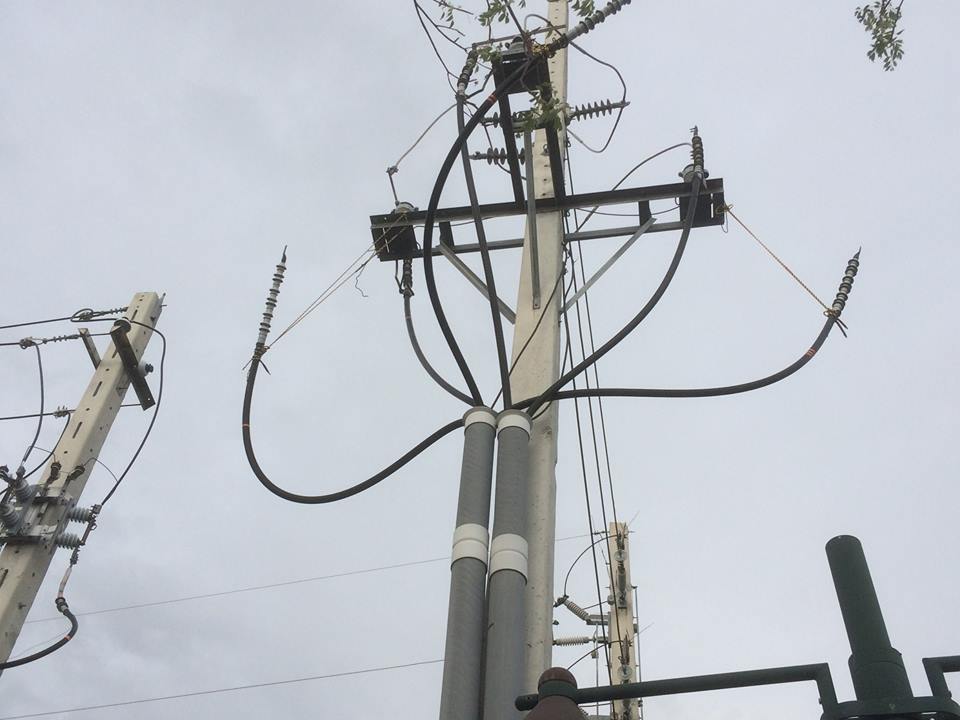
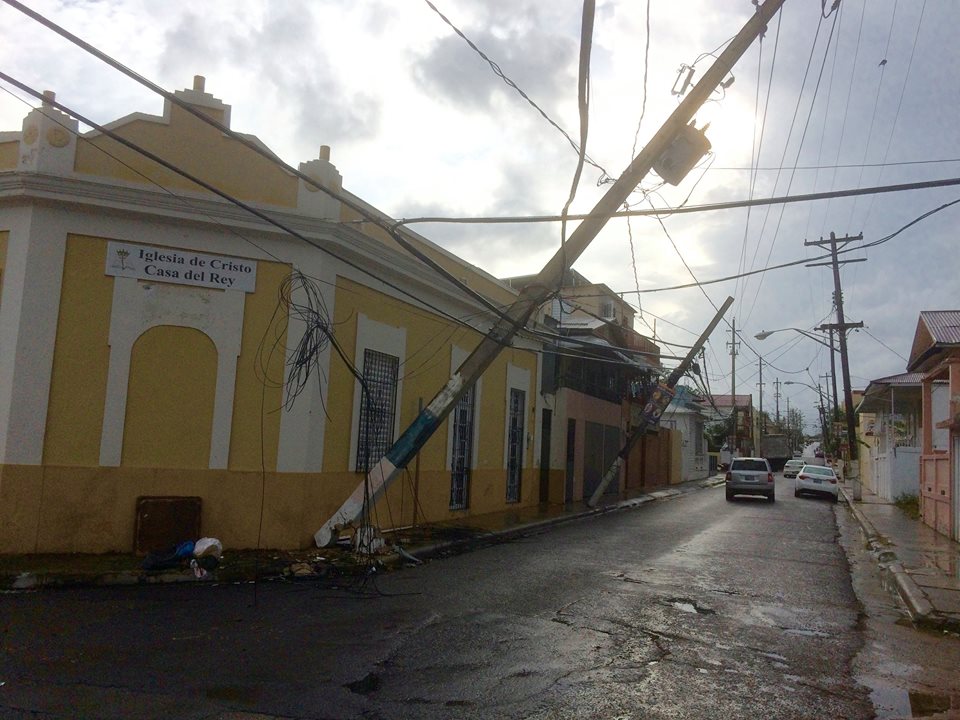
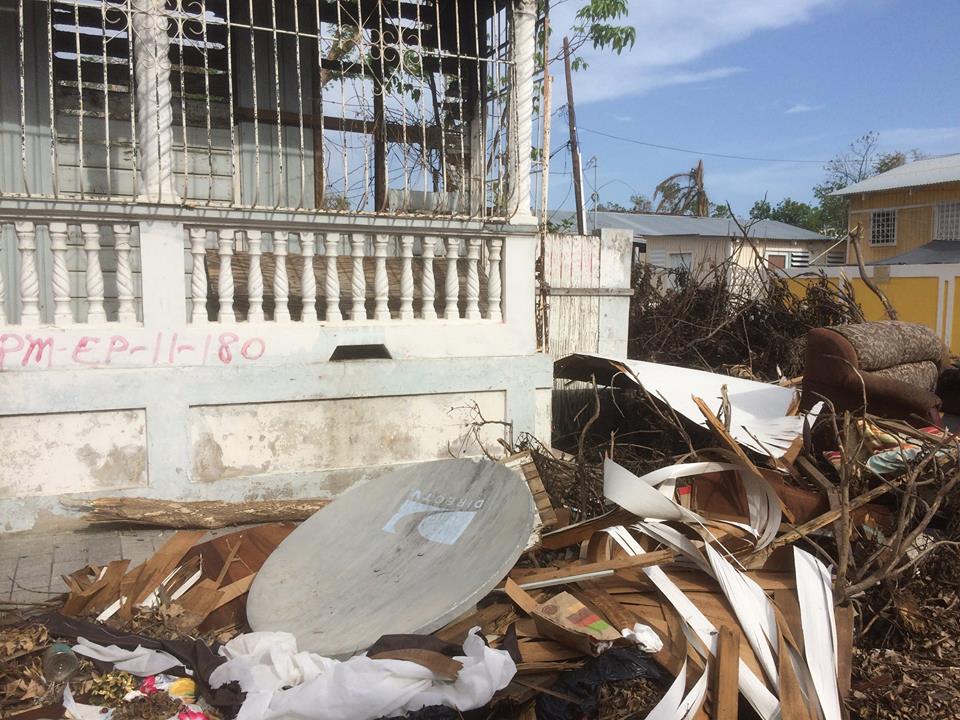
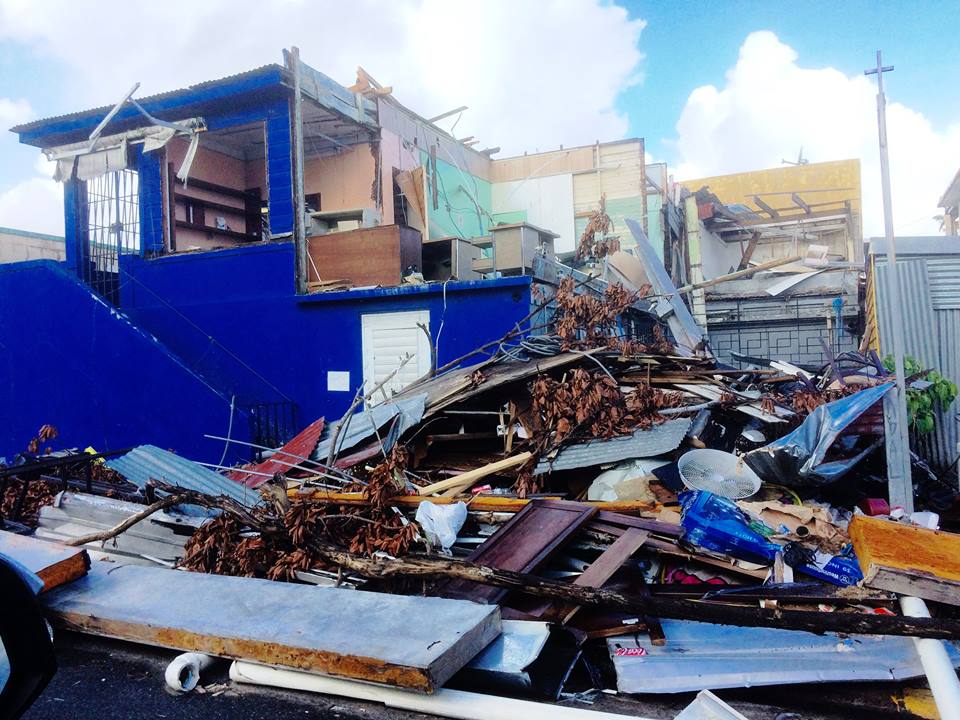
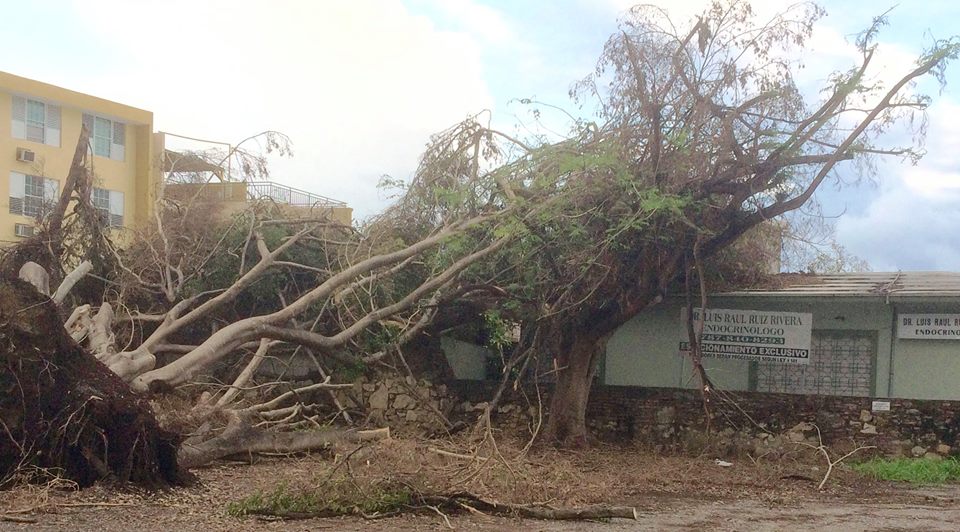
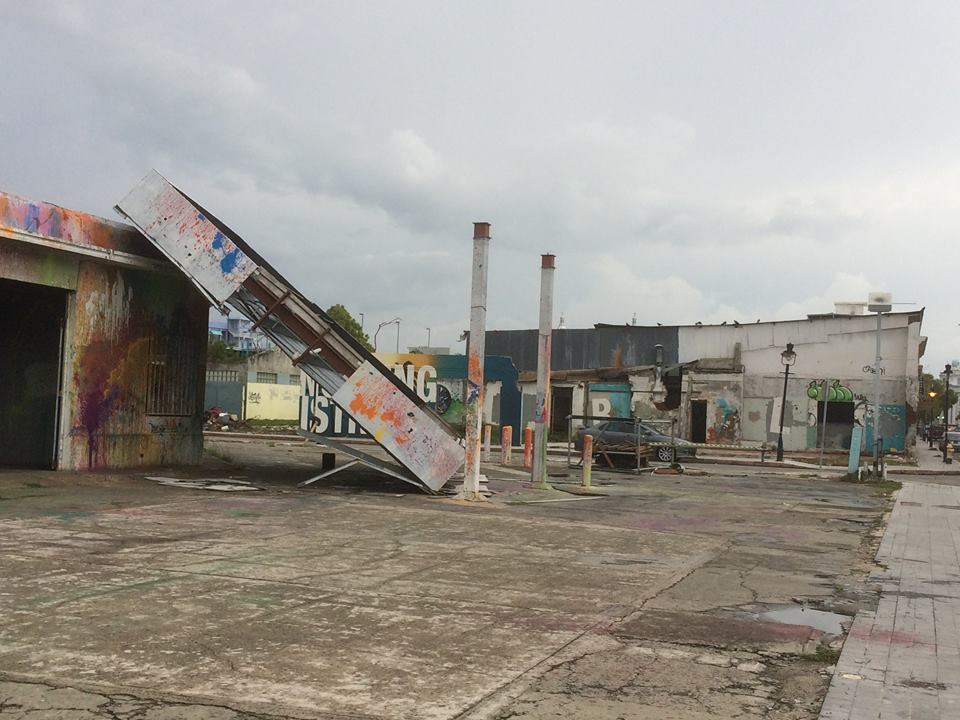
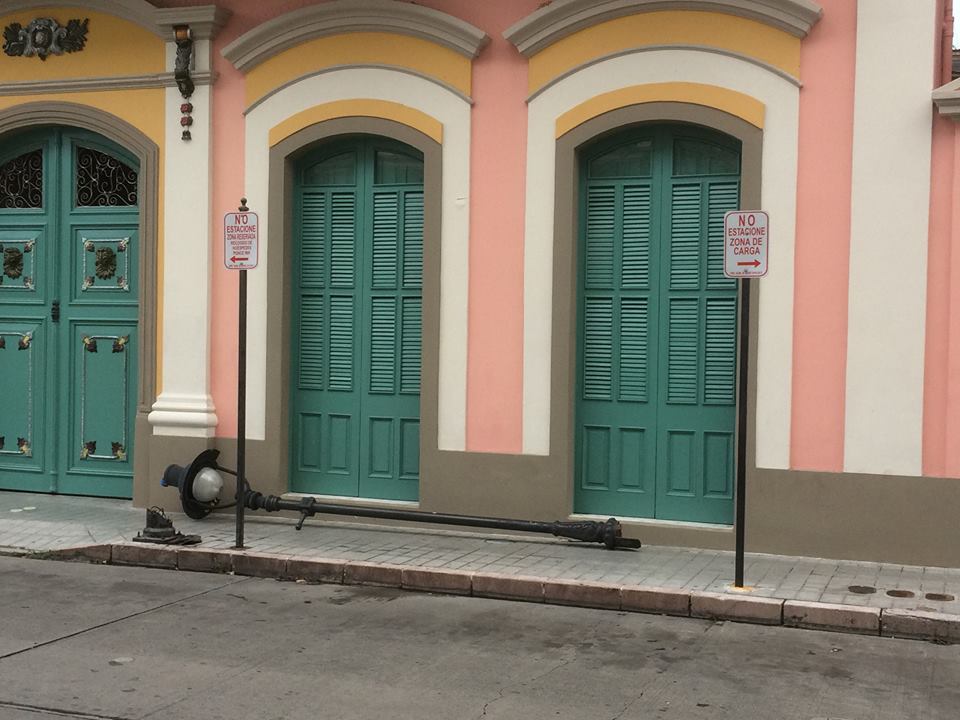
    The beautiful tropical forests have been stripped of their foliage leaving brown trunks of "burned" trees still standing instead of the luscious green we think of PR. Even the ocean is contaminated and I was told not to go in. The beaches are empty. Electrical poles have been knocked over, sometimes destroying buildings. Light posts are snapped off at their base. Traffic lights are blown away or a twisted mess even if there was electricity. Poles and trees still standing have been damaged and continue to fall unexpectedly. San Juan's tall buildings are dark at night as are most other places, Those with generators have electricity but pollute the air with the exhaust.

    Communication is shaky in San Juan and nonexistent in much of the island. Most of the island cell towers were destroyed in the hurricane. In Ponce's biggest hospital with its own internet connection, I could usually text but except for 2-5 am had little or no internet. I was only able to make one call out (to my mother who was on stand by to evacuate from the California fires). The hospital in Adjuntas had no communication with the outside world. I met a ham radio operator who was going to towns in the mountains to help them get their communications up. Boricua in the diaspora have been desperate to reach their families. Of course, there is no 911.

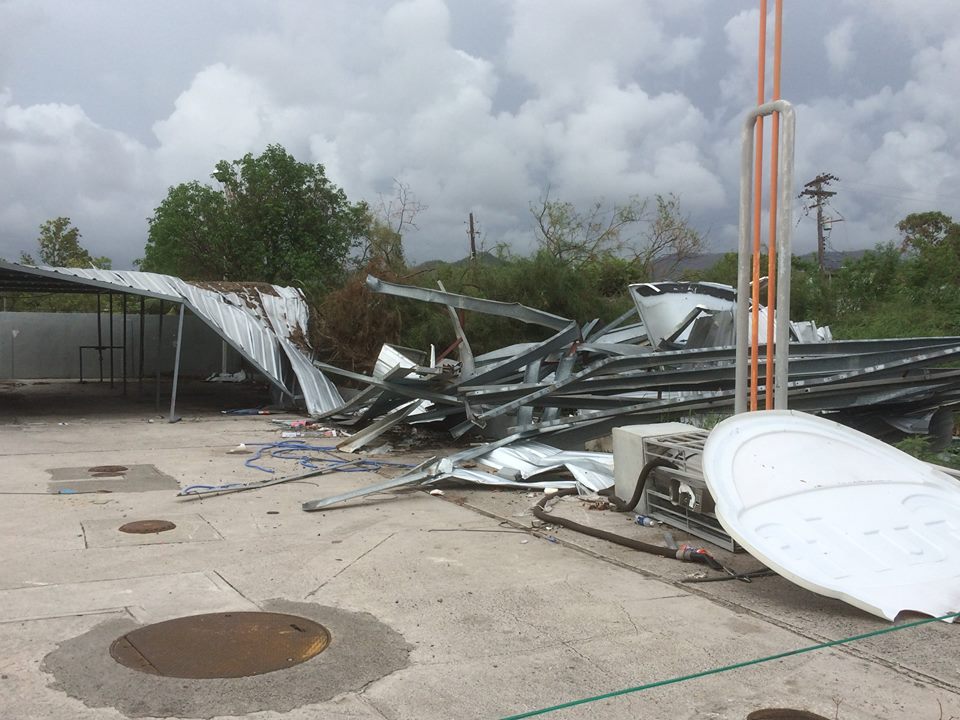
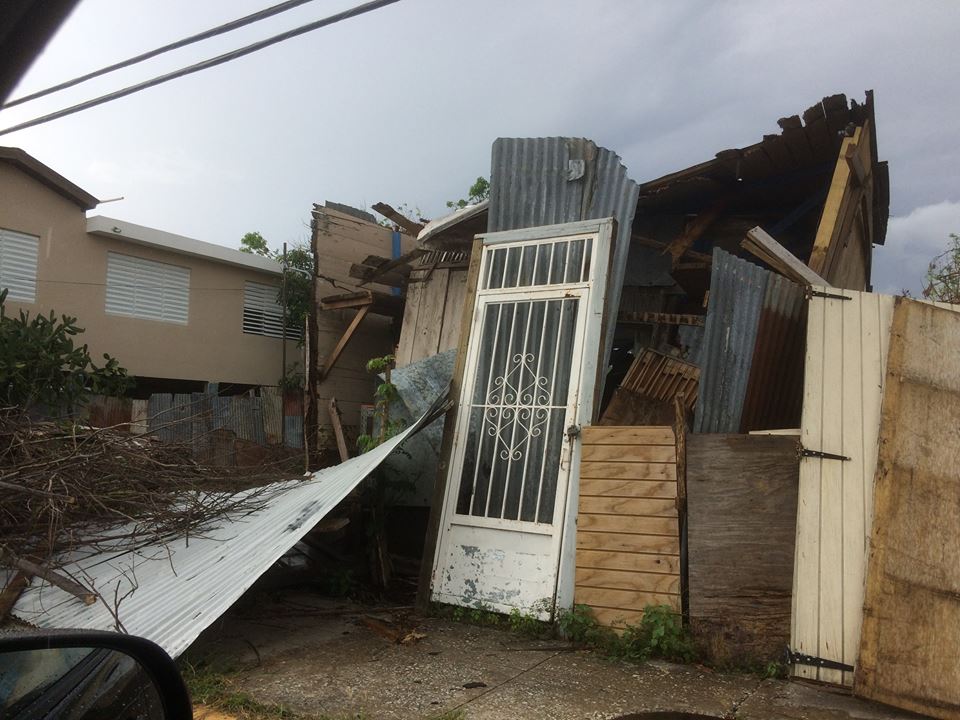
    Of course, the poor are hardest hit with wooden structures that fell down and zinc roofs that flew off. The strength of the hurricane and its tornados is inescapably evident. Even concrete buildings have collapsed. . Giant tree trunks twisted off and many trees fallen, crushing buildings and cars. Landslides, bridges washed out, roads just gone.

    The PR people have worked tirelessly to clear roads and highways. People with chain saws and machetes clearing paths for neighbors to connect and get to roads, rescuing people in flooded areas with boats. Still, the rains are continuing with more landslides, flash flood warnings, and often deteriorating conditions. The spirit of the people is amazing. Most people say they are "fine" when asked. Their houses are also "fine" even though they were flooded with several inches of water and perhaps a portion of the roof flew off. There is the endless daily searching for water, food, batteries, diapers, formula, and hours-long lines to get money, ice, or entrance to a big store that has goods. Gas is more available now than it was the first days.

    The people who are not so fine are those I cared for in the shelters, many disabled, whose homes have been totally destroyed, who do not have family or other resources to have another place to stay. There were so many sick and disabled in the largest shelter of 124 people in Ponce where I spent the most time. I couldn't believe the problems people were living with: muscular dystrophy (paralyzed with a urine bag), AIDS, uncontrolled insulin-dependent diabetes, 2 adults with cerebral palsy, myasthenia graves, Bilateral below the knee amputee, blind and paralyzed, bedridden diabetic elder, patients with wounds, numerous out of control hypertensives. Everyone very stressed, A young woman, single parent with 2 young children and her disabled parents, elders alone with no family. No one had any idea where they would be able to go long term, no places available to rent. The shelters are run by a private corporation and although there were some big-hearted workers, the corporation's overall response to needs as basic as filling prescriptions was horrible.

    So many businesses are closed, the tourism industry is gone, and reports are that 3,000 people a day are leaving the island. Their jobs are gone, they have no income. Survival is very challenging. The colonial nightmare is intensifying. There are those who plan to become fabulously wealthy off this disaster, buying up all the land and eventually turning PR into a wealthy people's playground. Fortunately, there are boricua on the island and in the diaspora working for another reality.

    I searched for the hope, saw a tree that was nearly bare sprout leaves during the days I was in Ponce. I heard of a pediatrician in the mountains who was pregnant, had lost her home and clinic, but was seeing long lines of patients every day in a parking lot. I saw neighbors taking care of each other who had barely spoken before the hurricane, I saw so many working nonstop to help their families and communities survive. There are also many great reporters documenting. Thank you Rosa Clemente, Eli Jacobs-Fantauzzi, and all. Please donate as possible to the grassroots folks who are doing so much.

    in struggle and preparing to return to PR,

    Amanda Bloom

    Tags
  • MOVE Africa: Oppressed Peoples Herstory Final

    09/23/2021 - 14:53 by Anonymous (not verified)
    Original Author
    Tiny
    Original Body

    Just to start off, Philadelphia is one of the most racist states in the U.S now. Imagine how racist it was in the middle of the Civil Rights movement. The Mayor, then one of the most racist people alive former police commissioner Frank Rizzo was supporting and urging on the brutalization of black people all over Philadelphia. That is the reason why MOVE was started to state that black people and people of color can fight for their rights.


    The belief system of the MOVE Organization is based on the writings of John Africa known as “The Guidelines”,  MOVE are deeply committed revolutionaries the way they honor their father and founder John Africa is they chant, “Long Live John Africa!”


    The way MOVE contributes the revolution is they show an alternative way of living and introduce it to the world. They put out a template that other revolutionaries could see and do good things with.


    MOVE was founded by John Africa but he was not their leader. They led themselves and they did not have one person leading them but all of them made executive decisions. They also didn't have to depend on the government for things because they made their own food, clothing, shelter etc.


    John Africa was one of many people who started and later continued MOVE. There was also MOVE 9. MOVE 9 are 9 people who were arrested in a military attack on the MOVE household. This was August 8, 1978. This attack. Led by the Mayor and former police commissioner and before that officer Frank Rizzo. The brutally racist man who hated all people of color.


    Police squadron’s filled the house with tear gas while the MOVE members who were at the house at the time were hiding from them in the basement. The MOVE members were not doing anything wrong in fact before the Philadelphia police force stormed their house they were just hanging out. They weren’t even having anything important like an event or a secret meeting. They were just being a family.


    The police proceeded to pump 40,000 gallons of water into the basement with 40 fire hoses from the Philadelphia Fire Dept. It got so bad that the MOVE members had to hold their babies and animals above their heads so the children and pets wouldn't drown while MOVE was. When they tried to escape the house they were riddled with bullets from the police department that killed two of their members.


    They were forced to choke on the tear gas and avoid the water that was slowly filling up their house. Nine of the members that escaped that were not killed from the bullets were brutally beaten by the police and then arrested. Those nine members were MOVE 9 who I might add, are still in jail today. The MOVE 9 are Debbie Sims Africa, Janet Holloway Africa, Janine Phillips Africa, William Phillips Africa, Delbert Orr Africa, Michael Davis Africa, Charles Sims Africa, Edward Goodman Africa and Pam Africa. They have been in jail for 39 years. Pam Africa was released in 1992 and is still fighting for the release of the other eight.


    MOVE is a strong believer of Garveyism. They maintain their own food and business without relying on the white man to solve all of their problems. The government and clan members believed that MOVE was a cult and hated them. I believe the reason why they hated MOVE was because they were afraid of them. They do not want to see black people stand up for themselves and fight for their rights.


    My opinion about MOVE is that it is an amazing liberation movement that encourages black and brown people to fight for themselves.

    Tags
  • The Mysterious Death of John Visor

    09/23/2021 - 14:53 by Anonymous (not verified)
    Original Author
    Tiny
    Original Body

    “Everyone in the hotel was saying how happy John was, that he would never have ended his own life,” power-FULL, superbabymama Stephanie Grant said through tears over the phone. Stephanie, who like John Visor, was a witness to the San Francisco poLice murder of Luis Demetrio Gongora Pat over a year and a half ago, was discussing the increasingly suspicious death of her long-time boyfriend and comrade John in the Mission hotel last week.

    “Myself and John's sister Maria Martinez, have spoken with three medical examiners and they all had different stories, first he was sitting on a chair, then he was on a desk, then he had marks on him, then something else, “ Stephanie concluded exasperated.

    “It is critical that the death of John Visor be examined by an independent agency to uncover any foul play that might have occurred,” said lawyer for the people Adante Pointer who has been working tirelessly on this case since the murder occurred, “ Anytime someone dies like this we are suspicious about the circumstances given the implications his death may have against the Luis Gongora Pat case against the SFPD,” Pointer concluded. 

    John was a poverty scholar, a street scholar who struggled with houselessness and the trauma that is lodged in our collective heads in this post-colonial gentrified streets of amerikkklan, in this case the stolen village of Yelamu (aka San Francisco ), where people like Luis were homeless because of gentrification and an extreme housing shortage.

    Myself, my sun and POOR Magazine extended family, artist and organizer Pearl Ubungen had the blessing of meeting  john and Stephanie in April of 2016 within days of the murder of Mayan father, uncle Husband Luis Demetrio Gongora Pat as the tent cities surrounding his murder were being poLice harassed because the witnesses, like Luis, were unhoused,. POOR Magazine’s village of houseless and formerly unhoused revolutionary reporters and advocates were called in to assist, advocate and do whatever needed to be done to support the witnesses and the unhoused community surrounding the murder. When we arrived on Shotwell near 19th street John and Stephanie were standing in front of their tent while two police officers singled them out, threatening them with tent and belonging removal if they didn’t leave immediately, which of course was strange considering no other tents right around them were being targeted in the same way.

    Poverty skolaz at POOR Magazine who have all been unhoused ourselves and therefore know the nuanced trauma /drama of what needs to happen to support folks in these moments, began a process  along with Pearl and her husband Ken Miller, advocate Laura Guzman, and advocate poverty scholar Nancy Scott to help them store their stuff, raise money, get into rehab and protect them from more police targeting.

    At the same time us revolutionary advocates were advocating many of us were working alongside writer and organizers Adriana Camarena, Flora Campoy and the family of Luis Demetrio Gongora Pat  and many others to form the Justice & Amor 4 Luis Demetrio Pat Coalition in support of liberation lawyer Adante Pointer from the John Burris Law Firm.

    The fight for the safety and protection of the witnesses and the victims became connected and enmeshed as they should always be in cases like this. It was at this point that Pearl and Nancy and myself began to focus on getting the about to be mama Stephanie permanently off the streets so she could properly mama, while also working to support John into transitional housing. 

    Months passed, a beautiful baby was born and a mama was lifted up.

    So in the last few months Stephanie has been on track to get housing, raising her  baby and supporting John through his own recovery. John got housing at the Mission Hotel, working on recovery and helping out everyone in the Mission Hotel building who needed it. 

    “He is sweet to everyone in the hotel , always ready to help, always there if you need him and always talking about his future, said an anonymous source to POOR Magazine about John.
     
    “And the timing is all wrong, first his mama said he spoke with him on Wednesday but he was supposedly dead on Tuesday, We just want justice, we just want the truth to come out,” Stephanie and Maria stated clearly. "We refuse to be silent."

    Please support the  Gofundme for John Visor by clicking https://www.gofundme.com/funeral-expences-for-john-visor

    Tags
  • Krip-Hop Nation Is Loving The Concept of Joshua Leonard’s Animate Cartoon Sires, Team Supreme

    09/23/2021 - 14:53 by Anonymous (not verified)
    Original Author
    PNNscholar1
    Original Body


    I’m the Black Kripple founder of Krip-Ho Nation.  Like our bi-line says, Krip-Hop is more than music, Krip-Hop Nation has been on a roll with interviewing creators of comics books and animated films and sires who are Black. From Kounterclockwise’s THE GREAT ADVENTURES OF KOUNTERCLOCKWISE aka Deacon Burns & Kaya Rogue Cleveland’s first hip hop sci-fi animated series to D.M.C.’S first comic book, D.M.C. (with my nephew Tiburcio Garcia) and Rosalind Alexander-Kasparik's upcoming comic book Recall and Given, Krip-Hop have been on it.  Well Krip-Hop is back with this interview with Joshua Leonard about Team Supreme, an upcoming animate cartoon sires with all disabled youth characters.


    Krip-Hop Nation, KHN: Before we get into  the cartoon, Team Supreme, I want to talk about your background being homeless because hurrican Katrina to actor to CEO.


    Joshua Leonard: I was born in Miami, FL in 1983 to a military family.  I moved quite a bit as a child.  I lived in Alaska, Miami, Maryland, and Biloxi, MS.  I’ve always been able to draw, but as a child and teen, I was mainly focused on sports, mainly football, where I was recruited pretty well.  Injury set in my senior year so I turned to the arts.  I did music for a while and toured a few cities, where I was featured in VIBE Magazine in 2007.  After the music, I began to act.  I have been in 6 movies, and 2 shows.  Before all of this, I was homeless from hurricane Katrina in 2005.  That small setback just motivated me to work harder.


    KHN:  Being a Black non-disabled how did you get an ideal of Team Supreme, a cartoon with characters with disabilities especially have a Black autistic   youth as a lead character?


    Joshua Leonard: I knew I wanted to do something different.  Something that has never been done.  I had the idea for TS for years because I have friends who have children with a special need.  A few of my friends have a child with autism, so I was able to study and learn from them.


    KHN:  Can you give us a storyline of on episodie? 


    Joshua Leonard:  My episodes will be pretty self explanatory, such as an episode about Bravery, Bullies, etc…


    KHN:  Who is writing the scripts do you hire writers with disabilities?


    Joshua Leonard:  I’m writing scripts with the help from my daughter for now, but eventually, when I can afford to pay other writers, I can bring in more people, yes.  


    KHN:  Lately more and more comics are coming to the big screen with disabled characters like Daredevil, full-length documentary category, Life, Animated, upcoming Power Ranger movie and   What makes Team Supreme different and what is the future of this project?


    Joshua Leonard:  Team Supreme is different from these other films because all of my characters have a special need, and super powers.  It will also teach people about these special needs so they can understand them better.


    KHN:  Tell us about your studio/company, Leonard Studios.


    Joshua Leonard:  Well, I’m currently an animation student at the Art Institute of Atlanta, where I’ll graduate in March 2018.  I always wanted to have my own studio so I could tell my own stories, etc… I believe representation in cartoons is vital.  I also started my own studio because it’s not the easiest to get into these big studios if you’re an African American.  Just check the numbers.  Why?  I’m not sure, but I’ve seen plenty of talented brothers and sisters who would be useful, but just looking at group pictures of these big studios, there’s usually only 1-2 african American people and it’s unacceptable.  


    KHN: What is your favorite animated film?

    Joshua Leonard:  My favorite animated film would have to be Toy Story


    KHN: So I read that you will be starting a Kickstarter campaign for Team Supreme tell us what are you raising for and how can people help?


    Joshua Leonard:  Yes, I’ll actually be doing an Indiegogo campaign to raise $25K to make either a short film, or an episode.  The funds will be used for voice actors, music, orchestra, writers, promotion and animators.


    KHN:  Do you see this project going into schools and if so how?


    Joshua Leonard:  I can see this project being in schools, yes.  My cartoon will be a learning tool, and also an overall dope cartoon that kids will love.


    KHN:  Beyond Team Supreme will you continue to create artistic products with a disability them? 


    Joshua Leonard:  Absolutely.  I feel like it is needed.  My goal is to have a DC or Marvel type universe with all of the disabilities.


    KHN:  Being Black, how do you think Team Supreme will do in the Black community and have Black people, funders, artists support your ideal so far?


    Joshua Leonard:  TS will be amazing in the black community because many autistic kids are black.  I have a few celebs behind the project, such as R&B singer Ginuwine.


    KHN:  How can people support this project and reach you? 


    Joshua Leonard:  People can support this project by emailing me at: joshua@leonardstudios.com


    Or on twitter @joshua__leonard


    Instagram @joshua__leonard & @leonardstudios


    Tags
  • Movmiento Sin Teirra: Oppressed Peoples Herstory Final

    09/23/2021 - 14:53 by Anonymous (not verified)
    Original Author
    Tiny
    Original Body

    The landless people's movement is located in Brazil the idea of the project is to grow their own food instead of killing off their people and also to get the farmers back their land so they can have collective living and live in harmony.


    The living condition in Brazil's landless people's movement are similar to standing rock’s but there's no snow there is dirt, and stove oven, tipis, and tents that are much like tiny houses so that they can live in they depending on the tent determines how many people will live there.


    This can relate to Homefulness because just like the movement homefulness goal is to grow their own food so they won't have to eat GMO food and get killed off.


    This also relates to self-determination by the government of MST has gender equality and a country determines its own statehood and forms its own allegiances and government.in which all these things can relate to Marcus Garvey he was a black man who lived in Jamaica and came to America and started to make well for himself and wanted this all over the world.


    Since it's creation in the early 1980's the MST has pressured the government to give land titles to approximately 150,000 families.


    Today the movement supports the struggle of over 57,000 families who have occupied uncultivated land in 23 states.


    In my opinion, the movement is interesting and much like hopefulness I think it's creative and innovating that they have enough brains to actually realize the government wants to give us extra body parts by feeding us GMO.


    The landless people's movement in Brazil in my opinion is a good thing, they are very good farmers and deserve respect.


    Tags
  • Confederate & Black Disabled People, More Than Statues Buildings Still Stands

    09/23/2021 - 14:53 by Anonymous (not verified)
    Original Author
    PNNscholar1
    Original Body
    Many disabled authors wrote books about Black disabled/Deaf people from separate Jim Crow schools to lynching of Black disabled people like Jessie Washington in 1918 in Waco, TX.  like Steve Noll Feeble-Minded in our Midst (1995); Mental Retardation in America (2004).  Many Black scholars says police came from slave catchers and we know the biggest name on White slave masters list was a Black disabled woman, Harriet Tubman.  The case of VA police profiling a Black autistic young man and chasing him around arresting him because he was sitting outside on the library's lawn is the continuation of slave masters turn police.  As confederate statues come down, we still walk on properties that were large institutions that not only locked up people with disabilities of all colors but was places of torture and death and not only in the South.
     
     
    When I walked on the College of Staten Island for a lecture years ago I knew that this campus has been located on the grounds of the former Willowbrook State School since 1993. It is the largest campus, in terms of physical size, in New York City, I felt it, the many spirits of the resistants of Willowbrook institution that many were buried on that land. I stopped for five minutes and felt that real history!   Another Black disabled community activist and writer, Heather Watkins, led me to a 2016 USA Today article that talked about the discovery of  2,000 to 7,000 bodies that were buried on 20 acres of the University of Mississippi Medical Center campus. The article confirms that the bodies were former patients of the state's mental institution, built in 1855. 
     
    Many Black Deaf/disabled large institutions in the South still stand and are college campuses, state buildings, conference halls and more where every day people walk in without noticing the history of these buildings.  
     
    Back in the late 1990's I had the honor to interview the Blind Boys of Alabama in their hotel in San Francisco and they told me that the Alabama Institute for the Negro Blind in Talladega, Ala., was like a prison compare to the White blind schools that was plush with a library and all kinds of programs.  Alabama School for Negro Deaf-Mutes and Blind (Talladega) was established in 1892 and Integrated with the Alabama Institute for Deaf and Blind, 1968.  That building still stands with of course new construction adding to the campus.
     
    So with the recent white supremacy attack in Charlottesville, VA. and taking down confederate statues, I as a Black disabled man, have been thinking, feeling and writing about Black disabled and in general disabled ancestors who lived in these segregated institutions and how we have to deal with historical  trauma every time we step on these properties today that hold a violent history toward people with disabilities.
     
     
    Pic:  Of   old Willowbrook institution opened in 1908 to house people with intellectual and developmental disabilities.  Over 10,000 people were confined there until it, too, was closed in 1987, following exposes and U.S. Supreme Court landmark rulings, setting the stage for deinstitutionalization across the country. Now the old Willoebrook institution is the College Of Staten Island, NY.
    By Leroy F. Moore Jr.
    Tags
  • Killing Us Safely: The Get Shot or Shocked Doctrine

    09/23/2021 - 14:53 by Anonymous (not verified)
    Original Author
    Tiny
    Original Body

    Image credit: Coalition for a Taser-Free Berkeley


    On November 3, 2017, the San Francisco Po-Lice Commission voted 4 to 3 to Yes on the question of should the San Francisco Police Department be awarded with Energy Conducted Weapons i.e. another weapon (Tasers)?  

    This question has been raised 5 times in the last 13 years, and San Franciscans, for the most part have answered with a resounding No!  Yet, the question of arming the SFPD, with an additional weapon in their arsenal has resurfaced again.  Why?  The SFPD, argues its need of Tasers is because “it is an intermediate force weapon between a baton and guns.”  Or is it because the national push to arm police departments with Energy Conducted Weapons, is due to the lobbying and big spending that Axon, manufacturer of ECW’s has done, miseducating many to believe that these weapons are a safe alternative to other options?  

    As a black person of African descent living in San Francisco, I am highly suspicions of arming the SFPD, with these so-called “less lethal” weapons.  My suspicions are partly based on recent studies that point to the disparate impact that ECW’s have had impact on Black folks, and People experiencing mental crisis, the homeless and disabled.

    The State of Connecticut:  Electronic Defense Weapon Analysis and Findings, 2015.  The Central Connecticut State University analyzed data submitted by 79 Connecticut police departments in 2015.  The state-wide data indicated that 83% of persons tasered were unarmed, one-third of the individuals subject to being tased were described as emotionally disturbed and people of color were more likely to be tased and less likely to be given a warning before being tasered than whites.

    The Baltimore Sun analyzed data on statewide Taser incidents between 2012-2014 and found that out of nearly 3,000 Taser uses, 64 percent of those hit by the stun guns were black men, and nearly 60 percent of those hit by Tasers were described as “non-compliant and non-threatening” (i.e. officers often turned to Tasers before exhausting less forceful means).

    A cornerstone of police community relationships requires trust between the police and community members.  Arming the SFPD, with ECW’s will not engender trust in my community.  It is seen as awarding the SFPD another weapon to be used against vulnerable populations and will serve to widen the chasm that already exists in our communities regarding police community relations.

    De-escalation techniques, time and distance, is a real solution,” something which the officers, mental health advocates and social workers made up of Crisis Intervention Team (CIT), through community pressure already implements.


    This martial state apparatus answer to the crisis of black and brown youth being murdered by terrorist organizations - popularly known as the police, was a thinly veiled more humanitarian approach, e.g., “it is better to be shocked, than shot”.  Now the po-Lice and po-Lice Commission seems to have effectively and successfully co-opted the communities rightful anger and demands for accountability through this seemingly humanitarian solution.  A kinder and gentler settler-kkkop, method.  While neglecting the legitimate concerns and fears of those who will be disproportionately impacted by energy conducted weapons.   

    Tasers are a thinly disguised veil use to obscure the hyper-militarization of law enforcement and its repression of black and brown communities in San Francisco.

    So let’s now give credit where credit is due:

    We want to give credit to the san francisco police commission for their cowardice and capitulation to the reactionary elements of the city of Francisco.

    We want to give credit to them for once again siding with these reactionary element against the people's will and demands to not to arm the SFPD with additional weapons that will be used against black, brown and red people, the disabled, people experiencing mental crisis and the homeless & the poor. I.e., vulnerable segments of our community

    We want to give credit to po-Lice commissioners,Sonia E. Melara Thomas Mazzucco, Joe Marshall and Robert Hirsch, for their blatantly, shameful, obvious disregard for the concerned community members who attended the meeting to voice their continous opposition to this racist and classist weapons policy and the sham amendment that would require these weapons next year.  It would have taken a year to implement ECW’s, anyway, so this was a bullshit amendment anyway.


    We want to give credit to the San Francisco Po-Lice commission, for once again reminding the people that this commission is nothing more than a Rubber-Stamp commission, doing the bidding of mayor Ed Lee, The San Francisco board of supervisors, San Francisco po-Lice department, and Axon, the manufactures of these weapons, who will continue to profit off of the police state and the misery the police state places on our communities.

    Finally, we want to give credit to this rubber stamp commission for clearly illustrating that what is needed is a Democratically chosen and Elected, People's Commission for Justice, that will replace the current rubber-stamp Po-Lice Commission with a People's Commission for Justice, with the power to fire, suspend, investigate, charge and prosecute offices and control the budget of the SFPD.

    In other words, the San Francisco po-Lice commission’s betrayal of the people’s will and its continued support of the blux klux klan,  justifies our calls for Community Control of the po-Lice.

    All Power to the People!!!

    Tags
  • Dylann Roof is condemned

    09/23/2021 - 14:53 by Anonymous (not verified)
    Original Author
    Tiny
    Original Body

    Dylann Roof has been found Guilty of the murders of 9 Charleston, South Carolina church goers who he murdered in cold blood at The Emanuel A.M.E church, one of the oldest historically black churches in America , during a Bible study.

    Roof was found guilty on 33 charges under the US Federal hate crime bill. They are as follows:

    • Hate Crime Act Resulting in death [9 counts]

    • Hate Crime Act Involving An Attempt to Kill [3 counts]

    • Obstruction of Exercise Of Religion Resulting in death [9 counts]

    • Obstruction of Exercise of Religion An Attempt to Kill and Using a Dangerous Weapon [ 3 counts]

    • Use of a Firearm to Commit Murder During and in Relation to a Crime of Violence [3 counts]

    He still faces the following charges in South Carolina State court where he also Faces the death penalty:

    • Murder [9 counts]

    • Attempted Murder [3 Counts]

    • Possession of a weapon during the commission of a violent crime

    He initially confessed and chose to represent himself and was found competent to stand trial.

    Roof bragged about being a white supremacist and expressed ambitions of starting a race war.

    Throughout the trial he showed little or no emotion and even Stated “I feel no remorse for the innocent people I killed.”

    He will receive the death penalty.

    It’s never a good thing to rejoice over the death of anyone but a message needs to be sent that it is not acceptable to murder black people , that our lives have value and if they are stolen the killer must be punished.

    He denied being mentally ill which could have spared him his life if he were found not guilty by reason of insanity/ But apparently he wasn’t interested in being spared the death penalty or being found not guilty.

    There could be years of appeals unless he waives his right to an appeal which appears to be likely.

    His being executed will not bring back any of the innocent victims nor will it stop people from hating.

    Sadly enough a new president was just into the Whitehouse who shares many of the same hateful views.

    Tags
  • In the White House, In the Community & Internationally, Ola Ojewumi, Give Her Views

    09/23/2021 - 14:53 by Anonymous (not verified)
    Original Author
    PNNscholar1
    Original Body
    1. Leroy F. Moore Jr.:  You are a journalist, disability activist and Founder of ASCEND tell us why, when you enter these fields and some work that came out of them.


      Ola Ojewumi: As a child, I spent way too many years in denial about having a disability. Though by age 11, I had already survived a rare heart and kidney transplant. This allowed me to start my career in disability activism very young after being denied an accommodation. My high school refused to give me an elevator key despite having a walking disability. It was at that moment when I realized that I would face these obstacles for the rest of my life. Instead of accepting their refusal, I went to the school board to fight the school’s decision. I was then appointed to represent Prince George’s County students on the Disabilities Issues Advisory Board. During my term, I advised elected officials about improving education and school facilities for disabled students. When high school ended, I knew I was not yet done advocating. In my sophomore year of college, I traveled to Guatemala to write about UN women’s programs for Marie Claire.


       I learned a great deal about global violence against women and patriarchal systems of oppression. This opportunity showed me how to use the written word to fight injustice and I’ve since been published by the Huffington Post and CNN. In college, I started the 501 c(3) nonprofit organization, Project ASCEND. As a student living with disabilities, it was often challenging paying for my tuition. I was constantly applying for scholarships to stay in school and did not take student loans at the University of Maryland. I wanted to give other young women of color and disabled students the opportunity to fund their education. Project ASCEND also gives middle and high school students a chance to receive mentorship and pathways to attending college. Since starting in 2011, the organization has distributed grants to international and domestic women’s mentorship nonprofits and literacy programs in Guatemala and Nigeria. Our scholarship program has provided college scholarships to disabled students, girls of color and low-income youth learning at institutions from Cornell to George Mason University and more.


      Leroy F. Moore Jr.:  What do you think are the major issues for the disabled community & the Black disabled community?


      Ola Ojewumi:  I believe African Americans with disabilities encounter the double headed monster of racism and ableism that influences high levels of poverty and unemployment. It starts in the education system with the special education to prison pipeline and mass incarceration. Equal access to quality public education does not exist for African Americans and worsens if they have a disability. If we live in a society that devalues black people how do you think it feels about black people with disabilities? There is a myth that having a disability somehow erases your blackness or race. It doesn’t.  The notion that there is a sympathy complex making it so able bodied people cannot see your race (or discriminate against you) if you have a disability is nonsensical. This is the farthest thing from the truth. 


      Recently, I attended the President’s joint address to Congress. While leaving the event, I was sitting in my motorized scooter when a woman began to hurl racial slurs by calling me the n word. This verbal assault happened right next to the U.S. Capitol Building. Racism doesn’t stop when you become disabled. It may amplify it. In the era of Black Lives Matter, African Americans are advocating for an end to police brutality. Though we recognize institutionalized racism in America’s law enforcement, we often don’t address that 50% of those killed by the police are disabled. Yet, when a person with a disability dies it doesn’t inspire marches or mass protests. It barely makes a sound. We die in silence because people still believe that pity means discrimination does not exist for us.


      Leroy F. Moore Jr.: We all focus on this Administration and Betsy DeVos push for character schools but what is so surprising is a lot of Hip-Hop well known artists support and even opening up charter schools.  So how can we educate wealthy Black artists and other Black people who support and give money to charter schools?


      Ola Ojewumi: In the fifth or fourth grade, I had a 504 plan that implements reasonable accommodations for disabled students in the classroom. I remember seeing the word “disabled” on the pamphlet that the principal handed my mom. I said, “Disabled? Who’s disabled? Not me!” I was so deep in denial and wanted to run from that label for the rest of my life because of the social implications that this label brought. Like most disabled students, I faced several challenges because of the stigmatization of disability in the classroom. Though most people believe that we are given sympathy because of our disabilities, contrarily, those with hidden disabilities face overt discrimination. Before becoming a part-time wheelchair user my disability was invisible to the world.  Having a hidden disability means the legitimacy of your disability is mercilessly questioned and treated with suspicion. You’re accused of faking your chronic illness, taking advantage of your disability by educators and looked at as though you’re less intelligent. Zero tolerance policies meant teachers would argue against providing make up work, look at your absence or tardiness as truancy to be punished with disciplinary action even if you have reasonable accommodations.


      Disabled students face enough challenges in the education system and the appointment of Betsy DeVos may spell harm for this already marginalized group. Students with disabilities already have high dropout rates with a widening achievement gap. DeVos’ response that states should decide to enforce the federal law, Individuals with Disabilities Act (IDEA), that grants equal opportunity for education to disabled students is ableism at its apex. The education of a disabled student being equal to that of an able-bodied student should not be a state’s rights issue or a choice. All children deserve a right to an education and to deny compliance with this federal law is morally wrong and unjust. Furthermore, Secretary DeVos is a major proponent of charter schools. The privatization of education through charter schools is a means of making millions from shifting government funds to private schools. While leaving public schools in a destitute state and in further decline. In the private school system, there is the option of turning disabled students away as federal education laws do not apply to them. DeVos’ response that the states should be able to choose whether to enforce the IDEA reflects the selective exclusion of disabled students. Charter schools prioritize making a profit while defunding public education institutions that are already financially strapped.


      Charter schools and the voucher system unfortunately has the support of many in the black community including celebrities and musicians. There are so many of us that may or may not be aware of the consequences of charter schools on the black community. Both Black Lives Matter and the NAACP has called for a moratorium on charter schools and disabled rights organizations should partner together to push black celebrities to invest in institutions other than charter schools. We can reach them by being strategic in our outreach. Nearly all celebrities have foundations or charitable organizations they’ve created. Why don’t disability rights organizations seek meetings with those that run these organizations. Then initiate collaborative partnerships that emphasize the dangers of charter school and how they support systematic racism. 


      In fact, charter schools have harmful effects on black and brown communities. The voucher system is often cloaked as a civil rights issue to quell racial divide in education. Charter schools in fact expand this division. It leads many to believe that charter schools can close the black and white achievement gap by affording poor black students the same education as wealthy whites. This is a myth. Charter schools only perform 17% better than public schools in terms of standardized testing. The charter school system runs education like a business where teachers are penalized for poor academic performance or student standardized test scores. These teachers don’t receive union protections and are constantly under immense pressure to meet artificially high standards. Charter schools’ zero tolerance policies leave brown and black children subject to harsher punishment and expulsions landing many of these youths in the school to prison pipeline. These institutions divert public funding from public schools in need to well-off private schools. This lines the pockets of the wealthy elite while leaving poor students of color collectively out in the cold. As a whole, charter schools do more harm than good.


      Leroy F. Moore Jr.:  Being an activist and I heard one interview when you talked about how activism needs to be more inclusive in that you talked about police brutality against people with disabilities.  Tell us what inclusiveness looks like in hot issues like police brutality, school to prison pipeline and the attack on Planned Parenthood.


      Ola Ojewumi: An active way of inclusive activism is organizing with the disabled community and not against them. The traditional model of activism through protesting leaves people with disabilities out unable to participate. Secondly, we show up for you but you don’t show up for us. People with disabilities across the spectrum show up to support Black Lives Matter and the Women’s March. But, we never see you at the marches for our rights. Begin actively inclusive calls for more than superficial commitments. It means partnering with not just a few disabled activists but disability rights organizations. So, the efforts are not just centered on those who already have platforms and are repeatedly tokenized just to check the box on the Affirmative Action list. “Let’s see, did we invite a person in a wheelchair? Check mark! Okay, we’ve done our part to be inclusive!” When organizing demonstrations, make sure the event is accessible with ramps, sign language interpreters and are in accessible facilities.


      In this virtual world, where many of us can telework and use social media to go viral for causes. There is little to no excuse for not being inclusive. Activists can make movements more inclusive for disabled people that have trouble traveling, leaving their homes or withstanding the hot or cold temperatures to participate in demonstrations. Try to live stream your demonstrations or community meetings. Create ways for all to participate virtually because disabled activists have a lot to contribute to causes whether it’s from our homes or in the streets fighting alongside you. You may not see many of us at protests because activism is exclusionary and constructed within systems that don’t think to add our voices to the conversations about social change.


      Leroy F. Moore Jr: In 2014, there was the creation of My Brother’s Keeper and in 2015 women of color answered back with “Advancing Equity for Women and Girls of Color” forum.  What are your thoughts about the two initiatives?


      Ola Ojewumi: I wrote this article before the My Brother’s Keep Initiative started. But I am impressed by President Obama’s undying commitment to helping and mentoring young men of color. I am so grateful to have lived during a presidency where an Administration cared about voiceless populations excluded in public policy. During his second term, I was invited to a meeting of disability rights leaders and Senior Advisor Valerie Jarrett. I asked her about the inclusion of disabled boys of color in the My Brother’s Keeper Initiative because of the special education to prison pipeline—where disabled youth are overdisciplined and funneled out of public schools into the prison system. As a black woman, I see how black girls and women are excluded from similar national initiatives. It is tragic that the well-being of black girls takes a back seat to black boys. 


      Black girls are not safe at home or at school. They face a brunt of the physical abuse in schools by resource officers and are sexually harassed in and outside of school. They are less likely to be enrolled in STEM courses and perform poorly on standardized tests. In their homes, they’re likely to have larger responsibilities of tending to younger siblings, cooking and cleaning than boys. The black community (and society at large) refuses to recognize these struggles where black girls are seen as older, harshly disciplined and enter the juvenile justice system because of sexism and racism. It’s ironic that Malcom X contended that the most disrespected human being on Earth is the black woman. Nonetheless, Malcolm X and Dr. Martin Luther King were unapologetic misogynists. Much of the civil rights movement was led by black women who went unrecognized for decades. Even within organizations like the Black Panthers, black women activists battled relentlessness sexism and gender-based discrimination. 


      Here we are in 2017 and very little has changed. Black women have to fight for ourselves and our rights on our own. When a black man is killed by police brutality the community organizes marches and rallies in the thousands. When a black woman is harmed or killed by the police it doesn’t make a sound. In fact, no one shows up to the protest as seen during a vigil for Rekia Boyd. Black women have spent centuries standing up for and organizing on behalf of black men’s liberation without reciprocation. Ask yourselves, how many men organize or attend protests for black women raped or abused by law enforcement? Male participation at domestic violence rallies and demonstrations is slim to none. In my 26 years on this Earth, I have never seen a black woman appear on television to validate or rationalize the unjustified violence black men face. However, it’s more than common to see black men on television arguing that black women provoke violence against them and support the narrative that “they brought it on themselves!” Don’t believe me? Remember when Amber Rose started a crusade against sexual assault? In response, black musicians Rev Run and Tyrese told her “dress how you want to be addressed.” However, if a person argues that black men should stop “dressing like thugs” if they don’t want to be harmed by police an immediate uproar follows. Rightfully, black men respond by saying don’t judge us or stereotype us as criminals because of the way we dress. Yet that same empathy or humanity is awarded to black women.


      ESPN commentator Stephen A. Smith  has spent many segments trying to teach women how to not provoke a man to hit them and asserting that NBA wives should be seen not heard. Black men have consistently argued that it is an injustice for anyone to believe that black men provoke police brutality and that it’s really caused by racial bias. Yet, Stephen A. Smith and a legion of black men have ALWAYS argued that black women and our “angry attitudes or outspoken nature” is the reason that we are mistreated, used, abused, sexually assaulted and that we ultimately bring it on ourselves. Hypocrisy or a double standard? You decide. Nonetheless, Black men subject black women to the same bigotry society throws at them. Because we live in a world where black women are devalued by much of society there is little incentive for black men to treat us any differently. We’re often treated worse. When it comes to mentorship, nurturing and the advancement of black women and girls we can only rely on ourselves to save us. We’re on own on and it’s our strength and wisdom that will help us withstand centuries long exclusion and injustice.


      Leroy F. Moore Jr.:  I was surprised to see you on Democracy Now cause usually media even left lending media don’t have people/activists with disabilities on.   As a journalist, what do you see that mainstream and left leaning media need to know and do when they report on something to touches the disabled community?  And what disabled Journalist like you and I can do better to keep our voices out there? 


      Ola Ojewumi: We as disabled journalists have to organize and begin pitching our stories to major news outlets like CNN, Huffington Post, New York Times and others. In the disabled community, we are repeatedly talking to each other (our own disability networks) and publishing our work on mediums whose primary audience is disabled people. That’s great. But to have inequality addressed we have to spread the word beyond just our own activist circles. If you are unable to get published by big names the internet is here to give you a voice through self-publishing websites like Mic and Medium. The readership is so wide and diverse that more people are inspired to contribute to the disability rights movement whether they’re disabled, able bodied or personally not affected by disability but want to make change regardless.


      Like many writers, I am tired of watching local news and major cable news programs only mention people with disabilities through the lens of inspiration porn—defined as society's tendency to reduce people with disabilities to objects of inspiration. I’m tired of reading stories about how an able-bodied individual pitied a disabled person enough to take them to prom. Or even worse how a disabled person has decided to commit suicide and how brave they are because of that tough decision. The news describes them as courageous and the neighborhood throws them a HUGE party for no reason other than that they have a disability. We pity them because imagine how horrible their quality of life must be? Contrary to popular belief, there are quite a number of people with disabilities that are happy and accept disability as a part of the human condition. Many of us don’t feel like we’d “kill ourselves if we ever ended up in a wheelchair” which is a very common phrase able bodied people use without shame. 


      Instead of assuring disabled people that they’re valued and that their lives matter. We share social media news stories about how taking your own life (with a non-deadly illness) is amazingly brave and praiseworthy. In any other circumstance, would we celebrate an able-bodied teenager’s choice to commit suicide? Would society label it as brave or celebrate it with a prom party? No, we’d do everything to stop them and direct them to psychological treatment. This happened last year when a disabled Wisconsin teenager chose to commit assisted suicide though her illness was not terminal. Hundreds showed up to her prom to celebrate this choice. This shows young people with disabilities that choosing to die is the right option and that your entire community will show up to support you and not tell you that you should choose life. As a person with a disability, your ambition can take you beyond the limits society has set for you and achievement is on the horizon if you fight ableism and its ability to make us feel worthless. This is precisely why we need more disabled writers. We need to put a cease to this so that this narrative doesn’t dominate the news like it does now. We can put a stop to this negative subliminal messaging that undoubtedly harms people with disabilities. I’ve been published by the Huffington Post. CNN, Marie Claire and other media outlets. So, I know the power of my pen to create social change and show the world that people with disabilities are people and not just our disabilities. People first.   


      Leroy F. Moore Jr.:  It’s 2017 and yes, I have seen more Black disabled activists/artists especially online, in the White House especially under Obama but for me I still see very little in the Black community and even in Black popular cultural media, arts and so on.  So how can we take the good work online and under Obama and bring into the streets of the Black disabled community?


      Ola Ojewumi: We have got to either start our own organizations and mediums to share our work or not continue to wait for black institutions and organizations to recognize our brilliance. If we continue to wait on others to include us, we will always be asking for a foot in the door and waiting on the approval and acceptance of others. I’ll use Angela Rye as an example. She was former the former Executive Director of the Congressional Black Caucus. She left and founded her own company, IMPACT Strategies. She’s since become a well-known commentator on CNN and Huffington Post Live. She sets the standard because there are too many of us that aren’t brave enough to go out on our own and start nonprofits, activist groups or businesses. But we have to do so as a means of no longer demanding acceptance. Rather, we must champion our own causes. Elevate our voices to launch our own platforms. 


      Leroy F. Moore Jr.:  You travel a lot and internationally.  I just got back from South Africa interviewing artists/activists with disabilities.  As a woman with disability what did feel like when you travel and see other disabled women nationally and internationally


      Ola Ojewumi: It felt amazing to travel across the United States and other countries. When I board a plane, there is a type of excitement that I feel. It’s this independence of traveling on my own that brings me joy. Many thought that this would never be a possibility for me and decided that I could never be that independent. In college, I had dreams of working in the field of international relations and I’ve done so with the United Nations Population Fund and President Obama’s Young African Leaders Initiative (YALI). YALI has an international fellowship program which affords African millennials the opportunity to live and work in the United States.


      At a YALI event, I met a deaf fellow and her interpreter. In many parts of my native West Africa, people living with disabilities are shunned and seen as cursed. Often, they never leave their homes and do not receive schooling. Seeing her changed the game for me and altered my thoughts about traveling with a disability and working internationally. I haven’t always had a disability. This occurred later in my adolescence. Before becoming disabled, I was told to reach for the stars and that I could achieve anything. After my transplants, I was told to accept my limitations. I responded by saying, “I have no limits and my potential was limitless.”  I was always told by those in my inner circle that traveling internationally would be nearly impossible while having a disability. Thus far, I’ve traveled to Guatemala and Israel. I live to prove others wrong and change the negative viewpoint of disability.


      Leroy F. Moore Jr.:  You attended the National Museum of African American History & Culture.  What did you feel about being there and did you see or read about any African Americans with disabilities?


      Ola Ojewumi: I have visited this museum a few times and each time it’s felt incredible. There is so much history that takes you to different time periods in the black history. The exhibits show the power and perseverance of those in the African Diaspora and the many accomplishments and contributions of African Americans to the development of America which has made it the world power that it is today. However, I was greatly disappointed to see no mention of the disability rights movement or disabled and LGBT African American history makers. In fact, Nene Leakes is featured in the museum for the popularization of black gay slang…and not an actual gay African American leader. I say black LGBT and disabled people are excluded respectively as a reflection how the black community has treated both communities historically. In the black community, being gay and disabled are things the black church has shunned. Many view being gay or disabled as something that needs to be prayed away or cured.


      In addition, the strong black woman and man narrative encourages people to hide their disabilities or deny they exist. Black gay Americans remain closeted in the same manner for fear of rejection and being ostracized by the community. I hope that the museum will try to change this and choose the inclusion of these two groups. So much of the disability rights movement’s history is influenced by the Black Panthers and the Civil Rights Movement. The same goes for the gay rights movement. The Stonewall Riots began with an African American transgender woman, Marsha Johnson, throwing the first brick. This initiated the beginning of the gay liberation movement. This is African American history and shouldn’t be forgotten due to ableism, heterosexism and transphobia.


      Leroy F. Moore Jr.:  In the next four years what would you like to see for you and your community?


      Ola Ojewumi: I’d like to see more youth and women of color leading the disability rights movement. I hope that the tumultuous times we’re living in will spark a revolution that brings institutionalized ableism to forefront and that the disabled community can amplify our voices and demands for access to equal education, an end to mass incarceration and police violence against the disabled. I want to see more diversity and inclusion so the disability rights movement doesn’t remain a movement for wealthy and middle class whites as the community is largely diverse. It is that diversity that is needed to effectively dismantle systems of oppression that leaves us trapped in institutions like nursing homes and prisons. Rather, we are fighting to live independently with access to quality healthcare and not further cuts to SSDI and Medicaid. 


      More importantly, I want to see a close in the achievement gap for disabled students. It’s unfortunate that we only represent 11% of those attending colleges and universities. Though much of the disability rights system is focused on employment, that centralization is a very classist approach. It doesn’t place an emphasis on how the public education system keeps disabled students of color out of the work force through a pushout into the juvenile justice system. The modern disability rights movement must address the disproportionately high dropout rate and while creating pathways for disabled students to attend college. This will provide equal opportunity to enter the workforce. Even within the workforce, there is an overrepresentation of disabled people in the field of janitorial services and menial jobs that pay them below minimum wage. There is nothing wrong with working in these fields but I want to see an end to laws that legalize subminimum wage for disabled employees. So that we can rise to become CEOs, engineers, tech innovators, doctors, lawyers and world changers.


      Leroy F. Moore Jr.  You have been in the White House as a visitor and other roles, what do you see the difference between Obama administration and one now?


      Ola Ojewumi: I worked as an intern in the White House and served on their kitchen cabinet on disability. President Obama had a real commitment to making the lives of disabled Americans better through his executive order to increase federal hiring of people with disabilities, the Affordable Care Act and expansion of Medicaid. President Obama has literally saved the lives of numerous disabled Americans that can now have access to affordable health insurance.  The current Administration is trying to repeal the Affordable Care Act and take away crucial programs that assist the disabled. From halting the expansion of Medicaid to eliminating federal funding for the Meals on Wheels program. We have a Secretary of Education who believes that educating children with disabilities should be a choice for states to decide and a President that has been sued for violating the ADA. It was disheartening to see him openly mock a disabled reporter. These factors combined make me legitimately fear that people will disabilities may die because of these policy changes and I fear for the future of disabled Americans. 


      Leroy F. Moore Jr.  Lately there has been high profile women in all arenas from the former first lady, Michelle Obama to Senator Warren to Beyoncé to Viola Davis to the founders of Black Lives Matter but very few with noticeable disabilities.  Please give us some names of disabled women who are making moves today.


      Ola Ojewumi: I have many disabled idols that are women of color. They’re fighting the good fight for disability rights and equality. I am inspired by the first black female attorney, Claudia Gordon. I look up to former White House disability liaison Taryn McKenzie Phillips. Other disabled women of color making waves are Dr. Angel Miles, Day Al-Mohamed, Keri Gray, Andraea LaVant, Dr. Donna Reed Walton, Kamilah Martin Proctor, Heather Watkins, Charlotte McClain Nhlapo and many more.


      Leroy F. Moore Jr.:  Any last words and how can people keep up with your work?

      Ola Ojewumi: You can follow me on Twitter @OlaOjewumi or visit the Project ASCEND website to keep up with our charitable works at www.project-ascend.org. 


      Pic Ola Ojewumi  sitting in her wheelchair wearing a black and cream dress suite. In the background is a huge sign that says, " Disaporas Development.  She is sitting next to a woman with a tn scraf that cover geer hair wearing a black jacket.
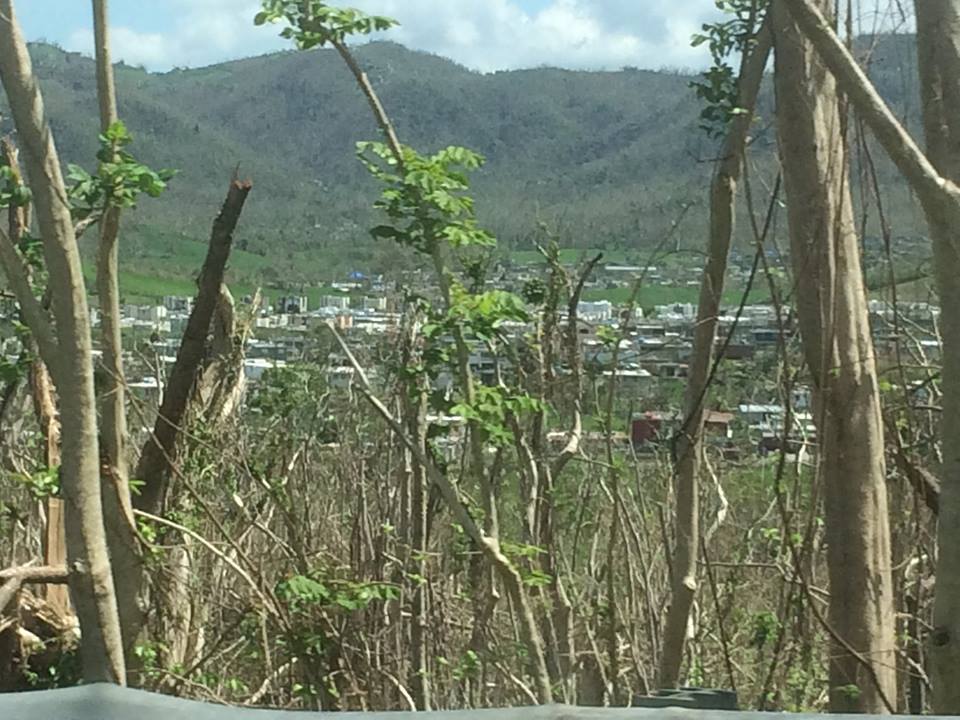
    Tags
  • The Nuclear Lunch

    09/23/2021 - 14:53 by Anonymous (not verified)
    Original Author
    Tiny
    Original Body

    Since my heart attack I have been having trouble breathing. I was used to walking unlimited 3-4 miles a day. Now I can’t walk a half a block without stopping. My heart attack was 2 years ago.Today I had a Nuclear Stress Test. Let me explain what a Nuclear Stress Test is: Nuclear Stress Test. They put you on a treadmill while they monitor your heart. They do other stuff too. If you are like I am, a 300 pound fat man over 65 years of age. Don’t give me diets, tell me to exercise--90% of my weight is water. I am taking enough water pills. I was always fat ever since I was 25 years of age. It did not affect my lifestyle. My blood pressure averages 160/40. I used to hike 10 miles for the relaxation of it until I had Heart Failure and Pancreatitis in 2014.


    Just recently I was having trouble walking a half of block without experiencing shortness of breath and back pains. My old way of walking anything less than a mile was a block. When I found out that I couldn’t anymore, I went to my doctor. I had every test under the sun. They even went to the big moon in back of my belly. They found the usual old fart disease for men, a soft ball instead of a Prostrate. So I am taking capsules, tablets, Albuterol and Lidocaine Jelly for Scoliosis or Superman’s disease due to the S on my back.


    What got me worried was that they told me what the test was about, but that didn’t worry me until they told me what the minor side effects of this test would be, “You may set off every alarm system at the airport.” I have no desire to see what the inside of Guantanamo is. If I wanted to visit Cuba I would visit legally or illegally. The next stupid thing they said was, “It may cause death!” To me they said a minor side effect is death. Then what is a major side effect, becoming a Zombie? I like my sweetbreads in a restaurant cooked not raw from a live animal or person.


    So I start asking my peers. Two people at CARA aka California Alliance of Retired Persons have taken that test. One women named Daisy she is in her 80s said she had no side effects from it. A gentleman named Michael in his 70s also did not have any side effects. I felt comfortable so I went ahead with the test.


    My original instructions were: No food or coffee for 24 hours. The day before I actually get the test, the doctor called and said, “Do you have any questions?” I asked, “What is the location of your clinic?” He gave me the location. He asked me do you have any other questions? I said, “Yes, Could you change the dialog on the briefing video?”


    I woke up the next day. I couldn’t have any coffee. The morning drug of choice. I had no breakfast either. Got in the cab and went to the Mission Bay Clinic of UCSF. Went to the Receptionist, checked in, looked out the window and watched workers put in the cement for a new sidewalk. Then they called my name. Took out 3 copies of the list of my medicine (brought 12). I was given a locker to put my valuables in and my jacket. Put the jacket in a locker and sat in a cubyhole where this doctor walks in with black corduroys and white shirt and not tie and he wasn’t a 12 year old Doggie Houser. He had grey hair. A doctor that I feel safe with. His bedside manner made me feel comfortable in the place. It may be the size of a crackerbox, but I felt comfortable in there.


    The doctor starts by saying, “You will be injected with nuclear material in your body. They will take you across the hall and put you on an MRI Machine for 15 minutes. They will take you off the MRI Machine and put you on a machine where you would be injected by me with a drug to increase my heartrate.” The doctor explains the sideeffects of that drug: Says, “You may turn red and your pulse rate may increase by 50%. You will be returned to the MRI Machine after 12 minutes and then be sent home.”


    Then the nurse came in carrying a plastic lunch box. She opens up the lunch box. Inside it was the isotope and a needle with a stint on in with an IV tube. She used a syringe to bring the isotope out of the liquid and into the IV. After she was finished, I said, “Will my body turn green or will I have long fingernails?”


    I was then escorted to the waiting room. Looking at a 9 month old AAA Magazine about Marin County. I then got called in to the MRI Machine where I had to sit on a 2 x 4 with my arm over my head tied to a rope. It reminded me of a Middle Ages torture chamber.  Brought into a V shaped doohickey where they take pictures and you cannot move for 15 minutes and then I was placed into a tube for 2 minutes. I was taken out and told to wait in the waiting room where they got everything ready for me for my next level. They came and got me. I was told to wait in the Waiting Room. While reading a 6 month old Sunset Magazine I then got called in.


    They asked me about my weight and height. The doctor injected me with a substance to raise my heart rate to about 25%. I didn’t feel any injection, my heart rate did not go up very much. Then when then when the doctor left, they monitored my heart for 30 minutes. I was then told to go back to the waiting room where I could crack jokes with my lovely wife. A La Rasa elder was getting the same test that I was getting. When she was finished, I got my final MRI CATSCAN. It took 12 minutes with my hands tied over my head. I then got up and went home. Doctors and Staff were very professional. It made my time there go by very fast.


    This test I recommend to anyone that the doctor recommends take it. The only thing I am disappointed in was that my skin didn’t turn green or orange. My fingernails didn’t grow. Nobody in a wheelchair asked me to join their private school. If they ask me for comments, I’d say get newer magazines in the lobby.


    Bad News Bruce signing out.

    Tags
  • A Couple Gives Us A Superhero that Doesn’t Leave His Bed Physically, Graphic Novel: RECALL & GIVEN

    09/23/2021 - 14:53 by Anonymous (not verified)
    Original Author
    PNNscholar1
    Original Body
    Krip-Hop Nation:  Thank you  for agreeing to be interview.   This comic book, RECALL AND GIIVEN, is really about your relationship tell us how did you all meet and the turning points in this book.
     
    David Rector & Roz Alexander-Kasparik: We met decades ago at National Public Radio (NPR) headquarters in David's hometown of Washington, D.C. David had been a news producer there for years already. I (Roz) was a grad student at Howard University hired to help out administratively on a show called, Let's Hear It! The show's primary audience was visually impaired and disabled people. At the time, just a handful of Black people worked at network headquarters, and NPR had far fewer staff than it does now. So we all knew each other and had each other's backs.  David and I became lifelong friends. He was and is the kind of guy you trust instinctively, as a matter of course.  He wears integrity in his smile, how he carries himself, and how he helps people. There isn't a person who knows him who does not respect David. David says there's not a person who truly knows me who doesn't love me. That's the consist of our relationship: We love each other.
     
    Krip-Hop Nation: Your preview edition is online in its entirety at www.RECALLandGIVEN.com. What are the turning points in your latest book? 
     
    David Rector & Roz Alexander-Kasparik:  We draw upon our lives just after David fell ill, when we found ourselves living in hospital intensive care units. As everyone who has ever survived a debilitating illness or watched a hospital TV drama knows, hospitals are rarely a place strictly for healing and recovery.  After David's brain injury, we huddled together there fending off the poor prognoses of doctors and health care professionals, as well as the traumas imposed by neighboring patients' lives.  One particular morning at 3:00 a.m., due to hospital overcrowding, David was moved to an overflow intensive care ward. We were joined there by a dozen or so jailed inmates and their armed guards. The patient in the next bed loudly declared his allegiance to the Aryan Nation and his disdain for Black people.  As we fought to ignore racist threats and get David moved out of the ward that was ankle-deep in shackles, I tried to distract David from the bedlam around us by reminding him how much we needed one of the superheroes he loved to get us out of this morass.  Now more than ever in this age of emboldened racists, that nightmare of ours—of being disabled innocents in a ward of hate—is the perfect opening scenario for RECALL AND GIVEN, especially since RECALL's superpower is memory in all of its facets.
     
    Krip-Hop Nation:  Tell us what this comic book meant to your relationship. 
     
    David Rector & Roz Alexander-Kasparik:  RECALL AND GIVEN saved us both. David fell ill eight years ago this month.  His recovery has been miraculous—given his prognosis—but glacially slow by most metrics. He is still unable to move purposefully or speak—though he remains more vitally present and alive than ever. His therapists routinely give up on him because he has not regained physical functionality quickly enough for them to continue billing insurers. David has grown discouraged with his therapies at times as well.  The comic, RECALL AND GIVEN, was born as a way to reinvigorate us.  David has loved and grown with his comic superheroes since he was three years old.  His knowledge of all things comic is and was encyclopedic.  I had no choice but to become more curious about the genre because it brings David such joy.  Our proximity to Comic-Con here in San Diego and our friends in the comic industry gave him comfort as he left his lifelong home in D.C. and moved West. In David's case, you can take the man out of D.C. (District of Columbia), but you can never take DC Comics out of the fan. He'd always wanted to create a comic book, so David re-found a reason to keep trying to live purposefully in RECALL AND GIVEN, and I found a way to a goal to our effort. Almost immediately after starting to craft the comic, we were no longer simply struggling to survive.  We were enjoying our survival. We were having real fun for a change.
     
    Krip-Hop Nation:  Has this comic became a way to speak on issues that you two see and witness in society today?
     
    David Rector & Roz Alexander-Kasparik:  Heck yaaaaas!  It's a hard, scary time for anybody who loves and cares about their fellow human beings here at home and out in the world. Overnight, the public face of our country fell from inclusive to exclusive. Disabled people went from being a platform priority with one candidate, to being demonstrative political pawns to the minority winner.  Our comic RECALL AND GIVEN deals with the collective and very personal fallout.  Of course, our story is ready-roll for the march, given David's successful personal fight to regain his voting rights in time for the 2016 general election. (You can checkout that well publicized story on www.RECALLandGIVEN.com.) In fact, restoring voting rights, we read, are a coming battleground for President Obama and Attorney General Holder.  RECALL AND GIVEN stands ready to fight voter suppression in all its forms—as our comic also illuminates healthcare and disability rights, racism, sexism, homelessness, political activism, and the power of heart in the arts. 
        
     
    Krip-Hop Nation:  Tell us about  issue one and the future of the story.
     
    David Rector & Roz Alexander-Kasparik:   Without giving too much of the non-linear storyline away, our current book starts with the inmates at the hospital being confronted by RECALL's memory superpower. It then progresses to RECALL's early, intermittent mastery of his ability suit via the five kinds of people one meets in an ICU. Finally, we tease for the next episode by way of GIVEN's good cookin' in blue-light politics. That scene is seasoned with the quiet kind of love you have to witness to appreciate.  There's plenty of background jazz, hip-hop, R&B, and self-deprecating humor providing a proverbial soundtrack throughout.  
     
    As for future issues, we've got RECALL's superpower memory—the scientific strides already made in understanding its biological, psychological and philosophical function—and so much that has yet to be fathomed. We're working with a few cognitive scientists on that front.  With GIVEN, we have love as a superpower more ancient and elemental than anything else to explore. 
     
    Krip-Hop Nation: What is your message for disabled and non-disabled comic lovers like my nephews?
     
    David Rector & Roz Alexander-Kasparik:  Just three things: 
    1) Comics are for disabled people too!—no matter how many comic developers try to tell you disability is the thing everybody wants to be rid of and nobody cares about. 
    2) Try not to be mercenary with your passion. It'll likely cheapen your soul now and your legacy down the road.
    3) Love always shows us the way home.
     
    Krip-Hop Nation:  Give us some scenes especially in homeless shelter and nursing homes.
     
     
    David Rector & Roz Alexander-Kasparik: You'll have to read the book for scenes ; -).  But the preview edition on our Website www.RECALLandGIVEN.com will get you started.
     
    Krip-Hop Nation:  How are women charechters play out in RECALL and GIVEN
     
    David Rector & Roz Alexander-Kasparik:  Just as they do in life. The threat of "inspiration porn" is very real to any marginalized sector of our society.  Gender differences—just like differences in ability—are an integral part of RECALL AND GIVEN's universe of cares. GIVEN is part of a love duo, like so many sistahs.  Life intervenes and helps her to define herself, just as it does for RECALL, and for every other character on the page.  
     
    Krip-Hop Nation:  Give us the meaning of the title, RECALL and GIVEN
     
     
    David Rector & Roz Alexander-Kasparik:  Memory is the origin of everything we do. Memory is RECALL's realm. Love encompasses everything we hold dear. Love is Given's realm. 
     
    Krip-Hop Nation:  Are you thinking a movie or televison series? 
     
    David Rector & Roz Alexander-Kasparik:  We penned a TV script that's been well received.  We'll let you know when it finds its way home. 
     
    Krip-Hop Nation: How can people support the book and stay in contact with you and any last words?
     
    David Rector & Roz Alexander-Kasparik:  Go to our Website, www.RECALLandGIVEN.com and leave us your info through our "Contact Us" nav link. We'll keep you apprised of our next book's digital and print availability this Spring.  We'll also share free comic book day offerings, comic con forays, and film news. You can also contact us at RECALL AND GIVEN via social media on Facebook, Instagram and Twitter.
     
    Pic:From Recall & Given: David is in a hospital  Bed and Roz  is at his side her hand ontop of  his hand. David is saying:  I'm glad you are here Roz saying: I'm a given your GIVEN.
    Tags
  • Islamic Feminist

    09/23/2021 - 14:53 by Anonymous (not verified)
    Original Author
    Tiny
    Original Body

    It’s no secret that once most people gain significant power, it’s hard for them to let go of it. Such is the case not only in the Muslim world but in most religions that have traditionally been ruled by men.

    Unfortunately there are scores of Muslim men who refuse to use the Sharia [Islamic Jurisprudence for the changing times] as it was intended, as a tool to make religious rulings in changing times. Instead they opt to use it as a weapon to wield against anybody who gets in the way of their power or challenges their authority.

    Feminist and Islamic Scholar Souad al-Shammary has not only been an outspoken voice for women’s rights not only in Saudi Arabia but throughout the Muslim world. She has been a tireless champion fighting for women’s rights especially as it applies to the Sharia but she has been an advocate for Muslim women and stood by their sides in Islamic courts even when their own families deserted them.

    Al-Shammary first became active after her first child was taken from her after getting divorced and remarried. A judge in an Islamic court ruled that since she got divorced and remarried it wasn’t good for her child to be raised in another man’s household.

    She once spent 3 months in prison with no charge for “agitating public opinion.” She has been barred by the Saudi government from traveling abroad/ Her co-founder of the online forum Free Saudi Liberals is currently serving a 10 year prison sentence and received 50 lashes publicly. As if that all wasn’t enough her own father publicly disowned her, yet she continues.

    Al-Shammary has been quoted as saying “I have rights which I don’t view as against my religion, I want to ask for these rights and I want those who make decisions to hear me and act.”

    Throughout the Arab world female Islamic scholars and activist have been demanding an interpretation of Islamic law that asserts men and women as equals. Of these scholars al-Shammary is the most high profile in Saudi Arabia.

    Men and women are not equal for the simple fact that no two people are equal. Even identical twins have noticeable difference. However all human beings have the same basic human rights regardless to any superficial differences such as gender. This however does not mean one gender is superior or inferior to the other.

    It is important to note that there is a difference between Muslims and Islam. Muslims are the people who believe in the religion of Islam and when faithfully adhered to it is not so much a religion as it is a way of life. Acknowledging rights is where the Sharia comes in In spite of what you may or may not have heard regarding The Sharia or “Sharia law” as it is often mislabeled it is simply Islamic Jurisprudence to deal with the changing times.

    Prior to the Prophet Muhammad establishing Islam, female babies were completely devalued and often buried alive in the sand when they were born, and if a family had wealth enough for education it generally was not afforded to female offspring. Not only in the west but through out the Muslim world women have become educated established themselves in business and even world politics.

    Some things cannot be changed for the sake of the religion otherwise It is no longer Islam. It is however high time that women’s human rights be reflected in the Sharia. And it is grossly negligent and irresponsible of the House of Saud [Saudi government] to continue to impose their own sexist and misogynist will on Women in Saudi Arabia.

    To get a grasp as to why they continue to do so one must understand that the House of Saud is little more than a puppet government of the west that was installed after the downfall of the Ottoman Empire at the end of WWI.

    They are the only Government in the so called Middle East that fully support the Zionist regime of Israel, and routinely support the west in war and other forms of oppression not just in the Arab world but Throughout the Muslim world.

    Tags
  • 100 Years of Black Herstory Murdered by Capitalism - Iris Canada

    09/23/2021 - 14:53 by Anonymous (not verified)
    Original Author
    Tiny
    Original Body

    Knives are sharpened into paper called leases -
    with blades that cut children and elders into pieces.
    Murderers called Landlords get away with this violence
    and no witnesses ever see it.
    While our mamas die everyone stays silent

    From Lola McKay to Iris Canada- From Ron Likkers to Elaine Turner-
    a system that separates and then annihilates
    was built on hate and winds paper trails around your neck so tight u barely have energy to think much-less fight....  Excerpt from Poison Paper trails by Tiny
     

    “I was born in 1916,” Iris whispered into the camera, Peter, I can’t believe you did me like this,”  her eyes were pools of sacred time.Sacred, like a prayer. Sacred like things you hold lightly to protect and lift up into the moonlight and dream about and kneel to. Not evict and harass and drag to court and intrude and disrespect and eventually kill.

    Iris Canada joined the ancestors on Monday one month after being evicted. Iris was murdered by the people and the systems that rule this stolen land. Iris was killed by Peter Owens and the Sheriff and the DA and the Mayor and the Judge and everyone else who protects them

    How do you honor your elders in a land ruled by cultures that desecrate their elders and everyones who came before them. How do you hold, love and learn from your generations when the people who crafted your world intentionally stand on and dismantle the generations, the herstory that proceeded you.

    “Why did you evict a 100 year old woman in Black History Month?” One month ago, a small crowd of people who actually cared about a 100 year old Black woman living stood, mouths agape in front of the San Francisco county Sheriff on the day she changed Iris’ locks while Iris was at her day program.

    From the sheriff to the real estate snake to the developer to the TIC tenant/neighbors to the judge who granted the final eviction, to the district Attorney who refused to charge the landlord with elder abuse to the Mayors office who welcomes in the Peter Owens of the world,  we all live in a society that is built to evict Iris Canada and honor criminals like Peter Owens.

    Eviction is Elder and Child Abuse.
    In 2014 POOR Magazine came to the District Attorneys office to press charges against the scam lords who were evicting literally hundreds of elders and families out of San Francisco per week. POOR family presented original research that penal code 368 could be used to convict the criminals who enable, cause and allow the financial and physical abuse of eviction against vulnerable, dependent populations. The violent story of Iris Canada had not even surfaced yet. At the time the District attorney, told us we didn’t have enough evidence. That the death and  resultant illness caused by evictions of elders who had lived in their homes for literally generations only to be thrown out wasn’t enough. That wasn’t. A crime said the DA. That poor people of color living on the street trying to stay dry and warm was a crime. That Luis Gongora Pat bouncing a ball was a crime, that Mario Woods walking was a crime, but evicting 60 , 70 80 and 90 year olds weren’t a crime.

    Fast forward to 2016, a small contingent of us went back to the District attorneys office to press the charges of elder abuse already filed by Iris merriouns, her niece. We were confident something should happen. We had a live victim. Iris and her niece was willing to testify. Peter Owens was guilty as charged of the crime of financial and physical abuse of a 100 year old frail elder. But instead of a claim or an attorney, we were met by a line of armed guards of the state. We were told to leave the DA’s office and escorted out, with not so much as a piece of paper or an appointment.

    Appeal after appeal was filed by Iris’ attorney and the advocates at Housing Rights Committee, Just Cause, Senior Disability Action, POOR Magazine and many more organizations continued to hold vigils and actions and press conferences and pleas and make calls and march and write letters. But the sickness of capitalism and blood stained dollar hoarding is a contagious drug and everyone seems to drink gallons and gallons of its sick-sweet cool-aid, even when it includes just a touch of cyanide. Normalizing the poison. living with the disease. Even when it kills 100 years of Black Women’s history.

    And if this poison isn’t enough, the poison and sickly sweet cool- aid of hypocrisy should make you gag. Peter Owens who doesn’t live in California, works as Bernie Sanders “development director”.  Bernie Sanders, the “progressive”.

    Our Mother, Grandmama, Great-Grandmama, Auntie and Tia Iris, has been killed by capitalism. When will we start convicting the real murderers?.

    Tags
  • 20 Years of Work, Looking Back From 1996 Up To Today

    09/23/2021 - 14:53 by Anonymous (not verified)
    Original Author
    PNNscholar1
    Original Body

    As Poor Magazine & Krip-Hop Nation celebrate their anniversay, Poor Magazine- 21 years & Krip-Hop Nation - 10 years, I thought it was a great time to look back of my work in the Bay Area since 1996.  I moved from CT/NY to SF, CA in 1991.  This is not to blow air in my head but to take time to track my work and give Black/Brown disabled youth a piece of plateform and mirror to build on or to make their own way. 


    Before I get to the list, as you will see I have strong ties to Poor Magazine.  Please read about Poor Magazine 21st anniversary beneefit:

    The 21st Anniversary Benefit of Poor Magazine will be raising money for the new KEXU 96.1fm Radio Transmitter and will be featuring Special Guests: Dr Loco's Rockin Jalapeño Band Resistance Awards Ceremony honoring Avotcja Jiltonilro, Corrina Gould, Aunti Frances Moore, Osha Neuman, La Mesha Irizarry and many more special guests still to come!!! with Dinner, Dancing & 2017 POOR Press Book Release.  The benefit will take place at East Side Arts Alliance 2277 International Blvd, Oakland, California 94606 Feb. 10th 7-11ppm. Please call to make reservations 510-435-7500  Tickets -$5-100.00 donation - No-one Turned away for lack of funds

    1996 - Illin-N-Chillin column on Race & Disability @ Poor Magazine & became a member of Poor Magazine.

    1998 - Disability Advocates of Minority Org DAMO & New Voices: Disabled Poets & Artists of Color.

    1998 - Moore-Gray MatterBerkeley Pubic Access TV &  Started to write for SF Bayview Newspaper.

    1998 - With Lisa "Tiny" Garcia under Poore Magazine started PoPoets Project

    1999 -Black Disabled Man with Big Mouth & High I.Q. chapbook.

    2000 - Black Disabled Man with Big Mouth & High spoken word CD.

    2001 - Senseless Crimes Open Forum: Crimes Against People with Disabilities. 

    2002 - The Disabled Ebonics Tour & Awarded KQED (SF) Local Hero Award.

    2004 - Open Forum "The War on the Disabled: People of Color Speak Out, Fight Back against Police Brutality." 

    2006  With Patty Berne, Todd Hermann help started Sins Invalid.

    2007 - Krip-Hop Nation on KPFA & first CD.

    2009 - Diversity Hip-Hop: Krip-Hop & Homo-Hop Event.

    2010 Krip-Hop Nation first international Art Festival @ DADAFest Liverpool, UK.

    2012 Krip-Hop Nation’s Police Brutality Profiling Hip-Hop CD.

    2014 - SF Baview Newspaper awarded Leroy F. Moore Jr Champion of Disabled People in Media. Also teamed up ugandan journalist, Ronald Galiwango to raise funds for a wheelchair and paying two years of education for a disabled young woman, Eunice Atim 

    2015 Where Is Hope: Film Documentary on Plice Brutality Against People with Disabilities with Emmitt Thrower.

    2016 Krip Hop Nation (USA) and THISABILITY NEWSPAPER (South Africa) from the 4th to the 27th of December 2016 undertook an epic journey across South Africa. The aim is to profile creatives with disabilities to raise their voice and talents to link them to socio-economic platforms Where their creations are included in the mainstream. The tour aims to make a documentary movie and a book to be published internationally.

    2017 (So far) Jan.  Krip-Hop Nation tenth anniversary CD


    What is next for LEROY MOORE/Krip-Hop Nation?  Stay Tune!

    Tags
  • They Wanted this Place to Burn- West Oakland Fire of Po Folks Housing

    09/23/2021 - 14:53 by Anonymous (not verified)
    Original Author
    Tiny
    Original Body

    “I’ll tell you…they really wanted that building to burn down”, said by one of elder survivors of the West Oakland apartment fire which has taken four precious lives, hospitalized several people and has now displaced over 100 people; disabled elders, community members and families with children in a dark and cold brisk morning on Monday, March 26, 2017 at about 6:15 a.m.. 

    This wrongful and preventable tragedy on our poor communities of color in Oakland is just another example of how low-income elders, disabled and families are being forcibly displaced, so that big money property owners, speculators and developers can profit off the hyper gentrification and ‘gentricide’ of our communities in the city of Oakland, pushing out long time community members at all costs…even with deadly consequences.

    Many of the displaced folks that we talked to at the Red Cross emergency shelter which was temporarily located at a church space in Oakland said that the 43-unit apartment building had multiple building code violation problems with mold, exposed wires, leaking water with flooded areas in the hall way near live electricity, empty fire extinguishers, defected plumbing, no heating in many of the apartment units and had an endless infestation of rats/mice/roaches/bedbugs.  Several people also said that when the fire broke out, they did not hear any smoke alarms nor did the broken sprinkler system in the building work.

    One family with three small children who lived on the second floor was forced to break out a window in the hallway and escape the fire with their children on a flimsy fire exterior fire escape in the brisk cold.  Another fire survivor said that the electricity went out in the apartment building, so many people were unable to find their way out of the immense black smoke which made it very difficult to see in the early morning darkness and breathe.  When the fire broke out on the top floor (3rd floor) of the apartment building, most people were still sleeping, so many woke up to the fire without warning, feeling very disoriented with burning throats from smoke inhalation. Another fire survivor also said: “Many of us had to break down several locks to escape.”

    A few other displaced community members from this tragic fire who had lived in the building for several years had said that the apartment had been recently sold to another landlord, who has been very difficult to deal with as this new landlord has outright refused to fix anything in the building, forcing all of the tenants, including very disabled elders with severe physical impairments to live in extremely dangerous and substandard living conditions.  They also stated that the landlord had also recently moved in a bunch of ‘his own tenants’ onto the third floor of the apartment, where the fire had started.

    One woman, who lived in a unit the 1st floor, but had courageously rescued her other family members from an upstairs 2nd floor apartment unit, getting them all out safely said that the landlord had given everyone living there a 30-day eviction notice to quit this last Friday without warning.  In mid-February 2017, the landlord also attempted to physically remove tenants from their units, putting on new locks and throwing some of the tenant’s belongings out on to the street after showing up at the apartment with a dozen men, trying to force people out through intimidation and fear.

    Immediately after this horrible incident of tenants being terrorized by the landlord, they obtained a restraining order against the landlord and got legal representation.  Court and City records show that the apartment building had dangerous and unsafe living conditions which were known to the landlord, master tenant and City of Oakland officials. The building's landlord was seeking to evict an Oakland-based, local nonprofit organization who leased part of the apartment building for a transitional-housing program that served dozens of homeless and very-low-income elders, disabled adults and families, however the tenants refused to be displaced and are fighting the wrongful eviction.

Attorney James Cook of the John L. Burris Law Offices, who is representing the organization and its tenants/community members, said that the landlord, who has ‘deferred maintenance’ on the apartment building, allowing it to dilapidate had initially tried to evict the nonprofit right after the deadly Ghost Ship fire last December 2016 and that the legal battle has escalated in the past few weeks.  He also said that he wants the fire to be investigated as an act of ‘arson’. 

    Also on March 3, 2017, a ‘housing-habitability complaint’ was filed with the City of Oakland and the apartment building was inspected by a City of Oakland inspector, citing major plumbing leakage that was spilling sewage into the first and second floors and that the 3rd floor was occupied with squatters.  However in 2013, another City of Oakland building inspector had cited the building's owner for ‘hazardous and injurious’ conditions which cost the landlord $3,239.00 in fines. 

    In 2005, a complaint was investigated by City of Oakland inspectors that women and young children were living in substandard living conditions, infested with mold and leaky plumbing. "Babies are getting asthma and very sick," read one of the City of Oakland building inspector's comments.  Also in 1996, another founded building violation was that the fire escape had been ‘tied up’, so tenants cannot get away in case of a fire."  According to county records, the landlord purchased the apartment building in 1991 through Mead Avenue Housing Associates.

    As a wrongfully displaced community who were literally ‘put out in the cold’ struggle to make ends meet while being temporarily placed at the West Oakland Youth Center facility without any of their personal belongings and the uncertainty of what will happen next to where they will be able to live, many community members affected by the fire said that nobody has really told them anything and that they have lost everything…that they need help with basic living needs such as clothing, toiletries and personal care items. 

    So many, broken-hearted, exhausted and anxious…the children, without anything to do as these elders, disabled community members, adults and families await uncertainty in a temporary space, forced to lay their tired bodies on hard, military style cots…  This is the price of gentrification…  The most vulnerable communities take the hit every time.  As one of the survivors said about the fire:  “What a coincidence…” 


    Tags

Latest

test