Story Archives

Sins Of A Mother, Former School'Mom Turn Stripper To Pay For Childs Hefty Monthly Tuition.

09/24/2021 - 11:22 by Anonymous (not verified)
Original Author
root
Original Body

The American Inqusition
[like Spanish only kinder].

If it was your child, your body and
other ways were not open to you?

Single Men/Women-Would you Strip to keep your child in school?

by Joe B.

Yesterday, I was reading an S.F. ‘Chron’s front page story and I thought of our friendly gung ho government doing it best to protect children from the evils pornographic websites better known by its original term smut.

Fundamentalist’s have problems with limits and human frailties.

Another parent rats on Ms.C. Silvas about her stripper job where she earns more money in three days than at a regular 9 to 5.

Yes, a contract was signed by Ms.C when her family was together when enrolling her daughter at
Capital Christian School.

But life is complex, families split, and Ms.C.’s family fell apart leaving her to scramble to pay the $400-a-month tuition with no help from friends unless she didn’t tell them because of pride.

I understand rules and stipulations of church run schools blaming the mom is one thing; so she doesn’t go to church but you don’t make a 5 year old girl suffer too.

“What is this “The Sins Of The Mother Visited On The Daughter?”

The child should not be ostracized her mother’s choice in jobs and I’m wondering about the parent who snitched on Ms. Silvas, did it feel good to do that without finding out why or the situations that drove her to it?

“I need to be faithful to my calling.” Said Head Pastor Rick Cole of Capital Christian Center. ‘Piffle, mercy, leniency, being creative, and leeway is also a hallmark of being a holy priest.

As we know these folks reputations are not the best these days and I don’t want to imagine what hidden horrors he Nuns are hiding.

At the Gold Club Centerfolds its about the money for her child’s monthly tuition.

Where were these sanctimonious church folks when Ms. Silvas was going through her divorce, Where were these Church going folks when money was tight - did they help her out a little or just wag their tongues in gossip?

I’d like to know if a few people in that whole congregation of church goer’s did any thing to help her out from kind words, some money, food, some daycare?

If some did help they are the true angels not the ones refusing to help her and her daughter in their bad times.

If anyone is heading over to Gold Club Centerfolds if she hasn’t quit her job just place the money in her hands and say “Go With God.” Being baptized in the Roman Catholic tradition myself I am deeply embarrassed at this holier-than-thou crap - this group acts like their on an isolated island and no one makes mistakes, they better watch out or they like piranha will go after each other in a sin seeking feeding frenzy.

Whatever happens I wish Ms. Silvas and her daughter the best, this to shall pass.

The asinine false God Squad will find other targets because if one person is struggling others are too; hidden, afraid to do what she did-find what honest work she could supporting herself and her child if the husband could not or won’t.

Well readers, do you think there were alternatives to what the church and School did? ... Bye.

Tags

Are Flinty Eyed Dogooder's Going Overboard... Again?

09/24/2021 - 11:22 by Anonymous (not verified)
Original Author
root
Original Body

The Ultimate 'Tech God

Ashcroft wants to tame The Evil Net.

Or is it his own guilt trip
peeking at porn?

Where's the Hunchbacked Saint?

by Joe B.

I finally read an old S. F. Guardian story called “Feminists For Porn” taking the title with a grain of grit I read it.

First about the early 1980’s and ‘90’s Antiporn feminists Ms. A. Dworkin and C. MacKinnon going ape trying stamp out high tech smut joining with the religious right with the idea it violated women’s civil rights.

Its still floating around a piece of federal legislation called the Compensation Act which in effect deny porn First Amendment protections as free speech.

On the other side its men wanting curtail and control porn while women are the upholders of sexual freedom for all.

I’ll skip to Att. Gen. J.Ashcroft, O. Hatch, M. Foley, on eliminating “obscene materials” on the Internet.

They use the excuse TO Protect Children.

A find and good sentiment such as Legislation entitled Child Pornography Act it was recently ruled unconstitutional by the Supreme Court.

The Child On-line Protection Act (COPA) is a way of end-running the courts ruling making adult speech to be censored under the guise of protecting children.

All I’ll say if Ashcroft has hussy fits for a half blind, one bare breasted lady justice statue because of position him and her in photo’s do ‘ya think he’ll just keep porn safe from the kiddies and not go overboard so adults cannot view what they want?

I’m concerned with “G” women and men in our beds, under our covers trying to make the net all Disnyesque or shutdown all tainted sights to protect us from harm.

Community standards are fractured because adults with children can lockout adult sites to children, and adults with grown or now children have access to adults sites they want to view.

Tying laws to what one so call God fearing church goer and a few holy roller types is not my or many other people would call helping but an Paternal Oligarchy with these God guys and gals oh-no.

We don't need or want this kind of "protection" kids-yes/adults-no.

Folks, you gotta watch these “saintly slickers” what they are trying to do, mainly protecting children from child molesters, porn should be done but-will watching adult sexually explicit animated cartoons or looking, discussing sex and important issues involving sex become censored too?

That’s where this is all heading if the (COPA) laws are passed.

You know how book burning starts first one seemingly objectionable book is banned from school, libraries, then people go to jail.

Remember 2 Live Crew, the store owner going to jail for selling the CD, rap lyrics, and 1991’s “Cop Killer” by Ice T.

Law Enforcement and a future Vice President then Senator.

Mr. Gore’s wife first wants tapes, cassettes, CD’s, albums, labeled for explicit graphic language - then wants it all banned so no one can buy it when market forces tell 'em people want it and not their controlling views.

Tell this Att. Gen. guy what century we’re in and that most of us adults in our own homes to lay of trying to control the Net and not use it as spy tools on innocent American’s. ...Bye.

Tags

For All NYC Youth of All Ages.

09/24/2021 - 11:22 by Anonymous (not verified)
Original Author
root
Original Body

Its a long letter so take turns
having younger or older simblings read.

Your parent(s) may
want to peek at it too.

This won't be no fairy tale.

by Joe B.

Saturday, May, 18, 2002. Got in office, from covering the 3rd annual Malcolm X JazzArts Festival in Oakland’s, San Antonio Park, 18th Ave. & Foothill Blvd, Oakland.

But at the same time there was also some annual do-dad at Jack London Square.

[Exclusive, expensive area]

But as Ms.Rhodessa Jones, said, "They said its their annual too but I only heard about it today."

I too think it a bit underhanded planning it on the same day as San Antonio Parks, it makes me go hmmm.

Lisa, Co-editor and employer is jumping up and down, telling me that New York young folks saw the DOE letter and my response to them and decided to write asking, me what it means or why the separation of parent(s) and child?

I think there is something DOE does also supposedly protecting children while parent(s) are in one or more of these study, work-training programs.

I don’t know if this occurs also but you guys and girls from Harlem, Fordham Road, 110th to 125th St. and both side of the Bronx, Manhattan, Queens, and Park Avenue, Long Island, Yonkers, and Long Island or anywhere else in NYC.

Hip-me to the happenings way out on the Eastside.

That tron-mail must have flaked up, scattered, or otherwise got lost coming to me but no matter here’s my answer.

I’m just sad that it took this long in answering. That’s why I always say snail mail too and please write clearly if you snail me.

What’s seems to be going on Alpha-C, ‘Chi Town, The City, State, and in every inner city-barrio, neighborhood or in Small Towns across America is a breaking down of working and middle class families.

Remember when Middle America said "Its those people, Black, Brown, Red, Yellow, Mixed, or poor Whites causing the problems?"

That trickle down theory [ask your folks] has it worked its way up to the dwindling or vanishing middle class, you know white or rainbow folks with blue, white, and pink collar jobs, struggling each year to make ends meet barely making it.

Maybe now the dirty little secret’s out of the bag.

America’s like a leaky boat and the holes can no longer be plugged by blaming rainbow people or immigrants for economic problems.

Could it be how multi national corporations ‘Bottom Line" mentality leaves little room for young parents raising children when working longer hours and harder for less economic gain?

Children from New York emailed me a few days ago and because of our server being over loaded, human and PC error’s I was not able to receive this mail.

I got it the old 17, 18, 19, and 20th century way, word of mouth; my editor and employer told me face-to-face of it.

Before babbling on I want to read this letter that some children in New York sent me.

It may take a few days to read and understand it because like my column say about me.

I don’t know, but their are other children all over America and overseas who may have answers to questions and visa-versa.

This splitting of families is happening everywhere and is no isolated incident there are reasons simple an complex that’s where CBM comes in to play.

Oh, sorry that means Critical Brain Mass.

That’s when people come together working on common goals on different parts of questions like jigsaw puzzles coming together to form pictures, person(s), or anything after and the pieces are placed in order.

It takes time but worth the effort if they fit into each other.

There are times when grups (grown-ups) don’t have all the answers but think they must at like they do.

I’m a grown up and I ‘hell-a don’t know the answers.

What scares, or give me nightmares is thinking most of our socalled leaders don’t have a clue either but tough-it-out bluffing their way through.

Its still a scary world even when we’re grown, married, have children or not, and work everyday.

There are lots new broken roots everyday (Broken Families) but some reform, become extended, or blended, be they two mom’s, or dad’s with children or single mother’s and father’s with children.

A family whether traditional two parent with one or more children or the one mentioned above are not worse case models but alternate kinds of family units many people have not seen but may have lived in and told no one about because of taboo. (not quite right)

Because of human adaptability and endurance these other kinds of family units are here and will remain until or society place greater respect, economics, and protections for children in any type of family.

Sorry for the complexity kids - ask your older siblings, relatives, parent(s) or friends I’m sure some of them know and if not their are always library books, internet research, or teachers that can help.

"Some of you are yawning, don’t read this, entire thing bookmark the site and read it in small bytes ‘oops. I meant bites. …Bye.

Tags

GILT-EDGED BUT OUT-OF-POCKET: Homeless policy in Dallas

09/24/2021 - 11:22 by Anonymous (not verified)
Original Author
root
Original Body

Dallas City Council Prioritizes Upcoming Bond Issues, Some Politicians Betray Ignorance of Homelessness

by Gordon Hilgers/PNN Dallas Correspondent

Recently, the City of Dallas has emerged in favor of providing millions of hard-to-find dollars to upgrade the areaís animal shelters, but from the looks of it, the Dallas City Council is only now beginning to grapple with the lowest-profile issue of them all. At this point, according to some observers, many council members possess only a general picture regarding homelessness; a complex issue that demands detailed information to adequately address. These observers add that some council members donít even know the City of Dallas runs the Day Resource Center.

Alan Walne, representative for the affluent North Dallas District 10, for example, asked the Director of the Cityís Department of Environmental and Health ServicesóMary Kay Vaughnóto get information on San Franciscoís homelessness services. Area advocates, however, say they already know first-hand that San Francisco has an abysmal record in dealing with homelessness. Last winter, they add, the National Coalition on Homelessness labeled San Francisco the "meanest city in America" due to heavy-handed tactics handling 15,000 homeless people. Do Dallas politicians want to follow that act?

"Why would we want to learn from San Francisco?" one advocate asks, citing a headline from a recent San Francisco Chronicle viewpoints pieceówhich was tellingly headlined, "Throw the Bums Out." What this means, she added, is that some council members are coming to the table with unreliable information. What should be pertinent is that cities like San Francisco have shoved the issue of homelessness under the table for so long that now its city government is being overwhelmed: residents in newly gentrified neighborhoods are angry, the cityís homeless are organizing to counter inappropriate government action and a head-on is already in progress. Councilman Walne, by the way, flatly opposes a City run homeless shelter and resource center.

Meanwhile, the few Dallas area homeless advocates attending budget briefings note that experts who can bring the council up to speed on the nuts and bolts of a growing crisisónamely, the group of homelessness service providers that recently established their mission "to end homelessness in Dallas"óhave been nowhere near the financial wrangling.

With homelessness in Dallas deep in the throes of a readily acknowledged population explosionóa recent survey indicates that homelessness in Dallas increased by 25 percent this year, though most advocates explain this estimate is too small--homelessness is still a contentious political kickball with or without the input of experts.

The big issue with homelessness in Dallasóat least right now--is a bond proposal to spend approximately $6 million to build and maintain a City-operated combination day resource center/homeless shelter, but the official opinions regarding the validity and viability of such a project literally run the gamut. During an April 15 bond discussion, for instance, touchy-feely comments such as "I spoke at the Dallas Life Foundation" ran interference for other, more malignant political arguments like "A City-run homeless shelter? Not in my neighborhood!"

The biggest argument of all against pouring forth citizen tax money for a City-run homeless shelter is that the City of Dallas is running cash-poor. The way some Council members talk, youíd think weíre currently running through a slump that dwarfs The Great Depression, an economy that calls to mind both the fall of the Roman Empire and the Dark Ages. Itís hard living in America right now, weíre told, and we believe it because itís on TV.

When you look around, however, you canít help but wonder if things are as bad as weíre told. While many average citizens will tell anyone who asks that theyíre having a tough goóand many blame the 9-11 terrorist attacks for the recession--areas such as Uptown continue to prosper. Upscale town homes, condominiums and high rises are going up everywhere, though most Dallasites indicate theyíre having trouble believing anybody can afford them, even if many continue to fill rapidly with mysterious young professionals whoíve somehow managed to accrue salaries far above median income, which hovers at $60,000 a year. Whereís the money coming from for these luxurious salaries?

And, though rents everywhere are skyrocketingóthe average rent for a 35-year-old atrium apartment in Oak Lawn is hovering around a ridiculous $700 a monthópeople with political influence and resources seem oblivious that the majority of property owners and apartment management companies are getting paid nearly twice as much for the same properties than they were a decade ago. What gives? Whereís that money going, and whoís benefiting?

Something odd seems to be up, as they say, although people with political connections seem afraid to tell exactly what that something might be. Officially at least, weíd rather look at photos in the newspapers that depict former millionaire dot-comers flying dog-eared cardboard signs along Central Expressway service roads that read, "Will work for latte."

The upshot? All the money seems to be flowing right out of government and into the pockets of the private sector. Two decades of tax cuts and cries for more have not only underwritten the careers of dozens of "fiscally conservative" politicians, theyíve gutted governmentís ability to fix roads, repair infrastructure or grapple with poverty and governmentís crumbling safety net.

The numbers are telling: for 2002, Dallas expects a $15.3 million sales tax shortfall, over ten percent below projections. This unexpected revenue loss has already dictated that the City mandate a one percent cut in all City employee salaries. At this point, however, the City has been unwilling to lay off the 200 positions some have recommended. Although cities like Dallas are somehow expected by state and federal politicians to pick up the slack and insure that homeless shelters get built, most on the Dallas City Council seem hard pressed over exactly how to stretch shrinking dollars.

To make decisions regarding financial priorities ruled by tax-free realities even more complicated for the Council, police and firefighters recently slammed their cards on the table, demanding a double-digit salary hike that has many wondering when the money for thatís going to appear. City officials fear the proposal, if approved, would cost the City approximately $60.8 billionóa figure that hypothetically amounts to 1,000 City run shelters.

Accordingly, stunning figures like that translate into property tax increases that nobody really wants, officials say. It also likely would force the City to cut other programs, especially aspects of the City budget that have traditionally languished at the bottom of priorities lists: like the Cityís commitment towards ending homelessness. After all, the last time Dallas ran cash-pooróduring the 1980s oil bust--government ignored the homeless.

Representatives for both police and firefighters, moreover, have done bang-up presentations that established other pressing needs in Council briefings: the numbers weíve seen clearly show we really need to replace a bunch of fire stations that got slapped up fly-by-night-wise 20 years ago and are now too small and are falling apart; and the police meanwhile make a strong case for the construction of a police substation in South Central Dallas to help them combat poverty, ignorance, anger and frustration the old-fashioned way.

In other words, whereas homeless advocates and the homeless themselves have been begging for a City-run and operated homeless shelter 20 yearsóand $6 million dollars, theyíll add, isnít much--the idea always gets lost in the shuffle because City priorities are "elsewhere." Itís just more fun to plan slinky boutiques than it is to solve ambiguous problems like homelessness that donít have any pat answers. It also looks good when voting time and international dignitaries come around.

Homeless advocates citywide would like citizens to run that measly $6 million for a shelter right up against the whopping $64 million in proposed City expenditures currently tangled up in what has come to be known as "the Palladium request." Thatís the exclusive hotel and retail complex designed to attract tourists. In plain English, itís a market-driven behemoth local developers hope to construct on a tract located between the cityís new godzillian dollar basketball court and the West End entertainment district. For $64 million, advocates for the other side of the tracks say, the Dallas could build and operate ten and a half homeless shelters.

Though regular Dallasites probably wonít be barred from the proposed Palladium development, the part of the community that cares about the homeless has its hopes pinned on the possibility local citizens will see through the blurry set of values that allow billionaires to rake in millions of dollars yet deprives the areaís most invisible poor even the opportunity to get out of the rain.

Local advocates for the poor, however, havenít yet found a voice on the council for their concerns. During budget briefings, for example, Dr. Elba Garcia of District 1 stunningly announced: One reason an animal shelter gets more attention from top levels of City government is that it "received in excess of 300 calls last month" from residents trying to get a little action for stray dogs and cats. A voice on the council is something the homeless really need if things are going to get better, but champions are hard to find in any political situationóespecially if youíre not out there looking for one.

According to Garcia, the City killed 75,000 stray animals last year. Is it a shot in the dark to suspect that local animal rights activistsóan outspoken bunch if television news reports and boisterous protests outside downtownís Neiman Marcus department store are to be believedóare outraged? Would it be too much to presume that 300 telephone calls a month on behalf of non-sentient animals to various sentient Council members and City departments werenít exactly coincidental? Whatever really happened, itís a truism that animal rights organizations in the Dallas area have learned their lessons well: effective grassroots activism has gotten the ear of the council. In contrast, homeless advocates have been as quiet and politely considerate of the feelings of those in power as, well, church mice.

One subtext to Garciaís remarks hints at a lesson local homeless advocates and service providers can learn from pet-lover outrage: politicians wonít hear you if you donít talk to them. So far, this lesson has been lost on homelessness service providers who are inured to a status quo that is going to have to change before things get really bad.

Though most connected to organizations like the Dallas Homeless Consortium, Dallas Agencies Serving the Homeless and the Metro Dallas Homeless Alliance have been forthcoming about reorganizing homeless services in the area, few attend bond briefings. Other than Clora Hogan (publisher of Endless Choices), James Waghorne (DASHís new VISTA volunteer) and a representative for the Veteranís Administration, the briefing, which could have far-reaching effects pertinent to Dallasí oft-disputed commitment towards alleviating homelessness, was literally devoid of prominent spokespeople for the homeless. Where were those folks?

It may seem odd, then, that perhaps the most strident voice on the Dallas City Council in favor of the construction of a City-run homeless shelter is the District 13 placeholder, Mitchell Rasansky. During the April 15 Council bond briefing, the 65-year-old North Dallas investment banker and real estate investor came out of nowhere, unequivocally in favor of funding a City-run shelter and resource center. Later, Rasansky told reporters, "Homelessness is just a very large problem that all cities have. Itís a social issue that we have to address. This is just as important as getting cultural arts. You know, Cultural Affairs just recently raised $112 million. If we have to trim some other things to get this shelter in order to help some people, then Iím really for it."

At this point in time, itís Rasanskyóand oddly he represents the most affluent council district in Dallas, a district that has had few serious problems where homelessness intersects with the interests and concerns of his constituencyówho could be the lone voice on the council that is on the record as willing to do whatever it takes to address the issue. "The City of Dallas should be ashamed that we donít already have a City-run shelter as do other major cities," he says. "We have to be able to help these people. Youíre not going to be able to help everybody. There are just people youíre just not going to help. Their guard is downóthat is, itís really down. The issue is not so much building a shelter as staffing it with the right people."

During a recent interview by Endless Choices, Rasansky spoke gently but with determination to indicate he doesnít have an answer to homelessness, or even the best way to begin finding one. Itís a gesture that fully communicated an unwillingness to profess intimate, hands-on knowledge on subjects he knows only generally, a quality rare in most city politicians. Rasansky, however, is also asking dozens of questions about homelessness. And in some respects, curious fact finding from a politician is refreshingóespecially for homeless advocates and service providers who for decades have sat out council meetings amazed at what they hear from wannabe statesmen, many of whom are intent on getting their way no matter how unenlightened they might be.

Sitting in his office, a comfortable if cluttered space on City Hallís fifth floor that is about as far away from the realities of homelessness as itís possible to be, Rasansky keeps those questions coming, though theyíre simplistic ones to people whoíve actually been homeless. But in the same turn these are subjects that befuddle and shock those unaware of just how difficult and confusing homelessness can be: Why is the Austin Street Center not located on Austin Street? If I was new to Dallas, would I even be able to find this shelter if itís located on Hickory Street instead of Austin Street? If a shelter is full, do they really turn people away? And if that were true, what would my other choices be? Would I have to sleep on the street or in a parked car? And do you really mean to say that if a man and his wife try to get into a shelter that they have to show their marriage license? How many people actually carry those around with them?

In so many words, then, Rasansky is eager to demonstrate good intentions: getting to details he believes he needs to make a good case before the council is also effective politicking.

"I really can't tell you what I think about all the issues coming before the council surrounding homelessness," Rasansky apologizes. "Thatís because Iím not versed in that sort of thing and thatís why we need professionals to help us in our decision-making. Thatís one thing I can tell you." A case in point: "I have a problem with the staff member whoís always picking out a place for the proposed new center. Sheís not qualified to pick out a place for homeless people. Whatís her name? Mary Vaughn? You know, I donít know her, but I do know sheís not qualified to pick out a place to house the homeless."

Rasansky is more than likely not trying to nitpick Vaughn, who directs the Cityís Department of Environmental and Health Services, but he does express concern that an observer of the April 15 briefing had to point out to Vaughn that directors of three privately run, downtown-area shelters donít release clients to downtownís streets at the sunny hour of eight a.m.óas she professed before the councilóbut as early as five a.m. Those listening to the briefing also mentioned they felt Vaughn had poorly prepared for her advocacy before the council. These are things top-level politicians need to know if they want to do good work.

Slowly, then, despite tinny moments like Vaughnís, the Dallas City Council is getting a grip on a problem most acknowledge has been ignored far too long. When Vaughn mentioned that there were plenty of additional resources "out there" the City could tap into, Sandy Greyson of far North Dallasí District 12, chimed in: "If there are additional resources to tap into, why havenít we tapped into them?"

That's a good question. But even though good questions indicate the Council is getting its ducks in a row, the group has a long way to go before effective City policies make a dent in homelessness. When South Dallas councilman Ed Chaney blew up after Vaughn asserted that one particularly good location for a City-run shelter and resource center had been identified in his districtó"Not in my backyard," he counteredóJohn Loza, who represents the Oak Lawn area, indicated heís willing to locate the complex in his district. But the best comment so far belongs to District 4ís Maxine Thornton-Reese: "The only time animals come before people is in the dictionary."

Tags

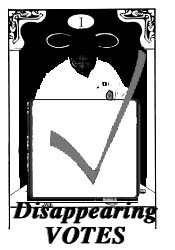
Disappearing Votes, Disappearing Communities

09/24/2021 - 11:22 by Anonymous (not verified)
Original Author
root
Original Body

Electoral Fraud in San Francisco

by Gretchen Hildebran/PoorNewsNetwork

Voting should be the easiest thing in the world. It
is the action that proves that we live in a democracy,
that our lives are self-determined, not dictated from
above. Of course the presidential election of 2000
destroyed that illusion for many. While politicians
and their groupies peered at poorly designed ballots,
thousands of people in Florida, the vast majority of
them African-Americans, were stepping forward to
testify how their right to vote was denied altogether.
Their names had been dropped from voting rosters,
their cars were stopped and searched by the police,
polling places made them wait for hours or had voting
machines that didn't work.

This was the true scandal behind that ìelectionî and
it was hardly discussed in the media or by elections
officials. The targeting of certain communities with
the intent to deprive them of their right to vote is
an old American practice that is alive and well today.
And not just in Florida, right here in San Francisco.
While the district supervisor election of November
2000 represented to many a huge change in our cityís
politics, for those who lived and voted (or tried to)
in District 10, that election was more business as
usual. The scandal that has emerged following that
election has focused only on vague ìinconsistenciesî
that the city has still not investigated. Behind
these statistical errors is the real story of how
entire communities are denied the right to
self-representation.

The general election of 2000 was a testing ground for
a change in San Francisco politics. For the first
time in twenty years, supervisors would be elected by
district. The candidates would be forced to live and
run locally, and be accountable to the issues of
people in their communities, not simply at City Hall.
In District 10, which encompasses the Potrero Hill and
Bayview/Hunterís Point communities, twelve candidates
crowded the ballot.
Three candidates were recognized in the community as
contenders. Mayor-supported Linda Richardson had made
a name for herself at City Hall, most notoriously
during her stint on the Planning Commission.
Richardson had the support of big money, evident in
the $1.5 million rumored to have been spent on her
campaign. Another candidate, Sophie Maxwell, was well
known in the community but was more of a political
unknown. Also running was Marie Harrison, community
figure and columnist in the Bay View, whose outspoken
political views were a threat to the politics-as-usual
that rules from downtown.

But Harrison wasn't just a candidate in that election,
she was also on the streets as an observer of the
Election Day that didnít go by the rules.
"There were great big discrepancies," Harrison
explained in a recent phone interview, "Many votes
disappeared, never came out of their boxes, never were
counted." Harrison is an upbeat and charming lady,
and she laughed often as she recounted her experiences
on Election Day. Under the light tones, her voice
also reflects deep seriousness about the effects of
electoral fraud on her community, she continued,"
What I witnessed was often in blatant disregardî of
election day laws ñ a cable car blasting
pro-Richardson messages parked next door to
various polling places, and signs for the
downtown-backed candidate were posted on poles in
front, both of which are violations of the law
protecting a polling place as a politically-free zone."

Harrison even recalls seeing Richardson herself
interfering with poll workers when they were assisting
a woman who needed to retrieve her absentee ballot
before she could vote in person.
Harrison is humorous about these infractions, "Did
anybody read the rulebook at all?" But she is serious
about the intent and outcome of other violations that
were clearly designed to intimidate voters or buy
votes. Across from a Sunnydale polling place
Richardson supporters gave free hotdogs to folks who
would vote their way. Harrison even spoke to several
people who were paid $10 to vote for Richardson.
In the weeks leading up to the elections buses arrived at senior
and public housing to bring people to City Hall to
vote ñ these ìget out the voteî drives were sponsored
by the A. Philip Randolph Institute, which was openly
backing Richardson in the election. As an observer at
City Hall, Harrison witnessed several seniors who were
openly intimidated to vote a certain way. When she
confronted one of the young people working on the bus,
their response was, "They are paying us and we arenít
the only ones. We are supposed to bring them here and
they only draw one line."

"Seniors and other folks in public housing are
particularly vulnerable to intimidation and bribes",
Harrison said, "due to poverty and the ìone-strikeî
policy of federal housing programs. All it takes is
an accusation of drug-use or criminal behavior to get
kicked out of public housing and this threat can be
effective in influencing voting or discouraging it
altogether." This kind of harassment on the part of
campaign workers is enhanced by the general police
presence that was on the streets of Bayview/Hunterís
Point on Election Day.

The net result of these infractions is not lost on
Harrison, who placed third after Richardson and
Maxwell in the general election (Maxwell went on to
defeat Richardson in a runoff election). While the
absentee voting hugely favored Richardson, the support
she had built up in her campaign disappeared to a
mysterious degree in the returns from Election Day.
Precincts where friends and supporters had personally
assured her of their votes had returns as low as 5
votes.

Harrison's concern about missing votes has been
confirmed, ironically enough, at the highest levels of
government. In May 2001, Philip Paris, the acting
director of the SF Department of Elections, accused
the former director of allowing 3,600 ballots to go
uncounted in the November 2000 election. The
political fallout of this scandal extends to the
present day and provoked an investigation by the
office of the Secretary of State of California, Bill
Jones.

Jonesí investigation discredited the estimate of 3,600
missing ballots but discovered that the number of
ballots distributed differed greatly from the number
that were counted. In the 21 San Francisco polling
places checked at random, a total of 705 discrepancies
were found. This prompted Jones to demand that San
Francisco recanvass all the votes from that election,
a process which would not check how people voted, but
only compare the number of votes cast to the number
counted in the final tally. The San Francisco
Department of Elections has refused to authorize a
recanvass, blaming budget shortfalls. In a statement
made to the city this February Jones said, ìThe
explanation for these discrepancies may lie in
inaccurate record keeping or ballot storage
procedures. Or, the explanation may involve
intentional misreporting of election results.î
A recanvass of the vote would only begin to touch upon
the questions these ìdiscrepanciesî raise. Such a
huge proportion of error cannot be attributed simply
to sloppy mismanagement at the department of
elections. If ballots are missing, how were they
taken, and whose interests does it serve to illegally
effect election day outcomes?

Beyond the paper trail of missing ballots, commonplace
violations of election procedure and law that Marie
Harrison witnessed as a candidate in the
Bayview/Hunterís Point are rarely reported or
investigated. Beyond the dubious outcomes of that
particular election, the overall effect of harassment,
intimidation and missing votes is voter
disenfranchisement.

Mary Ratliff of the Bay View has noted the change
since the November 2000 election. "Nobody is voting
anymore," she said sadly, "the culture of voting here
in the Bayview had been destroyed long ago and we were
seeing it come back in the last couple years".
Ironically, one of the best recent turnouts in the
neighborhood had been in support of Willie Brown in
1995. Since that election, ìmore people were turning
out, many people were working hard to get folks
registered.î Since the 2000 election, however,
discouragement has prevailed at the polls. Says
Ratliff," This is the legacy that Brown is leaving us
with. People are discouraged, depressed and cynical.î
In the general election of 2001, only District 10 had
a 22.38% turnout for the vote".

"Part of the problem is there is no accountability,"
remarked Harrison, "There is no faith in the system
anymore, period." When scandals come and go with
regularity, issues like this one, which cut to the
core of the rights and disenfranchisement of a
community, drop out of public consciousness before
anyone is held responsible. Harrison herself is far
from discouraged, and is planning another run in this
yearís District 10 supervisor race: "I do believe that
our communityís voice counts. There are people who
donít want to see us voting because if we did, you
would see some real change around here."

Tags

A great Leader is honored through words, sound and art

09/24/2021 - 11:22 by Anonymous (not verified)
Original Author
root
Original Body

The Third Annual Malcolm X Jazz Arts Festival is held in East Oakland

by Connie Lu/PoorNewsNetwork Media intern

Joseph Bolden, staff writer and photographer for POOR Magazine/PNN,
and I exit the Fruitvale BART station and after some aimless wandering in the multi-cultural, multi-generational neighborhoods of East Oakland we arrive at San Antonio Park, which was where the 3rd Annual Malcolm X Jazz Arts Festival was being held.

I look up at the brilliant blue sky. There is not a
single cloud. The air is cool with a light breeze
that gently sweeps over the lush green grass where I
am sitting in front of the main stage. The stage is
decorated with a huge purple banner that says
"Malcolm X" written in yellow and outlined in green. There are several stands and booths surrounding the
outer edge of the park with bold, colorful posters and
pieces of art translating the words and images of the Great Malcolm X , a civil rights leader who was murdered in 1965.

The day starts with one of the MC's and performers from the day, Josh Jones explaining that the festival is being held in honor of Malcolm X and his great civil
rights accomplishments. The festival is also
dedicated to Yuri Kochiyama, a friend of Malcolm X and
political activist, who was involved in the civil
rights movement and became a member of Malcolm X's
Organization of Afro-American Unity (OAAU). The theme
of this year's 3rd Annual Malcolm X Jazz Arts Festival
was "Women's Voices Against the War" because of how
our country's current situation with war is affecting
the lives of many women and their children.

Another MC introduces the next band to
perform, the Oakland Highschool Jazz Band. The variety of
instruments being played directly reflects the rich
diversity that make up this band. There are Black,
Asian, and Latino musicians playing different
instruments together. The next
band is The Josh Jones Ensemble. The style of
this band is very mellow, yet strong. Their music has
a jazzy flavor with a hint of funk. The lead singer
has a powerful voice. Her voice echoes with a deep
passion of soul as she sings the climax of the song,
followed by the intense electric guitar solo that
keeps my head nodding to the funky beat of the
drummer.

Throughout this wonderful day there were many youth and elder poets and speakers including The Black Dot Artists Collective, Idris Ackamoor,India Cooke and many more. One of the highlights for me was Rhodessa Jones, an actress,
singer, and writer who began her presentation by reciting an excerpt from a play by
Eve Ensler called "Vagina Monologues" which was based
upon several interviews from a group of diverse women.
Jones recited the excerpt and expressed the emotions
of the vagina by saying, "My vagina's
angry". The monologue itself is dramatically
delivered with passion. At first I wasn't sure how to
interpret what I was hearing, but as Rhodessa
continued speaking I realized the monologue was
addressing the pain, anger, and power of women.

As I walk across the grass towards the sidewalk to
leave the festival, I felt enriched not only with the art, images and words of the featured artists but with the dream that my generation would definitely not forget the important legacy of the great leader Malcolm X.

Tags

The Homeless Audit

09/24/2021 - 11:22 by Anonymous (not verified)
Original Author
root
Original Body

The Controllers Office releases the "Homeless Audit" - Homeless folk protest and support anti-homeless and pro-homeful legislations at City Hall

by CLive Whistle/PNN

As I walk toward City Hall I ponder on the notion of the Homeless audit done by the San Francisco Controllers office which will be presented today in front of the Health and Human Services Committee of The SF Board of Supervisors. I tried to understand the idea of being audited as a community. I knew the homeless audit wasn’t supposed to be a bad thing but somehow it still made me feel strange, and I wondered if someday just to be fair, the SF controller could do a Homeowners Audit…..

"You know it’s a shame that we’re living in one of the richest cities in the country, and we have to stoop to making criminals out of poor and homeless people," L.S. Wilson from The Coalition on Homelessness was speaking to the crowd of activists, poor folks and press gathered in front of City Hall to protest anti-homeless legislations proposed by Gavin Newsom and Tony Hall as well as support the positive legislations proposed by Chris Daly as well as the most interesting thing of all, "the Homeless audit" – an audit that was done to assess the most efficient way to provide services for houseless San Franciscans

"In a few minutes members of the health and human services of the board of supervisors will hear items from the community proposal... these items were endorsed by over 40 community organizations working with poor and homeless people on a daily basis. These ideas were birthed from years of bi-weekly or monthly work groups, counseling, or community meetings, as well as critical examinations of practices in other communities. It builds upon improving the system we have in place, it also strengthens the inclusion of input from those who are impacted mostly and therefore are most knowledgeable, staff who will implement them, homeless people who will live under the decisions that are made. These proposals focus their recommendations on improving the effectiveness of accountability of existing service delivery systems and decision-making processes. We call on the city to address homelessness in a comprehensive manner by implementing the continuum of care plan so many of us worked on."

There were several more advocates and community folks that spoke, The last speaker was public defender, Jeff Adachi who referred to some of the statistics gleaned from the audit, "Its ironic that we’re here on such a beautiful day to protest some of the ugliest legislation that has come before the board in recent times. As somebody who has practiced in our court system as a public defender for the last 15 years, I will tell you that locking up homeless people is no solution. According to the report that was issued yesterday by the controller’s office, out of City Hall, the city spends $30 million dollars of your money every year to lock up homeless folks. If today’s anti-homeless legislations are passed you are going to see that number triple."

After Jeff spoke we marched into City Hall, all of us "homeless folks" who were the proud owners of our own audit. Notwithstanding my pondering I realized that considering homeless folks were already considered a thing instead of a people, that maybe this audit wasn't so bad cause– we might as well have statistics to back up our oppression, then maybe we can fight this fight for civil and human rights with a little more power.

The Homeless Audit...

CONTROLLER’S AUDITS DIVISION

EXECUTIVE SUMMARY

Results in Brief

In the six months from
September 2001 through
February 2002, members of
the Board of Supervisors
introduced 31 pieces of
legislation, made 17 requests
of the City Attorney for
legislation, and made 41
additional requests of city
departments related to
homelessness.

Although the City and County of San Francisco (City)
makes available a wide spectrum of well-delivered services
for its diverse homeless population, the City has not yet
developed an effective, unified strategy for dealing with
the issues related to homelessness in San Francisco.
Homelessness is a major problem in San Francisco: The
homeless population is large, many citizens feel that the
problems connected to homelessness have gotten worse,
and political strife about the best ways to deal with
homelessness hinder the ability of the City to manage these
issues effectively.

Over the years, the City has spent
millions of dollars to address homelessness; however, the
City has not been able to ensure that this money has gone
where most needed. Additionally, the City’s methods for
working with the homeless population have been
inconsistent because different elected officials have
favored different approaches to assisting the homeless. As
administrations have changed, the City has not maintained
policies or planning information related to homelessness.

Moreover, unlike some other major United States cities,
the City has not worked with nearby jurisdictions to
approach homeless-related issues regionally.
If the City is to establish an effective system of services for
homeless individuals, the City will need to ensure that the
system contains three elements that inform and reinforce
one another: policies that include overarching, shared goals
and a strategic plan for accomplishing these goals, services
tailored to different types of clients and their varying
needs, and data that describes the clients who use
particular services, the resources used to provide those
services, how well the services work, and the needs that
remain unmet.

Ideally, to serve clients well and to avoid
wasting resources, the City should supply the right
amounts of the right services. In a good system, these
elements strengthen each other and provide the means to
assess the system’s effectiveness. Specifically, the City’s
policies for the system should determine the services
provided and the types of data collected. Data gathered
about the system and its clients should allow the City to
evaluate its services and to determine or reevaluate its
policies.

The Mayor’s Office on
Homelessness estimates that
15 to 20 percent of San
Francisco’s shelter clients
are seniors, and, according
to the City’s Continuum of
Care Plan, 25 to 30 percent
of homeless people in San
Francisco are families.

However, the City’s current policies provoke much
disagreement among decision makers, and its Continuum
of Care Plan for the homeless is not useful as a strategic
plan. This plan cannot guide the City’s delivery of
homeless services because it lacks the support of key
stakeholders as well as specific, measurable steps and
outcomes. Because stakeholders do not have common
goals for the City’s homeless services, nor do they agree
on a useful plan to implement the services, the City cannot
measure its effectiveness in assisting homeless individuals.

The current structure for delivering services has
fragmented among city departments and various parts of
the Mayor’s Office the authority, responsibility, and
information for the system. No department or agency is
accountable for the system as a whole.

The City also lacks an effective means to collect data
related to homelessness. Currently, the City does not
collect and track data in a manner that provides
comprehensive statistics about services, assessments of
service quality, or data on service funding.

Some of the
reasons that data collection and analysis is difficult in San
Francisco are that the City has a decentralized system for
accepting and tracking individuals who request services
and that no coordination exists among the various service
providers, which must collect and report data to the City.

This absence of coordination creates an administrative
burden for provider organizations, makes extremely
difficult any citywide analysis of service delivery and
provider performance, and does not serve clients well.

Thus, the City’s homeless services lack support from good
policies—which specify goals—and good data—which
shows needs. In addition, according to the information we
gathered, the City’s homeless have more unmet needs for
some services than for others. More specifically, the City
currently funds enough overnight shelter beds to
accommodate all single adults who seek them, but the City
lacks sufficient shelters or shelter beds for homeless
families. Families typically wait three to six months for
space in a full-service shelter. Further, the City does not
fund enough mental health or substance abuse services to
meet the demand, which comes both from San Franciscans
who are homeless and those who have permanent housing.
Finally, a shortage of transitional and long-term housing
exists for all segments of the homeless population, and few
of the homeless can afford "affordable" housing.

For those

whose incomes are sufficient for affordable housing, there
is not much to be found. For the past three years, San
Francisco has created an average of 1,333 fewer units of
affordable housing per year than its population needs.
To determine the needs of different types of homeless
people, we looked at the services available for families,
seniors, veterans, youth, and undocumented immigrants.

We found that the City funds a wide range of services that
appear to be delivered well by highly dedicated city
employees and staffs of non-profit provider organizations.
These services form a continuum of care, from emergency
or front-end services that help those in crisis or immediate
need to transitional services that stabilize homeless people
to long-term services, which include permanent housing.
Services vary in duration and intensity, allowing the City
to make available services with different outcome
expectations that are appropriate for different populations
of homeless people. However, there are people who may
choose never to participate in the City’s range of services.
Policymakers should realize that it will remain an ongoing
challenge to decide how best to respond to these
individuals.

The key policy body in the City’s response to
homelessness should be the Local Homeless Coordinating
Board. However, to be more effective and efficient, the
Local Homeless Coordinating Board needs to have fewer
members, and needs to be empowered and staffed to play a
central role. The City’s key implementation agency for
homeless services should be the Department of Human
Services.

Finally, city departments generally have procedures in
place to ensure that the programs they fund are functioning
adequately and in accordance with their contracts. The City
includes in its contracts with providers many contract
monitoring tools, such as performance measures and
extensive requirements for progress reports, but the extent
to which city departments actually use the data they
receive is unclear. Moreover, the City could more widely
use tools that ensure the efficiency of homeless services,
such as performance measures focused on efficiency as
well as contract provisions to pay providers based on a cost
per unit of service delivered. The City also cannot ensure
that it is purchasing the most efficient services because a
lack of competition among providers for many services to
the homeless causes city departments to award many
contracts without receiving competitive bids.

Key Recommendations

This audit was not intended to determine how to solve
homelessness in San Francisco. Rather, this report
recommends how the City can improve its system for
planning, delivering, and evaluating homeless services in
San Francisco. The City should act on all of the
recommendations presented in this report, including the
key recommendations outlined below. A complete list of
recommendations may be found in Appendix A.
To improve delivery of services to homeless people, the
Board of Supervisors and the Mayor’s Office should:
·

* Reduce the size of, empower, adequately staff, and
comply with the advice of the Local Homeless
Coordinating Board.

*Increase the staff of the Local
Homeless Coordinating Board from the current one
position to three full-time positions: a policy and data
analyst, a grant writer, and an administrative assistant.
·

* Designate the Local Homeless Coordinating Board as
the lead body for policy advice and oversight of
homeless issues in San Francisco, and designate the
Department of Human Services—which is represented
on the Local Homeless Coordinating Board and has a
Division of Housing & Homeless Programs—as the
lead agency for implementation of that policy in the
delivery of homeless services.
·

*Submit all proposed legislation, budget actions, and
ballot initiatives related to homelessness to the Local
Homeless Coordinating Board for review and comment
before adoption of any new measures. Except in
extraordinary circumstances, policymakers should
abide by any measures they approve for at least the
next budget year.
·

* Decide how best to allocate the increasingly limited
funds the City uses for homeless services, based on
prioritized and realistic goals developed by the Local
Homeless Coordinating Board. San Francisco has not
had, and likely will not have soon, enough money to
provide sufficient shelter and housing to meet the needs
of San Francisco’s homeless.

·

*Formalize and sustain a relationship with policymakers
in other Bay Area governments to see how San
Francisco can participate more actively in a regional
approach to homelessness.

*To improve its effectiveness as a policy advisory body, the
Local Homeless Coordinating Board should:
·

* Advise the Board of Supervisors and the Mayor’s
Office about whether to redirect or further restrict the
City’s cash aid to homeless people, and whether the
City should strive to fund more services to provide
homeless people with money management and
representative payee services, where clients have their
rent and other bills paid for them.
·

* Investigate if there are means, including grants, to get
more non-City funds that the City could use to add
capacity in family shelters, full-service residential
treatment programs for families, and mental health and
substance abuse treatment programs.
·

* In collaboration with the Mayor’s Office of Housing,
set realistic numerical goals for the creation of housing
units affordable to low- and very-low income people in
San Francisco, and specify which city departments are
responsible for seeing that specified numbers of units
are created by specified dates.
·

*Compile and analyze the data collected from service
providers by city departments.
Finally, the city departments that contract with homeless
service providers should:
·

* Coordinate with one another to ensure that contracts for
the same or similar services include standardized
service statistics, units of service, and performance
measures, including measures of service outcomes.
·

*Work to implement promptly the federally required
Homeless Management Information System that will
link all service providers and track client data.
We conducted this audit according to generally accepted
government auditing standards.

Tags

Future Fast Forward, Just My Opinion On What May Be Ahead.

09/24/2021 - 11:22 by Anonymous (not verified)
Original Author
root
Original Body

We Don't know what the
future holds.

But arriving there Deaf,
Blind, and Dumb!

I DON'T THINK SO.

by Joe B.

I don’t know what to say.[Like that’s new Joe]

I’ve got an economic windfall, breathing room besides my regular monthly check which is still worrisome, because of D.H.S. Department of Human Services non breach but stinging.

"Just making sure we’re on the same page" hold up of money already paid to work program participants.

Enough about that it only means one has to find alternative means of funding POOR.

As for myself besides having business cards made up for a one-person business for house sitting, writing science or speculative fiction, radio voice over work, and on-line investing.

I pretty much know my options are not as limited as I once thought.

I might try buying and selling real estate in San Francisco mainly because I still want to live here even though its treated poor folks badly it would be home base for me after traveling the globe and maybe off-world?

The last thing but probably most pleasurable would be first writing screenplay, producing, and directing Pornographic film.

The distribution and on-line process someone else will handle.

Folks these are all things I’d like to do to keep myself sane and healthy for the next few decades that is if 2012 is only another year and not special because the Myan Calendar stopped there thousands of years in the past.

I look forward to 2010, ’20, ’30 and beyond, hopefully my other half bake plans will be evenly cooked by the time those years loom closer.

Here is my business, there will be a number to call as soon as I get a phone or place ads in newspapers in S.F. and across the Bay Area.

I do worry about taxes but if my business becomes viable then I won’t mind paying them isn’t that part of being American, excuse me American of African descent.

Now below the business I’m struggling to get into below and if other House sitters can give me friendly suggestions please do – I need all the help I can get.


HouseCare-Pro Price range:$25 per day or $100 a week for 1 bdrm. apt, small House.

4 to 3 bedrooms, $50 to $100 a week,

$5,000 a week for 20 to 40 rm. Homes.

$25,000 by the week or $100,000 for

50 to 100 rm Mansions

Prices are negotiable.

Non drinker, smoker,

drugs (unless its aspirin & vitamins)

Not a party animal, Boredom, works for me.


For Joe only my snail mail:PO Box 1230 #645

Market St. San Francisco, CA 94102

Email: askjoe@poormagazine.org

This column was written to inform people – some who laughingly are suppose to be running this yet to be land of milk ‘n’ honey that ‘PO folks have their own agenda’s just as the power full have theirs.

Ours may not be on as grand a scale, there are more of us learning to withhold our money, votes, be disconnected from power grids, sharing or barter for equal goods, wares, and low-mid-or high tech items.

Poor folks do think out-of-boxes – we have to, our continuing survival and evolution depends on it.

If I, a city boy and man born and bred have to move to the country to survive I’ll learn what mountain folk did to live and survive if it comes to that.

I’m betting it won’t, but just in case that’s what "roughing it" in the outdoors without mobile homes, cell-digital phones, palm pilots, but a bowie knife knapsack, and sleeping bags are all about and originally for.

I don’t miss cable or satellite TV or radio all that much.

See ‘ya, survival lesson’s like curing meat, making candles, weapons, churning butter and if I can get a Crane’s Corp’s wind up radio in case batteries no longer made, - most importantly find a few good men and women if worst comes to worst.

I’d like to die happy with grandkids and old friends surrounding me… Bye.

Tags

The County is Taking My Mothers Property...

09/24/2021 - 11:22 by Anonymous (not verified)
Original Author
root
Original Body

A low-income African-American family have lost their disabled Grandmama and all their property to the precarious world of the Alameda County Guardianship Program. Advocates and family attempt to fight back…

by Lisa Gray-Garcia and Ashley Adams

"This county is taking my mother’s property and evicting us illegally." Scott Sloan’s salt and pepper ‘fro glistened in the 9:00 am glare while he addressed POOR Magazine and DAMO staff – the only attendees of an emergency press conference held outside the Alameda County Courthouse on a bright morning in May. POOR Magazine staff in conjunction with Disability Advocates of Minorities Organization were present to report, support and advocate for the Sloan family – a low-income African-American family who have lost their disabled Grandmama and all their property to the precarious world of the Alameda County Guardianship Program.

"I live in L.A," Miss Moore, Mrs. Sloan’s daughter spoke next, "but I’m up here to lend support because everything they’re doing to my mother is wrong, like the way they evicted my sister out of my mothers house, they told her they were gonna fix the house up then she could move back. Soon as they fixed the house up they told her she was out, she had to go, had to find her own self a place to stay. No compensation, but she just had to go."

Four of Mrs Sloan’s seven adult children, several grandchildren and their extended family stood silently beneath the massive steel and concrete structure of the County building that wielded arbitrary control over the legacy of Mrs. Beatrice Sloan

Beatrice Sloan as the single parent of 7 children worked full-time as a dishwasher for thirty years to come up and out of poverty and buy property for her and her family. After endless sacrifices she bought and maintained four houses, which mostly housed her large extended family. Then she became ill and the county of Alameda seized control of her estate. Now her family faces homelessness and she is held captive in The Excell Nursing Home, a board and care facility in East Oakland.

The Sloan family have been trying to get justice for their grandmother ever since she was placed in Conservatorship. One by one Mrs. Sloan’s properties have been sold out from under the family without their consent to "pay" for the extremely high fees charged to her estate in the nursing home and have faced an endless number of mysterious surrounding the "loss" of her family assets.

"We’re trying to find out what’s going on with her and why the county wants to take the conservatorship of her, Charles Woods, Mrs Sloan’s grandson in law who has lived with his wife Javelyn and father in law Scott Sloan and has just received a 30 day eviction notice from one of Mrs. Sloans’ houses related some of the confusing bits of information they have been told by the county officials, " the county told us; we can get Conservatorship of her person but not her property; and soon as the county got control of the property they started selling the properties.

If they had liens-tax liens on her property there should’ve been liens on the bank account. She had no liens on the bank account that means she had no liens on the property but this is what they were telling us – the tales they were telling us.
Charles Woods continued, " I’m just here to speak for my father-in-law’s behalf .

Since Mrs. Sloan has been in the care of the Alameda conservative she’s been neglected, and abused at the Excell Nursing facility . The county conservator’s care more about her property than her well being .." Charles went on to relate the families recent attempt to visit their grandmother at Excell, who on other visits has been found in her own feces, with burns and bruises on her body and/or so drugged up that she is unable to move or speak, this last time they visited – they had to deal with a new shock, she just wasn’t there at all – and in true form, the family had to file a missing person’s report with the Oakland police department just to find out that Mrs. Sloan had been taken to Alta Bates Hospital.

"We just want to make this situation right.." Charles shook his head after this last statement, as though he was shaking off the impossibility of it all

The court day to-be bustled officiously around our small press conference; $300.00 suits, deep bronze and ruby red designer shoes, glistening leather briefcases dangling off of bejeweled hands. The "law" at their fingertips, judges and lawyers buzzed by, ready to take what little assets and/or dignity folk might have had left or like in the Sloan’s case, remove what small trace of equity and assets remained.

"How many properties did Beatrice Sloan originally own?" POOR staff inquired

"Four."

"Does she any of them now?"

"Only two – sort of."

"How is that set up, does she actually own them, is she on the deed, or is she…?"

"She is the sole owner. She’s on the deed… no one else."

"Then how is Alameda charging you guys $2000 dollars rent and evicting you?"

"Because they can that’s what they’re doing." They’re getting back at us for fighting them for what they’re doing ...They are actually stealing the property." Scott Sloan finished by looking angrily towards the court house

"What is the reason for the thirty day notice that you’ve just been given right now?"

Scott answered emphatically, "No reason, they gave us no reason, Oakland don’t have to give you a reason to evict you – at any given time they can evict you. You don’t have to have a reason, this is the only city that don’t have to have a reason to evict you."

The POOR staff, many of us victims of those no cause evictions ourselves, chimed in together, "There’s no just cause at all."

Before the press conference was over we asked the Sloan’s what they would like to accomplish at today’s hearing

"We would like to take conservator of person so that we can take care of our mother and grandmother in the way she deserves to be taken care of "

9:25 am The Hearing

The Sloan Family and the POOR Magazine and DAMO crew of media advocates, Ashley, Isabel, Jewnbug, Charles, Leroy, and Tiny entered the Alameda County Court building. One by one we were screened and scanned for weapons and unnecessary pieces of metal or paper , including the POOR Magazine poster boards, which they told us were prohibited in government buildings. For a minute, we all thought we were at the airport, as these facilities are not much different from each other, both cause stress.

Once we arrived in the court room The court clerk gave a run down of court procedures had asked to make sure everyone had seen the video on Conservatorships. Scott Sloan said that he had not seen the video, and the man said he would show it to him. We all wondered in shock, Why has Scott Sloan not seen the video when his mother has been under the county’s conservatorship since 1996?

"All rise..The honorable Judge William McKinistry presiding"

The Sloans looked towards the bench in disbelief. This judge was different than what the court papers said. They were expecting to see Judge Harry R. Shepherd, instead the judge was William McKinstry. McKinstry is the judge that the Sloans have been dealing with for a few years regarding the conservatorship of Beatrice Sloan, a man who the Sloans have seen on some of the transfer of deeds and deeds of sale of Mrs. Sloans property, a man who the Sloans believe has his hand "in the cookie jar" so to speak. .

Judge McKinstry, an older white man who entered the room quickly and had a habit of tilting his head to the side like a confused puppy and then emitting a short laugh at his own remarks quickly called the Beatrice Sloan case. Mrs. Sloan’s son, Scott Sloan, grandaughter, Richalda Williams, grandson-in-law, Charles Woods and POOR media advocate, Lisa Gray-Garcia (aka Tiny) all walked silently toward the front of the courtroom. Connie Rutherford from the Alameda County Counsel, also joined them. She was in place of an attorney that has been on the Sloan case through the County Counsel. Mary Lou Griffin, the current conservator did not get up from her seat and Alfred Fisher, another player in this complicated drama, entered the court room and sat down in the audience...

After introductions were made to the judge about who was present. The family stated their case, "We are here to take over the conservator of person"

"Well, I am afraid you can’t do that today- you can state your objection to the county taking over conservator of person which they are filing for, but you would have to file a formal petition to the court with your objections to their conservatorship and as well you would have to file a petition to take over conservator…"

"Your honor this family cannot do these legal documents themselves- they need a lawyer appointed to the case" Lisa Gray-Garcia, brought up the fact that this family desperately needed some legal representation.

The judge replied that it is not required that an attorney be assigned to the case and that the best advice he could offer is the family should contact the Alameda County bar Association

"Well what about the fact that Mrs. Sloan is being abused by the care facility she is in" Lisa implored.

"I am not able to deal with an elder abuse case but the family should contact the County Council’s office about that"

"W have made several calls to them and they never follow through on our complaints" Richalda Williams spoke up

" Well I am afraid that you’ll have to take that up with them – they are in court today maybe Mrs. Rutherford could talk to you today"

After a few more issues were brought up by the family and the advocate from POOR
The judge bounced around impatiently in his seat and switched out of dialogue mode and into judge-speak and set a date with the public defender present who was allegedly there representing Mrs. Sloan for July 13th court hearing and informs the family that they can file objections or petition to become conservator of person by June 20th \

The case ended without dealing with the health of Beatrice Sloan which is in jeopardy, especially if she goes back to the Excell Care Center.

After the hearing the whole family, POOR staff, Connie Rutherford of the County Counsel, Mary Lou Griffin, and Alfred Fisher filed into the hallway "to talk"

The family and their advocates confronted the county officials with facts regarding the negligence of the conservatorship, and the misuse of the funds the County received from selling two of Beatrice’s estates. Mary Lou Griffin had a difficult time with eye contact. She was constantly fidgeting with her hands, shifting her stance, and avoiding the eyes and faces of those addressing her.

Connie Rutherford was there to offer support to Mary Lou but she refused to answer any questions pertaining to the Sloans’ case, She did state that the Sloans have the right to petition for both the conservatorship of person and estate. To petition for conservatorship of estate they have to be bonded which is dependant upon the value of Beatrice’s estate. The odd thing is when asked about the value of Mrs. Sloan’s estate, Mary Lou and Alfred Fisher claimed they had no idea how much her estate is worth….

One of the POOR staff members asked why the baby of Javlyn and Charles Woods had lead poising from 588 55th street when two properties were sold to ‘supposedly’ finance repairs on the others…no one really answered… the subject was quickly changed.

It was about at this point that Connie Rutherford called for a close to the adhoc meeting. … the County Council team seemed slightly "shook" from having to spend 20 minutes telling the truth…

If you are an attorney willing to help the Sloan Family or have any more information for them call POOR Magazine at (415) 863-6306

Tags

Michael Manning

09/24/2021 - 11:22 by Anonymous (not verified)
Original Author
root
Original Body

by Leroy Moore

Michael Manning

Greener Pastures Lie Within

New York, New York, the Big Apple. The City that doesn’t sleep is the home of a story full of worms sluring around day by day trying to escape the feet of man-made oppression. In the middle of city lights, Broadway and the history of Black Harlem is the dark injustice of victims of police brutality, laws that lock up homeless people and a dim beaming light trying to live and find the healthy juices of this big apple; the Manning family. Born in the Bronx on December 2nd 1969. How funny, graduating from an institution named after a man that raped this country, Christopher Columbus High School. Although life in the Bronx is the temptation of inner city ingredients i.e. drugs, alcohol and gangs Michael stayed clean and never had trouble with the law in fact from the age of 15 to 18 he served as a member of his neighborhood civilian patrol with his closest friends. They were responsible for the arrest and capture of a burglar. He also played little league baseball and basketball for the police athletic league, which he has trophies.

Like many older Black families, Michael was surrounded by love from his grandmother, ants, uncles, nices, nephews, cousins and two brothers and two sisters. However growing up in the Bronx of New York is not an easy task for anybody and the Manning family had their share of battles with poverty that led to a search for greener pastures of employment, lower rates of street violence and safety.

In 1992 Michael, his girlfriend of 12 years and her three children packed up and moved to Pennsylvania in hopes of a better life. He landed a job as a line cook at a resort for a while. Michael’s mother told me that Michael’s craft is cooking. "Oh, yes he can cook!" His mother wrote in a letter. But he took a job in an Envelope Corporation. This is where Michael’s life changed forever. One day at work Michael was just stocking the selves when a forklift ran him over leaving him with severe spinal damage, nerve damage, carnal damage and daily chronic pain. In the words of Michael, "My disability has put a sizeable struggle on my life, mostly I feel helpless and ashamed at times when others have to do for me what I once was able to do myself." Recovery was slow but Michael went through physical therapy and graduated with the aid of a cane but he still has chronic pain.

It seemed every time Michael’s life came together, the dark sky would open up and release a bolt of lightning.

Defending My Brother, Michael Manning

Defending himself

In a life or death situation

Blink of an eye

Cane was kicked to the side

His life was on the line

Michael’s heart was racing

Knife slicing the air

Baseball bat cocked

Ready to swing behind him

Two against one

Hands cut up, blocking

His smooth brown face

Revealing tender flesh

One took off the other fell

And Michael stood tall

Defending himself

In the Halls of Justice

The Judge & Juror vs. Michael Manning

Two against one deja vu

Michael, poor, Black and disabled

Judge, upper class, White and disabled

Juror not of his peers

Don’t need hard evidence

When the Juror and prosecution

Is playing pocket pool with the Judge

Read the verdict

No Justice

14 to 30 years on self defense

Juror ruled first degree murder

The only witness, a lying drug dealer

Called lazy & not contributing to society

Limping back and forth with no cane

Accused of faking his disability

Institutionalize isms kidnapped

Hurricane Carter, Earl Washington Jr.

Mumia Abu-Jamal and Michael Manning

But the shackles are slowly unlocking

And the TRUTH is blossoming

Michael Manning’s story is common

Among Black disabled and non disabled men

In the US Justice System

Don’t just sit there

Innocent brothers & sisters

Are locked up in prison

Join the Manning’s family campaign

For justice and freedom

His family is struggling for media attention

Write letters to political, Black and disabled leaders

Organize the Black Panthers, the Black Caucus,

The Black Radical Congress & Black Churches

To lead Michael Manning and our brothers and sisters back home

We have to be the Harriet Tubmans of today

Make our own Underground Railroad

Burn down prison plantations

And start working on the people of color

Reconstruction of US Justice System

We must love and defend each other and ourselves

By all means necessary

I am here today to defend my Black disabled brother, Michael Manning.


To get involved-Go on the internet at www.michaelmanning.homestead.com

Tags