Story Archives

Krip-Hop Finds Home in The Motherland

09/24/2021 - 09:45 by Anonymous (not verified)
Original Author
root
Original Body

An interview with the South African Disabled Musician's Association

by Leroy Moore/illin n chillin-PNN

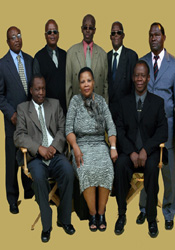
Blind musicians who were once good musicians during their young days established the South African Disabled Musicians Association (SADMA) in 1997. The main reason for the formation was to assist young disabled musicians who can not get record deals and were left out of the music industry and could not participate in opportunities which the country offered for musicians e.g. music talent searches by big companies like Coca Cola. The organization caters to all people with disabilities and different genres of music. This interview is with Sam Nooge representing SADMA.

Krip-Hop: Give us some background of why Musicians with disabilities are discriminated against in the industry?

SADMA: People see disability before listening to the artist's music. As a result, people come to unfair conclusions about the artist. People with disabilities are kept outside their communities at a very early age and are placed in educational institutes that are for children with disabilities. They then grow in the environment where people see very little of them and later in life they are introduced to the community as complete strangers and every thing they present is considered inferior and of no value. Some of them in the process develop inferiority complexes. Maybe it is different in your country. There they do have an opportunity to mix with able-bodied artists due to communication and mobility. Music today is about artists who do more dancing than the actual singing. Unfortunately, most disabled people are not into dancing. Commercial recording studios are not user-friendly for artists with disabilities either.

Krip-Hop: Tell us more about your future goals?

SADMA: Our future goals are to improve and expand our recording studio so that we can accommodate more artists. To establish a commercial recording studio for purposes of business. To establish a music training facility. We want to train people with disabilities as sound engineers. To offer training in business skills and the music industry. To promote our musicians locally and internationally. To promote music festivals and concerts for people with disabilities locally and internationally. To acquire a mobile recording studio so that we can reach disabled musicians in the far away rural and poor areas of our country. To establish a radio station and television station for people with disabilities.

Krip-Hop: Have big musicians in South Africa and in the US helped you at all in your work?

SADMA: No. Big musicians in South Africa and in the United States of America have not helped us. I hope you will assist in talking to Americans like Stevie Wonder, Ray Charles Foundation, Teddy Pendergrass, etc.

Krip-Hop: Give us a view of what happened to music during apartheid?

SADMA: South African music was confined to South Africa and blacks could not play with or for whites and vice versa. Blacks could not perform in the well-equipped venues that were for whites only.

Krip-Hop: How do you reach an international audience and the youth?

SADMA: We have not been exposed to international audiences. It was a first when our artist Coach Matlawe performed in Beijing. Once the documentary that includes our organization is finalized, Coach and other overseas people with disabilities will inform you. The youth we reach through our music talent search for more artists with disabilities.

Krip-Hop: Have any of your artists traveled to the US?

SADMA: NO.

Krip-Hop: Has the government supported your work?

SADMA: Government has assisted us by creating a conducive atmosphere for recording people with disabilities and supporting our programs somewhat financially, although not sufficiently. We were expecting the government to help in marketing our artists and launching them locally and internationally.

Krip-Hop: Do radio stations in South Africa play your artists?

SADMA: NO.Projects we intend embarking on need huge financial resources. To be able to achieve our goals financial resources are needed. People who have financial resources can partner with us by contributing funds that will serve as capital and those people will be shareholders who will receive dividends once the business starts making profit. We are also in the process of raising funds and things are looking promising. Should our sponsors keep to their promises we shall soon be having our own premises with an additional recording studio and a video studio. It will then be a matter of raising cash to be able to run the organization professionally.

Tags

Jail Them, Dont Bail Them

09/24/2021 - 09:45 by Anonymous (not verified)
Original Author
root
Original Body

What the Corporate Bailout Means to all of us...

by Phil Adams/Race, Poverty, Media Justice Intern

I know what it is to be used by the government for the profit of a few corporations. Since I have become a veteran I learned the planes I flew in were from Lockheed Martin, weapons I used were from Colt-Remington, and the computers I used and soda I drank were procured from Haliburton. I have learned that the blood shed in Iraq was for the purpose of buying items from these corporations. At this point I believe that private corporations play more of a part in decision making within the government than the citizens do. With this corporate bail out I believe our country has transferred public finances to private hands and private debt onto the public.

It was around Ten o'clock in the morning when I showed up at the Mortgage Bankers Association's annual conference. I walked into Moscone Center and immediately felt out of place. The hall was empty with high white ceilings and empty booths. Bland colored banners with lame catch phrases and stock photos urging me to invest in real estate, obviously designed by a drowsy office worker somewhere only to be tossed into the dumpster the next day. I knew I stood out, the only people in the room were pale fat sixty year olds with saggy faces and business suits, six uniformed police officers, the hazy eyed brow beaten convention staff and me, a twenty something year old from Richmond in a leather jacket. Eventually one gray-haired convention staffer mustered up enough courage to ask me if I needed assistance. I saw him eyeing me through his thin-rimmed glasses. I took a breath and looked at him for a second knowing he was making minimum wage and probably coming on retirement age, the placard on his chest reading event staff made me want to ask him the same question. I told him I was interested in learning about the Mortgage Bankers Association. I must have touched some type of robotic knee jerk reaction for his occupation because he pointed me to the information desk and went back to standing at the door with his walkie-talkie. At this point I knew I wasn't going to get anywhere and I knew I was about to be asked to leave.

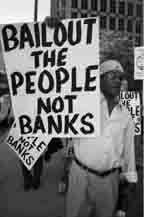
About an hour later the protest started. It was organized by A.N.S.W.E.R. SF. The reason I was there was to find information and do a little venting of my frustration. I knew that there was a corporate bail-out and I knew it had something to do with the mortgage industry. The whole time I was asking myself, why should we give money to corporations. Don't they have enough already? It was fairly cold that day--on the sidewalk the protestors formed a semi-circle off to the side of Moscone Center barely enough to fill the sidewalk. That's when the chanting started. Natalie Hrize stepped up on the two crates she was using as stage and shouted "jail them don't bail them!" We were loud, we were charged but unfortunately it seemed like there just weren't enough of us. I think the problem is not enough people know exactly what happened with the corporate bail out plan.

I recently attended a lecture by Dr. Jack Rasmus. He enlightened me to a few of the facts on what's happening on Wall Street and how the elites are furthering their war on the poor and working class of this nation. There isn't one direct cause of this economic downturn but there is an explanation behind it. It's pure and simple greed.
Politicians have been in the process of deregulating the banking and lending industry since the mid-90s. Basically they are putting fewer rules on how these guys trade and go about business, pretty much letting them make it up as they go along. The real problem started in 2002 when our fearless leader George W. Bush got together with Allan Greenspan to lower the federal interest rate to 1%. That means that the banks could borrow money from the government at a 1% interest rate. I wish I could get a loan at 1% interest, I guess I have to have a huge banking corporation first.

The reason behind this rate decrease was that Greenspan was on his way out and didn't care and our fearless leader needed to win an election and keep the illusion that everything is fine. During this brief rate decrease between 2002 and 2004 mortgage companies wrote 4 trillion dollars in mortgages and half of them were bad loans that they would not have written under normal circumstances. This made their companies look so good on balance sheets that they would sell stocks in their companies around the world. Other countries were investing in our market because it looked really good even though there were bad predatory lenders giving people houses knowing that they wouldn't be able to make payments. Eventually the federal interest rate went back to normal and it came to light that the people they convinced to take these loans would not and could not pay them.
The problem with the bailout is that it's like throwing money in the closet hoping the monster will go away. The bailout is based on a strategy called liquidity. That means if you give the bank some money they will lower the interest rates on these mortgages and people can stay in their homes and pay off these debts. That or possibly lend to other people honestly at a fair rate. Instead what they are doing is hoarding the bailout for their balance sheets serving their shareholders and investors. This is the systemic root of the problem.

There is a way to solve this problem. These companies don't need or deserve a Bail Out; we the people deserve a Bail Out. We need to reset all the rates to the way they were before 2002. This would alleviate the strain that a lot of people are feeling right now with high rates that these companies have imposed trying to save their own asses by screwing over everybody. That and instead of using tax money, the government needs to repatriate all those offshore tax shelters in the Caribbean and in Europe that these CEOs and investors have hid their stolen money at. Force these cowards to bail themselves out instead of profiting off of conning honest workers.

Tags

Migrant Movement

09/24/2021 - 09:45 by Anonymous (not verified)
Original Author
root
Original Body


by Freddy Gutierrez

one of the first things we learn to do
is move
its what we do

movement is embedded in our existence
strung on the chords of our DNA songs of resilience

SO AS WE EXIST
WE MOVE
SO WE CAN EXIST

and the people moved
see how they liberated their bodies from structure
codifying migration techniques
in what can be identified
as stylistic individuality
creating their own language
bodyrock talk
mountain top vernacular
not speaking the king's GMO tongue

for their roots are grounded points of view
achievements of existence that branch out
stemming from philosophical shifts
moving in a way that moves us
so move out our way

move out the way
for we have always been a people of movement
since our pigment was one and the same
choreography the color of rubber and leather
on the tap dancing
huarachando
feet of a young child
bound on the balls that balance
bouncing crossing
an imaginary line in the sand
off the banks of El Rio Grande
or the West Bank
or the Mississippi

the people don’t dance for pennies,
never to reinforce borders
they dance they move
for movement is at the core of our universe
contracting
expansions of biological oratorio
the people move to dance personal expression
with a vocabulary of gestures
ushering urgency for an American dream beyond the currency

the people move
like barefoot tribes
with the names of our lineage lining
the souls of self sacrifice
the Rite of Spring

the people moved
before dance became acceptable in proper society
before they wanted our arms to pick their cotton
pull their weeds
and gather harvest that we planted

the people moved
presenting point of views
cultivating a world of hues
always reflecting the contemporary climate

the people moved
as an amalgam of who they descended from
with movement initiated with emotion
expressively from our own drive
and desire for a higher standard of living
for a safe place to make their children a true face

as sons and daughters
of marginalized migrant mothers and fathers
the adepts of motion,
this friday we'll move
with the moves they taught us
mobilizing the community

for this country has an ambivalent relationship to the body
motion sickness

but little do they know
that the only cure is to keep moving
and so
we MOVE
WE MOVE
WE MOVE

Tags

So Very Hard to go

09/24/2021 - 09:45 by Anonymous (not verified)
Original Author
root
Original Body

A native San Franciscan remembers Joe Jung's restaurant

by Tony Robles/PNN


Ain't nothin' I can
say, nothin' I can do,

I feel so bad, yeah,
I feel so blue.

I got to make it right

for everyone concerned

Even if it's me, if it
means it's me what's
gettin' burned.

"So Very Hard to go"

Tower of Power

The faces glide across the pane glass window. They come into focus and just as quickly fade. I stand inside a department store on Market Street of which I am a security guard. It is 1990 and I am a man. I remember walking down this street with my Grandma. I remember Market Street bearing scars and pockmarks created by bulldozers and jackhammers. I didn’t know what was going on. I imagined riding the Muni bus and getting swallowed up by the ground. I’d ride the bus with my eyes closed until Market Street was in the distance. I was just a kid. I didn’t know that San Francisco was making way for the Bart system. I only knew that I didn’t want to be swallowed up.

I’m dressed in my polyester security guard uniform. I look out the window at the new shopping center that has risen out of the ground. It’s the new San Francisco Shopping Center and people flock to it as if it was a religious shrine. I look out the window. Shoppers come in and out and are being watched by the cameras on the ceiling—especially the black shoppers. I was in the loss prevention department. The plainclothes officers in the department carry badges and handcuffs. I carry the polyester on my back.

I was mad at the new shopping center across the street. I was mad at the engineers, the architects, the cement masons—all of them. I was mad at the entire structure and what it represented. I saw the big cars and the tourists and the business people and the young. I saw them walk through the swinging doors. I watched the houseless people watching the shoppers carrying bags as they left. I watched.

I remembered what was there before the mall. The Emporium Department Store stood there alongside smaller businesses. I used to go to the Emporium when I was a kid to sit on Santa Claus’ lap. On the roof were carnival rides. It was a magic place.

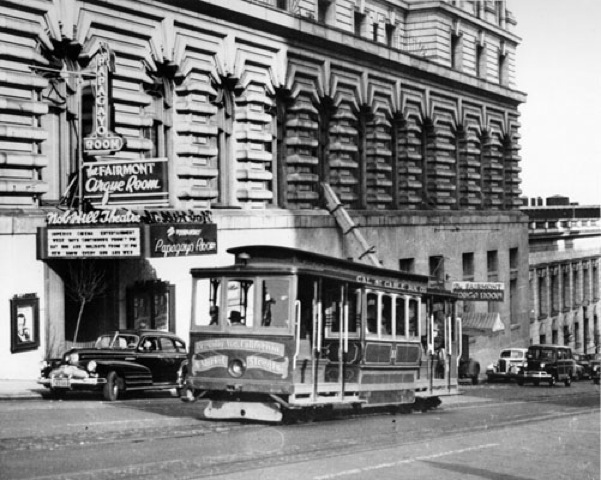
Even more magical was a place a few doors down. It was a Chinese cafeteria called Joe Jung’s. My grandmother used to eat there. We’d walk inside and grab a tray. I’d slide the orange tray across the rail, gliding past all kinds of delicious food; chow mein, fried rice, pork noodle soup, roast beef, turkey and my favorite, lime jello with fruit cocktail. Grandma wore colorful scarves and big sunglasses. She would pay for the food and we’d sit with other Filipino elders. Grandma would talk and laugh in Tagalog. I would listen and not listen at the same time. I was busy with my lime jello. The elders would laugh while I sat slurping at it.

I didn’t know it at the time but my grandmother’s friends were survivors. They were the manongs and manangs (Filipino word of respect for elders) who came to America in the early days. I watched them eat their rice. They would look at me and smile. I wondered what they were thinking. I imagined what they looked like when they were young. It would be years later that I would see their faces in black and white pictures in a book called Liwanag—a collection of Filipino-American writing whose pages talked about our resistance as Filipinos against those who would colonize our lands and our minds. The words were written by such writers as Al Robles, Oscar Penaranda, Serafin Syquia and Lou Syquia. I remember the laughter of my elders at Joe Jung’s.

I stood looking at the San Francisco Center. I refused to go there. People told me of the massive floors and the circular escalator but I couldn’t have cared less. I still heard the laughter of my elders and the smell of chow mein and the sound my plastic tray made as it slid along the rail. I wondered what became of the elders. I wondered if the shoppers knew what had once stood in its place. I wondered what the shoppers stood for. I wondered if they would care.

© 2008 Tony Robles

Tags

Don't lose your music

09/24/2021 - 09:45 by Anonymous (not verified)
Original Author
root
Original Body

An Inspiring worker scholar whose power comes from within

An Inspiring worker scholar whose power comes from within

by RWS

Time Warp

He wears a white

T shirt with a

Gold chain dangling

From his neck


Calls everybody

Homey, even the

White guys


Carries a mini

Boom box

Radio


He’s 44 years old

And has never

Held a job


He had a bad

Car accident that

Left him disabled


He now works in a

Warehouse heat sealing

Cellophane packages
courtesy

Of a job training
program


It’s his first

Gig


but his real job

Is recording cassette

Tapes


He calls them

“mix tapes”


He has all

The slow jams

From 30 years ago


He sell ‘em for

2 dollars a pop,

sometimes 3 for

5 dollars


He talked me into

Buying 2 tapes

The other day


I didn’t have the

Heart to tell him that

I don’t listen to
cassettes

Anymore


I gave it up

About 10

Years ago


All my music

Is on CD’s now


But I keep it

To myself


Guys like him

Are just like

Good music


They never go

Out of

Style

© 2008 RWS

Tags

A letter to the young people I yelled at about JROTC

09/24/2021 - 09:45 by Anonymous (not verified)
Original Author
root
Original Body

by Tony Robles

I was a kid when my father threatened to “ship my ass off to military school”--a threat that has been used by so many parents for so long that it is now cliché; even comical. But to my 10 year old mind, the idea of getting shipped to military school scared me. My father thought that scaring me with military school would make me disciplined. He wanted me to wake up early and eat all the food on my plate and get good grades. My grades were average and I had trouble getting out of bed. As for eating all the food on my plate, I did because—if I didn’t—he’d “knock me upside my head”. The military school threat was merely part of his disciplinary arsenal.

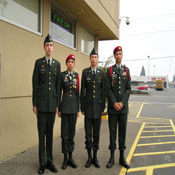
A few days before the election I saw you on the corner of Fulton and Funston Streets holding signs in favor of Prop V—which called for the reinstatement of JROTC to San Francisco high schools. I was riding my bike home from work. I saw your faces—all Asian, all young. I had seen your faces before in the faces that I had seen in JROTC when I was a student at George Washington High School nearly 30 years ago. We were full of energy and we wore our JROTC uniforms for various reasons—my reason was to get out of PE—I didn’t want to “mess up my hair”. Others were involved for various reasons—patriotism, to explore what the military might be like, etc. I too wore that uniform.

You probably thought I was yelling and I was. In these times it’s difficult to be heard—to get your point across when there’s so much misinformation out there. I looked at your faces knowing that you were doing what you thought was right. Your parents probably think that JROTC is a good thing—something that instills discipline and builds character. Perhaps your parents are immigrants, which make it even harder.

I stopped to talk (and yell) at you because you are our young people, not the military’s. When I told you that we need you, I truly meant it. We need you much more than the military. In this American culture of independence, we are taught to be separate from our elders, from our community. This is something we need to fight. I had said that you should have been standing on the corner with signs urging the passage of Prop B—which would have given millions of dollars to build affordable housing in San Francisco; housing that is needed for our elders, the disabled and low income people—many of whom are immigrants who work two and three jobs to just to survive. I told you we needed you—we still do.

We need your energy to fight for affordable housing for San Franciscans. We need you to walk with our elders and hear their stories. We need you to help our elders carry the rice and the fish to their rooms and guide them across the street in the blind madness of traffic that says that we must be concerned for only ourselves and not our elders and our commmunity. We need you to sit and laugh with our elders over a plate of rice that you’ve helped carry over that myth called the American dream. We need you to sit and listen to their dreams and see your dreams in their faces and stories. We need you to stand with us—on our side.

Prop V won and prop B lost. We need you.

Tags

I didn't shot the sheriff

09/24/2021 - 09:45 by Anonymous (not verified)
Original Author
root
Original Body

A co-worker blast from the past

by RWS


I was going to
community

College taking a not-so

Full load of

Classes


I worked at

A fast food

Restaurant


They stuck me on

French fries with a

Promise that I’d be

Promoted to burgers in

6 mos.


William was

The shift

Boss


He had a thick

Chinese accent and when

He spoke you could see

A light brown film
covering

His teeth


He resembled a bulldog

That had run head-first

Into a freight
train


He barked orders,
telling

Us to hurry with the

Burgers, fries and

Cokes


And to get a

Mop on

Aisle one


I quit that stupid

Job and went on to

Security guard work


Yesterday I got off

Work and was walking

Down the street in my

Stupid security guard
uniform


And I saw

William


He had a child

In his arms and a

Woman at his side


He wore a sheriff’s

Uniform with a .45

At his side


I said
Hello


He didn’t

Remember

me


His accent was gone,

His teeth were

Perfectly white


Told him I must

Have mistaken

Him for someone
else


And i

Did

Tags

Amores Sin Fronteras

09/24/2021 - 09:45 by Anonymous (not verified)
Original Author
root
Original Body

The Fourth Year of Latino/Latina Gay Pride celebrates Unidos en el Cambio in San Francisco

The Fourth Year of Latino/Latina Gay Pride celebrates Unidos en el Cambio in San Francisco


by Teresa Molina/Voces de Inmigrantes en Resistencia at PNN

For English Scroll Down:

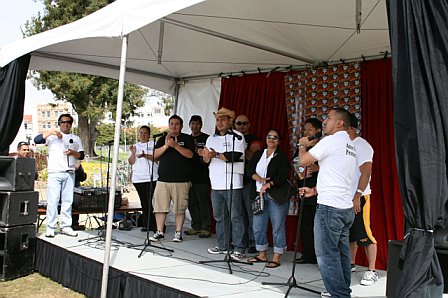
Cualquier ser humano merece el derecho a amar y tener ese amor sancionado sin prejuicios ni fronteras. El amor es amor, no importa a quién o qué lo sientes y nadie debería tener la autoridad para invalidar cualquier tipo de amor. Estos fueron dos de las demandas de la comunidad LGBT latina orgullosa que se reunieron en un evento llamado Amores Sin Fronteras en el Parque Dolores el mes pasado. Otras demandas lógicas y justificadas fueron: que su validez como amantes, seres humanos cometidos sea reconocido por una sociedad y sistema homófoba y que deben tener la oportunidad de ser feliz, viviendo una vida con sus amantes.

William Romero, un organizador voluntario del evento dijo: "Este festival es genial porque es nuestra oportunidad para que nuestras voces sean escuchadas y nuestras demandas se cumplan", añadió, "Lo que queremos es ser respetados y tratados mejor". William es una figura poderosa en la comunidad latina LGBT como él es un gran organizador que ayuda a planificar este evento cada año. William añadió: "Las cosas han cambiado para mejor. Hoy en día, por lo menos tenemos la libertad de expresión de nosotros mismos, pero la lucha no ha terminado y no será acabada hasta la igualdad de derechos exista para nuestra comunidad".

Trajes coloridos y rostros sonrientes decorarón el paisaje alegre y ilumino la sinceridad en los corazones de muchos. Un grupo de lesbianas, gays y personas transgénero celebraron con orgullo su identidad y demostraron sus talentos muy confiadamente mostrando su amor.

La doctrina religiosa es tan arraigada, no sólo en nuestra sociedad, sino que también tiene una presencia muy fuerte en la cultura latina. Como todo el mundo sabe, de acuerdo con la Biblia, ser homosexual es un pecado, y si la familia de uno no puede romper de la creencia de que la homosexualidad es inmoral y un pecado en lugar de sólo una preferencia sexual, es muy difícil tanto para los homosexuales en la familia, y la propia familia para entender unos con otros, y, además, empatía con los demás. La presión de nuestros padres latinos, compañeros, y la mayoría de familiares, a ser heterosexual; y no sólo heterosexual, sino llevar a cabo este acto machista si es un niño, y actuar como una dama reservada si eres una chica. Es sólo a partir de los últimos anos que la comunidad LGBT latina ha sido aceptado en nuestra comunidad más abierta, por lo que la lucha por la aceptación realmente comienza en casa, con nuestras abuelitas, tíos, tías, madres y padres.

English Sigue:

Any human being deserves the right to love and have that love sanctioned without prejudice or borders. Love is love, no matter who or what you feel it for and no one should have the authority to invalidate any particular kind of love…,These were two of the demands from the Latin pride community who gathered in an event entitled Amore Sin Fronteras (Love without Borders) at Delores Park last month. Other demands equally logical and justified were that their validity as loving, committed human beings be recognized by a homophobic society and system and they should have the opportunity to be happy creating a life with their partners.

William Romero, a volunteer organizer of the event said, "This festival is great because it is our opportunity to make our voices be heard and have our demands be met" he added, "What we want is to be respected and treated better." William is a powerful figure in the Latino LGBT community as he is a major organizer that helps plan this event every year. William added, "Things have changed for the better. Today, we at least have the freedom to express ourselves but the fight isn't over and it won't be over until equal rights exists for our community." Colorful outfits and smiling faces decorated the joyful landscape and illuminated the sincerity within the hearts of many. A group of lesbian, gay and transgender people proudly celebrated their identities and demonstrated their talents very confidently displaying their love.

Religious doctrine is so engrained not only in our society but also has a really strong presence in the Latino culture. As everyone knows, according to the bible, being gay is a sin, and if one’s family cannot breakaway from the belief that homosexuality is immoral and a sin rather than just a sexual preference, it is very difficult for both the homosexual in the family, and the family itself to understand with each other, and furthermore, empathize with each other. The pressure from our Latino parents, peers, and most relatives is to be straight; and not only straight, but carry out this macho act if you are a boy, and act like a reserved lady if you’re a girl. It is only as of recent that the Latino LGBT community has been accepted in our community more openly; so the struggle for acceptance really begins at home, with our abuelitas, tios, tias, and padres.

Tags

Up Against The Wall Motherfuc**er

09/24/2021 - 09:45 by Anonymous (not verified)
Original Author
root
Original Body

PNN interviews the author, Osha Neuman, revolutionary lawyer, artist and long-time civil rights activist.

Readings: Wednesday, November 19, 2008 @ 7:30 P.M. Modern Times Books in San Francisco

Thursday , December 4th @ La Pena in Berkeley

by Vivian Hain/PNN ReVieWsfoRtheRevoLuTioN

Editors Note:

Osha the lawyer, practiced revolutionary legal advocacy so I could be “free” of the Prison Industrial Complex today. Osha, the artist showed me art truly rooted in the revolution. Osha the activist lives and breathes change. Osha never sold out or souled out, never got pimped and played, always remained hand-made. His story should be a bible, a guidebook for all budding activists, that you can actually make change happen by continuing to “be the change”.
...Tiny aka Lisa Gray-Garcia, author of Criminal of Poverty: Growing Up Homeless in America

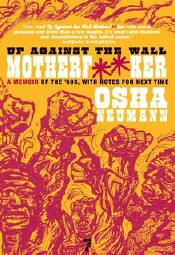
Vivien: Can you tell me a little about your new book Up Against The Wall Motherfuc**er’?

Osha: Though it has not been easy finding a publisher unless you’re a ‘bling-bling’ celebrity, I have received a lot of positive feedback about my book, which is my memoir honoring the anger and the passion of the 60's, including the pitfalls of the politics during that time. These days, many publishers feel that progressive books are not big sellers and today, most smaller progressive book publishers are struggling to publish books. It’s also that it’s either publishers don’t really know how to put a book like mine on the shelf, because they may feel it doesn’t fit neatly into a box or that a book like mine may be too complicated and personal. It has been a struggle, taking me several years to find a publisher. The book title is the name of the radical group I was a founding member of from 1967-68 on the lower Eastside, which also derived from a Leroy Jones poem called Black People, which tells about ‘just taking it’, that “all the stores will open if you say the magic word, up against the wall motherfuc**er, stick em’ up!” This was during a time when there was a lot of discontent in the United States, a time when the civil rights movement and an anti-war/anti-draft movement were at their peak, so it was the right time for us to create a social movement. It was a good time to create a mass social revolution, especially when there was such a huge drop-out rate of white people not fitting into the boxes, refusing to live a stereotypical life. Things got very intense during this time and we were considered ‘freaks’ though we were quite radical and militant, constantly fighting with police and creating riots.

V: Why didn’t you sell out, get comfortable and become a yuppie?

O: Although I grew up in a middle-class family, I was never one to have an appetite for having a lot of material stuff. That has never really mattered to me, as I am very minimal in nature, I am an artist and I am committed to representing and being on the side of the real people who deal with injustice committed upon them. I really enjoy the work I am doing, yet on the other side of the coin, it can be complicated at times. I am not in it for the money, I am happy with what I am doing in my life.

V: What is your take on the whole notion of ‘pimpology’ in what you see going on today in the context of others ‘selling out’ & getting ‘played and pimped’?

O: I suppose a part of me understands some of the painful experiences from my own families’ past experience, making me drawn to people who are going through struggle and adversity in their life, it’s my identity… My parents were German Jewish refugees who survived a divided world of fascism. I also see a similar dynamic of this sort here in the USA, in the constant scapegoating and in breaking people down in lawless ways. I stand strong with my resistance, representing the people from the bottom like houseless and poor folks, who in my opinion are the most solid in their lives. It’s also the crazy energy involved in the politics, while looking at history back in the 60’s, because they were thinking about the future and in how to create new social movement in dealing with fighting the system.

V: What is it deep within you that keeps you fighting for poor folks like me and Tiny, co-founder of POOR Magazine?

O: Becoming a lawyer has enabled me to level the playing field in fighting the big institutions. I am very impassioned doing this work in every way. Well… I really wish I knew, but I do know that it upsets me when injustice happens to people with no power who are being abused by people with power, being taken advantage of. I have also had my own personal experience with this in the past.

V: Tell me a little about the revolutionary advocacy you have done providing legal help to houseless folks and some of the other stuff you are doing with COPWATCH and POOR Magazine?

O: I am impassioned about the work I do with groups like COPWATCH, who are a very small, but great organization where I help facilitate legal training workshops. I am also active with POOR Magazine as a board member, supporting POOR in every way that I can. In addition, I also work with East Bay Community Law Center, providing free legal services to very low and no income people, including working with law school students in operating legal clinics for this community and help run the self help center CLAS, Community Legal Access Site, representing houseless folks who need legal help by providing legal help and fighting policies around houselessness throughout East Bay cities such as Berkeley, Albany and Oakland. We have been operating for one year now, creating a sense of civil disobedience by forcing change and creating possible action through this program with legal advocacy.

V: What would you like to see happen with your book?

O: I have a vision of a better world full of people who are a lot more free and happier without creating destruction on nature. I feel that what we do to the most vulnerable tells us a lot about the kind of people we are. In searching for thoughtful examination of all the unanswered questions from the 60’s about how to do radical politics, you can't learn from the past if we don't honor that complexity, as the past is still very much with us today.
.

Check out Osha’s upcoming book release events:

Wednesday, November 19, 2008: 7:30 P.M.
Reading and Talk
Modern Times Books
888 Valencia Street
San Francisco

Thursday, December 4, 2008: 7:00 P.M.
Gala Book Release Celebration - Music/Food/Talk/Rare Archival Footage
La Peña Cultural Center
3105 Shattuck Avenue
Berkeley
$10 gen. $5 students w/ID & seniors
A Benefit for MECA, the Middle East Children’s Alliance

Tags