Story Archives

Godfathers of Street Kids

09/24/2021 - 10:42 by Anonymous (not verified)
Original Author
root
Original Body

Leroy/Krip-Hop Interviews Staff Benda Bilili of the Congo and their Filmmakers Renaud Barret & Florent de La Tullaye

by Leroy Moore/PNN

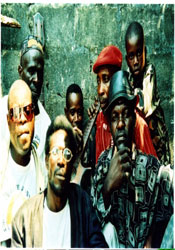
Staff Benda Bilili is a band of six disabled musicians from the Congo. In 2004, French filmmakers Renaud Barret and Florent de La Tullaye began filming the band to create a documentary about their music and struggle. Leroy Moore interviewed the filmmakers and two of the band’s creators about music, the upcoming film and life in the Congo for disabled musicians and artists.

Leroy\Krip-Hop: Where are you from and where do you do most of your work?

Renaud Barret & Florent de La Tullaye: We live in Paris and used to work as photographers and graphic designers. We discovered Kinshasa in 2003 and decided to work there, shooting movies and producing bands

Leroy\Krip-Hop: I found the story about Staff Benda Bilili on the internet. They are disabled musicians who live on the streets of Kinshasa. Please tell us more about this group and their message.

Renaud Barret & Florent de La Tullaye: Staff Benda Bilili is an orchestra of six disabled (all have polio) musicians and two street kids, who they fostered years ago and taught music. SBB is a true musical oddity, whose musical style lays somewhere between James Brown and Buena Vista Social club. The lyrics of their songs are like advice they give to all the people who live in the streets like them. They are like the godfathers of all the street kids and very respected personalities of the ghetto. The thousands of [disabled] of Kinshasa have created an underground syndicate called Platform: Man like you and the SBB are like their spokesmen…Yet their message hasn't got anything to do with their [disabilities] as they don't consider themselves as [disabled]. They're married, have kids and apart from music they're gifted electricians, sewers and hairdressers… Their message to the people is all about survival… How can one survive in such a city, if I can do it [living with a disability] so can you.

Leroy\Krip-Hop: How did the band’s members meet each other?

Renaud Barret & Florent de La Tullay: The two leaders Ricky and Coco met in a care center for handicapped 30 years ago and started to jam together. They met the other members in the streets and little by little they created the orchestra. They also played in Papa Wemba's Raka-Raka in the late 80's. When the country exploded in, the late 90's they managed to stay united and always playing music. They met the street kid Roger (who is now their soloist) at The Kinshasa central market in 2004 and decided to adopt him although at that time they were themselves living in the street.

Leroy\Krip-Hop: How is life for people with disabilities in the Congo?

Renaud Barret & Florent de La Tullaye: Hellish life for an occidental person (disabled or not)… There is no transportation, no proper roads, no health care system, no schooling system, no electricity, no state policy, nothing. The [disabled], like the valid people, are completely abandoned. Quite logically, they are not considered handicapped because like everybody else they must struggle [to figure] things out.

Leroy\Krip-Hop: How did you meet the group?

Renaud Barret & Florent de La Tullaye: We met them in 2004 while shooting our first movie in Congo Jupiter's dance

Leroy\Krip-Hop: How long has the group been together?

Staff Benda Bilili: As Staff Benda Bilili about 10 years

Leroy\Krip-Hop: Can each member say something about his or her mission and life?

Staff Benda Bilili: Coco: We the SBB are like journalist; in our songs we are the true press. We talk about street life, the street kids and their dreams of happiness, we talk about corruption. The press here is a slave to the power. I consider myself as a journalist…[it’s] my duty as a member of the SBB, to say things as they are. Ricky: The SBB has a vocation to give shelter to any gifted people from the street, handicapped or not. If the album is a success, we would build an art center of our own, to teach music and other things to the street kids. If we don't do anything for them, it's like a time bomb. That's a major goal in my life. I have to share my experience, because I'm great, and God made me a rock star.

Leroy\Krip-Hop: Tell us about the UN of Africa and their relationship with the group?

Renaud Barret & Florent de La Tullaye: The UN hired the group to sing a song to incite people to register for the 2006 election. (the first democratic election in thirty years) The SBB did the song Let's vote and were paid $300 for the whole process. In the end the song was on each radio station [and] each TV channel at least ten times a day and the group got nothing. In the meantime the local ndombolo star who sang praises for candidates got $50,000… That's about it.

Leroy\Krip-Hop: I read that you got only a little bit of money from the UN is there any more news on this?

Renaud Barret & Florent de La Tullaye: The situation hasn't changed so far. The SBB was infuriated and sued the UN for $100,000… Imagine that.
It's like David against Goliath. But hey who knows?

Leroy\Krip-Hop: Tell us about the movie. What is the title? Why and what are you trying to display to the world?

Renaud Barret & Florent de La Tullaye:
The story of this band we are following since 2004 had to be told somehow. Benda Bilili in Lingala means beyond appearances. It's a modern tale of courage and dignity; a universal story that touches everyone, it's about people who never give up.

Leroy\Krip-Hop: You say the group fights for the rights of disabled homeless people. How do they do this?

Renaud Barret & Florent de La Tullaye: With the release of the film and the album, the SBB are going to start something of their own (a center for the disabled). We are not into charity business; we are dealing with professional musicians (the SBB) that's all. But the movie is going to have a great impact and we hope it will help the [cause].

Leroy\Krip-Hop: I have read that you took in two kids. Are there a lot of street kids and what are your goals for the two kids and other street kids in Kinshasa?

Staff Benda Bilili: There are thousands and thousands of them…Some are [kicked out of] homes because they're accused of being witches by fake reverends…many come to Kinshasa because they flee war in the east of Congo. The government arrests them, deports them sometimes kills them. The power is made of utterly incompetent people who'd rather cure the effects than seek the causes of such situations. All those kids are like a time bomb. They are all the SBB’s children.

Leroy\Krip-Hop: Tell us about how your government is or is not dealing with poverty.

Staff Benda Bilili: The government is a bunch of avid, cynical puppets in the hand of the western nations. You can be corrupted but how can you starve your own people ???

Leroy\Krip-Hop: How would you describe your music?

Staff Benda Bilili: Rumba-blues… tribal-salsa

Leroy\Krip-Hop: You make your own instruments, tell us about them.

Staff Benda Bilili: Home made guitars plus you have The Sdoloiste Roger who plays with a single stringed guitar of his own. It's made of a can of milk a wooden stick and a metal string, it sounds amazing check that on www.myspace.com/staffbendabilili

Leroy\Krip-Hop: Now you are planning to buy a house with your kids. How and when will this happen?

Staff Benda Bilili: If the album sells…

Leroy\Krip-Hop: As a filmmaker, why did you choose to make a film about Staff Benda Bilili?

Renaud Barret & Florent de La Tullaye: We didn't choose it. It was an emergency to us, for the beauty and the poetry of it and plus to help those people. But if they wouldn't have been brilliant musicians we wouldn't have done anything.

Leroy\Krip-Hop: You've been filming for seven years, what were the ups and downs in those years?

Renaud Barret & Florent de La Tullaye: The group lost everything in a fire that ravaged their center in 2005 so they had to sleep outside with their families. Some musicians disappeared or died… Normal everyday life in Kinshasa

Leroy\Krip-Hop: Did you as a group felt comfortable being filmed?

Staff Benda Bilili: We felt we could pass our message to the world. With that film our kids will be proud and maybe wealthy

Leroy\Krip-Hop: Tells how media there treats people in poverty and people with disabilities.

Staff Benda Bilili: In Congo the media equals the government. It's treated in a highly self-satisfied tone. Like they give a poor guy a bag of peanuts [just before the election] and make a whole ceremony about it.

Leroy\Krip-Hop: You said that Staff would be going on tour. Will this be the first time that the group will be traveling?

Staff Benda Bilili\Florent de La Tullaye: Yes in 2009; it's going to be the first time.

Leroy\Krip-Hop: As a person living in America I'm used to seeing small shiny wheelchairs. On your myspace page I saw your video and I noticed your wheelchairs are big. How do you get your wheelchairs?

Staff Benda Bilili: We do it ourselves, it's all recycled materials we, the SBB know how to craft those chairs, we can teach you one day, when we come to America.

Leroy\Krip-Hop: How can we, as Americans support your work?

Staff Benda Bilili: We'd love to do a concert in America… we need to be connected to some associations [for the disabled] down there

Tags

Mortality Malaise

09/24/2021 - 10:42 by Anonymous (not verified)
Original Author
root
Original Body

Aches,pains,the norm.

Given a health warning...

what do you do?

Especially if $$$$ is an obstacle?

Improvise,be creative,get healtiher.

by Joseph Bolden

Mortality Malaise

I’ve read in a book somewhere that people in the time of the Roman Empire lived to be 25, living to 40 or 50 was considered ancient.

Most of us honor the supreme sacrifice women and men have made then as now when war is waged.

Few of the men and women in these conflicts are given time to contemplate their lives were suddenly taken away.

Its it any wonder survivors of World War II took every opportunity to live the way they wished mostly quiet,unassuming, lives.

Marrying,using the G.I. Bill to buy homes and or have a better education
We weren’t called the Baby Boom Generation for nothing!

Before leaving the city for Memorial Day weekend I received test of my medical results.

Cold shower,system shock,finally the sober reality of one’s mortality from a dietician.

Though never a raucous, loud person I’ve had a share waking up in beds not my own panicking because I was not in the city.

Drinking,smoking,drugs, pills,even sex,
being a late bloomer may have saved me from tragic consequences of the AIDS epidemic of the early 1980’s witch continues its devastating affects even now.

Food from meat,cakes, deep dish apple pies topped with American cheese and all manner grease delights.

For years since turning 45 I tried to be less pig and more gym rat but circumstances of money and time hampered me.

That is until I met a few people living a different,purposeful lifestyle.

Very slowly over time saw benefits and pitfalls being a vegetarian.

Between various kinds of food,types of vegie folk.

What works,didn’t there was lots of backsliding until
my decision vegetarian only.

That didn’t me my body craved meat as it likes and enjoys mingling with female flesh,sure I can live without it and have had long years without feminine touch.

I’d fight the craving as vampires sometimes fight blood-for-live-cravings.

I couldn’t give it all up completely just go with fish,chicken,and lean meats though milk, cheese, eggs, was easier to go without.

Medically,there are bad fats,sugar,and other stuff and
I must change my health before bad dietary habits take me off the planet!

As a former house-less, jobless,transient guy its is difficult to eat healthy when nearly the only foods around are full of starch, sugar,high or bad meats full of grease.

I’d like to love, live, longer,if it takes a little time to self prepare meals at home than spend in café’s or restaurants then that’s what I’ll do.

Few people are given a heads up on their mortality and how to prevent shortening their lifespans.

I’m not in a war of bombs,bullets,mortar shells,not being strafed by supersonic stealth jets.

My private war is one all of us fight unseen everyday.

I have been warned and I take this warning seriously.

For those like me who’ve been given a red flag to take better care of themselves I hope they heed it because you may not be given another stop or yield sign.

Tags

We Hate 98

09/24/2021 - 10:42 by Anonymous (not verified)
Original Author
root
Original Body

Hundreds of tenants, advocates and community members rally against the pro-landlord Proposition 98 which will be on the June ballot

by Tony Robles/PNN

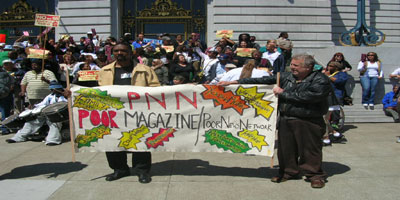
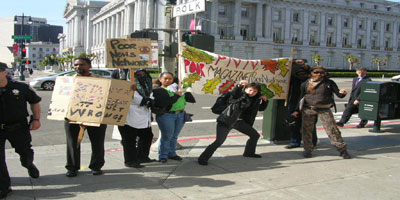
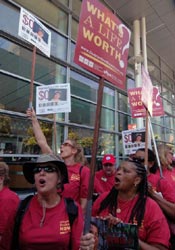
"Save our city, save our state, vote no on 98!" The chants in tandem with, fists, signs and banners of collective resistance rose up into the California sky from over 200 tenants, immigrants, workers, elders, activists and advocates gathered on the steps of San Francisco City Hall on Wednesday. We stood there, together, in power, in opposition to the very dangerous Proposition 98 which is on the June 3rd primary election ballot. Dangerous because, if it passes, it will eliminate rent control and jeopardize the laws designed to protect renters such as fair return of rental deposits, 60 day notices and laws designed to protect elders and disabled people from rent increases.

"When I received my eviction notice, it was depressing and scary. Where would I go? Stay with my family? I'm a grown woman. My landlord said he'd help me out. I asked him how, buy me a tent? Liana Villasenor, a single mother spoke at the podium amid colorful signs and banners clashing with the gray backdrop of City Hall telling of an eviction inspired by the greed of a landlord who wanted to receive more money for her apartment, the kinds of evictions that will happen with regularity if Proposition 98 passes, "He actually bought my roommate a tent. I was determined not to go until the sheriff came", Ms. Villasenor concluded to a rousing cheer from the crowd.

Proposition 98 will do away with rent control and outlaw inclusionary zoning requirements that mandate affordable housing on developments.

"This is a scandalous piece of legislation that's going to kick out the poor. It's a huge eviction notice that we got to fight" said Reverend Norman Fong, Deputy Director of Programs for Chinatown Community Development Center.

Proposition 98 is being sold to the public as Eminent Domain reform that would amend the state's constitution. Opponents see 98 as deceitful, hiding its true intention. On the surface 98 calls for eminent domain reform but when you read the fine print, you find that it would abolish existing rent control and prevent local governments from enacting new rent control measures. More than a dozen cities in California have rent control laws in place.

San Francisco Supervisor Aaron Peskin was on hand in support. "I hate 98. It will ruin California. It is the most dangerous legislation I've seen in my lifetime".

Opponents of 98 say that the wealthy devised this scheme to be on the ballot at a time of low voter turnout. It is estimated that 30% of registered voters will vote on June 3rd. Peskin says that voter turnout is critical to cancel out the affluent pro-98 voters in Orange County and other places.

Speakers from The San Francisco Tenants Association, Bernal Heights Neighborhood Center, POOR Magazine, Community Housing Partnership,Young Workers United, The Sierra Club, and the Filipino Housing Collaborative voiced their support for tenants, working class people and immigrants.

Angelica Cabande from the city's Filipino Housing Collaborative stressed the importance of the immigrant community in the struggle stating, "Just because we can't vote doesn't meet we can't educate people. We have to fight for our community".

The rally ended @ 1:00 pm. The crowd was invigorated with the knowledge that there are 12 days until election time to do more outreach and advocacy work about this destructive proposition that will create more poverty and homelessness. Advocates walked tenants to the polling place at the basement of city hall.

In the words of Reverend Norman Fong, "What good is it to pray for the poor if we don't fight for the poor?"

Tony Robles is a race and poverty scholar in residence at POOR Magazine as well as a writer and co-editor of PoorNewsnetwork/PNN. To learn to be a journalist for change on issues of poverty, race and disability join POOR's upcoming Summer program which begins June 3rd. To register for classes call them at (415)863-6306 or go on-line to www.racepovertymediajustice.org . Space is limited so act now!

Tags

Untitled

09/24/2021 - 10:42 by Anonymous (not verified)
Original Author
root
Original Body

A poem.

by Steve Kirby/Special to PNN

When I was a child I don’t remember

Planning or saying to myself when i

Grow up I’m going to be an alcoholic

Or a crack head, drop out of school

And become homeless. Like a child

When conceived, the mother goes

Through a process, when a seed is

Planted it must go through a process

Even for the rain to fall, yes a process.

So why look at one and say that’s

Who you are? Miles short of

Wondering where he or she comes from

So when ever I see anyone who

Society considers crazy or wild

When I see them I see them as a child

© 2008 Steve Kirby

Tags

Heart of the City

09/24/2021 - 10:42 by Anonymous (not verified)
Original Author
root
Original Body

The Farmers Market in Downtown San Francisco is at-risk of take-over

by Tony Robles/PNN

As a child I would accompany my grandma to the market 3 blocks from our house. She held my hand as we walked. The trees seemed to bow before her, and the traffic, upon seeing her wide sunglasses and colorful scarves, would come to a respectful halt. I'd skip alongside her as we got closer to the market. Once inside, it was magic. Grandma knew vegetables - bok choy, squash, ginger and bitter melon. They knew her too, jumping into our cart as we made our way to the meat and fish section.

Grandma knew when fish was fresh by looking into their eyes. The fish would always look back and say, "You're that little girl from Sorsogon in the Philippines! I know you. You used to play in the river". Grandma and the fish would exchange winks and the fish would come home with us, nourishing our bellies and minds - the smell lingering like a poem. As grandma used to say, "Fish is brain food, kid."

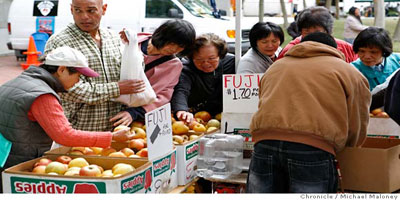
I think of grandma and the women who carry so much of the world in bags and sacks when I walk through the "Heart of the City" Certified Farmer's Market at Civic Center. People from every walk of life congregate there to breathe in the sweet fragrance of produce grown all over California with love and care. I watch them carry bags of apples oranges, and strawberries from places such as Stockton, Sacramento and Watsonville.

Christine Adams is manager of Heart of the City. Before becoming manager, she sold vegetables at the farmer's market on Alemany Blvd for 3 years. She is the market's 3rd manager with a passion for community and fresh, healthy food. "The market was started by a Quaker lady who ran it as a co-op to obtain food in bulk" said Adams, whose son assists her with the day to day (Wednesdays and Sundays) operation of the market. Afterwards, Market Street Development asked her to start a farmer's market. She declined, opting to sell fruit and vegetables from her stall for the next 5 years.

"The farmers come from all over" says Adams, holding her walkie-talkie, ready to assist vendors and field questions from reporters. They come from all over California. They bring dates from Death Valley and mushrooms from South San Francisco. "At the market, you meet the farmers personally. You get food that hasn't been refrigerated. Refrigeration alters the composition and flavor of food". Adams adds that the farmers are very much aware of environmental impacts. "You have to give back to the earth. Crop rotation saves the ground and insures quality".

The farmers rent their stalls for $25 a day--flat, no association fees. Adams sees the market as a vehicle to serve the community. "We're here to give farmers a space and give the public quality food. It was put here because it was in a low-income area. The supermarkets will gouge you".

Recently, the city's Chief Administration office (CAO) has proposed taking over the market - streamlining the operations and reorganizing the market's board of directors which is made up of 5 farmers and 2 community members. The CAO wants to take over the operation - which includes 67 stalls which grossed 187,000 last year.

In response to the proposed takeover by the city, the market has started a petition. Adams says what's at stake is the very heart of the area. "The city's proposal will kill the market. It's run by the community. The people who shop and work here run this market. Nobody owns this market. This market does have heart. All the booths are family owned".

As I walked through the market, I saw a group of children from a Tenderloin elementary school. They carried notepads and jotted down the names of fruits and vegetables, noting the smells, shapes and sizes. The farmers smiled and people of all shapes and colors walked about.

I came to a booth where I met a young man named Kevin. He sold cakes baked by his wife. Kevin made the trip to the market from Sacramento. His young son watched as his father showed me his array of cakes and goodies. "My wife and I started "A little piece of cake". She bakes everything and we sell them here. Business is good". I looked at the pineapple upside down cake, seven-up cake, chocolate and vanilla cupcakes and vanilla pudding.

"We want to start a bakery in San Francisco or Sacramento" he said as he put my cupcakes in a bag. "With rents so high, we might have to opt for Sacramento" he said. He said that he enjoyed working at the farmer's market. He said that working in a diverse environment as the farmer's market has helped him grow and become a better person. It was beautiful seeing a young African-American father with something to show his son. And by that I refer to the sweetest things under the sun.

It was the highlight of my day.

To help keep the Heart of the City Farmer's market as a community oriented place, please visit the market and sign the petition. You can also contact the Board of Supervisors and Chief Administration Office.

Tags

Our Shaman

09/24/2021 - 10:42 by Anonymous (not verified)
Original Author
root
Original Body

THE IDRISS STELLEY FOUNDATION STORY
(PART 2 of 3)

by Marlon Crump/PNN

“At his funeral, Idriss was eulogized as "Our Shaman" by the Dean of Students of SF Healds College, Mr. Patrick Hutchinson…Idriss counseled many fellow students, among them a single dad [who was] suicidal and said at the funeral mass, that Idriss saved his life. These were just some of Idriss Stelley' success stories," his mother told me, a proud smile on her lips, as we continued our interview on the life and death of her son.

We sat at her home in the Bayview Hunters Point in early December. In between sips of freshly brewed coffee, meshá showed me Idriss' diplomas and awards and shared stories from his life.

I marveled at Idriss' awards, trophies and accomplishments, including his Second Degree Black Belt Karate diploma and his Post Mortem "Resistance Award" received from POOR Magazine. mesha continued showing me his seemingly endless memorabilia, including his craftsmanship of an unfinished stone sculpture, an Egyptian Sphinx that meshá gave me to keep. Idriss was in the Marble Union and was working on this sphinx on the very day he was killed by the SFPD.

"He did not get a chance to finish it….” she explained, her voice sadly trailing off. She then began to tell me about Idriss’ birth.

Idriss Scott Stelley was born on August 20th, 1977 at the Alternative Birth Center at the San Francisco General Hospital in a room full of incense, Indian music of Ravi Shankar and cheering friends.

Idriss graduated first out of 90 students from Optnet in Advanced Web Design, and was a Spanish tutor at Wallenberg High School, as well as a French and Advanced Math tutor at San Francisco City College and John Adams Community College.

With an IQ of 145, Idriss tutored in colleges even before his own graduation from High School through Independent Studies. He also taught ESL to undocumented migrants at the San Francisco Day Labor Program, volunteered on the AIDS Ward 5A, the very place of his birth , and aided in the soup kitchen at Glide Memorial Church.

In addition, Idriss also volunteered at Arriba Juntos, a center in the Mission District that provides job readiness workshops, computer labs, and job search skills.

He also taught graffiti-airbrush design at a Fillmore center for at-risk Youth, and at 7 years old, was the youngest performing artist of the SF Mime Troupe, in the "Madame Video" play. He also performed in several SF International Franco-American School's Shakespearean productions.

Of eclectic taste, Idriss was an avid reader of the mainstream "classics", but favored the works of Malcolm X and his beloved Koran (Idriss converted to Islam at 17).

In his apartment the air was often filled with music. From Bach, Bela Bartok, Debussy, Eric Sati, Aranjuez and Misa Criola to Miles Davis, Sidney Bechet, and Thelonius Monk to U2, Tupac, Paris, Sade and Michel Franti, Idriss appreciated many different styles of music.

In formal attire and bow tie, he routinely assisted his Godfather, Mr. Henry Watson, who passed away, heartbroken, a year after Idriss' death. Mr. Watson, head usher of the SF Opera House, was a wonderful Black man who introduced Idriss to rich AfriKan American culture as well as his musical and "classical" education.

Although I've never met or laid eyes on Idriss, mesha has often told me of how much I remind her of her only child, because we both share a very rare kind of wisdom, and exceptional background. It is always a wonderful feeling to hear mesha say this to me, because I have adopted her as my "Godmother" and feel truly blessed with everything she offers me, especially post-trauma counseling

Given everything that I have gone through in the past few years, in my dealing with homelessness, poverty, criminalization, racism, police brutality, and injustice, I feel that meeting Idriss would have restored hope in me about the fate of those struggling in this corrupt society.

I believe that our relationship would have shown that unity in non-white communities plagued with poverty, violence, racism and incarceration, is not impossible. And that despite the venomous lies of corporate media and its portrayal of non-white communities and people struggling with poverty, we can unite to make change.

"I taught Idriss that it is never too early to commit to social justice," said mesha. As we traded warm smiles, dusk began to blanket the earth outside. I sat my cup of coffee down and we both took a break, before mesha began to share the most difficult part of the interview, and the deepest, darkest moment that forever changed her life and the lives of many others: The Death of Idriss Stelley.

To Be Continued in "The Idriss Stelley Foundation Story" Part III.

Tags

Justice Fo Da Mamaz: Part II

09/24/2021 - 10:42 by Anonymous (not verified)
Original Author
root
Original Body

Single mamaz fight back against an unjust judge.

Single mamaz fight back against an unjust judge.


by Marlon Crump/PNN

What do we want?

JUSTICE!

Who do we want it for?

Poor mamas struggling!

With?

A bias judge!

When do we want it?

NOW!

Led by POOR Magazine co-founder and advocate for single mothers Tiny Gray-Garcia, these chants boomed into the air outside San Francisco's Superior Courthouse on the morning of Monday May 12. She was joined by single mamas and poverty scholars, June Strohlin (a.k.a. Jewnbug), Kim Swan (a.k.a Queenandi), Sandra Thomsen, Maria Brosas and others to protest the blatant bias and corruption of San Francisco Judge Marjorie A. Slabach.

As a revolutionary legal advocate for POOR Magazine, I was there to re-port and sup-port these poor mamaz in their struggle for justice in San Francisco's family court system. As I walked up to join my POOR Magazine family, Tiny's voice was already blasting through the bullhorn, my POOR comrades yelling alongside of her.

On this Monday morning, the day after Mother's Day, most mothers in the Bay Area were still glowing after family celebrations, but these single moms found it difficult to celebrate this traditional holiday when an unjust judge has stolen their children and civil rights.

Since 1997, Judge Slabach has presided over family law of child dependency cases in the Unified Family Court Division, at the San Francisco Superior Courthouse. Since that time, single moms that have appeared before her have had their rights ignored and have been mistreated and belittled in her courtroom. She has consistently and biasedly ruled against mothers, ignoring their parental and constitutional rights.

Some of the moms that were in protest had past cases involving temporary restraining orders and some were currently involved in cases that were issues of child visitation and parental custody rights.

Kim Swan, Jewnbug, Sandra Thomsen (who's son was unjustly taken from her by Slabach) and Maria Brosas shared their own struggles in Judge Slabach's courthouse. Each had experienced her cruel behavior and unjust rulings.

As I listened to each mama speak into the bullhorn, I waved my handmade sign, reading EX-PARTE MOTIONS ARE UN-JUST AND WRONG. Ex-parte motions are motions filed by one party, without advance notice to the opposing side. They are decided by a judge, without requiring all of the parties to the controversy to be present.

Ex-parte motions are sharply limited by the U.S Constitution’s 5th and 14th Amendment, because they violate a U.S Citizen's Right to Due Process of Law; however Judge Slabach has repeatedly and unwarrantedly used ex-parte motions in her rulings against single moms.

"I demand that the judicial commission hold a hearing regarding the conduct of Judge Marjorie A. Slabach for her to be held accountable, by her resignation from the bench!" exclaimed Jewnbug into the bullhorn.

"I would like to see this judge investigated by her highest superiors. I would like to see her prosecuted for her injustice and the fraudulent crimes she has committed against single mothers!" Sandra Thomsen yelled in agreement. (Despite all of the evidence that Sandra has provided to the courts, nothing has ever been done about Slabach's behavior in her son's custody case, a case that Slabach continues to preside over.)

Two San Francisco Sheriff Department Deputies stood grimly by at the entrance of the San Francisco Superior Courthouse, as they smugly eyed our protest. The presence of single moms fighting for their rights in front of the San Francisco Superior Courthouse was quickly capturing the eyes of numerous pedestrians, drivers, spectators, as well as lawyers and litigants who entered the courthouse.

POOR Magazine po' poet, Ruyata McGlothin recited a special poem in honor of mothers and I shared my poem, Callous Custody Corruption, which describes Judge Slabach’s unjust behavior:

"You took away my child like a landlord to a tenant's lease...Ohhh your honor, you heinous beast!

You addressed the many in attendance with a plastic smile...All the while you plotted with the other side to seize my child."

As I read my poem, I looked at the faces of the single mamaz in the crowd, and thought about how their children and rights were being stolen from them everyday. I thought about the words of Gaylynn Burroughs, staff attorney of the Bronx Defender in New York City, as she was quoted in a recent San Francisco Bayview article, "Too poor to be a parent."

"Until this country comes to terms with it's culpability in allowing widespread poverty-related issues to exist, poor single mothers will continue to lose their children to the state. And we will continue to label these women as "bad mothers" to usage of our own guilt."

Tags

The Struggle to Become a Superstar

09/24/2021 - 10:42 by Anonymous (not verified)
Original Author
root
Original Body

An Illin n Chillin International report from Uganda

by Leroy Moore/PNN

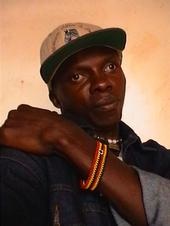
Ronnie Ooh a.k.a Muwanga Ronald is Ugandan, an experienced Journalist by profession and one of the most promising disabled singers in Uganda. Below is an excerpt from his book "The Struggle of becoming a SuperStar,” which he shared with Leroy Moore in his column Illin-n-Chillin

Ronnie was a lonely child born to Mr. Kaboggoza Joseph, a Muganda, and a retired carpenter now a resident of Lubaga and the late Margaret Kuwebwa, who was a Musoga and a business woman, who died on 29th November 1990 after one week of sitting my Primary Leaving Examinations(P.L.E) rather standard seven exams at Namalemba Mixed Day and Boarding Primary School

Many people may and might take it for granted that my success to come (if it happens as planned) would arrive on a silver platter, a life without struggle.

I also must point out for those who may wish to stand by me and support my efforts in all my endeavors, that I plan on using my music career to reach out to the world with educative and richly informed messages.

I was born a normal bouncing baby boy in 1977 in Jinja Hospital but at the age of three years according to the information available with my father, I got a boot of malaria which led my parents to seek advice from my aunt, the late Theresa Najjemba who was by then working as a senior midwife at Busesa Dispensary in Iganga District.

She advised my parents to take me to Busesa Dispensary where my lower right limb was treated with a Chroloquine injection on the nerve. Although we were staying at Namasoga we by-passed Iganga Referal Hospital where I could get proper treatment.

Before my mother died in November 1990, she had told me that before the physicality of my affected lower right limb got worse, I did not take much time to start walking as a baby and used to run fast and play with my peers as a child. But when I got the injection, I lost a lot of weight and the physical appearance of my lower right limb was alarming as it was growing thinner and thinner compared to my lower left limb. She said I could no longer play, support myself to stand nor walk but only could sit and cry. I become a baby once gain thus it was a hard learning moment and time for my parents.

Before she finished telling me the whole story, my eyes had become wet with tears. I tried to hold them back, but could not help crying as I thought about the physical life experience I went through at such an early age and about the chances and opportunities I was denied due to my disability.

This was a time of temptation and forgiveness for me, something I had never taken time to think about even though I am a strong catholic believer. It took both of my parents’ strength to make me believe that what went wrong with my lower right limb was only because of malaria and irresponsible medical personnel.

It was such a moment of tension, I cursed myself immediately when I started thinking of children I used to play with in the neighborhoods and schoolmates that used to give me hard time. They used to imitate me by limping around and calling me "akalema", meaning a small lame person, "Katonda kyava yakukuba omugo n' olemala", meaning that is why God made you lame.

Up to now I have failed to understand this world and I will never understand the level of discrimination that exists in it. I do not experience this alone but know that other disabled people experience it too.

In 1997, I lived in Bugembe in the Jinja District with one of my long time schoolmates; a friend by the name of Joseph. We had attended Nakanyonyi Primary School as classmates in Primary one (Standard one). He knew I had a problem with my eyes as they are squinted (not straight), and openly told me "Wenna omubiri gw' oli mulema", meaning all my body parts are disabled. It took me a long time to realize that the only reason he had said that was because of a dispute we had earlier.

One time in 2001, my brother-in-law and I escorted my fiancé to the Park Yard of St. Balikuddembe Market (the former Owino market to get shoes) one vendor around where we had opted to buy the shoes shouted to my fiancé that "omulema taba namukazi", meaning a disabled person is not worthy to have a fiancé or wife. I felt uncomfortable, so embarrassed and felt too small in front of my brother-in-law and fiancé and regretted going to the market.

I have also been denied opprotunities to work with different non-governmental organizations and companies due to the physical nature of my disability. Although some of these jobs require a physically fit candidate and I believe that I posses the necessary qualifications, I have been denied jobs because of my disability.

With such life experiences, I realized that I was born to have a hard life in a harsh and rude society. In 1985 and 1988 I was a pupil at Namalembe Boarding Primary School. One day in 1989, I had to convince my mother to get me a doctor's letter of health concern to be addressed to the school administration to protect me from hard work.

She got me the letter and it indeed helped me alot since it was my security that guarded me from rude teachers who used to punish me with harsh activities. In January 1989 when we were going to take a taxi at Bugembe, my father showed me the Doctor who injected me on the nerve. (I still don’t know if this was necessary or an accident.)

He was old enough and had retired. I did not ask any question but just looked at the doctor as he boarded another taxi. It took me sometime to talk to my father about the doctor. While at home in December 1990 after the death of my lovely mother, I approached my father with two questions. One was why they decided to take the advice of my late Aunt Theresa to take me to Busesa Dispensary and by-passed Iganga Referral Hospital? The second was if he knew where the doctor was residing.

Before he could answer any question he looked at me while asking why I had asked him such questions. I told him am that I was not angry any more but just wanted to know. He took time thinking about it but later said the doctor died in August 1989. I did not wait for the answer to the second question but immediately told my father to let his soul rest in eternal peace. I told my father that if he had told me the doctor was still alive, I was going to request him to take me to his home, and talk to him about the difficulties I had so far faced with the society due to being disabled. I was ready to forgive him but I forgave him and asked the Almighty God to judge him with mercy.

He said they tried so much to do whatever was possible with the little resources they had to rescue my worrying situation by visiting different professional doctors in Jinja and Iganga Hospitals but nothing was positive but only left to pray to the ALMIGHTY for his mercy. He said my mother entrusted her prayers to Mary the virgin mother, and she got answered. I slowly started leaning on tables, chairs and could support myself but with a lot of difficulties until my lower right limb become strong enough to lift and support body.

Part II My career in Journalism

Before completing my Journalism course in 2000 as a requirement for a diploma, I was required to do an internship with any media organization, which many refer to as "Industrial training." I did my internship, with Radio Sanyu where I was promised by the News Editor that if any of my articles were used, I would be paid 3,000 Uganda shillings (about 1 and 1/2 dollar).

To my surprise after a month, Richard asked me to go to the company accountant to pick my money. I was paid only 3,000 Shillings implying only one article was used, but in reality all of articles about 30 of them were used.

After my internship, I stopped reporting to the station and kept on wondering how I could continue working with such exploitation and left thinking about the difficulties I had been going through including climbing up to the sixth floor.

With a lot of struggle through January 2002, I decided to switch to the television section. I was assigned to report for WBS television station as a correspondent based in Iganga, then in April 2002 assigned to cover the 1st Africa Military Games in Nairobi without any facilitation but also paid per story used. Unfortunately, with my sweat in Nairobi, I did not get any money for the stories although the Sport Editor acknowledged using the articles and footages.

Although my career had grown steadily with the Television station management accepting my application to report from the East African Community Seretariate in Arusha, Tanzania, my attempts to get my name on the staff list and be paid per month as a staff did not bear any fruit.

In 2003, I decided to discover my gifted natural talent and shared about my idea of starting to sing to my fiancé. At first she could not believe until I started writing and shown her one song entitled " Omukyala w' Africa." She encouraged me then and there.

So far I have written more than 70 songs in Luganda, Swahili, English and French with genres of Reggae, dancehall, Worship, Hip Hop and Contemporary. But have only recorded four songs due to lack of resources.

Currently, I am working as a broadcaster with TV WA, a northern region based television station and have acquired some resources that have enabled me work on my two music videos and set up a video studio.

Tags

Healthcare for All...Again!

09/24/2021 - 10:42 by Anonymous (not verified)
Original Author
root
Original Body

The fight for health justice continues!

by Bruce Allison/PNN

"Single payer now! Insurance companies no!"

"Hey, hey¦ ho, ho¦ healthcare greed has got to go!"

The voices of over 3,000 community members boomed into the sticky, humid air over San Francisco's Moscone Center last Thursday. The large crowd gathered to urge government support on House Resolution 676, the United States National Health Insurance Act, which would give universal healthcare free of charge to all Californians. The plan, if passed, would cover all community members with only a 1% tax on the working population.

I stood in the crowd, feeling dizzy from the heat, and listened as community members shared their own experiences of living without healthcare in the United States. Currently, 6.5 million residents in California don't have insurance. Supervisor Tom Ammiano spoke in support of the resolution and a jazz band performed while the crowd danced. The Ragin' Grannies sang and performed while the crowd clapped and cheered.

In 21 cities across the country, similar rallies took place, as community members came together to fight for universal healthcare. Hundreds of community-based organizations support the resolution in California, including the California Alliance for Retired Americans, the United Educators of San Francisco, the California Nurses Association and more.

The day's rally ended with a memorial procession exemplifying how the insurance companies are killing us. The large crowd continued chanted and clapping in hopes of healthcare for all.

Call your state assembly member and senator and demand that they vote yes on SB 840.

Tags

Shirley: A Poverty Hero

09/24/2021 - 10:42 by Anonymous (not verified)
Original Author
root
Original Body

Poetry Journalism by Byron Gafford in memory of Shirley Weston, a poverty hero.

by Byron Gafford/POOR Magazine Poverty Scholar

As well as honoring Shirley as a Poverty Hero POOR Magazine is launching an investigation into the wrongful death by corporate negligence of Shirley Weston.The following series of poetry journalism by poverty scholar and family member Byron Gafford is the beginning of that effort.

How Can PG&Evil Say That They're Open 24 Hours a Day?

How can PG&Evil

say that they're

open 24 hours

a day?

When PG&Evil

didn't give a

shit about my

sick girlfriend's

health where she

live.

So when PG&Evil

refuse to send

someone out to

turn her power

back on.

like they sent

someone out to

cut it off

at 180 Westpoint

Rd. on 6/19/2008.

My girlfriend would

have still been

alive today helping

me with our

son.

But since PG&Evil

didn't want to

send someone out

on 6/9/2008 to

cut my girlfriend's

power back on

that they cut off.

Her brother went

out and got

a gas generator

and brought it

into her house

in order to

watch TV.

And when I got

the call from

my girlfriend about

what PG&Evil did

to her I ran

over to her apartment and the

brother and shirley

and his wife

were all together

in the living room

with the generator

on.

And when the next

day came my girl

friend was found

dead on the

floor bleeding out

of her head.

In the living room

where she sleep

everyday.

When shirley's brother

came to town

the devil also

came in town

too.

To rob, steal,

an kill the

good like shirley

weston in order

to claim the

neighborhood of

death for his

own.


With the help

from PG&Evil.

#2

How can the medical examiner lie on Shirley Weston?

How can the medical examiner

lie on shirley weston

on how she died

when they wasn't

there that night

when she was

alive but I was there�

How is shirley

weston's death an

accident especially

if PG&Evil and

shirley's brother both

are at fault.

If PG&E would

not have sent

out one of

their workers to

cut off the

wrong power and

put a different lock

on her box.

Shirley Weston would

still be here with

us today.

But she's not

here with us

and now

the medical examinder

want to rule

it as an accident

but it wasn't

an accident to me.

Because PG&Evil

didn't do their

job right, shirley

weston is dead

because of their

neglect to help

cut her power

back on.

Shirley Weston is

dead and PG&Evil

and her brother

both are the

very ones that

took her away

from us.

PG&Evil cut shirley

weston's power on

6/9/2008 and her

brother went to

get a gas generator

So he can

watch TV and

that was the

last time that

he saw shirley weston

alive after he went

to bed first.

Tags