Story Archives

Nomads

09/24/2021 - 09:45 by Anonymous (not verified)
Original Author
root
Original Body

A Sequel to "Whose Budget? OUR BUDGET!"

by By Thornton Kimes/PNN

Part 1: Moi?

I started seriously wanting to conquer my 3-to-5-year cycle of employment-to-crash-landing-and-start-over-from-scratch (from the proverbial grassy roots, the streets) Summer 2008, after the end of the Goodwill job mentioned in “Who’s Budget? Our Budget!”

How does “success” in life, by anyone’s standard, happen when you don’t have a coherent “this is how we do it” handbook in your head—-primarily put there by parents? I was born a middle class white guy. The white’s still there but the middle class status got squeezed out like lemon juice into ice tea over 30 years.

I was allowed to quit and not succeed at many efforts after turning 8 years old and being a Christmas season Nutcracker recital clown. A terrified clown. Boy #3 of what began as 4 boys in a ballet class I wanted to be in for all of 5 seconds of jealousy over my sister being a ballerina. We mutinied at least once. Didn’t work. We lived.

My parents quit too--divorce. College was a family thing and it became my thing too, except that I didn’t understand how much work any success requires at the adult level of the game of life. Didn’t work.

I lived. The silver lining is that like many people I’m stubborn about surviving and finding ways to rescue myself—-with a little help—-from both self-inflicted and Capitalism-inflicted failure and doom and gloom.

The San Francisco version of Economic Doom And Gloom 101 and the Budget Ballet of Horror (you know what I mean—-ballet is at least as mysterious as opera without a guide who speaketh the language), the Gavin Newsom Show—-with or without Stimulating Stimulus Stuff to Stymie Sticker Shock and Giant Sucking Sounds—-makes bouncing back from demolition, disruption, despair, doom and gloom, so much tougher than it has to be.

I’m reminded of what it was like to be homeless in San Francisco in 1989 and 1994. Gavin Newsom has re-set the computer clock back to the Bad Old Days that got us the Gospel of Social Services According to Frank Jordan, Art Agnos and other Patron Saints of Not Allowing The Dirty Horrible Aggressive Panhandlers And Other Bad Poor People To Spend Our Tax Money The Same Old Same Old Way blah blah blah alakazam alakazotz Care Not Cash not lots of care and cash not lots.

The only difference is now all the shelters that exist (which, of course, aren’t enough) are linked by computer, and all the shelters that exist are under the thumb of you-know-who and the staffs of all the shelters that exist are so demoralized and overworked (remember that word “decimation” from “Who’s Budget? Our Budget!”?) they don’t have much reason to accurately count empty vs. full beds—-so we have a constant low-intensity-conflict war of words over beds and people wanting to fill them often don’t.

Part 2: Us!

In 1989 and 1994 I wandered the streets with crews of homeless friends met by happy accident until I respectively left town and decided I’d had enough “vacation time” the hard way and it was time to do what I had to do to get employed, housed, etc. Several times in ’94 it seemed like my bed for the night would be cold concrete except for 10 or 11p.m. late night luckiness for me and other folks leading to floor space at what is now Next Door Shelter.

The only time I’ve actually slept out was one night in some bushes in a park in Denver, CO, after a friend of a homeless friend went Mini-Me Incredible Hulk on us for some reason probably having to do with alcohol, and destroyed the door of his apartment we’d been hoping to crash in for the night.

In 1989, to get one particular shelter for a week at a time you walked to a church in Chinatown hoping to be early enough to get the limited largesse ticket to the Ozanam Center on Howard Street. Ozanam was half night shelter for homeless men and a detox center. That was an “interesting” experience, trying to sleep while someone on the other side of the building “entertained” (us…) the staff trying to admit them to detox from various substance abuses. Ozanam was also a daytime drop-in center. Now it’s detox only.

There used to be a small shelter on Ellis or Eddy Streets in the Tenderloin (it’s hard to remember exactly where) behind a security gate and a walkway to a door you passed only if the ticket lottery worked in your favor. People there kept trying to convince me I snored so they could sleep. I didn’t believe it. I do now, but you have to wake yourself up from almost-sleep to get to that particular strange-sounding truth.

Next Door Shelter used to be Multi-Service Center North. In 1994 you could get case management beds, but temporary beds could also be had on the same upper floor that was, at the time, dominated by a fearless semi-volunteer, semi-staff member (I never quite knew exactly what his status there was) latino gay guy who didn’t take any crap from anybody and also made the chaos considerably more bearable (at least to me) by the force of his outrageous personality alone.

Other folks pulled the crooked straw and slept on the floor downstairs, along with the less than 10 lucky late nighters filling up unused space.

If that’s the system you have, what you’re used to enduring, and it makes some sort of sadistic sense, well, okay, you can and will endure and survive and the most stubborn (and lucky) will move on to something better. The rest will just suffer.

If that’s the system you have, computer linked and effed up even when the local and national economies are nice and fluffy, people can and will endure the worst crap humans do to other humans (until they don’t and die), but in this 21st Century in a city that howls to the heavens about being “WORLD CLASS”—-can’t we do better? Can’t we do it even if the city budget makes metaphysical giant sucking sounds?

DON’T WE HAVE TO DO IT BETTER?

I have one clue what we can do in the short term until the various Federal Stimuli tickle the nation and start Making It All Better, though that clue includes a long-term poke in the eye for some folks.

Sometimes I take the #49 MUNI bus from Eddy Street and Van Ness Avenue, a block and a half from my SRO hotel, to get to Poor Magazine. Eddy and Van Ness. Big unused empy building in front of bus stop. CLUE!

Part 3: Brave New World?

I’m working on my personal “doing better” project. The San Francisco welfare PAES (Personal Assisted Employment Services) program offers clients 3 options after going through 5 weeks (it used to be 12. Long. Weeks. Of. Boredom. and. Occasional. Weirdness.) of mandatory meetings and computer lab mini-job website surf-a-thons: 1) look for work immediately cuz yer ready dang it!; 2) enroll in a job training or on-the-job-training and/or internship-hopefully-leading-to-employment thing; 3) counseling therapy before either of the above.

Einstein said, “Insanity is doing the same thing over and over and expecting different results.” Sanity sounds like a good thing to me. I chose Door Number 3. I wonder if we’ll ever go through some national form of Capitalism Therapy?

My PAES case monster, ah, um, manager, told me scare stories about the therapy program, no doubt to save San Francisco a few dollars by encouraging me to, as Monty Python loved to say—“Run Away!”, join the circus, get ah jhob. I’m well aware of how I got to this place, sometimes it feels odd to do this therapy thing, but I’m also not interested in making more bad choices and decisions—-while San Francisco, California, and the country don’t quite know what’s what either.

When I was still a client of Goodwill in early 2005, just before the confusing, excrutiating process (confusing only because prior to this experience I’d never waited longer than 1 to 2 weeks to know if I’d been hired) that led from discovering I could go after a position as a full-on employee there to actually hearing I was ready to rock ‘n roll, one of the employment specialists asked me a question depressingly familiar to anyone who’s been through any of “this."

Would I try to get hired to be a fast-food industry worker just to git ah jhob, make ends meet, etc., while using days off to find something better? I said no. I’d rather be homeless and back in the Next Door shelter than do something I knew without a doubt I’d hate. They stopped pushing that idea.

The E.D.D. “One-Stop” little shops of employment horror, specifically the one at Cesar Chavez and Mission Streets, are and were a mandatory visit to the Twilight Zone about the same time. I’d scored very well at speed and accuracy on word processor keyboards (funny how speed tests make you feel like you’re about to be a disaster but you’re hands are magic typing stories like this one…) in the Goodwill computer skills classes. I was not so speedy for the E.D.D. test.

What followed was…sitting waiting for my name to be called for well over an hour. I called attention to this and the E.D.D. staff didn’t have a clue who I was. The Goodwill employment specialist crew only acted befuddled by the whole thing (Elmer Fudd hunting Bugs Bunny…).

Fast forward to today. Several months ago Mark Williams was part of Poor Magazine, an SRO Collaborative tenant rep, a man with way too much stuff to do—-including making his PAES case monster happy.

He got a job with Episcopal Community Services (who I met with recently only to discover that they weren’t offering much in the way of training programs and their computer lab was only doing basic skills classes…) working at their Sanctuary shelter, vanished from Poor Magazine and I’ve seen him only briefly twice while using a computer or making a phone call from a Collaborative phone.

PAES put pressure on him, but he’s not unhappy, is doing well and being an advocate for people’s stories to be told effectively, if at all possible, by the mainstream news media.

More folks need happy outcomes, less stress, less crap, indifference and interference from any and all of the power players they must deal with-—directly and indirectly.

That’s what I’m looking for too.

Tags

Redemption or Work?

09/24/2021 - 09:45 by Anonymous (not verified)
Original Author
root
Original Body

Redemption, a new film by Amir Soltani is reviewed
by tiny aka Lisa Gray-Garcia, poverty scholar and daughter of Dee in collaboration with Gloria Esteva, Muteado, Sam Drew, Teresa Molina,
Phil Adams, Bruce Allison & Thornton Kimes

by Staff Writer

“Redemption? Who is being redeemed? And who is doing the redeeming?"
Gloria Esteva, migrant, poverty scholar in residence, recycler/worker
and reportera de Voces de Inmigrantes en resistencia at POOR Magazine
looked at me sarcastically as we sat with a large group of poverty
scholars and staff writers from POOR Magazine in the 1st
congregational church of Oakland at a showing sponsored by the Poverty
Truth Commission of The Graduate Theological Union to view the new
movie, Redemption, by Amir Soltani.

Gloria’s plaintive question synthesized many of the feelings of anger
and depression that were lodged in my heart and throat after the 20
minute film finished--lodged so deeply that I was unable to speak in
the few minutes of Q& A with Amir after the film before an oddly timed
break where most of the audience departed, never to hear the voices of
the recyclers in the film, the revolutionary lawyers from Homeless
Action Center (HAC) and POOR Magazine’s poverty and worker scholars
who talked about a proposal to decriminalize recycling and support the
recyclers as independent contractors.

Redemption, the movie, is focused on the recyclers (read: workers from
POOR Magazine’s perspective) located in West Oakland, ground zero of
gentrification in Amerikkka. Once a thriving Black community
reminiscent of the Harlem renaissance, in the 1950’s, West Oakland’s
thrival was bled away by a seemingly city-sponsored decimation
program: the easy access to liquor licenses. By the 1980’s, between
the government sponsored access to crack, alcohol and lack of economic
opportunity, the area and its residents were in deep poverty. It was
called Blight. This Blight made it accessible for the default
gentrifyers, the white, middle-class art school students, to people in the
bombed out lofts and industrial property because it was cheap and easy
to afford.

By the late 90’s dot com era, the fix was in. Enter the
Loft-Monsters, a cadre of real estate developers, speculators and
architects who began to re-colonize the now cutesy, slightly whiter,
now arty, West Oakland. Suddenly corporate media was counting how many
young men of color were dying on its streets. It was odd how, with the
advent of the loft monsters, all of a sudden so many young black men
were dying--or was it that so many were being counted? Poor peoples
housing, both HUD and market rate housing, like me and my mamas, which
was still holding on by a thread in West Oakland, were being summarily
stolen from under us by gentrification sponsored evictions and/or
criminalized by agencies from the ATF, CPS to DPW, leaving most
of us in the new public housing, jail and/or still in the neighborhood
working in unrecognized labor like recycling, dwelling in our cars or
our new cardboard homes, only to be razed and harassed by cops and
“swept up” by hygienic metaphors such as “cleaning up” the
neighborhood.

This racist herstory and history of destruction, betrayal and genocide
in West Oakland neighborhood is not in the film. Rather, there are
visions of power and metaphors of loss. The movie opens with cans,
bottles and cardboard, flowing down the ramp of a recycling truck like
water from an urban river, it’s a beautiful opening metaphor for the
nature of trash. Out of this, a camera shot follows a worker, a
recycler, as he walks through his work day. He and other poverty
scholars speak in the film about their struggle to survive and do
their recycling (only referred to once in the film as “work”). These
interviews are co-mingled with a series of interviews with the owning
class (loft-dwellers) speaking about how the recyclers are a blight,
are fostering a drug culture and stealing their trash. There are a few
interviews with the business owner of the recycling place and some
local officials who talk about the “dignity” of being able to redeem
cans for cash.

As the lights went down and people praised Amir for his “powerful”
film, my anger and sorrow were choked in my throat. As a poverty
scholar who recycled to survive through homelessness for many years in
Oakland, who advocates for the workers rights of recyclers to be
considered as workers at all, instead of bums, dirty, crazy and all
the other myths told and re-told about poor folks locally and
globally, who has fought gentrification and its many roots in the
poverty and homelessness of gente pobre in West Oakland, I felt
betrayed.

At POOR we have a concept we have formalized called Poverty
Scholarship, to formerly understand, integrate and hold the knowledge
that we as folks who have struggled with poverty, homelessness,
eviction, substance use, violence, incarceration, criminalization and
border fascism have to ensure that artists and formerly educated
folks like Amir are co-authoring, and co-producing media with our
scholars on issues like this that come directly out of our lives and
scholarship. To forge collaborations in media and research with poverty scholars, to work horizontally rather than hierarchically- to share gifts of access and funding so that
these collaborations are possible, to make
sure the voices in struggle are in fact leading these dialogues, these
stories, these perspectives. Yes of course, the owning class should be
in there too! but in art there is something called metonymy: if you
see someone who looks like you in the art (film, performance, action)
you identify with their voice, their perspective, their ideas, their
actions, which is why it is so important to make sure that an informed
history and herstory of oppression, activism and resistance is
included in these art pieces as well!

So what to do? I know Amir meant to create a powerful film that would
help the poverty scholars and workers in West Oakland who he featured
in the film, folks who, like this poverty scholar, need to not be
criminalized for the sole act of working, but instead must be
supported and honored for our work, our scholarship.

The film has a chance, it just needs some real framing and
information. It must include an interview with Just Cause Oakland who
has been actively resisting gentrification and eviction in West
Oakland for years, Western Regional Advocacy Project (WRAP) who has
done extensive research about the destruction of HUD housing in
California and the criminalization of houseless folks, an on-screen
interview with anyone of POOR’s poverty scholars about our proposal to
support workers as independent contractors and our beliefs about
recycling as a form of micro-business, and a re-distribution of some
grant funds received for the film to support de-criminalization
efforts and housing of the houseless folks featured in the film.

I hope Amir listens to this scholar because after much debate and
discussion at POOR Magazine’s indigenous circle of news-makers in
community Newsroom we poverty scholars believe all of these steps will,
in fact, redeem Redemption.

Tags

EXPOSING THE STRUGGLE OF DIFFERENCE: KRIP HOP/HOMO HOP SYMPOSIA

09/24/2021 - 09:45 by Anonymous (not verified)
Original Author
root
Original Body

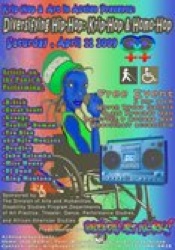
PLEASE JOIN POOR MAGAZINE/PNN RACE AND DIASBILITY SCHOLAR: LEROY MOORE at DIVERSIFYING HIP HOP: KRIP HOP AND HOMO-HOP Symposia

When: Saturday, April 11th 2pm-9:00pm

Where: Worth Ryder Gallery, 116 Kroeber Hall, U.C. Berkeley. The building is near the corner of Bancroft & College Ave. Admission is free.

by Staff Writer

Krip-Hop Nation, Art-In-Action & the University of California at Berkeley bring you the first ever panel/performance event highlighting two upcoming movements in Hip-Hop: Krip-Hop (Hip-Hop by artists with disabilities) and Homo-Hop (Hip-Hop by artists who are queer). "Diversifying Hip-Hop: Krip-Hop & Homo-Hop" will be held on Saturday April 11th

BACKGROUND

Hip-Hop has a rich expressive history, and at the same time it is now heavily commercialized. Who defines Hip-Hop? Who controls what its image will be? This program explores two emerging offshoots of the Hip-Hop movement, "Krip Hop" and "Homo Hop." Bringing together academics, performers and community activists, the event will explore these sub-cultures, gathering leading figures from both cultural phenomena to examining their place within Hip-Hop culture(s) and their invitation to a more diverse audience. The goal of "Diversifying Hip-Hop: Krip-Hop & Homo Hop" is to bring the margins front and center, to expose the struggle of difference, as has always been the legacy of hip-hop.

"Diversifying Hip-Hop: Krip-Hop & Homo Hop" will consist of a showing/discussion of two documentary films, Kathleen Kiley's "Halfasoulja" and Alex Hinton's "Pick Up The Mic: The Revolution of Homohop"; live performances; and a panel of speakers.  Artists and speakers will be coming from as far as Atlanta, GA., New Mexico, Houston, TX, and Los Vegas and as close to home as the San Francisco Bay Area.  Performers include George "Tragic" Doman, the King of Handicap-Hop; King Montana, who is the first quadriplegic Hip-Hop artist to secure a global distribution deal with DEKA Records and his song, and video, "Freedom Fighter" will appear in an upcoming documentary, "Cycle of Life" with Carlos Santana, Miss Money, who is in the documentary "Pick Up The Mike: The Revolution of Homohop" and who has a radio show in Houston;  NaR, a queer Arab hip hop crew of Oakland, CA;  Deadlee of LA., who was recently featured in the LA Times, talking about the rise of Homo-Hop; Juba Kalamka, who served as curator/director of PeaceOUT World HomoHop Festival from 2002-2007, an event featured heavily in Hinton's "Pick Up the Mic"; and more leading voices of both movements.
 

The moderators of the event will be Khalil Amani, the author of "Hip-Hop Homophobes,." who bills himself as a spiritual advisor to gay hip-hop, and Leroy F. Moore Jr., founder of the Krip-Hop Project and community relations director of Sins Invalid.
 

"Diversifying Hip-Hop" is sponsored by the Disability Studies Program, the Division of Arts and Humanities, the Departments of Art Practice, Theater Dance & Performance Studies, Katherine Sherwood's Art, Medicine & Disability class and African Diaspora Studies at U.C. Berkeley. The organizers also acknowledge the support of Poor Magazine, Turf Unity, Homo-Hop Radio and the Doreen Townsend Center Working Group for Hip-Hop Studies at UCB.
 

Tags

Stimulating What?

09/24/2021 - 09:45 by Anonymous (not verified)
Original Author
root
Original Body

The Stimulus Plan Comes to San Francisco

by Bruce Allison and Thornton Kimes/Facilitator

Now that the Stimulus package (Federal Medical Assistance Percentages) has reached San Francisco, the 50%-on-the-dollar that comes back from the Federal government for Medi-Cal, MediCare and all other gov’t funding was raised to 75%. San Francisco got $100 million extra from that. Only 2 City Departments are using it to cover losses incurred by the budget deficit.

The Department of Public Health is spending the money for Director Mitch Katz’ pet private projects, none that will help low-income people (with or without disabilities) get health care. The San Francisco General steam-powered back-up power generator breaks down once a week--a huge part of the disaster that the “Big One,” the next big earthquake that we keep hearing is going to happen in our lifetimes in the Bay Area.

All records of SF General patients could be lost because the database for the whole city is in a building that hasn’t been retrofitted to survive temblors more powerful the the 1989 shaker that burned down some of the Marina District. Katz and Mayor Gavin Newsom consider the F-MAP money a one-time gift from the government that they can use as they see fit.

The Department of Adult Aging and Disability programs are trying to cover their budget cuts with this money, and improve services were they can. Helping Seniors and/or folks with disabilities receive food, shelter and adult day health care is their job. Director Anne Hinton’s priorities are for the neediest people her department serves, not Newsom’s interests.

The Dept. of Human Services Director, Trent Rhorer, is keeping his lips zipped because he hasn’t figured out how to use the money and may be tempted to continue dealing with his duty to low and no-income citizens Newsome’s way. Stay tuned to the Bruce Channel for more on this and other budget-related news.

Tags

Sir, I need to see your receipt

09/24/2021 - 09:45 by Anonymous (not verified)
Original Author
root
Original Body

"...and to check your bag!"

by Marlon Crump/PNN

Wow, I thought to myself, I just purchased some groceries, and I hadn't even gotten past the security monitor checkpoint, and here was a supermarket employee profiling me!

In the aftermath of my near-death police brutality experience surrounding "racial profiling" and even "class profling" by a dozen members of the San Francisco Police Department on October 7th, 2005 at 11:50 p.m, I felt that I wouldn't be "profiled" by any law enforcement official ever again or at least in this lifetime.

Thus far, I have not had any problems with law enforcement officials. It's fair to say that people are profiled by other people 24/7, not just from people of the law enforcement persuasion.

Given my years of unrelenting efforts towards raising vast public awareness of police abuse, racial profiling, unwarranted actions into poor people's housing with my voice/attendance to the S.F Police Commission, writing stories for POOR, filing a civil action (as my own attorney) against the City of San Francisco, and even going to the S.F Police Academy last year to motivate the youth recruits to deter from such actions; I figured that all forms of "profiling" was now dead............at least for me.

Unfortunately, the death of "profiling" was reincarnated. It descended upon me on a fairly warm and nippy-like March 21st, 2009 on a 12:50 p.m. Saturday afternoon from an unlikely source..................... a supermarket employee who was "acting security."

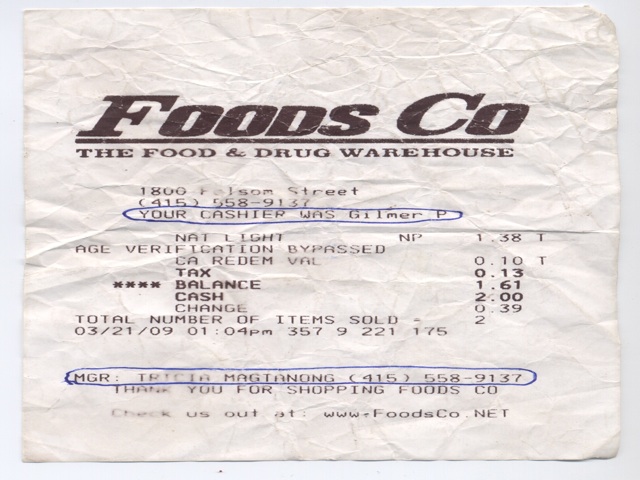
FOODS CO, a supermarket part of a network grocery chain located at 1800 14th/Folsom St (just a ten minute walking distance from where I live) has been a significant food chain for people in poverty to purchase relatively affordable groceries.

Many customers, (including myself) have depended on FOODS CO, for quite some time now, to keep their food prices relatively low to satisfy poor people's budget, at some degree.

Right after the illegal October 7th, 2005 S.F.P.D raid in my Single Room Occupancy Hotel, I went to FOODS CO to operate my food stamp card to get just enough food to satisfy the hunger pains in my stomach, as well as to the shock of my conscience of nearly losing my life to a dozen cops over "mistaken identity."

I walked into FOODS CO to satisfy those same similar hunger urges I had back then. What I did NOT anticipate was for similar shock consciousness (mental elements from my Post Traumatic Stress Disorder) to resurface in light of that deep, dark fateful October 2005 night. Only this time, there weren’t going to be any deadly firearms to be pointed at me, by police officers:

Today, the ignorance of an employee was pointed at me, as a possible shoplifter!

I glanced at the construction renovations that were taking place, outside the store as I approached the entrance. Walking inside the store was like passing through a mini tunnel, due to the outside construction. This was somewhat of an inconvenience to the shoppers, because this was both the ENTRANCE and EXIT, temporarily.

The night before, I was told by a cashier that typically works the evening shift that the store would be closed for most of the week. FOODS CO was getting a "face lift" according to the flyer he handed to me.

This supermarket was always packed with customers, sometimes even at night where there weren't alot of cashiers.

I looked around various store aisles to determine what kind of food would make my heart content for the day. "Hi, do you need help with something?" an employee asked. "Oh no, I'm fine, but thank you." I replied, with a warm smile. I knew him from my frequent store visits, and he was always customer courteous.

After packing my basket with a pack of hotdogs, a can of chili with beans, a loaf of bread, a gallon of fruit juice and two cans of beer, I headed to the express checkout line. Fortunately for me, the line was very slim, and I only had a five minute wait.

"Your total is $6.35, please." said a FOODS CO cashier--a young Latino man, with short low-cut black hair, wearing square-rimmed glasses. I reached into my wallet, took out six dollars, and gave it to him along with 35 cents. He quickly gave me my receipt and tended to the other customer.

I packed my groceries into one shopping bag, doubling them to ensure strong quality, and began to head out the entrance/exit.

I was just barely a foot away from the store's security checkpoint scanner, when out of nowhere, a short middle-aged Latino woman, wearing a green apron bearing her employee FOODS CO I.D., stopped me literally dead in my tracks. It was as if she was Wonder Woman or Supergirl poised against her prey, though I was hardly the villian.

"I need to see your receipt and check your bag."

My jaw tried to drop to the ground, but it knew I was too shocked to pick it back up, so it stayed where it was. Why did this employee even stop me before I even went through the security monitor checkpoint scanner?

Three years, counting every single hour, minute, second, day, week, daylight savings time, spring, summer, fall, and winter. Counting every single food stamp transaction, cash transaction, A.T.M/Debit card. Three years, counting good days, bad days, depressed days, stressed days, emotional days, sick days, alive and well days.

Three years, I have NEVER had ANY problem at FOODS CO, with its employees, and/or store management. The employees gave me respect, and I gave it back to them in return. Some of the managers delivered warm smiles, and I returned the exact same smiles. Even the store security guards gave me respect, with a friendly nod, and I also returned the same.

Three years, and none of that began to matter! Today on March 21st, 2009 at approximately 12:50 p.m. my humility and reputation were in the danger of being shattered. The uncomfortable feeling that you're being treated as if you did something wrong (even though you had not) grasps your dignity and humility.

"Look at this. I don't see beer on the receipt."

"Excuse me?"

"I don't see it on your receipt."

"That's kind of strange, because everything that I had on the checkout belt should've been rung up," I replied. I showed her on the receipt where it said "Age Verification Bypassed" which indicates that a customer has purchased an alcoholic beverage or a tobacco product, without having to show their I.D.

Unfortunately for me, it was revealed that there was only one beer sale listed on the receipt. Rather than get into a heated argument exchange with her and cause a scene, I suggested that we both go confront the cashier who rung up my items.

I followed her over to the appropriate cashier. He nodded to her that he did ring up all my items, until he studied the receipt further. "Uh, no, I only charged you for one beer and not the other."

Then came the real shocker: "I didn't see you with two beers, only one was on the counter." My eye lids perched upwards like a hawk, as I was surprised by his words.

"What!" I exclaimed. "That's strange, because I placed all of my items from my basket onto this belt. You scanned all of my items. I come through your checkout lines a lot and this never happened before. How could you have missed this one beer, when it was with my other items...........on the counter?!"

The cashier coldly looked away from me, refusing to acknowledge the possibility that he might have errored, irresponsibly. If he would've said, "I'm sorry, I must have forgot to scan it through." Then I would have at least understood, because everyone makes mistakes. He didn't want to appear to have been doing his job improperly, so he shifted the blame towards me.

Even so, what ever happened to the cardinal consumer rule that "customers are always right?" I guess it didn't apply to me, today.

Three f@#%$king years!

After a few brief back and forth exchanges, I ended up paying for the beer, which I had absolutely no problem doing in the first place. Why wouldn't I? I'm not a thief, and I always pay for my items. But from what I was understanding it clearly from the cashier, he was implying that I must have snuck the beer from underneath his "radar." Buy one, steal one free?

I shot them both an angry glare and asked them for the store manager. They referred me to another cashier who called the manager on the store intercom. As I waited, I alerted my comrades on my own phone to what was taking place.

The manager, a short heavy-set Caucasian woman with blond hair and slim dark streaks came from upstairs to talk to me. I politely explained to her what was going on. As heated as my temper was, I refused to lose my composure. I thought that she would've been more understanding to this situation. Something in her pupils told me a different story.

As a spiritual person having been prone to people's various levels of energy, negative and positive, I immediately got the feeling that she did not believe a word that came out of my mouth. When she started talking to me, her voice, eye contact, body language confirmed the vindictive attitude I received from her based on my observation(s) of her.

"He's already told me what happened. I believe his word over yours," she said. "He's worked here for quite a while, and I doubt that he would be making all of this up. Why are you complaining about an unpaid beer? It’s not like it’s free." Tricia then took the "undetected" beer out of my bag, and was getting ready to put it back, until I told her that the cashier had just charged me for it.

"Where's the receipt?" she asked. I searched both of my pockets, and my bag that contained my groceries. I realized that amidst this madness, either the cashier or the woman that stopped me must have kept it. Now I only had the second receipt he gave me, verifying that I had just paid for the second beer. I showed it to her.

There have been many terms that define the term "profiling." One of them in recent years is "Shopping while Black" which gives a definition to African Descent customers when they walk into an average consumer business, such as a shopping mall, a grocery store, a department store, a liquor store and even a restaurant, and are harassed because of their descent.

Yes, it's important to acknowledge the existence of criticisms, "Oh that can happen to anyone, regardless of skin color." (Which is very true) However, statistics, reports, surveys and especially history itself, has proven time and time again that black people are always the most watched than any other race in the world.

Unfortunately, I’ve never been immune to the problems, speaking from SO many experiences, as a young African-Descent man.

This is especially true if there are black shoplifters caught and subsequently, there becomes a red alert on many black shoppers because of that one or two that were caught stealing. Notwithstanding, what a person wears also gives off the wrong signals, judgments and assumptions. These are the attributes that lead up to "profiling" and "racial profiling" via "shopping while black."

You can tell if you're being "profiled" or "singled out" when as soon as you walk into any kind of merchandise store, along comes an employee who decides to follow you around, or asks "If they can help you" barely giving you a minute to even shop for an intended item.

Even singers, celebrities and performer have encountered "profiling" incidents committed by store employees and cop........................that is until the profiling perpetrators recognize who they are.

The manager wanted to see both receipts. While I kept asking her to go ask the cashier to get confirmation, she stared at me for a few seconds, indicating she still didn't believe me. The reasons the manager had for not believing me were evident in her eyes.

The manager finally asked the cashier and he did confirm that I had JUST paid for it, so she then gave it back to me. Then I thought to myself, "Evidently I must have just paid for it, else what do I look like having a bag full of groceries, with only ONE receipt for ONE purchase?"

I argued that their store security cameras could ultimately validate all my claims. I suggested that we both could view the cameras. The manager's eyes flashed, and she sternly refused. "There is no way I am going to have you go upstairs and look at the camera!" I said that was fine by me.

"But I wanted to lodge a complaint against this store. I know you guys have complaint forms, and I want one."

The manager said that they didn't have any complaint forms. She wrote down the number to the corporate office, "Ralph's Food 4 Less" and gave it to me. I took the number from her, rolled my eyes at her then I walked out the entrance/exit past the Latino woman employee that stopped me, who was now wearing a skinny smirk on her face.

I quickly walked past her with a dirty look, shaking my head at her, as I departed from my former favorite supermarket, narrowly missing and dodging the incoming customers pushing their shopping carts.

Total embarrassment and humiliation, I was nearly put in a position where security could’ve sided with the store employees, if they would've been called on me. Even if he would've recognized me as a frequent customer, there is no question in my mind that he would've sided with them for the safety of keeping his job.

There's also no telling what could've taken place. A mere "misunderstanding" could've elevated into an unnecessary chaotic scene, where security personnel and cops could've been called on me, and who knows what could've transpired?

Three f@##king years down the drain, caused by three people's foolishness, resulting in the birth of my disinterest to continue my business at their store, and maybe in any of other FOODS CO stores, for that matter. No r-e-s-p-e-c-t FOR me, no c-h-e-c-k FROM me. Unbelievably unfair!

I'm a living testimony of "misunderstandings" and the effects it can have on someone. They nearly cost me my very own life. It's strikingly ironic that after my October 7th, 2005 S.F.P.D encounter, I went down to this very store before closing time, after being "racial profiled" about thirty minutes before. Here I was years later being profiled at a store, just a few adequate walking distance from my home, by an employee that apparently lacks security experience.

From where I see it, FOODS CO needs more than an outside "face lift" to attract more customers. The real plastic surgery should begin with spiritual surgery, with accountability to the characters of some of its employees and management.

The Ralphs/Food 4 Less Foundation to Donate Over $60,000 to African American Organizations as Part of Black History Month Program.

In recognition of Black History Month, The Ralphs/Food 4 Less Foundation will accept donations from customers throughout the month of February in more than 450 Ralphs, Food 4 Less (Southern California, southern Nevada, Illinois and Indiana), Foods Co, Bell Markets and Cala Foods stores.

All funds collected will be donated directly to African-American organizations with a focus on education, culture and heritage. Customers can support the Black History Month fundraising program by donating their spare change in specially marked collection canisters located at the checkstands in their neighborhood Ralphs, Food 4 Less, Foods Co or Cala/Bell supermarket.

http://www.prnewswire.com/cgi-bin/stories.pl?ACCT=105&STORY=/www/story/02-02-2005/0002944982

Tags

WORKFARE WAR

09/24/2021 - 09:45 by Anonymous (not verified)
Original Author
root
Original Body

by Thornton Kimes/PNN

Introduction

This a To-Do List and more thoughts on the “Who’s Budget? Our Budget!” Battle of San Francisco. This is my rant and rave about the San Francisco version of the Culture War, one or two of the ways it is fought here.

After some effort, while or just before the city budget process started acting like a bullet train on a bridge to nowhere, the Coalition On Homelessness successfully negotiated a limited victory in the struggle to save it and other organizations from losing Workfare volunteers to re-assignment to sweeping streets and cleaning MUNI buses in Summer 2009.

Almost every city service is threatened with multiple personnel and hours-of-service cutbacks. Even Stimulus cash may not be used to undo the damage—-where have we heard that before? Why not expand the list of places where Workfare workers work?

The Public Library System

This “World Class City” has a Public Library System that is more properly thought of as “A World-Class Bad Joke.” The Main Branch doesn’t open at the same time every day of the week and closes early on weekends. The satellite branches aren’t open 7 days a week.

Workfare volunteers could help the PL system stay open 7 days a week from 9 a.m. to 9 or 10 p.m. All of it. Nobody becomes a librarian to get rich, the issue of union busting that does concern the Coalition On Homelessness, union workers and others with regards to who cleans San Francisco’s streets isn’t quite the same problem—though it could be if our current Mayor wanted to make it so.

MUNI

The MUNI public transit bus system has several problems, including loss of revenue from riders getting on without paying, a chronic inability of buses/drivers getting through their routes on time, and the current economy—we are told—is forcing the agency to raise fares in the fall of 2009. Adult fares would rise to $2, from $1.50—-all other fares would increase as well.

I participated in the last round of public community center meetings called to tell citizens what MUNI is concerned about and wants to do and to get public questions, comments and suggestions. They didn’t talk about fares then and the suggestion I sent “To Whom It May Concern” apparently found a nice home in a trash can.

When it comes to adjusting fares, MUNI doesn’t seem to care what riders think or what other transit systems have done that has the slightest bit of creative problem solving in it.

My fare solution: charge everyone $1 and do what the Seattle Metro bus system does—-charge an extra quarter during the AM/PM rush periods. Everyone pays the same, and the folks who’ve been paying the most cash get to feel like they’re paying less.

It’s the little things that make “modren life in the big citay” hell or heaven.

Workfare workers could help with the loss of money thing, riding EVERY bus line and making sure everyone who can pay does pay. They’d be doing something more useful than cleaning gum and vomit off the floors and seats, and most people want to feel they are doing something useful with their time.

Does city government care enough about citizens, with or without money and power, to at least try to have a clue about solving problems? There seems to be an all-inclusive empathy gap, which gets bigger the larger the gap between incomes becomes, at the core of this perfect vicious circle of circumstances.

San Francisco Ballet/Opera/Symphony

The day after a January mock funeral for the city budget I went to a San Francisco Supervisors budget committee meeting. Later, I told Tiny I wished she’d repeated the comments she made at the mock funeral. Those comments were a perfect response to the San Francisco Ballet, Opera, and Symphony employees and execs’ testimony begging the Supes to not cut their city welfare money.

A blue collar Opera worker said she was concerned that the Opera’s outreach to city youth would be cut if city cultural welfare money disappeared or was reduced, and she wasn’t the only employee of the Opera, the Ballet, etc., who spoke to this issue. She also said that she felt this would be a tragedy, that many city youth HAVE no culture and need to be exposed to some.

Tiny’s comments the day before included these words: “I can sing Opera too!”, and she did—-translating whatever it was to mean “the woman is fickle.”

The Opera worker’s comments were an amazing, infuriating statement. I may have problems with some popular music, but not all of it. What I really have a problem with is somebody telling me or anyone else (the youth of San Francisco) that their culture, which generates billions of dollars in profits and countless cellphone and iPod downloads (I’m betting a whole helluvalot more than downloads for symphonic or operatic music!) isn’t good enough.

That said, putting Workfare workers to work in the Ballet, Opera, and Symphony might be a good thing. How about a trade? Workfare workers instead of city cultural welfare money? Maybe it wouldn’t only be the Workfare workers larnin’ sumthin’.

If hard times actually do hit the Ballet, Opera, and Symphony, those folks could do Workfare with the hip-hop and other pupular music folks scattered through the city doing their bit for the entertainment of the, I think, majority who rarely (if ever) cross the doorways of those institutions. I know my feet have never passed through those doors, mostly because I wouldn’t spend the money they charge to fill their seats even if I had it.

Which is a shame. I lived in England for a year, age 8, went to public school and spent a lot of time listening to the University of Lancaster Symphony Orchestra play in their hall (my math professor father was on sabbatical to study Stonehenge) and loved it. I don’t hate classical or more modern symphonic music, I just don’t have the time or money to waste on it, nor the interest in supporting people who think youth or anyone else who don’t listen to their music is/are somehow deprived.

We all have televisions and radios and some of us have cellphones, MP3 players and iPods. I think they call that freedom of choice and opinion about what you consider “good music”. The same goes for any genre of cultural endeavor.

Tags

ONE LAST SECOND OF FREEDOM: LOVELLE MIXON & OSCAR GRANT

09/24/2021 - 09:45 by Anonymous (not verified)
Original Author
root
Original Body

By Thornton Kimes

by Staff Writer

I can't claim much police mcnastiness scholarship, though that could change any time. My 1980's post-anti-nuke-protest-short-time-in-jail-prison is a bit faded in memory, except for an I-can-laugh-about-it-now brief phobia about jangling overstuffed key rings.

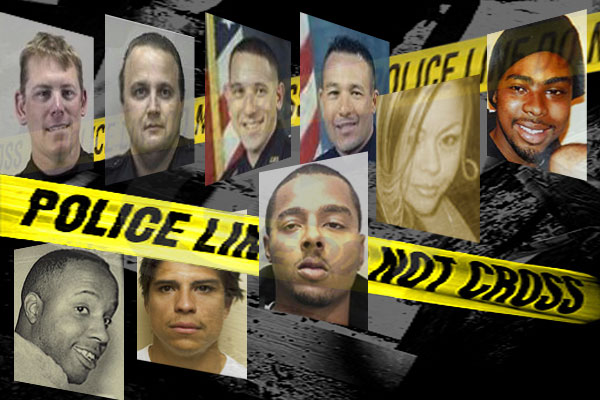
What strikes me hard about the death of four cops and Lovelle Mixon, who didn't want to go back to prison badly enough to kill for one last second of freedom, is video and written images. Mixon's mother, begging for forgiveness from the families of the cops, when the blame for her son's nightmare of a life of dreams crushed, deferred and defined as meaningless by his own parole officer and who knows how many other people can be placed squarely elsewhere on vastly more guilty shoulders-everyone who has ever voted for tougher punishment for crime, who refuses to hire people released from prison, and so much more.

The television news zealously did it usual thing, crushing whatever remains of Mixon's reputation, while one of his sisters vigorously defended him. I wanted to hug her for that.

The San Francisco Chronicle ran articles about what Black men and others face coming out of prison, the economy threatening to only add to the devastating three and more strikes against most if not all of them; mentioned the dueling street shrines and one cop looking at messages left for Mixon, shaking his head and walking away.

Arnold Schwarzenneger and others honor the cops, the only comfort Lovelle Mixon's family gets is from the streets of Oakland, from everyone already outraged and traumatized by Oscar Grant's shooting death, from the rest of us who know they need a lot of love too.

Oh how we all need that!

Lovelle Mixon's family and Oscar Grant's are united in their pain and the utter mind-fuckery of the media and the messages we get to varying degrees in school and elsewhere. The court system and the lawyer defending Johannes Mehserle in the Oscar Grant case are using Mixon's lethal resistance to being taken back to prison to delay justice for the Grants.

Oscar Grant's mother noticed.

Lawyers are paid to be human computers, putting irrelevant stuff behind mental bars to do the job they were hired to do-defend or prosecute. The deaths of four cops are irrelevant! We all know it, though Mehserle's shark wants us all to believe he really needs another month and a half to lawyer-up again.

I've been avoiding Oakland. A lawyer and a judge remind me why I should be there.

Tags

To Persecute and Arrest

09/24/2021 - 09:45 by Anonymous (not verified)
Original Author
root
Original Body

By Muteado X/POBRE Poeta y Poverty Scholar in Residence

by Staff Writer

To protect and serve--I feel more like to persecute and arrest. Having lived in Oakland for 19 years as a young man of color, I have not had a good memory of dealing with the police and I know I am not alone. I come from a community of color who have this fear whenever we deal with the police; even when we are the victims of a crime we are afraid of calling the police because there is a mistrust and I don't blame my community. When we look at the statistics documenting all the harm coming from the police done against communities of color, it's undeniable. I feel sad of that lives are lost cause of gun violence, but donÕt romanticize heros. I feel we live a violent system, a violent society and feel sorry I am not surprised of what happened. I also feel that society has a scale method, categorizing different human beings depending on your class and occupation. I donÕt think the lives of a police officer are more valueable than any other human life.

Tags

Close Encounters of the Worst Kind- on Oakland Po'Lice Shooting

09/24/2021 - 09:45 by Anonymous (not verified)
Original Author
root
Original Body

By Vivien Hain/Poverty Scholar in Residence

by Staff Writer

It’s late tonight as I sit here in a quiet and homogenous North Central Berkeley with the sound of distant trains passing through, thinking about the recent shootings of the four Oakland PO’lice officers on March 21st and why it all really went down. Having survived nearly four years of houselessness, living in poverty in a dirty storefront without hot water and an outdoor toilet in West Oakland and later in public housing projects on a ‘blocked off’ 85th Avenue for 5 ½ years in East Oakland, I've experienced many unfortunate and negative encounters with the Oakland PO’lice.

I remember back in the day while living in Oakland, dealing with several confrontations of being profiled while ‘DWB’ (driving while brown or black) and being pulled over because I was driving an old ‘hooptie’ car while being a person of color. I even had the unfortunate experience of being harassed and threatened with arrest with my babies in the car by the ‘Oakland Riders’ back in 2002 just outside the old, smelly, paint-chipped, dilapidated commercial building we called ‘home’ in West Oakland.

I remember how hopeless I felt as those blue and red siren lights beamed into my blurry, dirty, kid-finger-smeared rear window like a scene out of Close Encounters of the Third Kind, making me feel trapped and hunted down for simply being a poor person of color. I remember feeling my head get hot and my chest tight, feeling breathless and afraid. I remember the feeling of extreme anxiety taking over me with wild impulsive thoughts and the tempting urge to put my key back into the ignition and desperately flee out of there like a bat out of hell.

What the PO’lice, the authorities, the mainstream TV news networks and even many people fail to understand is that the daily struggle that poor folks of color like myself deal with tends to compound into a situation much deeper than what is being seen or addressed on the surface. So when we are criminalized for our circumstance, our need for survival is taken to another whole level and in the most extreme situation, sometimes becomes a matter of life and death.

What I feel is truly missing in this whole situation are the root problems of why it went down this way. From what I have seen on the mainstream local TV news networks, nothing is being said or addressed about the deep seeded adversity that poor folks of color deal with daily in communities like East and West Oakland and the on-going momentum of internalized oppression that builds up from constant profiling, harassment and criminalizing by the PO’lice within these communities--which for us is truly Close Encounters of the Worst Kind!

I see nothing being addressed in the mainstream media about the core reasons to why he (Lovelle Mixon) may have felt hopelessly trapped in his own circumstance and felt such extreme desperation and anxiety that he had to go out like that. Remember… He lost his life too! And of course, nothing was even mentioned how he (Mixon) was trying in vain to get his life back on track during this time when this happened. What also perplexes me is how the mainstream TV news networks value certain lives over others. Tell me… Why isn’t there no Oracle Arena memorial being held for Lovelle Mixon or why wasn’t there one for Oscar Grant? I thought we were all supposed to be equal? So, what’s up with that people? Think about it…

Tags

You Never Let Your Guard Down When You Live in Hell

09/24/2021 - 09:45 by Anonymous (not verified)
Original Author
root
Original Body

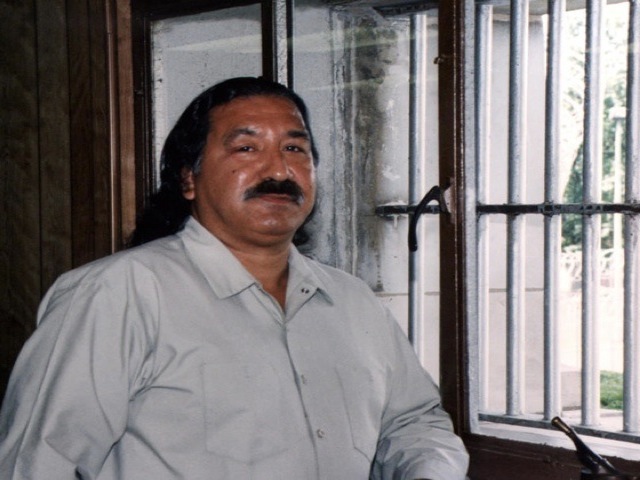
Our Brother Leonard Peltier's crisis continues

by Indigenous People's Media Project

“You never let your guard down when you live in hell”

“Innocence is the weakest defense. Innocence has a single voice that can only say over and over again, “I didn’t do it”. Guilt has a thousand voices, all of them lies”


--Leonard Peltier from “My Life is my Sundance"

The rain fell gently as I made my way to 7th Street near Market. I approached the federal building and looked up. The building’s metallic structure loomed ominously over the street—out of place among the people gathered in front of it. The rain fell on my forehead and came down like tears. More people appeared, as if rising from the ground. 2 men unfurled a banner announcing the purpose of the gathering: Free Leonard Peltier, free all political prisoners. The banner flapped in the wind like an eagle as the people began to speak.

A woman named Bird took a hold of the microphone and spoke passionately about her friend Leonard Peltier. “It’s shameful the way the US government is letting this happen to Leonard. President Obama said we will have no torture in our country referring to Guantanamo. But what about the torture that’s going on in the US prison system? Let’s live up to your words President Obama”.

Leonard Peltier AKA Tate Wikuwa, meaning, “wind chases the sun”, AKA Gwarth-ee-lass, meaning "he leads the people". He is a political prisoner. In the US prison system he is known as US Prisoner 89637-132. He has spent 33 years in prison (mostly in the infamous “Hot House”, Leavenworth Federal Prison) for the crime of being Indian--of loving and doing whatever necessary to insure that the indigenous people of this land live in dignty as human beings. On January 20, 20098 he was brutally attacked (beaten to a “bloody pulp” said one elder) as he was being transferred to Canaan Federal Penitentiary in Pennsylvania. He was placed in solitary confinement when he refused to identify his attackers. He was given one meal—dangerous for a man who is an elder and diabetic—and denied access to legal counsel for 4 days. This incident is an example of a multitude of documented privations indicative of the government’s vindictiveness and willingness to circumvent justice to satisfy its craving for vengeance.

Leonard Peltier is serving a double life sentence (2 lifetimes plus 7 years). His scheduled release date is 2041. His sentence is a result of his involvement in a shooting in 1975 at the Pine Ridge Reservation in South Dakota. Peltier and members of AIM (American Indian Movement) were summoned by elders at the reservation for protection against elements that were out of control—the goons (AKA Guardians of the Oglala People), and the poverty and oppression sanctioned by the Bureau of Indian Affairs (BIA). Those bold enough to speak out on behalf of their people were harassed; many ended up dead. Leonard Peltier and AIM answered the call.

On the morning of June 26, 1975, Leonard Peltier and members of AIM were camped out at the Jumping Bull Ranch on the Pine Ridge Reservation. A black car pulled in to the area with a pair of unidentified men. They began shooting, killing a native man by the name of Joe Killsright Stuntz. The natives took cover, gathering the elders and children. They returned fire in self-defense, killing the two men. They later found out that the 2 men were FBI agents—their visit supposedly predicated on a pair of stolen cowboy boots. The presence of the GOONS was ubiquitous and State troopers had sent out armored vehicles and considered the area a compound. The natives fled. The FBI knew whom they wanted: Dino Butler, Rob Robideau and Leonard Peltier—AIM leaders that they considered threats. Robideau and Butler were tried and acquitted on the grounds of self-defense. Leonard Peltier had fled to Canada where he was welcomed and supported by indigenous brothers and sisters. He was subsequently extradited back to the US to stand trial. He was found guilty of the murders of the 2 FBI agents. The acquittals of Butler and Robideau infuriated the FBI. Someone had to pay for the killings of the FBI agents. That someone was Leonard Peltier. Had he been tried with Butler and Robideau, he would be a free man today. Coercion, including falsifying documents and affidavits to illegally extradite Peltier from Canada to Fargo, North Dakota was used to put Leonard Peltier in prison. The prosecuting attorney said, “We don’t know who killed these agents, but someone has to pay”. The evidence allowed in the trial of Robideau and Butler were not allowed in Peltier’s case—evidence that would have proven his innocence.

“We are going to march to the congresswoman Pelosi’s office”, said AIM West Coordinator Tony Gonzalez. “We want to let her know of our concern for the safety of Leonard Peltier”. The people marched up 7th Street and across Market. POOR Magazine poverty scholar Dee Allen led the chant, “Geronimo Pratt is free…Leonard Peltier should be free!” We made our way past city hall and to the Federal Building on Golden Gate Avenue. A group of us entered the Federal Building. It was standard procedure—we went through metal detectors while stone-faced security personnel looked on. It’s a dehumanizing process—much like the airport. One man in our group was a disabled scholar who asked one of the security officers a question. The officer ignored him as if he were an insignificant annoyance. We were escorted to Congresswoman Pelosi's office by 2 security personnel--one man and one woman (the woman bearing a striking resemblance to the late actor Carol O'Connor). We had finally arrived.

A pleasant African-descendent young woman offered us coffee. Tony Gonzalez and Sampson Wolfe of the Northern California Leonard Peltier Support Group joked about coffee, about how much people fuss over it. The writer Dostoyevsky once said that you could determine the character of a man by the way he laughs. Both Tony and Sampson laugh well. We were met by one of Pelosi’s staff members. “I only have 5 minutes”, he said. Tony explained the situation of Leonard Peltier and asked if the congresswoman could help. The staffer indicated that he wasn’t familiar with Leonard Peltier but that he’d pass the information along. We left but not before being given complimentary 2009 calendars, complete with pictures of US historical sites and patriotic quotations meant to rouse the spirit and fire the bones. I flipped through the calendar. No quotations of native elders, their faces absent from the many pictures. I thought about the disrespect that the indigenous people of this land have had to endure. I thought about the day Quannah Brightman of United Native Americans lit sage in front of POOR Magazine’s old office building during our “Take back the land” ceremony. I remember the cop (African descended) telling him to extinguish the sage as it was “unpleasant”. We left the federal building and walked outside where the rain met us.

Leonard Peltier has survived incarceration and the physical pain of confinement. We believe he is innocent. We believe the FBI orchestrated the attack on Leonard in prison to blemish his record when he comes before the parole board. We demand that the Obama administration grant Leonard Peltier a full pardon and to right a wrong that has lived on far too long—despite evidence that would exonerate him. He is an elder, a man like any other who wants to be free. As he told Bird when they last spoke, “All I want to do is feel the branches crackle under my feet. I just want to feel the earth beneath my feet again. I want to be a father and a grandfather and go home and love my family. I just want to see them and be with them. If people only knew that”.

Note: Leonard Peltier was transferred back to United States Prison Lewisburg and released to the general population. While this is preferable to solitary confinement, the Bureau of prisons can’t or won’t protect Leonard Peltier from harm. Send letters, call, and/or e-mail the director of BOP. Harley G. Lappin, Director Bureau of Prisons U.S. Department of Justice 320 First Street., NW Room 654 Washington, DC 20534 Phone: (202) 307-3250 Fax: (202) 514-6878 E-mail: hlappin@bop.gov A sample letter (that you can adapt and use for a telephone script, as well) follows. -----

Dear Sir: I was outraged to learn that, on January 13, Leonard Peltier was transferred to USP-Canaan in Waymart, Pennsylvania, where he was immediately attacked and injured by young gang members. Your inability to protect Mr. Peltier in this or any other maximum-security facility is clearly evident. I understand that last August Mr. Peltier properly submitted a formal application for transfer to an institution close to his home in North Dakota-either the low-security prison at Sandstone, Minnesota, or the medium-security facility in Oxford, Wisconsin. Such an assignment, I know, would comply with Program Statement 5100.08 which states that the BOP is to make every effort to keep prisoners within a 500-mile radius of their homes so that prisoners can maintain ties to their families and home communities. In reviewing Mr. Peltier's places of confinement during the past 33 years, however, I was shocked to discover that he has never received such consideration. Apparently, your rules don't apply to Mr. Peltier and never have. In addition, in late 2008, the Turtle Mountain Band of Chippewa Indians also sent a resolution to you offering a third option, i.e., that their tribesman Peltier be transferred to that Nation's custody to serve the remainder of his sentence. Leonard has been a model prisoner for the past 30 years. In recognition of this, the BOP has greatly reduced his security rating. Peltier shouldn't be imprisoned in a maximum-security facility anymore. His reduced security rating, Peltier's application, and his Tribal Council's request should have been but clearly weren't taken into account in the BOP's recent decision to transfer Peltier to yet another maximum security prison-and one where his safety and wellbeing were put in such serious jeopardy. The only remedy to the current situation is for you to immediately transfer Mr. Peltier to one of the above, more appropriate facilities. I strongly urge you to do so. Sincerely, (Your Name) (Your Street Address) (Your City, State and Zip Code).

Tags