Story Archives

Not Compromising Himself- The Eric Quesada Story

09/24/2021 - 09:45 by Anonymous (not verified)
Original Author
root
Original Body

by Marlon Crump/PNN Revolutionary Legal Scholar

"I think that in order to win you have to talk a certain way, without compromising yourself."

These were the charismatic statements from San Francisco Candidate for District 9 Supervisor, Eric Quezada during POOR's monthly Community Newsroom, on August 8th, 2008.

Quezada was collectively interviewed by all of POOR's poverty scholars, writers, and journalists present, regarding his candidacy run for the upcoming November 4th Election for the current seat of incumbent, District 9 Supervisor Tom Ammiano.

POOR's co-founder/my mentor, "Tiny" Lisa Gray-Garcia no-nonsensely navigated the meeting, in her normal fashion by ensuring that all questions asked to Quezada were quick enough for everyone to ask.

"I come from revolutionary politics." said Quezada. "I came into radical politics at an early age. If I win, I want my office to be a tool for the movement. Tell no lies and claim no easy victories."

When he was asked about the affordable housing and displacement(s) situation regarding S.F's poor population, Quezada replied, "We're trying to slow down gentrification and get more affordable housing."

A native San Franciscan, Eric Quezada is a longtime community and housing activist in San Francisco's Mission and Bernal neighborhoods.

Prior to joining Dolores Street Community Services in the fall of 2005, Eric worked for the Mission Housing Development Corporation, co-founder of the Mission Anti-Displacement Coalition (MAC) and the Mission Economic Development Agency.

Quezada also serves on the Board of Bernal Heights Neighborhood Center and PODER (People Organized to Demand Environmental and Economic Rights).

In the 90's during the Dot.Com boom, Eric Quezada took the lead on challenging live/work development in the Mission in the 90’s and has worked since on stopping the gentrification of the neighborhood.

Before and after, he has been at the forefront of the District's most pressing issues, ranging from affordable housing, immigrant rights, family services, economic development, and environmental justice.

"What makes me stand out against the other candidates (S.F Police Commissioner, David Campos, and Mark Sanchez) is that I've been working on these issues for twenty years."

Eric Quezada also expressed his feelings on the treatment of poor people living in affordable housing and S.R.Os (Single Room Occupancy) Hotels, in the face of law enforcement abuse by police officers.

(Which I knew far too well from my own experience in October 7th, 2005..)

"I think that just because you live in affordable housing doesn't mean that your constitutional rights are to be left at the door." he said.

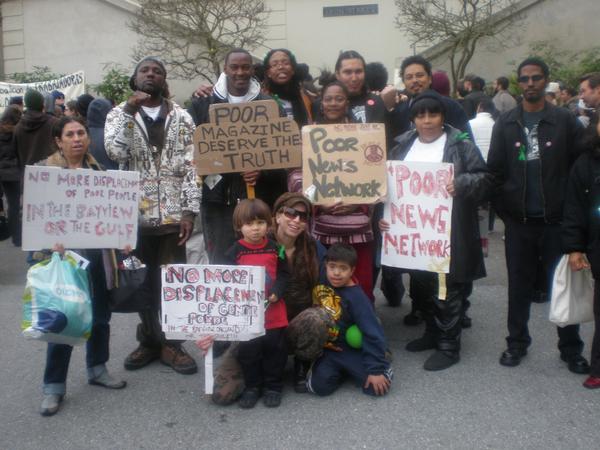
At the People's Rally on July 10th, 2008 at San Francisco City Hall, residents of the Mission, South of Market, Potrero Hill, and Chinatown flooded its steps. Myself, and POOR were there to re-port and su-port the rally, among other neighborhood community activists.

The people in attendance were fed up with the zoning/owning plans that were exchanged, between the S.F Planning Department, and the S.F Planning Commission, and how it would possibly have an "eminent domain" affect on their neighborhoods.

Present in the crowd was Eric Quezada, in support of the rally.

The topic shifted to the destructive issue of the criminalization of S.F's poor, a discussion that proved lengthy. A recent proposal by S.F Mayor Gavin Newsom for a court strictly for S.F's homeless population for "misdemeanor offenses" was approved for funding by the S.F Board of Supervisors, despite objections and protests of many.

As a result of Newsom's "proposal" and its support by numerous S.F. Board of Supervisors, the Community Court Justice Center (defined by POOR as Poverty Court.) was born, on June 22nd, 2008.

In response, Quezada suggests that, "What should really happen is organizing the supervisors."

Quezada discussed the treatment of S.F's youth population, regarding the very racist and classist "gang injunctions" introduced by the San Francisco City Attorney's Office, a little over a year ago.

"It was all about getting money from Homeland Security while trying to keep new residents safe, during targeted gentrified areas in S.F. All it really does is lead to more racial profiling."

Towards the end of the interview, Quezada discussed how he felt about non-profit developers profiteering off of poor people's lives. "Holding non-profit developers accountable actually got me into trouble." Quezada said, in reference to his employment at Mission Housing Development Corporation.

"There are developer fees and these developer fees should be coming back into the community. To say we (S.F.) are going to give 400 acres to Lennar Corp is crazy. The Mayor's Office on Housing is always putting funding on big sites."

Tags

Making Sure that All people are heard - The David Campos Story

09/24/2021 - 09:45 by Anonymous (not verified)
Original Author
root
Original Body

by MARLON CRUMP/PNN Revolutionary Legal Scholar

"There is a legislation of an immigrant's Municipal I.D Card. We want to make sure that the police department (San Francisco Police Department) acknowledge immigrant rights."

In the upcoming November 2008 election for District 9's current incumbent, Tom Ammiano's seat, San Francisco Board of Police Commissioner David Campos voiced his concerns regarding a number of issues, including immigrant rights here, in San Francisco, CA to my fellow POOR Magazine comrades.

This was during POOR's Community Newsroom, on November 6th, 2007. Tom Amiano's District consists of the Mission District, Bernal Heights and Portola neighborhoods. David Campos, himself, was an undocumented immigrant when he arrived here in the U.S with his family, from Guatemala at age 14.

Campos also briefly discussed an S.R.O Hotel (Single Room Occupancy) presentation that was going to be on the following day, at the San Francisco Police Commission, at S.F City Hall.

I referenced David Campos' address to my POOR comrades, in regards to this long anticipated presentation of San Francisco Police Department members and their interaction with people (including myself) who live in S.R.O Hotels in the City of San Francisco.

"It's David's commitment as a police commissioner in getting the police department to know the community of Bernal Heights better, is why we were able to get things done regarding community policing." John Perry, a Bernal Heights resident boomed his voice to a large "Campos 2008" capacity crowd at the Mission Cultural Center for Latino Arts, in San Francisco's Mission District, on November 29th, 2007.

Among the many in attendance was fellow San Francisco Police Commissioner, Petra DeJesus, Sheriff Michael Hennessey, John Perry, Axis of Love executive director, Shona Gouchenaur, District 9 Supervisor, Tom Ammiano, David Campo's family, and your's truly from POOR Magazine.

When I asked him in a follow up interview what motivated his run for District 9, Campos replied, "I am running for Supervisor because I believe that the most disenfranchised people in District 9 (the poor, immigrants, the homeless, working families) need a voice on the Board of Supervisors."

"I was an undocumented immigrant from Guatemala who came here with nothing. For many years, my family struggled to make ends meet. After a lot of work and the support of my family, friends and my community, I managed to put myself through college and law school.

As an attorney, I also brought the perspective and knowledge of how to get things done, as evidenced by my work on the San Francisco Police Commission, where I have pushed for real and meaningful police reform. I believe that because of my personal and professional experiences, I can be that voice."

David Campos was born in 1970 in Puerto Barrios, Guatemala. He came to the United States with his family when he was only 14 years old. As an undocumented immigrant who spoke only Spanish, David grew up in the barrio of South Central Los Angeles.

He excelled in his classes, earned scholarships to college and law school, and remained true to his roots as a progressive civil rights advocate and Democratic leader. He has earned a BA at Stanford, University in 1993 and a Law Degree from Harvard, in 1996.

David has served as Lead Counsel to the San Francisco Unified School District from 2004-2007. He has worked to desegregate San Francisco schools, investigated corruption, and bring open government to the School District. Campos has also worked in the San Francisco City Attorney's Office, from 1999-2004.

In addition to these accreditations, Campos is Co-chairman of BALIF (Bay Area Lawyers for Individual Freedom) and a Board of Directors member for the San Francisco La Raza Lawyers Association.

When I asked him of his plans for the immigrant families that are currently going through issues of deportation, he replied, "As Supervisor, I would push for the City and County of San Francisco to help those families. Because the federal and state governments are going after these families, the City and County of San
Francisco needs to stand up for them."

"We as a City need to send the clear message that everyone deserves to be treated with dignity and compassion whether or not they have papers. The City should develop a support system that gives these families assistance, to give them an opportunity to stay in the country."

Then I questioned his thoughts of the City of San Francisco's attempts towards establishing Municipal Codes for undocumented immigrants, “" assume you're talking about the Municipal ID card." David said. "I totally support it. Most of us take it for granted but having an identification card is critical."

"Without it, it's almost as if you don't exist. Since the federal government and the state government are unwilling to give these individuals a driver's license or some other form of identification, then it is only appropriate for the City to step in and give it to them. My hope is that the identification will allow them to do basic things like opening a checking account, for instance."

I asked him what his thoughts were of a very crucial and critical issue regarding the marijuana debate of cannabis patients here in San Francisco and the protection of their rights, especially in the face of the S.F.P.D, D.E.A, and other law enforcement agencies.

"I believe that we should protect the rights of medical cannabis patients. This is really a human rights issue. It is a very simple. People who need medication should get it. I don't see why the federal government is getting involved in something that is truly a local matter".

The fact is that the people of the State of California and the City and County of San Francisco have spoken, they believe in medical cannabis and the feds should leave patients alone."

I asked Campos how he would address the problems facing youth in San Francisco, and the lack of employment available to them. "I will work tirelessly (pushing for jobs for the youth) to do that. As someone who once was one of those youth who felt like I didn't have many options, I know the importance of giving our youth a hand".

Many of these kids get in trouble because they have no where to go. We as a City need to make an investment in them and develop more programs that allow them to explore their potential, programs that give them options in life."

My next question was something he was all too familiar with for the past two years that I knew him, since he was appointed to being a member of the Board of San Francisco Police Commissioners, in late December of 2005.

"Do you feel that there have been changes in the San Francisco Police Department, regarding many complaints and grievances brought by complainants, since you've been on the Board of Police Commissioners?", I asked.

Campos replied, "I believe that there have been positive changes since I became a Police Commissioner. One good example is that for the first time that I can remember, we are developing a program where tenants are going to the Police Academy to give cadets training on tenants' rights."

The goal that I personally pushed for with Campos, and several other members of the S.F Police Commission for two years, was for the department to re-train their police officers with proper conduct assessments and behavior, particularly people of race, class, and poverty status.

This was in response to the October 7th, 2005 incident when a dozen members of the S.F.P.D illegally stormed my S.R.O Hotel room without a warrant and with their guns drawn, in a "mistaken identity" scenario.

After 25 months, this S.R.O presentation before the S.F Board of Police Commissioners finally became imminent.

"This is happening because commissioners like myself believe that police officers need to hear from the people they serve. It's truly unprecedented that for the first time we are going to have tenants, including SRO tenants, telling police officers about their concerns and problems."

Following the S.R.O Presentation on November 7th, 2007 presented by S.F.P.D Captain Corriea, and Officer Nate Steger of the Mission District Station, Campos, several S.R.O tenants, and I attended the S.F.P.D Citizen's Academy Training for the youth recruits that would be the future of law enforcement, on March 25th, 2008.

"Our hope is that as a result of this training, we will have a police department that is more in tune with what tenants in this City deal with on a daily basis. I also hope that this helps develop mutual trust."

Tags

Resisting Poverty-pimpitis

09/24/2021 - 09:45 by Anonymous (not verified)
Original Author
root
Original Body

by R.W.S.

I am in my second month of unemployment since my discharge from the non-profit industrial complex. Two months is nothing. I know people who have been out longer--much longer. I have been busy at POOR Magazine doing very worthwhile work. The non-profit that used to employ me occupies an office in the same building as POOR Magazine- - a building whose owners are evicting us. Fortunately for the non-profit, they have a 5-year lease. That's good - for them.

I am not working, but I work. As new co-editor at POOR Magazine, I work the phones contacting our community support members to join us in our Homefulness campaign - a sweat-equity-housing model that gives true housing equity to poor families. It's not based on how much $$ you have but what you can contribute--your art, your skills, your songs, poems, rituals, etc. We are looking to buy a building. Unlike the non-profit industrial organization, POOR Magazine is being evicted.

The non-profits I've become acquainted with seem to operate on the same premise - heavy emphasis on numbers, color coordinated spreadsheets and imposed boundaries. But their structures are corporate with the few at the top reaping benefits at the expense of the many. They seemingly eat themselves from within, becoming mini-fascist fiefdoms with little or no accountability.

As co-editor at POOR, I don't get a paycheck. I don't want one. POOR struggles, thrives, survives because our ancestors - who we honor and respect - will not let it die. POOR's co-founder Lisa Gray-Garcia AKA Tiny, shoulders many of the day to day operating costs, reaching into her own pocket most of the time. Working at POOR to keep it going is more rewarding than a case of povertypimpitis at a non-profit who's bought into the cult of independence and separation. POOR is an organization worthy of my time and efforts because it's real - made up of real folks who are not out for themselves but for the elder, youth, disability and migrant scholars of the community. Our doors are open.

I am collecting unemployment - it's not much but its something - while looking for a regular full-time job with a regular paycheck. But what I am doing right now at POOR Magazine is work - writing articles, making phone calls to our community supporters, facilitating classes, etc.

Yesterday I left POOR to go home. I pushed the button for the elevator. The door opened and inside stood my ex-boss. I stepped inside and we both went down in silence so sharp that it cut through the still air. What was there to say? What if the elevator was to break down? Would she ask me to join her in a rousing version of Kumbaya until help arrived? Luckily the elevator opened. I walked out of the building onto Market Street having put in a day's work and the poverty pimps behind me.

2008 RWS

Tags

Recovery is a life-time goal- Poverty Scholarship on Prop 5

09/24/2021 - 09:45 by Anonymous (not verified)
Original Author
root
Original Body

by RAM/ PNN Race and Poverty scholar

I have lived with formerly incarcerated people who tried to get clean and their lives on track without the prison industrial complex holding them back. I know from personal experience how it separates families and prevents us from raising our own kids who end up in the clutches of child protective services (CPS)--leading to the revolving door of juvenile hall, county jail and ultimately prison.

I grew up with addicted parents. I was the victim of their addiction and domestic violence. After they separated, police raids and sexual pressures put upon my single mother pressured me to leave the house at age 11. I left to better my condition and be an example to my little sister--who was born a week after my 10th birthday. I wanted to go to school in a better district so that my sister would follow my example and strive for a better education instead of handing out in the hood and doing hood things. I had no summer vacations--I changed diapers, fed her, took her to doctors appointments and cared for her everyday after school.

My father passed when I was 16, leading to my mother's decision to get clean. I decided to venture into heavy drug use and alcoholism. While she was getting clean, I was getting dirty, which lasted 8 years. I had my first daughter at 22. When she was 3 I entered my first program (Walden House) of my own recognizance. I was 25.

Recovery is a lifetime goal that I'm still struggling with. Going to meetings, changing my crowd, living in a residential treatment facility where you can't get drug and making the decision to get clean I changed the people, places and things in my life.

My first time at Walden House was a 2-week stay; the second, 3 months; the third, 10 ½ months. I was housed in the same room as my mom who graduated in 1996. The third stay gave me enough time to let it soak in instead of simply biding time. My kids drove me to get clean, but living with my mother--a drug counselor--is my motivation to stay clean.

I am personally in support of proposition 5 because it takes the government out of raising our kids. Since I made the decision to get counseling, my kids have a better chance of going from preschool to school and then to work instead of the preschool to prison pipeline. I believe we need to get rid of the prison industrial complex--it just doesn't work.

A quick glance at California's prison industrial complex reveals the preferred method of dealing with people struggling with drug addiction: incarceration, incarceration, and incarceration. Prop 5 is on the November ballot. It puts forth a lasting solution to replace mindless incarceration of people who need help with drug addiction.

Prop 5 will reduce criminal consequences of non-violent drug offenses by mandating a three-tiered probation with treatment and will provide for case dismissal and/or the sealing of records probation; it will limit court authority to incarcerate offenders who violate probation or parole, shorten parole for most drug offenses, including sales. It will create numerous divisions, boards, commissions and reporting requirements regarding drug treatment and rehabilitation. Prop 5 emphasizes treatment,not punishment as a solution to drug addiction and seeks to expand and increase funding and oversight for individualized treatment and rehabilitation programs for non-violent drug offenders and parolees.

Tags

Criminalizing Poor People means criminalizing all people

09/24/2021 - 09:45 by Anonymous (not verified)
Original Author
root
Original Body


by Angela Pena/Voces de Inmigrantes en Resistencia/Prensa POBRE

Scroll down for english

Nota del editor: La criminalización de las comunidades en la pobreza y la comunidad de migrantes de Raza son perpetuadas por un sistema común de opresión que culpa a esos en la clase mas baja de sociedad y levanta una regla de mafia fascista para apoyar la criminalizacion de las comunidades pobres de color . Angela Peña reporta sobre la manera en que considera que la correlación como mujere migrante de Raza.

Soy una mujer inmigrante, reportera de prensa pobre que sufre todos las dificultades de estar indocumentada en este pais. Me siento atrapada en un medio de vida en el cual no hay consideraciones para mi de ninguna forma. Nos tratan como que no fueramos seres humanos. En vez de reconocer lo bueno que hacemos en este pais, solo se enfocan en su odio contra nosotros. Los comentarios de algunas personas que realmente no conocen nada de nosotros es deprimente. Ha estas personas yo les hago una pregunta, “Podrian tener la fuerza de sobrevivir y luchar como lo hacemos nosotros?” Se que serian muy debiles y no lograrian ni la mitad de lo que nosotros hacemos, por que hablar no cuesta, pongance en nuestro lugar para saber de lo que estan hablando. Algo que indigna es darse cuenta que no solo a los inmigrantes se les trata con descriminacion, si no que a la gente pobre de este pais tambien. La descriminan solo por ser seres humanos pobres sin casa. Esto es la Criminalizacion de la pobreza.

La pobreza es como la oscuridad que no deja que las personas vean las causas de la cituacion en que viven.

Con el analisis de presupuesto que estan haciendo los supervisores de la ciudad de San Francisco estan atacando a las personas viviendo con bajos ingresos o sin trabajos, solo por el simple hecho de ser pobres. Quieren tomar un acuerdo de cerrar centros de Salud , viviendas, programas de ayuda economica para personas sin recursos.

El cierre de ambulatorios de salud mental, que es un programa de tratamiento psiquiatrico, que proporciona tratamiento y apoyo intensivo incluyendo medicamentos para personas discapacitadas. Este recorte les va a negar a esas personas discapacitadas la oportunidad de vivir una vida balanciada y saludable.

El departamento de salud publica piensa recortar $2,000.000 dolares sin importarle las consecuencias de su falta de ayuda. En cuanto al departamento de salud publica en el cierre de ayuda a la salud y la higiene en los refugios. Este es un cambio destructivo por que personas vivendo en estos refugios, al no tener los elementos de limpieza veremos mas suciedad y enfermedad en las calles. Asi afecta a los pobres y tambien todas las personas inmigrantes no tenemos ningun servicio. Parece que la ciudad de San Francisco cree que por ser pobre o por ser inmigrante es razon suficiente de no merecer ninguna ayuda. Estamos destinados a morir sin nunguna oportunidad de sobrevivir.

En la salud, piensan cerrar centros de ayuda para las personas enfermas sin casas que al no tener dinero para acudir con un doctor, enfermaran mas o podrian morir por falta de atencion. Esto es prueba que el gobierno de la ciudad de San Francisco es desponible a dejar morir a la gente solo por no tener con que pagar. Por ejemplo, el caso de la senora que espero atencion medica en el hospital pero no le dieron importancia solo por ser una persona pobre sin recursos para pagar . La dejaron morir. Lo pasaron en las noticias pero la gente lo miro como un caso aislado que no les importa.

Editors Note: The criminalization of the communities in poverty and the migrant Raza community are perpetuated by a common oppressive system of scapegoating those at the bottom of the social class system by rowling up a fascist mob rule to back up this demonizing of poor communities of color. Angela Pena reports on how she views the correlation as a migrant Raza women.

I am a migrant mother, POOR Magazine reporter who suffers from all the difficulties imposed on people who work undocumented in this country. I feel trapped in a living environment in which there are no considerations for me in any way. They treat us like we as not human beings. Instead of recognizing the good we do for this country, they only focus on the hate they have against us. The comments of some people who really do not know anything about us are detremental. To these people I ask a question "Could they have the strength to survive and fight as we do?" I know they would be very weak and not achieved half of what we do. Talk is cheap, they should put themselves in our shoes to know what they're talking about. It is sad to realize that not only immigrants are discriminated in this country, but all very poor people are discriminated against . They are discriminated for the sole act of being poor and not having a roof over their heads. This is the Criminalization of Poverty.

Poverty is like the darkness that doesn't let people see the cause of the situation they live in.

Recently there have been massive closures of outpatient mental health centers in cities like San Francisco, due to budget cuts. These psychiatric treatment programs provide intensive support and treatment including medication for people living with disabilities. This cutback will seriously harm folks living with mental disabilities and take away the opportunity for these folks to live a somewhat balanced and healthy life.

As for the health department, this budget proposes cutting off money for health and hygiene in shelters. This is a change for the worse, destroying these people by not having the necessities to survive. This affects the poor as well as all immigrants. Not having services that help those who are the most needy because of their economic or immigration status is something that seems to be justified by the propaganda that makes homeless people out to be street rats, and blames immigrants for the economic crisis. With no one recognizing us as human beings, making us out to be subhuman, we are destined to die without the opportunity to live with dignity. With this budget analysis that supervisors have passed, people without work or income are being attacked, just for being poor.

The health department wants to cut $2000,000 dollars regardless of the consequences of their lack of aid. In the Housing department, they want to remove the aid payment to households with children and that when they lost where they live, as these children were living on the street, and I'm not even talking about immigrants, these are U.S. citizens most of whom are veterans. Department of Public Health will take a cut $70,000 in singing to health and hygiene in shelters that actually refers to products such as blankets, soap for the bathroom tooth paste for all shelters were without these basic components to survive.

Because of these cuts all the people who live in this city feel the change because we will see entire families in extreme poverty, but in reality those who worry us most are the kids that we will see in poverty and desperation. This will also result in more people asking for money in many places.

Tags

People Get Ready

09/24/2021 - 09:45 by Anonymous (not verified)
Original Author
root
Original Body

In Honor of Curtis Mayfield

by Tony Robles/PNN

People get ready

There's a train-a-comin

You dont need no baggage

You just get on board

--Curtis Mayfield

People Get Ready by Curtis Mayfield and the Impressions--to me it's the greatest song ever written. Rolling Stone Magazine named it the 24th greatest song of all time (It named Bob Dylan's "Like a Rolling Stone"#1). Forget Rolling Stone. People Get Ready--when I hear it I reflect, sometimes cry. More often, I feel inspired in a world full of war and bad news. In the late 80's I was a student at San Francisco State University majoring in broadcasting. I wanted to be a radio DJ. I succeeded--sort of. I worked in small towns spinning dusty records. One such station was in a wheat field in Stockton where cows sauntered by the window, shooting occasional glances and dropping mounds of steaming cowshit everywhere--including the parking lot. When I got to my car, I'd dodged so much cowshit that I thought I was in a field of landmines. As they say in radio, it was paying your dues.

At SF State I saw a flyer announcing that Curtis Mayfield would be performing in a small theater in the student union. I immediately bought a ticket. The girl I was dating was younger than I was--Curtis who, she asked.

I remember when I was a kid. My uncles and father used to hang out listening to records. My father had about a thousand albums and loved to sing. He and my uncles would sing with the records, hitting the highs, lows and in-betweens. They had a singing group called "The Brothers of Minority". My uncles were like the United Nations--one looked black, the other Chinese, the other, Chicano--they were a cross section of the people of color in San Francisco gentrified out of the Fillmore. My family was gentrified. They never lost their music.

I got to the small theater that was half-filled. I thought, how could this so? Curtis Mayfield is a legend, a man whose music inspired young people, the civil rights and anti-war movements. Anything less than standing room only seemed insulting. I sat down and he came out. He greeted the audience. He picked up his guitar and started playing,accompanied by a pianist. It was part music, part Q & A. One audience member asked, "Curtis, where have you been?" Curtis just shook his head and said that just because you're not recording, doesn't mean that life doesn't go on--that he'd been busy with other things, like everybody else.

He played his songs. It was the soundtrack of my Uncles lives. He played Gypsy Woman, the song about a lovely woman in motion, with hair as "dark as night", and eyes like a "cat in the dark". He stopped occasionally to speak to the audience. I wanted to ask him something but my mind went blank. I requested a song. "Can you play, I'm so proud?" I asked. He played it and I sat thinking of all the girls I liked that I never had the courage to talk to.

Prettier than all the world

And I'm so proud

I'm so proud, I'm so proud of you

Curtis Mayfield recorded the song, "People Get Ready" in 1965. Hearing it reminds me of my Uncle Anthony. Uncle Anthony is a street minister. You might have seen him on Market Street donning a black hat and bright red sweatshirt. He gives out tracts with a message--a message that breathes the lyrics of Curtis Mayfield.

There ain't no room for the hopeless sinner

Who would hurt all mankind just to save his own

Have pity on those whose chances grow thinner

For there's no hiding place against the kingdom's throne

My street minister uncle reaches out to the players, the pimps and those in the life. I see him at times--times that I need him most. He appears--telling me the little things I worry about ain't nothing, that I have to get ready for the lord. He says that God doesn't differentiate between a person's color. "Let me ask you this", he says, "When you die and meet God, do you think he's gonna ask you what color you was down there? He always makes me laugh but his insights make me think. "I'm working for the lord now
, he says. "It may not pay much but the retirement plan is out of this world".

I sometimes think of the words of a Filipino minister that I heard one Sunday morning. "God is an equal opportunity lover", he said.

A little more than a year after that intimate performance by Curtis Mayfield I learned that he had been involved in a tragic accident. While on stage in New York, the wind blew down a utility pole, which struck Curtis on stage. He became paralyzed as a result. Regardless, he went on performing--releasing the critically acclaimed, "New World Order" album in 1999.

I walk through the gentrified streets and I'm sad. I see my city dying but if you look close enough, you can see life--a spark. The writer Charles Bukowski once wrote, "Keep a little bit for yourself, a spark. One spark can set a whole forest ablaze".

People get ready is a universal message that honors the creator. It honors the blood and bones creation in us held together in poetry and ancestral voices reaching far into the soul waiting to breathe and praise the goodness in us as the sun beats its pulse upon our chests.

The world has gone crazy and in this inching towards insanity there is pause. It is given in the pages of a book, the sound of a trumpet in the Bart Station, the tap dancer tapping stories on pavement and in the words of songs.

People get ready is a song that gives you hope. In it you'll hear the voices of your grandmothers and grandfathers and their grandfathers and grandmothers. It will take you back to interdependence--mother, father and daughter and son and neighbor and creator. The way it was meant.

All you need

Is faith to hear

The diesels hummin

Don't

Need no ticket


You just thank

The lord

Tags

We Only Need One Billion

09/24/2021 - 09:45 by Anonymous (not verified)
Original Author
root
Original Body

Families, children and elders in poverty ask congress to consider giving at least one billion of the proposed 700 Billion Bailout to families and elders struggling with poverty across the nation

by tiny aka Lisa Gray-Garcia/PNN

Thousands of families, children, and elders in poverty are barely subsisting in this country, while thousands of others are struggling to stay housed after having their houses foreclosed on, their welfare subsidies timed out(ended) and their food stamps cut off, if we were given even one billion of the 700 billion dollar bailout, that was approved by congress, we could bring hundreds of families permanently out of poverty and into economic stability.

This is an excerpt from a press advisory released last week by POOR Magazine. I made this statement as a formerly houseless and currently very poor mother. I made this statement as a director of an organization that works on visionary and real solutions to poverty. I made this statement as a resident of a country who consistently pits the poor against the poorer and decides with impunity who is deserving versus underserving of aid.

It was noted many times last week, even by so-called moderates and conservatives in casual conversation that capitalism doesn't work. Mothers, fathers and individuals in poverty have been knowing that for years. It was also noted on BBC radio (one of the few places where one can actually hear truth-media) that other countries across the globe know this but that the way they implement so-called socialism is not by saving multi-million dollar corporations in need, but rather, by setting up guaranteed housing, health care and services for their neediest citizens.

As poor people who have struggled to survive and sometimes even thrive, we have developed, through lived scholarship, logical solutions to poverty and economic instability, lasting solutions that we have figured out through our own experiences. One of our ideas include a sweat equity co-housing model that provides permanent housing, micro-business opportunities, arts education and a multi-generational, multi-lingual school for houseless families. The interesting thing is each of these models only costs 2.5 million dollars.

Once again this is a flagrant example of who is trusted with money, whose ideas are considered legitimate and whose requests for help are even listened to.

As Congress and the Senate pondered the extremely expensive corporate bailout, poor people across the nation watched in disbelief. Shelters are closing, state budgets are being slashed, services for the poor are being closed and peoples homes are being lost to foreclosures. Meanwhile economic justice advocates have been begging, pleading and requesting support for years, and our requests are continually referred to as special interests, handouts or too much government.

Finally, the saddest aspect of this odd experience is the overt example of the deserving versus undeserving mindset that informs U.S. service and resource allocation. When poor people ask for help, we are called bums, stupid, lazy and/or blamed for what got us into poverty. When the high profile panhandlers of Wall street and beyond came up with this insane corporate welfare plan, they weren't laughed at or called names for all their deadly mistakes with our tax dollars or questioned about their corporate scams that set up the average homebuyer to fail with overpriced interest rates. No, instead they were rewarded for their innovation and given 700 billion dollars.

Tags

This is a guy who never hurt anybody

09/24/2021 - 09:45 by Anonymous (not verified)
Original Author
root
Original Body

Houseless, mentally ill man in LA doused with gasoline and set ablaze

by Daily Newswire Service

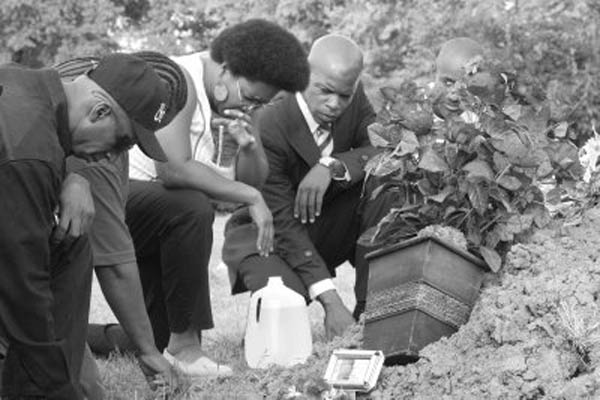
LOS ANGELES -- City officials and residents gathered at a memorial service Saturday for a homeless man doused with gasoline and set on fire.

John Robert McGraham, 55, died October 9 when he was set on fire near Third Street and New Hampshire Avenue.

Los Angeles Councilman Tom LaBonge told the crowd at Immanuel Presbyterian Church that McGraham was mentally ill and living on the streets, but remembered as a simple but peaceful man.

"In the case of John and all of the homeless, we must encourage all of our leaders to work on the issue of mental illness," LaBonge said. "I know that we'll always keep John in our hearts."

During the service, a projector showed pictures of McGraham's family, and shots of him as a baby and young boy. The last photo showed him with his hair uncut, fully bearded, wearing a battered coat, shirt and shoes.

Presiding pastor Rev. Frank M. Alton, officiated the services, which included a translator for a largely Latino crowd on the second floor of the church.

"We thought he was alone," said his sister, Sharon McGraham. "It is so wonderful to be loved. Thank you so much."

The Los Angeles City Council is expected to vote next week to offer a $75,000 reward for information leading to the conviction of whoever is responsible for the crime.

At a news conference Friday, police and McGraham's relatives asked for the public's help in finding two men believed to be responsible for the killing.

LAPD Deputy Chief Charlie Beck called McGraham's death "a crime that should shock every man, woman and child in the city of Los Angeles."

Witnesses say two men, in their mid- to late-20s, jumped out of a late-model tan or gold car, possibly a Honda, and poured gasoline on McGraham before setting him on fire, Beck said.

The men bought a red gas can and filled it at a station in the area, Beck said. Police have yet to find surveillance video that would help identify the killers.

The man, who once worked at the former Ambassador Hotel nearby, lived on the streets for years, where his sisters brought him food and money.

Susanne McGraham-Paisley said her brother was a peaceful person who avoided trouble.

"This is a guy who never hurt anybody," she said.

Sharon McGraham choked back tears as she described her brother as sweet and good-hearted.

"He was just so precious. He was such a sweetheart," Sharon McGraham said.

Tags

Blood Trails in Paris, Texas

09/24/2021 - 09:45 by Anonymous (not verified)
Original Author
root
Original Body

Black man tied to a truck and dragged until body was dismembered in Texas

by Jesse Muhammad/Final Call

On Saturday, October 4, I received a serious phone call from Krystal
Muhammad of the New Black Panther Party (NBPP) in regards to a possible
dragging death in Paris, Texas which is located about five hours north of
Houston. The first thing that immediately came to my mind was that 2008 is
the tenth anniversary of the lynching of James Byrd, Jr. in Jasper, Texas.
Liken unto that case, the victim in Paris was said to be a 24-year-old
Black man and his killers were two White men.

I immediately Googled the town and saw that there were only a handful of
media outlets that had covered the story which involved Brandon McClelland
and these two White males. One reason possibly that there was hardly any
coverage was that this killing took place on September 16, which was the
tail end of Hurricane Ike hitting landfall so I am sure the town officials
were hoping this would be swept under the rug. Too bad, because the Final
Call is on top of it!

Sister Krystle told me that members of the NBPP Dallas Chapter were on the
grounds already to meet with the family. So myself, Sis Krystle and my
older brother Deric Muhammad hit the road on Sunday, October 5 to do some
on the grounds work to see what really happened.

After a five hour drive, we arrived in the 'hood of Paris. We then
caravaned over to the home of the McClelland family where Brandon's mother
sat on the porch with tears in her eyes. Ms. Jacqueline McClelland and her
family gave recorded statements to me for my Final Call story as well as
the NBPP for an independent investigation. We were also joined by local
activists, a head of the State NAACP chapter and other friends of the
family.

After hearing their accounts, it was verified that her son was dragged on
the back of a pickup truck by these two White males and his body was
dismembered. Jasper all over again. Afterwards we drove over to the grave
site.

We then went to the scene of the crime in Lamar County. You would not
believe that parts of that Brandon McClelland's skull was still out there
on the ground! Shows how much the police cared. It was like an episode of
CSI:NY with blood tracks up and down the road and tire marks chased by the
blood trails. This was one of the most painful stories I have had to cover
in person.

"They tied my son to that truck and dragged him until his body parts were
detached", said his mother Jacqueline McClelland to the Final Call. "His
body was so destroyed that it could not even be embalmed by the funeral
home. This is a hate crime. I don't want the death penalty for these
killers because that would be too quick. I want them to suffer for life in
jail without parole since I will never have my son back".

Read my entire story in next week's edition of the Final Call Newspaper

>

Tags

Bukowski, Me and R.O.T.C

09/24/2021 - 09:45 by Anonymous (not verified)
Original Author
root
Original Body

A Proposition V Tale

by Tony Robles/PNN

In his autobiographical novel Ham on Rye the poet Charles Bukowski described ROTC:

ROTC (Reserve Officer Training Corps) was for the misfits. Like I said, it was either that or gym. I would have taken gym but I didn't want people to see the boils on my back. There was something wrong with everybody enrolled in R.O.T.C. It almost entirely consisted of guys who didn't like sports or guys whose parents forced them to take R.O.T.C. because they thought it was patriotic. They parents of rich kids tended to be more patriotic because they had more to lose if the country went under.

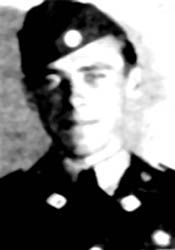
It was 1981. I was boarding the 18 Sloat bus when the driver said to me, "Rotten old tomato cans?" I looked at the driver. "Huh?" I said. He laughed and said; "R.O.T.C. stands for rotten old tomato cans". I smiled, paid my fare and went to the back of the bus. I looked at my R.O.T.C. uniform, the drab color of it contrasting with the vivid green and yellow leaves on the trees in passing. I ran my fingers over the brass buttons I'd vigorously shined with brasso polish the night before. I remember my father calling it a monkey suit and how I was a fool for wearing it. I remember struggling to tie my tie. I remember the way it hung around my neck like a noose made of a wet noodle. I rode to school.

I wasn't a patriot--I didn't like the idea of the military. To me the military was behind the massacres of native peoples and the stealing of indigenous lands. I had relatives who'd served in the military--an uncle who served in the Philippines in WWII and a cousin who served in Vietnam. They left one way and returned another. My father looked at my J.R.O.T.C. (Junior Reserve Officers Training Corps) uniform and at me in disgust. Dad may have been born in the US, but was Pilipino to the bone. He didn't graduate from high school. He knew more.

To be honest, the reason I got into J.R.O.T.C. was that it was an alternative to PE. I had acquired a fascination with girls and spent many hours on my Afro--dousing my fuzzy head of hair with products such as Afro sheen and Murray's pomade. Going to PE meant getting my hair messed up. Hell if I was going to do that. I had to look good for the girls. The asthetic beauty of my hair could not be compromised--no, never.

The folks I encountered in J.R.O.T.C were, as Bukowski said, misfits. Some were in it for the same reason I was--to keep their hair looking good. But an ironic thing transpired--I was promoted from a buck private cadet to staff sergeant/platoon leader because I was very proficient at marching drills and could get the entire group of misfits to stay in perfect formation. I was even a decent shot on the firing range.

I remember my platoon leader on the day John Wayne died. "He was a great man, a great man", he said. I couldn't think of any great things John Wayne had done--movies included but I stayed quiet. My platoon leader must have known of the great things accomplished by "The Duke".

One day the military recruiters came in. They talked about military service and how we could acquire money for college and marketable skills when we got into the "real" world. They showed us a film that seemed like a travelogue. We saw military men eating and laughing and having fun overseas. When I suggested that the films weren't giving the true story, a recruiter responded by saying there was nothing wrong with having fun after you work--that they were merely showing that side of it. "Don't you have fun after you work?" they asked. I didn't have a job.

All of this brings me to PROP V on the November ballot. San Francisco eliminated JROTC in 2006 after nearly 60% of San Franciscans voted in 2005 to eliminate military recruiters from schools. The proponents of Prop V deny that it is a recruitment program and are injecting big money to ensure its passage. The proponents say that J.R.O.T.C. promotes leadership and responsible behavior. Riva Enteen from the organization "No Military Recruitment in Our Schools" feels that the youth can focus their energy in better ways. "San Francisco needs a safety response plan in case of a major disaster. The youth could be trained as responders". Members of the San Francisco school board have called for such a program--calling it "student emergency response Volunteers". There is already a leadership development course with community service in place to provide a non-military alternative to JROTC".

I recently saw a picture of high school students walking door to door asking the community to support PROP V. I thought of the school arts programs that have been cut and of the displacement and gentrification in our neighborhoods and about elders in rooms. We need those young people's hands to not carry guns but to carry our elders fresh flowers; to guide them down flights of stairs. We need our youth to listen to the stories and songs and poetry of the ancestors and claim what is theirs. They need to hold hands with the elders and walk in the sun without the deafening noise of the blue angels to ruin it all.

Author's note:
To see a poem about my father and the military, go to www.tony-robles.com and click on links. The poem is "Brown boy on the 4th of July"

Tags