Story Archives

ATA, Weird Sober Trip

09/24/2021 - 10:42 by Anonymous (not verified)
Original Author
root
Original Body

Ok,I'm back from Atlanta.

Though its humid hot it was cool too!

Too bad The First U.S. Forum gave POOR Magazine

Broken,Faux,quicky,made up access.

by Joseph Bolden

What Atlanta Meant To Me.

If it was years,months, or weeks in planing for Atlanta’s first U.S. Social Forum it was a matter of a month or a few weeks for POOR Magazine gathering its pool of multi cultural-talented folk to Fem/Man-up for this first ever state crossing trip!

Though our van band of plucky people began late because of two seats that are re-installed again we set out in a cottony,white cloud-sky blue Saturday afternoon.

A stop in Hunter’s Point for two or more stacks of the San Francisco Bayview Newspaper to distribute when we get to Atlanta.

It get increasingly hotter,Paris and Public Enemy is blaring in the background and me being apolitical had to listen by proxy.

He tells truth raw and real and I need to hear it a lot more so as not to feel entitled,complacent, or safe.

Black Folk are still targets of opportunity for jail,homicide,suicide,or cop assisted suicide.

Luckily an old style am/fm walkman tape player becalms me even as parallel political,arguments on lifestyle and past personal painful episodes enter in discussions which I cautiously avoid by sleeping or listening to my old, newly,acquired $3 walkman.

Flying through states Texas,Arizona,Navajo lands, and Alabama,which like many a southern bell is full and lush with greenery there is a tragic tale of why so many trees close and high together but that’s for someone else’s story to tell.

After a hotel stay where I and a few tired riders splash,swim to avoid the ever growing southern heat.
[No wonder people here are known to as hot blooded!]

After one more stop in a comfy Days Inn or was it?

We are in Atlanta, Georgia.

All during the trip I keep hydrated by having literal ice baths [that is using ice cubes of melting ice from a donated igloo portable icebox rubbing them over my head, shoulders,arms,face,and drinking cold to warm water not icy water which may wreck the delicate interior temperature of bodies automatic thermostat.

First we met up with other contingent of Poor M who had either flown over by plane or by interstate bus lines.

Quickly we register,get our media tags,U.S. Forum I.D. for names because without one you don’t enter the forum.

Can anyone see a flaw already beginning to form? If as non profit organizations out to collaborate with other orgs, and/or people having difficult times facing and living houseless,jobless lives!

I certainly wasn’t aware still tired not having a full nine hours sleep still groggy though awake wanting to unload my two burdens of back- pack and travel bag.

What happened the next day? Lets say food and flesh had me equally conflicted.

I’ll just call this "The Lost In Hooter’s Affair."

Tags

Save Club Six

09/24/2021 - 10:42 by Anonymous (not verified)
Original Author
root
Original Body

A letter from Angel Cruz, owner of Club Six in San Francisco.

by Angel Cruz/Owner, Club Six

I would like to thank all the patrons, promoters, Djs, artists, and employees of Club Six for an amazing six and a half years. We have owned and operated Club Six trouble free for all of these years; there have been no Ods, no stabbings, no shootings, no underage drinking. Now we have been summoned by the Entertainment Comission of San Francisco for a hearing to suspend our Place of Entertainment permit and our After Hours Permit. This would mean no Djs, no performers, and no dancing for one month. This would put us our of business.

The complaint states that Club Six violated the noise ordinance anywhere from three to nine decibels above our limitations. Over the last few years we have invested over $200,000 in soundproofing. We continue to do more sound work to improve our situation. Regardless of the outcome of the hearing, I am committed to meeting the guidelines the city has set forth. I have twenty years left on my lease at Club Six and I intend to continue to bring quality entertainment to the community and set of San Francisco.

My goal when I bought Club Six was to unite all types of people, music and cultures together in one place where everyone from all walks of life would be treated equally. It was to create one of the city’s top venues in what was and considered to be one of the city’s most blighted and destroyed neighborhoods: Sixth Street. Do you remember Sixth Street two and a half years ago? Friends and business associates told me it couldn’t be done.

Now, Club Six is the largest minority-owned business and employer on Sixth Street. People from all over the Bay, the country and the world stop off there. Club Six is the anchor of Sixth Street and in many ways the glue that keeps it together. It has been instrumental in helping bring more business to the neighborhood and I am very proud to say that I can see my vision of successful co-existence between all types of people being fulfilled everyday.

Club Six is Sixth Street!

For now we will continue to do our business as usual. Please come down and listen to some incredible music, dance and enjoy Club Six. We are open!

Please send us an email in support at clubsix@comcast.net and cc the community leaders listed below.

Thank you again for allowing me this wonderful opportunity to won and operate Club Six.

Angel Cruz

Owner, Club Six

Bob Davis bob.davis@sfgov.org

Chris Daly chris.daly@sfgov.org

Sompac mban@sompac.com

Spur info@spur.org

Urban Solutions info@urbansolutions.org

Tags

Please help us save our children

09/24/2021 - 10:42 by Anonymous (not verified)
Original Author
root
Original Body

by Jennifer Polton/Writer Facilitator: Lola Bean/PNN

Please help us save our children!
By Jennifer Polton. Writer facilitator Lola Bean.

“It’s too dangerous. Just stay where you are. We’ll figure something out. You’ll get killed of you go out there.” I didn’t know what to do. I begged her to stay in one place.

“But I can’t take it anymore!! So what if I get hurt? Anything is better than living here!” Chelsea was in so much pain. Years of torture and abuse and mind shattering helplessness sent her bruised and wounded body into an all out purge of her battered being.

I was so scared for her. My heart was pounding and I couldn’t breathe. I knew my stepdaughter Chelsea and her brother Brandon were in serious danger, but I was completely helpless. I didn’t know what to do. All I could do is cry with her and beg her not to run away into the ice storm with nowhere to go and no one to help her. All I could do was try to stay with her on the phone.

----

The first abuse hotline reports started coming in 2001. Chelsea was 6 and Brandon was 5. They were both living in Moberly, Missouri with their mother Kayela and now step father, Billy. Neighbors started complaining that the children were begging for food and other basic necessities from tenants in their building. Complaints of unclean living conditions, malnourishment, and neglect soon followed. It wouldn’t be long before reports of Kayela and Billy physically and sexually abusing the children began to surface.

The Department of Social Services came out to speak with Kayela, but they did not speak with the children or any of the neighbors. They concluded that Kayela was a good parent and that the multiple reports of abuse were unfounded. That same year, Kayela pulled the children out of school and started moving around without letting Ron, my fiancé and the children’s father, and I know where they were. Brandon started engaging in suicidal behavior.

----

“Why is no one helping me? Why is DSS leaving me like this? Why won’t they listen to me? I want to run away. Please Jen, please come get me!” Chelsea was crying hysterically and kept gasping for the air that seemed to fail her. All I wanted to do was go and get her and take her away and make all of her pain and fear stop. Ron and I have been fighting for years to get Chelsea and Brandon to safety. I couldn’t tell her why the Department of Social Services refused to help her. I couldn’t understand it myself.

Early in 2002, Ron and Kayela divorced. Kayela was granted full custody and Ron was allowed “reasonable visitation.” When Ron tried to visit the children, Kayela left with the children and refused to let Ron see them. The police refused to help on the grounds that there was no way to define “reasonable.” With the help of attorneys, Ron was able to secure visitation in June of 2003. We couldn’t believe the state the children were in when we finally got to see them.

Roaches scattered from the garbage bag where the children’s filthy, ill fitting clothes had been packed. Chelsea had lice and Brandon’s head had been shaved because he had lice. The stubble of his small round head made a weak attempt to conceal the raw, infected sore that festered there. It was ringworm. Brandon had already been diagnosed, but Kayela had refused to treat it. The children’s physical and emotional pain was visible. They started telling us about the sickening conditions they were being forced to live in. The children described how their home was filled with feces and urine. The toilet didn’t work and moldy food could be found on every floor. Billy had forced Chelsea to engage in sexual acts while they videotaped it. Billy and his family hit the children on their backs, arms and faces with switches from trees.

Brandon had undergone a series of psych evaluations and was being prescribed multiple medications, which his mother was inconsistently administering. In one of these psych evaluations, it was revealed that Brandon had a problem with fire. He had been drawing pictures of buildings on fire. Ron was a fire fighter. Brandon told the psych that he thought if he set fires his dad would come and save him and take him away from everything.

We contacted the Department of Social Services and they eventually sent someone out to speak to the children. Brandon and Chelsea describe the abuse and neglect they have been experiencing under Kayela’s care. DSS concludes that the situation was nothing more than a heated custody battle. Mike Shay states that the children should be with their mother no matter what.

----

Chelsea had called me from her mother’s house. She had been left alone momentarily, but that moment of solitude ended. Kayela, Billy, and Brandon had just returned home. Kayela saw that Chelsea was on the phone and instantly assumed that she was speaking to her father. Kayela and Billy started screaming at her. “You’d better not be talking to your dad! You’re going to get punished Chelsea. We’re going to disconnect that phone for good!” The screaming escalated and Chelsea grew very upset. I could hear every word they were saying to her as clearly as if they were speaking directly into the phone.

Chelsea begged them to stop. They would not stop. She ran into her room and hid under the bed with me on the other line of her cell phone. She was scared out of her mind. She was sobbing uncontrollably. “Please come and get me. Please!”

----

The children came to stay with Ron and me frequently during the summer of 2003. That July Chelsea and Brandon told us that a man by the name of Brian Roselius had moved in with him. Both of the children feared him. They said he was always trying to touch them on their butts and looking down Chelsea’s shirts and up her skirts and trying to touch her inner thighs. Brian had a past history of sex abuse in another county. Kayela refused to listen to us when we told her that Brian had been abusing Chelsea and Brandon. She refused to listen to us.

In September of 2003, Kayela, Brandon, Billy, and their friend Janet showed up at our house at 11pm. Kayela was crying. Bandon’s clothes were filthy and he wreaked of urine.

Kayela admitted that two days prior, Brandon had been sexually abused by Brian Roselius. They had just come from reporting the abuse at the police station. Kayela did not want to file a report, but Janet – the friend that was at our home with them – forced her to file the report. Two weeks prior, Brian raped Janet. Kayela was aware that this had happened, but allowed him to continue living with her and the children.

Brandon told me that his privates hurt. I gave his small broken body a shower and dressed him in some clean clothes.

Ron and I contacted the Department of Social Services to try and find help for the children. We could not find anyone willing to help us. After numerous calls, a meeting was set up with a woman by the name of Janna Clark. At the DSS office, we told Janna about Brain Roselius and the horrible things he was doing to the children. We told her about how he was sexually abusing Chelsea and Brandon.

Janna Clark became hostile. She was not angry at the abuse the children were being subjected too. She was angry with us. She was not angry that Brian Roselius was a sex abuser and that our children were being fondled and abused by him. She was angry that Ron and I were trying to do something about it. We were shocked.

Janna Clark at the Department of Social Services told us that she would see to it that Ron and I would be sent to jail if we pursued Kayela or Brian. We now know that Janna Clark is Brian Roselius’s mother.

----

I have never felt so helpless in my life. I didn’t have any idea what to do or where to turn. I didn’t know how to comfort her. I didn’t know what to say to maker her feel better.

Chelsea begged me to find her help. Gasping for air and fearing for her life she begged me to come and get her. “Please Jen. Please come and get me. I can’t take it anymore! Please Jen. Please come – .” The line went dead.

----

We could not believe this was happening. We knew we had to find someone to help us. We were able to secure an attorney and hearings were scheduled for October of 2003. The court found that Brandon and Chelsea had been victims of physical abuse and educational, physical, and medical neglect. Ron was awarded joint legal\joint physical custody.

In November, Brandon came to our house out of breath, pale and shaking. He was sick with fear. He stopped at his mother’s house to drop off his backpack after school. When he went inside, he saw Brian Roselius sitting inside with Kayela and his stepfather Billy.

Ron was furious. He wet to the courthouse to file protective orders. Under Missouri statute, protective order papers must be accessible to anyone needing protection, even on nights and weekends. Further, court employees are obligated to assist people in filling them out. He tried twice to file protective orders against the man sexually assaulting his children. Both times he was denied access to these papers.

In December, Ron received a letter from Boone County DSS worker Ashley Smethers, now Ashley Turner, that a co-investigation between DSS and police founded that Brian Roselius had sexually abused Brandon.

Ron and I knew we had to get the children away from that man. Ron contacted Attorney Susan Henry in Macon Missouri and read her the court orders and statements. Susan told him that this was exigent circumstances and since he had the primary custody, he could legally relocate to Iowa with the kids. We finally had the green light to get Brandon and Chelsea to safety. We contacted police departments in Iowa and Missouri to inform them of where we were going and why. We also notified the courts about the move.

In January of 2004, Ron and I moved back to Iowa from Missouri with kids in tow. On Jan. 6, 2004 Ron was arrested for kidnapping.

Ron was extradited to Missouri and was let out on his own recognizance. He was not allowed to have contact with his children until this was settled. Another court date was set and by the end of January, all of Ron’s parental rights were reinstated. On the date of the last court hearing, Kayela took off with the children. Ron and I had no idea where they were for 3 months.

---

“Chelsea? Chelsea are you there? Chelsea!?!”

There was nothing. No crying. No screaming. No nothing. The line was dead and I was frozen in place. I have never felt so sick and so scared in all of my life. My stomach violently strangled the air out of my lungs and my muscles were locked in short spasms. I was so afraid for her life. She is so young.

----

We did everything we could to try to find the kids. We knew they were in danger and we wanted to bring them home safe. We desperately wanted to keep them out of the filth and the beatings and the molestation. We did everything we could to try to find them but we couldn’t.

In April of 2004, Ron received court papers stating that there were court proceedings in motion to remove Chelsea and Brandon from Kayela’s custody permanently. We learned the children had been removed from Kayela’s home for 3 days because of lack of heat and hazardous living conditions. No one contacted Ron to let him know where the children were or to let him know they were in danger. His parental rights were completely ignored. The children were placed with Kayela’s parents, and juvenile officers were working to remove custody not just from Kayela, but from Ron as well.

Kayela ran off with the children once again. Again we had no idea where to find them. Since Kayela took Chelsea and Brandon in April of 2004, we have only seen them a handful of times.

- - -

The phone rang.

“Chelsea?”

“I’m so sorry. I’m so sorry I dragged you into this. The battery on my phone is low and ---”

The line went dead again.
- - -

For the past three years, Chelsea and Brandon have been forced to continue to endure the most physically and psychologically torturous treatment. Their minds and bodies have been twisted for years without rescue.

Reports show that dog feces and urine were on the floors of their house. Trash and garbage bags overflowed in each room. Moldy food sat out Chelsea was afraid to take her shoes off. She developed huge, red, raw, sores all over her feet as a result. It was foot rot.

Brandon was put on multiple different medications. Kayela was inconsistently administering these drugs and Brandon was sick as a result. He was lethargic, wet the bed and slept ungodly amounts of hours. He had memory problems and could not even remember his birth date. He was hearing voices.

Not even a teenager, and Brandon has been put in the psych ward on at least two different occasions. The second time he tried to commit suicide. He said he wanted to kill himself because no one cared.

Now he is starting to turn his anger outward. He hits and kicks ad bites in his hopeless rage. He has even started to physically abuse Chelsea.

Billy and his family continue to physically and psychologically abuse Chelsea and Brandon and reports show that Kayela still allows Brian Roselius around the children.

---

“Jen why won’t anyone help me? I don’t understand why they won’t help me?”

---

We have done everything we can to try and keep these children safe. The Department of Social Services refuses to help us. Kayela learned that she could keep the children away from Ron and I by filing false reports against us for abuse that occurs in her home. Each charge has been cleared, but in addition to fighting for the children’s safety, we are now being forced to fight to keep our names clear so we don’t lose what limited rights we’ve got left. All the while, the children continue to suffer and their mental and physical health deteriorates further.

We have been treated like criminals for trying to protect our children while the people that have committed physical and sexual crimes against their little innocent bodies are allowed to continue abusing them with the protection of the Department of Social Services. We are continually punished for doing whatever we can to try to get someone to help Chelsea and Brandon.

But what else can we do? We can’t just sit here and do nothing. These are our children. They are in very real danger. If we can’t find a way to protect them, who will?


---

“Jen, please come and get me. I just want to live with you where it’s safe. Please come and get me. I can’t take it anymore. Jen, I can’t take it anymore.”

I told her I wanted to do this more than anything in the world but if we did, we would go to jail.

“But I have to get away from here. I can’t take it anymore!”

The phone went dead again.

---

Ron has not seen his children since February of 2006. We have had limited contact with Chelsea. She continues to beg us to help her. She begs us to take her away so the abuse will stop. My heart is torn open each time and I am sick with helplessness. I feel like I am failing her because I can’t keep her away from this abuse.

She is only a car ride away and a safe loving home is waiting for her and for Brandon, but there’s still nothing we can do to get these kids away from safety. There’s nothing we can do to get them out of the filth and psychosis and sexual abuse and physical beatings. There’s nothing we can do to get them into safe, warm beds where they will not have to fear for their lives every single day.

We have called numerous attorneys by the hundreds all over the state of Iowa and Missouri, Illinois and bordering states to Missouri. We just can’t afford a retainer. There is a gag order on Ron, so he can’t discuss the case with anyone. Now I am the only one that can try to find help for Brandon and Chelsea.

I hope there is someone out there that will help us save our children. Brandon and Chelsea are begging for our help. They are just small children. They shouldn’t have to spend another day fearing for their lives. Please somebody help us.


Tags

Disabled Dumping to Deporting: The United States Social Forum

09/24/2021 - 10:42 by Anonymous (not verified)
Original Author
root
Original Body

by Leroy Moore

July is here again, the month of the birth of this country and the annual birthday of the Americans with Disabilities Act plus this year the United States Social Forum in Atlanta will be ending in the first week of July. However there has been very little to celebrate for poor people of color with disabilities. Yes, I’m looking forward to networking and helping to open the media airwaves for more people with disabilities and other minorities at the United States Social Forum in Atlanta with my follow Poor Magazine reporter and all maraginze voices but lately poor people with disabilities have been under abuse, crimes and raw discrimination from individuals and institutions. Will the latest abuse, hate crimes and discrimination that I will highlight in this essay be talked about at the United States Social Forum, in the presidential campaign or in our communities after the social forum?

The following cases have been in the media and well documented but once again very few have connected the dots to create not only individual cases but a whole system of abuse that’s been engulfing people with disabilities and at the same time a lack of responds from our federal government. After you read these cases ask yourself what can we do locally and in our communities knowing that our federal government has refuse to sign the UN Treaty on Human Rights of People with Disabilities and also recently President Bush veto the new Hate Crime Bill that would include people with disabilities. Also ask yourself where should the disability movement focus their energy on? Warning, these cases are brutal and might be too much for some readers but they and many others need to be frame in one article and an ongoing discussion with recognition that this is a growing pattern throughout this country.

By now most people have heard about the Los Angles hospital and their ambulance that dumped a disabled homeless man on skid row without his wheelchair, clothes, food and medicine. The above institutionalize abuse happen on February 8th. Today’s headlines in newspapers from LA to NY screamed Disabled American Wrongly Deported to Mexico. What can we do when abuse comes down from institutions, hospitals to Homeland Security? Bush and his administration think that the new Hate Crime Bill will create a “special class,” and it’s not needed. Tell that to the family and friends of James McKinney, a Los Angles mentally disabled man who was attack and beaten to death in May. Last Summer I penned an article about five cases of people with disabilities who were torched, burn some died. Still today there are articles on how patients in nursing homes were scold in bath tubs and thrown bleach on them. One nationwide report found that nearly one-third of nursing homes were cited for a violation involving abuse and that many of these abuse violations caused actual harm to residents, and that the number of abuse violations is increasing.

Atlanta is not only the host city of the United States Social Forum it was the home of Kathryn Johnson , an elderly grandmom who police thought was living in a drug house so they barge in and killed her in her wheelchair. Once again I ask will this and other cases of police brutality and senseless crimes against people with disabilities be apart of a panel at the social forum? The city of Atlanta is talking about withdrawing funds from one of the largest homeless shelter in the city, The Homeless Taskforce. The Homeless Task Force has been in operation since 1981 but like any big city, downtown businesses rule City Hall and both have eyes on the property under the Homeless Taskforce. Poor magazine has planned to hold a press conference on poverty, race, disability and homelessness at the Task Force during the US Social Forum and will interview Task Force Director Anita Beaty. We, at Poor Magazine, hope that this shelter will stay open and fully funded.

This is only one reason we at poor magazine is looking forward to reporting and supporting our follow activists, media makers, agencies like the The Homeless Task Force, The Georgia Law Center for the Homeless at the US Social Forum and beyond. I wonder if the Homeless Task Force was a project of the Mayor like The 24/7 Gateway Center that is the keystone project of the Regional Commission on Homelessness would they have to worry about funding being pulled away. These are the type of stories we, at Poor Magazine, along with our fellow grassroots media makers will be reporting on in the Ida B. Wells Media Justice Center at the US Social Forum June 26-July 1st and we will also make sure panels will address the growing cases of abuse, crimes against people with disabilities who are poor, homeless and of color and have seen a lack of responds by our government and organizations from Hurricane Katrina to round ups by Homeland Security & INS in this country.

By Leroy F. Moore Jr.
Poor Magazine Columnist of Illin-N-Chillin

Tags

We're Already poor, if they do this to my family, it will be a nightmare

09/24/2021 - 10:42 by Anonymous (not verified)
Original Author
root
Original Body

PARENTS and CHILDREN PROTEST STATE BUDGET DEADLOCK
caused by Senate Republicans who are Targeting Poor Children With Proposed Cuts

by Diana Spatz/ LIFETIME

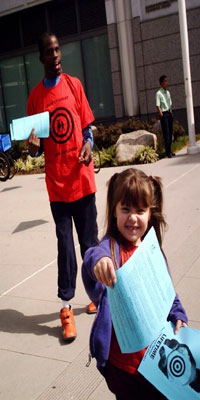
(Oakland, CA) Low-income children and parents from Oakland and San Francisco held a press conference at the State Building in Oakland this morning to protest the push by Senate Republicans to cut more than 200,000 poor children off the welfare rolls to balance the state budget. “Children like me are targets in the state budget this year,” says 13-year old Jasmine Hain, POOR Magazine youth scholar and one of the children who will be cut off public assistance if the Republican Senators have their way. “We’re already poor - if they do this to my family, it will be a nightmare.”

Poster-sized photos of a baby, with a black bull-eye’s target on her diaper, drove the protestors’ message home. “They’re targeting my children,” says Jasmine’s mother Vivian Hain, a LIFETIME member , PNN staff writer and CalWORKs student in Oakland, “to balance the state budget.”

The protestors were members of LIFETIME, a statewide organization of low-income families working to educate policymakers on the impact that the proposed changes to CalWORKs will have on poor children and their families. During the press conference, several media covered the event, while CalWORKs children passed out information on the state budget crisis to more than 300 visitors to the State Building. Four-year old Zosia Scilowski gave her frank assessment of the situation: “The oppressors are trying to take our welfare.”

To break the budget stalemate, the approval of two Senate Republicans is needed. However, a full month into the budget deadlock, Republican Senators refuse to approve a state spending plan unless it includes an additional $700 million in tax breaks to corporations and the wealthy. The proposed tax breaks will be funded by changes to CalWORKs, the state welfare program, that will push nearly a quarter of a million poor children off the welfare rolls – and deeper in poverty. “These proposals are economic abuse of poor children,” said Jewnbug Strohlin, a CalWORKs student at City College of San Francisco active with Welfare Queens, a project of POOR Magazine in San Francisco. “It’s not right to balance the budget of the backs of poor children.”

Under current state welfare rules, CalWORKs parents are cut off welfare once they reach their five-year lifetime limit, or if they fail to meet stricter welfare to work rules. However, under the state’s safety net program, their children can still receive aid. Under the proposed changes, if a CalWORKs parent is sanctioned off welfare, their children will be cut off, too. More than 50,000 low-income children will lose benefits under the proposed “full family sanctions.” In addition, the proposed changes will impose retroactive time limits on children whose parents have reached their five-year lifetime limit on welfare, resulting in the immediate termination of nearly 200,000 low-income children from the welfare rolls. Research shows that since 2003, the majority of CalWORKs parents who have reached their time limit on welfare were working and playing by the rules, but in low-wage, dead-end jobs not earning enough to “income off” the welfare rolls.

“Families like mine can’t afford these cuts,” said Dawn Love, a CalWORKs mother caring for her disabled daughter, while working and attending Chabot College in Hayward. “Don’t punish children because their parents are poor.”

Patricia Arana, an immigrant mother living in Oakland, expressed concern about full family sanctions. Patricia and several other mothers described being illegally sanctioned due to caseworker error, and losing cash assistance, as well as childcare, counseling and other support services that enabled them to escape domestic violence, enroll in education and training programs, and hold down jobs.

The sanction caused Patricia and her disabled son to lose their housing. “If not for my boyfriend taking us in, we would have been homeless.” Under full family sanctions, her son would have been illegally sanctioned, “and my family would have had nothing.” After nearly 18 months without cash assistance, Patricia’s caseworker illegally cut off her son’s MediCal benefits, too. Last week, Patricia won her state appeals and all benefits to her family were restored.

While the proposed changes to CalWORKs will save the state money in the short run, research indicates that such measures may cost the state much more over time. Studies show that after similar measures were adopted in Texas, the impact on low-income families was severe. The number of parents on welfare who were working declined by more than 300%, while 45% of the state’s welfare block grant now goes to Child Protective Services, to remove children from their homes. Says LIFETIME Executive Director Diana Spatz, “when a parent deprives their child of food or shelter, its called child abuse. When the government does it, it’s called balancing the budget.”

The Senate reconvened this evening at 6pm to try to reach an agreement. In the meanwhile, LIFETIME encourages everyone to contact their State Senator to share your concerns about the proposed changes to CalWORKs and urge them to pass a fair budget that values all families – especially supporters in the following counties:

- Alameda County: call Senate President Pro Tem, Don Perata, at his Sacramento office at (916)651-4009 and his district office at (510) 286-1333

- Santa Cruz, Monterey, San Luis Obispo, Santa Clara, or Santa Barbara Counties: please call Senator Abel Maldonado at (916) 651-4015.

- Stanislaus, Merced, Madera, San Benito, or Northeast Monterey Counties (Salinas, Gonzales, Soledad, Greenfield and King City), please call Senator Jeff Denham at (916) 651-4012

- Los Angeles, San Bernardino, Ventura and Kern counties: please call Senator George Runner at 916-651-4017

To find out who the State Senator is that represents your district, please go to: www.sen.ca.gov, go to “Senators” on the sidebar and click on Your Senator.

In the meanwhile, check out tomorrow’s Oakland Tribune and the California Progress Report (californiaprogressreport.com) for coverage of the event.

Yours in justice,

Diana Spatz
LIFETIME

Tags

Don’t Balance the Budget on the Backs of California’s Poor Children!

09/24/2021 - 10:42 by Anonymous (not verified)
Original Author
root
Original Body

by Vivian Hain - POOR Press Political Correspondent and Welfare QUEEN

It is now time to give poor families what they need to thrive in order to survive!

With the recent May Revise of the California State Budget by Governor Arnold Schwarzenegger, the Cost-of-Living Adjustments (COLAs) for California´s poor children and their families on welfare (CalWORKs) were frozen for the fourth year in a row by Governor Schwarzenegger again!

Under state law, CalWORKs grants for poor children and their families are supposed to increase each year – but state policymakers want to suspend this Cost-of-Living Adjustment (COLA) again this year, even though CalWORKs grants are currently 50% below the poverty line – the same amount they were in 1989! Think about what the cost of rent/housing was back in 1989 versus what it is now in 2007!

While the state says it doesn´t have money for the CalWORKs COLA, it plans to make debt payments to Wall Street brokers a year before the payments are due. Poor children are being asked to sacrifice, while state legislators got an increase in their salaries – and the Governor has proposed a Cost of Living Adjustment for his staff!

What Does the CalWORKs COLA Mean to Low-Income Children? In 1989, milk only cost $1/gallon – today it costs over $4! Low-income families are already struggling to make ends meet, and a CalWORKs COLA would give a typical family of three about $30 more every month to provide food, shelter and the basics for their children. Even at that, $30 does not even cover the basic cost of bills today.

This week, the budget conference committee is meeting to begin finalizing the state budget, and Assembly Speaker Fabian Nuñez (D-L.A.) and Senate President Don Perata (D-Oakland) have the chance to add the CalWORKs COLA back into the state budget.

Call: Nuñez and Perata and tell them to"Choose Poor Children and Give CalWORKs families COLAs!"

Senate President Don Perata: 1-866-920-9457
Assembly Speaker Fabian Nuñez: 1-866-920-9458

Contributing Correspondent for this article:
Anita M. Rees, Associate Director
LIFETIME (Low-Income Families' Empowerment Through Education)
www.geds-to-phds.org

Tags

Sicko Review

09/24/2021 - 10:42 by Anonymous (not verified)
Original Author
root
Original Body

Sicko Review

A poverty scholar's review of Michael Moore's latest documentary- Sicko.

Marlon Crump
Tuesday, August 7, 2007;

By Marlon Crump

"We got an issue in America. Too many good docs are getting out of business. Too many OB/GYNs aren't able to practice their... their love with women all across the country."

These words uttered so arrogantly by a typically smug-faced President George W. Bush ignited a chain reaction of laughter by everyone in the audience, at the Kabuki Theater during Michael Moore's latest documentary, Sicko.

I was sitting in the theater with the POOR Magazine family- to view and respond to Moore's critique of the health care crisis in America. I had never viewed any of his other films but had heard many critics deeming them too "political, inaccurate and controversial" for the average viewer. After viewing Sicko, I can only imagine how well made, poignant and thought-provoking these films must be.

Just watching the first two minutes of the movie, of an unknown man literally sewing up his own leg wound and another having to decide which of his fingers would be cheaper to have re-attached, I immediately realized that this wasn't going to be just any ordinary documentary on the cost of medical hospitalization, affordable health care insurance, or even the right to be seen by a doctor at the average county hospital.

Moore's film not only gave a serious in-depth look at who, what, where, when, and how ultra-inhumane the U.S.A has been towards those in need of affordable healthcare insurance, treatment, and medication, but he also gave a fantastic timeline of the origin of possibly the most notorious hospital in AmeriKKKa today: Kaiser Permanente.

Michael Moore went so far as to date all the way back to o'l "Tricky Nick" himself, Richard Nixon and his connection/relationship to Edgar Kaiser, as he pitifully politically-proposed a "healthcare system" beneficial to the U.S Government, in 1971. "That's not a bad idea" Tricky Nick, slyly replied.

He also connected the dots between Ronald Reagan, Former First Lady, and New York State Senator, Hilary Clinton, Bush Sr. and Bush Jr. These were just some of the people that played an extremely crucial role in the theft of healthcare.

The first hellthcare story of the many that would be shared throughout the movie was about a couple who had very decent and stable careers- the husband was a Union worker, and his wife worked as a newspaper columnist. Within the coming years, the poor couple found themselves totally depleted of their savings and nest eggs, after the husband had to cover very expensive bills, when he suffered five heart attacks, back-to-back.

After paying off sneaky, corruptive clauses in healthcare applications, they discovered they were uninsured for the necessary treatments the husband needed to survive. At retirement age and after years of hard work, they were forced to move in with one of their sons, who didn't seem at all willing to aid his mom and dad in crisis.

This was just one of the heartbreaking stories that "Sicko" depicted. Another was a story of a woman in Georgia had lost her husband, after a "denial" of the couple's application to cover the costs for an operation on the husband's brain tumor.

"Sorry, we sympathize with you and your husband's life threatening condition, but I'm sorry we can't help him." The wife lashed out, "If I was someone wealthy, you would save my husband." The board members replied, "Uh, no that's not the reason, ma'am." As the wife walked away, she sadly muttered with conviction, "I already know why, I do. It's because I'm white and my husband's Black."

Listening to all these people's stories and pain, I thought about the Saint Vincent Charity Hospital, where my very own grandma died three years ago, in Cleveland, Ohio. At 73, she underwent many extreme surgeries and died without proper healthcare. I still remember the pain and anger I felt at watching her pass away under such conditions.

Moore also broke down the difference between AmeriKKKan Values and many various countries, regarding their morality towards its own citizens.

"In places like France, governments fear their citizens, when it comes to uprisings, outcries, and protests," one American woman living in France noted - a striking difference between America, where citizens fear their own government.

In London, England, though widely known as an expensive place to reside, the healthcare system covers all citizens and people are REALLY able to get treatment for any illness, wound, length of prognosis, etc, etc. France, and even Cuba virtually treat any patient, regardless of how serious a health problem, the way a human being is supposed to be treated.

When asked on many occasions by Moore, himself, about any payments, insurance coverage, or even money for prescription medications, all of them replied "No such thing, here." Moore was flabbergasted, even asking pharmacy cashiers in England and France, why the sign that says "cashier" "if no one had to pay?" (In reality it was a window for people to get reimburse for public transportation)

Seeing how much our government doesn't support its own people suffering from serious health problems, I, myself, was speechless and dismayed, as much as others were in the audience. We are lucky to even get care- much less reimbursement for public transportation.

Moore also showed Linda Peeno, a former medical reviewer for Humana, one of the few in the hellthcare system that honestly addressed the role she was forced to play, testifying at a congressional hearing about denying people care that were deemed "unfortunate" or "unfavorable" to make money.

Moore even attacked Hilary Clinton, who for a time took an active role in helping with the Clinton Health Care Plan, in 1993. The Clinton Administration attempted to legislate by Congress, declaring Universal Healthcare for all. Congress, of course, abruptly put a stop to the plan, and sided with major hospital corporations. Interesting enough, Film Producer Harry Weinstein (whose company also financed Michael Moore's film) once contributed to Hilary's first senate campaign, and asked Moore to remove the scene from his film, but in typical Michael Moore style, he refused.

Toward the end of the film, Moore showed clips of the history of John F. Kennedy and his declaration that Cuba's Ruler, Fidel Castro was "a ruthless dictator and a threat" yet Castro's very own country of Cuba welcomed American Citizens with open arms.

Michael Moore, out of the absolute goodness of his heart, took people needing treatment to Cuba to get help. Some of the people he took to Cuba were Ground Zero workers, one a retired fire fighter of 9/11 who after their volunteer efforts of digging amidst the rubble, became exposed to life-threatening respiratory infections, but shockingly received no health aid, whatsoever.

I couldn't believe this! The worst terror attack on American soil, in history, and no aid for people who risked their lives, volunteering to clear up rubble and debris on Ground Zero get no aid because they weren't city workers?!! This was just many of the very scenes in the movie that made me feel anger and rage at our government.

Moore's extremely well crafted depiction of the HELLcare crisis in Amerikkka is a must-see for everyone, like myself, suffering in this country without real, humane healthcare. From the beginning scene of the man sewing up his own leg to the stories of people denied care because of "preexisting conditions" to parents losing their children from being turned away at emergency rooms, Sicko is truly an education in the hellthcare system of this country. Moore paints a bleak picture of the hellthcare system's creation and past, but provides some hope for the future by showing us all the possibility of real healthcare and how its been accomplished in places all over the world.

Tags

Disabled Missing at US Social Forum

09/24/2021 - 10:42 by Anonymous (not verified)
Original Author
root
Original Body

Two race, poverty and disability scholars, Leroy Moore and Calvin E. Peterson, respond to the United States Social Forum's lack of access.

by Calvin E. Peterson & Leroy Moore

by Calvin E. Peterson

Every day millions of U.S. dollars are being spent in support of the nonsensical war on Iraq; a war that is causing the population of disabled people to increase by astronomical numbers. Soldiers are losing their limbs and their minds and are coming home totally transformed.

In addition to this tragic reality, large numbers of black men and women, both young and old are being incarcerated for multiple lifetimes, convicted over economic disparities that are rooted in the perpetuation of poverty. Reports show that housing an inmate costs up to $66,000.00 per year, while the costs of educating a college student costs less than $20,000.00.

I am baffled to think that today being an African descendent, living in poverty with a disability, in this great big world with no parents or any support system that the fact that I am forced to live on the streets as a houseless educated man is by design.

As I think back on my life, the question that Marvin Gaye asked 20 years ago “ Who really cares “ is still prevalent and significant today.

Actually I have been homeless three times in my life. The first time was when I was a student at Long Island University (LIU) in New York. I was always an activist rallying and mobilizing against injustice, and fighting for my human rights.

At LIU, their focus was on strictly enforcing their administrative policies that curtailed the free will of the students. We were expected to go to class, go to the cafeteria, and go back to the dormitory. This was our only regiment. I broke out of that confined regiment and was punished for my actions. LIU changed the lock on my door and put me out of the dormitory. For weeks into (8) months, I was forced to live at a public hospital. Consequently, I wrote a letter to Congressman Charles Rangel who helped me by pulling whatever punches he could to get me reinstated and back in LIU.

The second time homelessness occurred in my life was after successfully completing my degree and returning home again forced to apply for public housing. The Atlanta Housing Authority ( AHA) at that time was not yet handicap assessable. AHA also told me that according to their policy , someone was required to live with me. They told that people with disabilities were not allowed to live in an apartment alone. When AHA rejected my application, again I was forced to live inside of a holistic restaurant called the “Here & Now”. The Black Nationalist brothers and sisters took care of me for 3 months.

The third time was not a charm. I received a positive response from the AHA to move into an apartment, which was not handicap assessable, yet. I mention not yet because AHA kept promising to renovate, then it took maintenance or the administration up to 13 years before the job was completed. I finally found someone to live in with me to get the personal care that I needed. She however did not want to sign onto the lease. So that put me again in jeopardy of eviction. For the record, normally I paid the rent on time. To survive, I paid my attendant instead of paying rent, therefore, I was evicted.

I stood firm on my position to withhold the rent in my own ‘rent strike’. I landed on the street once again, evicted! My day in court proved me right and wrong. However, AHA took issue with my stance of non-payment and that decision prevailed. Many of my DIA supporters stood with me protesting all the way to the Atlanta’s Mayor, Maynard Jackson . When the Mayor dropped the ball on my case, I was put on the streets, which resulted in my returning to live at Grady Hospital., for several weeks.

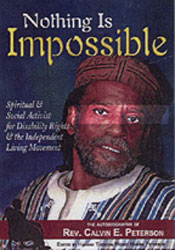
Right now, I want to encourage the disabled to stay focused on your personal goals. My book “Nothing Is Impossible” chronicles my challenges and my victories. As African descendents, we need empowerment tools to help us to combat these societal ills that are designed to eliminate us all. “Nothing is Impossible” gives you the opportunity to overcome obstacles that have already been conquered.
.

My impression of the US Social Forum was the same as that of so-called mainstream society in that the makeup was exclusive. There was a diverse cross section of people in attendance, each going their own way, not always connecting. It was still a good showing of people who reject the unjust practices of the status quo, however as a disabled activist, I still had to struggle to be included and heard.

I witnessed the lack of workshops that addressed the continuing issues of racism and poverty in the disability rights arena. Although I had been asked to participate as a speaker and a disability rights panelist in February at the annual Poor Peoples Day by the national planning committee coordinator, no one contacted me further, and a workshop was not included.. So I was hyped up in the expectation of the social forum, but I was disappointed in its delivery. I am hopeful in the establishment of the Peoples Movement Assembly as the outgrowth.

About the Author:

Calvin E. Peterson was born in Atlanta, Georgia and grew up in the civil rights era. Born with cerebral palsy, he recognized early his calling to organize around the disparities in education and the human rights of the disabled when he founded the Advanced Association of the Physically Handicap in high school and Disabled In Action, Inc (DIA) after graduating from college. He is an educator, advocate, lecturer, program director, and resource to individuals and organizations that focus on issues of equity and inclusion for the disabled.

To contact DIA: disabledinactionatl.org / disabledinaction009@comcast.net/ 678-358-1180

by Leroy Moore

I want to thank Mr. Peterson for sharing his story about his life, his organization and his dedication to people with disabilities in poverty and how he was treated at the US Social Forum that took place in his hometown of Atlanta, GA. POOR Magazine invites Peterson and other disabled advocates living in poverty to become a regular contributor of Illin-N-Chillin.

The best thing that came from the US Social Forum was meeting people and hearing voices that were muffled at the Forum. I had a chance to meet one of Peterson’s associates, at the US Social Forum during the closing ceremony. I was excited to get to know about another Black disabled advocate but when I found out that Peterson had the same vision as POOR Magazine to advocate and talk about poverty, houselessnes and discrimination toward people especially Black disabled residents of Atlanta and elsewhere I knew this was the reason why I attended the USSF.

POOR Magazine was looking for stories like Peterson. This is the reason that POOR came up with the whole notion of the Ida B Wells Media Justice Center at the USSF where the media would be made by collaborating and co-producing with poverty, race youth and disability scholars with workshops led by these scholars and our own newsroom in an accessible, large space. Just like Peterson, POOR Magazine had been apart of a committee of the USSF but we were on the media committee of the USSF for almost four months before the Forum. POOR Magazine stuck to our guns with our mission and certain people on the calls agreed with our mission. We tried our best to push our mission by contacting local disabled advocates in ATL to make sure that the space for the Idea B Wells Media Justice Center was accessible. We were told it was accessible with a freight elevator.

My friend in Atlanta tried to find me at the Idea B Wells Media Justice Center and was told to go up, down and up stairs. She found me and took me to see the real Atlanta. After visiting one of the MAD HOUSERS Inc’ camps where houseless people live in small hunts in wooded areas, my friend took me around downtown Atlanta next to The Homeless Task Force where she pointed out lines of people sleeping in parking lots, on churches front steps and on sidewalks that led to the metro\subway stations with no benches.

She also told me the reality of fullfiling POOR Magazine’s goal of getting stories and having people in poverty pen their news along with media “experts” would be very hard because the city has arrested houseless people if they get close to the civic center where the USSF was taking place. Although POOR Magazine fought to get an accessible place for our newsroom at the USSF our workshops were still in a place that was mildewed, not accessible and very hard to get to. Because of all of this many of our reporters got deadly sick due to the smell of the Ida B Well Media Justice Center. The above could be one reason why Peterson and over forty disabled advocates that POOR Magazine outreached to during the opening March of the USS Forum could not find my workshop on Race, Disability and Poverty in the Media.

I was excited to see advocates with disabilities in front leading the March that opened up the USSF but my excitement didn’t last when I read in the Progressive newspaper that the city changed the route of the March to avoid two other local protests for affordable housing on a street that had abandon buildings and to help keep Grady Hospital open.

Mr. Peterson has experienced both, housing discrimination and working on accessibility plan of Grady Hospital plus he was born and lived there, but like he said his voice and workshop were not included in the USSF although the National committee coordinator of the USSF had contacted him. After all the struggles that Peterson and POOR Magazine went through at the USSF, we realized that we were still able to make relationships, networks and news that reached far beyond the walls and security guards of the USSF and that our new writers like Calvin E. Peterson and poverty, race, youth and disability scholars from down South, on the East and West Coast and in Canada have now joined forces with POOR Magazine in the struggle to be heard.

Tags

Big Island, Big Business

09/24/2021 - 10:42 by Anonymous (not verified)
Original Author
root
Original Body

Big corporations are taking over every inch of Hawai'i, as local businesses and people are pushed aside.

by Amanda Smiles/Race, Poverty and Media Justice Intern

Driving through the bones of Hilo, a residential town on the eastern tip of the Big Island of Hawaii, I feel as if Hilo is a fish caught on the barbed hook of development, hopeless with little chance of recovery. This is my home, where I was born and raised for 17 years, returning every few years to watch my little island town drift slowly into the mists of corporate control and big business.

As a young child, I remember the businesses in my town. From the diner we ate so often they knew I was afraid of the crack in the booth, to the video store that never needed to ask my mom´ s name, most of the businesses we frequented were local. This isn ´ t to say we didn ´ t have big mainland business in our town. Long Drugs, Sears and JC Pennys are old standbys in the mall, but these corporations were few and far between, a minority in Hilo

I remember when the second McDonalds opened in Hilo and the delight our parents shared when they no longer needed to drive downtown for a Happy Meal. Pizza Hut, Taco Bell, and Baskin and Robbins followed, the acne of Hilo. Soon Boomers, the 1940s style ice cream shop in the mall closed. I never thought to ask my dad why. It just seemed to happen.

Costco opened when I was in middle school and threw the island into a frenzy. Everyone went to " the other side " (of the island) to shop at Costco. We made special trips to the beach and then us kids would scream with joy on the way to Costco, knowing our moms would come home with a car stuffed, like a Thanksgiving turkey, with name brand foods, closing the gap between Hawai&acutei and the mainland.

Soon after Costco opened, K-Mart followed and the island went into an even bigger frenzy. Now entire days were set aside for shopping trips to the other side. Two hours driving over, for 3 hours of shopping, and 2 hours driving back. The Big Island welcomed these businesses with open arms and open wallets.

Although the Costco- K-Mart frenzy was a source of excitement for many locals, it was well known that Hilo was safe from these corporate invaders. Hilo is not a tourist town; it is rare people stay in Hilo more than a night, usually in a desperate attempt to experience the " real " Hawaii before returning to the safety of a resort and an Astroturf- like vacation.

Kona, " the other side, " is more digestible for tourists. Unlike Hilo´ s black and green sand beaches, Kona is a platter of white sand beaches like the ones admired in postcards and travel guides. Every resort has some sort of " authentic," Hawaiian experience that can purchased for twenty dollars, from luaus offering the local flavors of kalua pig and lomi lomi salmon, to Hula and Tahitian dancers swinging their hips in front of hungry mainland eyes, it is a far cry from the two dollar loco moco Hilo offers.

Perhaps the chief reason tourist flock to Kona, and not Hilo, is that Hilo is one of the rainiest towns in Hawai´ i and, although tourists like to snap photos of the ripe, emerald, forests of the Big Island, they have little patience to experience the mother of the Big Island´ s beauty: rain. These reasons have kept big business and big tourism out of Hilo, or at least it seemed, until Wal-Mart opened its doors. Now, big business was no longer after the tourist´ s dollar, it was seeking the Hawaiian’ s dollar as well.

Wal-Mart opened in Hilo while I was still in high school, across from the mall, in a grassy field that would also become home to Borders, ROSS, and Office Max. This undeveloped plot of land, centrally located in Hilo, was not only a superior location for business, but also part of Hawaiian Homelands. Hawaiian Homelands are plots of land set aside for native Hawaiians to settle and build homes and businesses. The Hawaiian Homelands Commission is the gatekeeper of Hawaiian lands, distributing the land as they see fit, and although thousands of Hawaiians are on waiting lists for land settlements, land is usually diverted to commercial interests. In this case, Wal-Mart.

Within the first 3 months of Wal-Marts opening, the store became the heart of shopping and as cars clogged the main arteries of Hilo on their way to the jumbo sized store, inside Wal-Mart pumped dollar after dollar out of local peoples and local businesses.

A year later the mega-sized Wal-Mart-ROSS-Borders-Office Max dynasty was in full effect and it seemed the entire eastern half of the island had forgotten about the jewels outside of the family fortune. Auntie Barb, a family friend who I have known my entire life, ran a small bookstore specializing in Hawaiiana books in the mall and had been there since I could remember. Within a year of Borders opening, her business dropped drastically and she was forced to move her store to the sleepier, less trafficked, but cheaper downtown location. No longer could I spontaneously drop by to talk story when I was in the mall.

After leaving Hawaii I for college, I did not return for two years. Although I heard casually of the development phenomenon devouring Hilo, I was in no way prepared for what I encountered when I returned. Macys opened two locations in the mall, my friends now wore American Eagle Outfitters and Hot Topic. Cold Stone was the new hip ice cream place, Wal-Mart never stopped thriving, and most disturbing of all, Starbucks and Jamba Juice overtook the town like a vine of angry ivy. I couldn’t bear to ask myself what happened to Bears, the only coffee shop in town, where I played as a child while my father sipped a cup of joe.

Two years later, I have returned and the development I had witnessed on my last visit has only spread more lethally than before. Half of Hilo looks like a ghost town- whole buildings have been abandoned after corporate development slowly tortured them into closure. Other parts of Hilo look like exact replicas of shopping complexes found in strip malls throughout the mainland. Thick, illustrious glass doors and vivid neon signs are in stark contrast to the squeaky screen doors and chipping signs of my childhood. I wore myself out, searching for a hint of Hawaii that is authentic, a piece that does not mimic the country that has pocketed its culture and autonomy.

On my last visit home, a family friend, who has lived on the Big Island for over 30 years, said to me, " Hawaii used to be one of the most mysterious places on earth. We’ve used up all that mystery, now. People no longer come here to find the unknown. We have to look elsewhere for that."

The last time I drove through Hilo I felt the tides of tears wash over my ocean-glazed eyes, sheltering them from a formula all too familiar to small towns in America. I drove through town with my 3-year-old niece, who will come to visit Hilo throughout her life. The Hilo she will visit will not be the Hilo I have grown up in, however. It will not be a Hilo that enchants her, that is a source of magic apart from the mainland. It will not be another way of life, a tucked away culture mystifying to outsiders. Instead, it will be a Hilo she recognizes, a Hilo that binds her memory to California, and a place where she can always get a Grande Triple Vanilla Latte.

Tags

I dont have any insurance!

09/24/2021 - 10:42 by Anonymous (not verified)
Original Author
root
Original Body

Most healthcare fairs have big name sponsors concerned about public image, not long term solutions to the hellthcare crisis.

by Angel Garcia/Race, poverty and immigrant scholar

Living as an immigrant in this country, I know what it is like to go to public health clinics and try and receive health care. The first thing the desk clerks want is proof of insurance. My answer has always been the same, "I don't have any insurance." As soon as the words roll off my tongue I always wish I hadn't spoken them. The demeanor of the person across the desk from me quickly changes. People look down on me. I am a nuisance to them because I have no health insurance.

Every time I hear the same laundry list of unaffordable options for people like me to obtain health care. In the end I will have to pay ridiculous fees just to see a doctor for five minutes. I have to think twice about going to the hospital or going to get any kind of health treatment because I can’t afford it.

For many immigrants in this country the story is the same, and most of us are forced to live without any kind of health insurance. Often immigrants will not seek health care unless they desperately have to.

Recently a health campaign and twelve-city health fair tour was launched by Celebra La Vida Con Salud. The campaign targets immigrant and Latino communities. The fairs offer screenings and health information with the goal of focusing on the high percentage of Latino women with preventable cervical cancer.

Although Celebra tries to treat people at these one-day fairs, which is nearly impossible to begin with, it does not seek to understand or address the reasons behind the high percentage of preventable diseases among Latino communities. Health fairs do not look at the root causes for the lack of health care among immigrant and Spanish speaking communities. Health fairs are a quick fix for a larger systemic problem in this country. The main reason immigrant families do not seek health care is because to obtain treatment is a long and expensive task. Health fairs do not address the issue of lack of affordable health insurance and health treatment, rather they use a bandaid approach to fixing this large problem.

Health fairs serve to boost the image of their sponsors. Celebra's sponsors include big pharmaceutical corporations such as Merck. Health fairs are marketing strategies. Health fairs portray their sponsors and pharmaceuticals as angles and saviors of the community. The media only reports on the "heroic" stories concerning the health and health care of immigrants. These are the sexy stories. We do not hear stories about the families that have to wait in long lines just to see a doctor and have them say they will be okay they should just take an aspirin. The people who attend health fairs are generally poor people who work two or three jobs and have no health benefits. These families come to health fairs to try and get some treatment for themselves and their families. But these health fairs do not provide long term lasting solutions.

I continue to be skeptical of health fairs when large pharmaceutical companies such as Merck are sponsors. Merck was established in 1891. As written on their website they say, "Merck discovers, develops, manufactures and markets vaccines and medicines to address unmet medical needs." Merck has stolen indigenous plant medicines from rainforests in Latin American countries and criminalizes indigenous people by making it illegal for them to use their own traditional herbal medicines.

Merck has a long controversial past. In 1999 the Food and Drug Administration (FDA) approved the drug Vioxx, also known as rofecoxib, made by Merck. In 2004 Merck took Vioxx from the shelves because of the serious adverse side affects it can cause, such as heart attacks. Many lawsuits were filed against Merck by patients and family members of people who took the drug. Over eighty million people were proscribed the drug.

Merck also produced the drug fosamax that was later found to cause serious health issues. The media continues to largely ignore these issues surrounding Merck's past. Merck is participating in health fairs while simultaneously distributing and continuing to distribute drugs known to be harmful. I ask myself, are these companies really concerned about the people they claim to be helping or are they just concerned about making a name for themselves? These pharmaceutical companies and all these health fairs, are like politicians, full of promises but take no concrete action.

Health fairs glorify the current health care system and the big pharmaceutical companies. We need to hear more voices from immigrant families, the people who are supposed to be helped at such events like health fairs. My own story is no different than many immigrants living in this country. I have lived in the Bay Area since I was fourteen. I have never had health insurance. I have never had any continuity of doctors or health care. I only go to the doctors when I have to because I am forced to pay in cash up front.

Immigrant communities are wrongfully blamed for their own lack of initiative concerning health care. But the real reasons behind higher percentages of preventable disease among immigrant communities is not because of a lack of understanding or self-care, but because of this country’s denial to provide access to health care for all.

Tags