Story Archives

No Safe Place to Sleep

09/24/2021 - 10:54 by Anonymous (not verified)
Original Author
root
Original Body

Jay Toole shares her and many others in the LGBT community's struggle to find a safe place to sleep in New York City's abusive and violent shelter system.

by Lola Bean/PNN Community Journalist

This story was produced in POOR Magazine's community newsroom at the US Social Forum in Atlanta.

" I felt safer in the box than I did in the shelter. " A lot of the LGBT (Lesbian, Gay, Bisexual, Trans gender) Community would rather stay on the streets than subject themselves to the violence and abuse running rampant in the New York City Shelter System. A stoic woman with steely eyes and a salt and pepper crew cut sits with me in a grey and musky cubicle, as she recounts gut twisting stories about being beaten, sexually assaulted, and tossed like a worthless and used up sack of garbage down a flight of stairs in a shelter that was supposed to be there to provide her with a safe place to sleep - all because she is queer.

" I talked back to one of the shelter staff, and she just grabbed me and threw me down the stairs, " she recounts with an accent of stern dignity

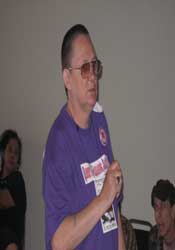
I met Jay Toole in POOR News Network's Community Newsroom at the Atlanta Social Forum. She is a strong and unapologetic butch dyke that spills the brilliance of her scholarship and uncompromising dedication out of her thin, light pink lips. She is the Homeless Shelter Community Organizer for Queers for Economic Justice, and a queer woman with close to three decades of poverty scholarship with a focus in houslessness under her belt. Jay probably knows more about the New York City Shelter System than anyone else in the Big Apple.

As she details the inhumane and violent stories the New York shelter system has written in her mind, my stomach began rejecting the pizza I had eaten just moments before and my headlight wide eyes began to fill with tears. As a poverty and abuse scholar myself, I immediately connected with Jay's experiences of being physically, emotionally, and economically violated because those with authority and access considered me to be less than human. The mental and physical blows she described almost knock the wind out of me.

The abuse she sustained was not limited to single instances. It was an unsaid contractual obligation in exchange for the right to sleep under a roof. " The guards would be in the same room I was being beaten in. They just turned their backs until they were done." She could be attacked in the bathroom, in the stairwell, in the main room – there was no safe space in the shelter. In addition to physical abuse, Jay sustained mental blow after blow as the shelter system psychologically battered her will.

When asked what the most difficult part of her experiences was, she immediately answers, “The loneliness. It was just lonely not being able to talk about who I am.” The shelters forced Jay to participate in group talk therapy. This was supposed to help her in her healing process and recovery, but actually served to further alienate and isolate her. Jay wanted to talk about her relationship, about the experiences she had as butch lesbian, about the trauma she was forced to endure for being a queer woman. All of these things were at the root of her joblessness, her houselessness, and her addiction. The counselors said she needed to talk about her problems, but when she did, she was told that her problems were to be kept to herself. The consequences for speaking were violent.

Jay was also separated from her partner of 14 years, Shiela. They were not allowed to stay at the same shelter together, although they were each other’s main source of support. Jay not only had to deny her own legitimacy, but that of her partner as well. The shelter system did not want her to exist.

Again my stomach turns. I hear so much of my story in her own. I’ve taken many beatings, lived in conditions I would not wish on anyone, and fought through trauma and its accompanying self medication. The most painful part of these experiences was, and in many ways still is, the lonliness. It crushes your will and dulls your sight. It leads you into dark places and traps you there. It eats the lining of your stomach and bleeds your tears dry. It is where you live with the flashes of memory and the shock of fear.

" Homophobia – it's alive and well in New York City, " Jay says with an upturned eyebrow elevated by dark irony. Jay's queer scholarship spans decades, and I follow her word all the way back to the mid sixties. Saturday nights, to be exact. Which one doesn't really matter, they all ended up the same. Jay and her crew would get together, go out for a night on the town, and end up arrested by the end of the night. Back then, women were legally forced to wear three articles of "female" clothing. Anything less was considered to be male impersonation and violators were charged with sexual deviance. As butch women, their clothing style was a criminal offense.

This is especially offensive considering that on the whole, it was impossible for butch women to get jobs unless they pretended to be men. " I used the name Melvin. " But even as Melvin, Jay could barely earn enough money to pay for a hotel every once in a while. She explains that it's hard to find work and that she was forced to live on the streets because with no work, there was no money.

Her words echoed in my ears loud enough for me to momentarily believe that they were my own thoughts replaying. In a flash, I relived countless failed job interviews, years spent moving from couch to couch with all of my belongings in my car, hours and hours of dumpster diving to try and find hopefully that last bag of bagels that would feed me for at least 3 or 4 days if I spread it out right. My stomach started turning again and the dry slice of starchy pizza started climbing once again up my throat. Most nights, I could find places to sleep and today cleaning houses helps keep me fed. Jay, a woman who lives to find safe spaces for houseless LGBT community members, spent decades living on the streets of New York City.

With a depth of experience that is only paralleled by her depth of dedication, she admits that as difficult as it was for her to earn a living, it was and still is even more difficult for queer people of color. Without skipping a beat, Jay proclaims, "It's a brown community in the shelter system in NYC. " To take it another step further, the most vulnerable population, is the trans gender community. They used to send the trans gender women off to an island. Ward's island, to be exact. " You're not going to believe the name of the building they were sent to on that island. It was called the Charles H. Gay building, " Jay said. Jay as fought for years to get transgender off of that island and into safe shelters. This task is all but impossible considering the general abusive treatment experienced by the trans gender community in most sectors of Amerikkkan life couple with the fact that out of 53 shelters, only 4 of them are considered acceptable by Queers for Economic Justice. In a recent victory, though, QEJ won a long fought battle and now trans gender men and women are allowed to self determine their placement in shelters.

This is unacceptable in and of itself, but considering the large number of queer folks in the New York City shelter system, it is outright appalling. Between 40 – 60% of homeless youth in NYC shelters are from the queer community. Jay explains, "“The kids I'm seeing on the streets today are the people I'll be seeing in the adult shelters tomorrow.”" Identifying as queer in the United States often leads to forced conditions of violence and poverty. Many men and women in the LGBT community are separated from their families and communities, find it extremely difficult to find work and places to live, and are left vulnerable to hate crimes and other acts of violence. It is no surprise so many queer youth and adults must pass through the shelter systems in New York City and throughout the nation. The large number of poor members of the LGBT community passing through shelters coupled with the high rates of abuse establishes the New York City shelter system as an institutional system of violence against queers. Jay Toole is working to change this.

" Education in the shelter systems is #1." Jay has spent years advocating for sensitivity training in the shelter systems. She worked tirelessly for three years to institute a pilot program in which shelter staff in 4 shelters would be trained on queer issues, especially in trans gender sensitivity. She conducts monthly “Know Your Rights” Trainings for houseless LGBT folks and has run outreach groups in a dozen shelters throughout New York City. Jay is fighting for the right of houseless domestic partners to have access to the family shelter system so they don’t have to be separated as she and Sheila have been. She is also active in the "Shelter Safety " campaign which seeks to end violence in the shelters.

When people are taught that some of their brothers and sisters are less than human, whether it’s because of their race, gender, sexual orientation, class, etc., it takes a lot of work to undo the damage that kind of teaching causes. When that damage causes hate and fear and violence that goes unchallenged in any system, it takes a great deal of strength to fight these battles. Jay and those in struggle with her are forced to face violence at all levels in order to secure a safe place to sleep for those in her community. There’s a lot of work to be done before shelters are safe for the Lesbian, Gay, Bisexual, Trans gender community. There’s a lot of work to be done before any of us can find a safe place to sleep.

Tags

May Day March

09/24/2021 - 10:54 by Anonymous (not verified)
Original Author
root
Original Body

by Mari Villaluna/PNN Youth in Media Washington D.C. correspondent

We are the children of the migrant worker…
We are the offspring of the concentration camps…
Sons and daughters of the railroad builders…
We will leave our stamp on America.

- a song lead by a Reverend Norman Fong from Presbyterian Church of Chinatown in San Francisco at the Washington DC May Day API Mobilization

When I was little, I knew nothing of how my mother came to this country. My guess was that they had just moved here. As I got older my Nanay and Lola would reveal to me their stories to carry on their voices of diasporia. My Nanay would always make it clear that first my Lolo (Rest In Power) came to San Francisco by himself. He lived in a house with many other immigrants, who were saving up money to bring their families over or to send it back home. My Nanay told me, " Your Lolo (Grandfather) was already waiting for us in San Francisco. Then I remember hearing on the radio that Marcos declared martial law. We were already trying to leave the islands, and now it seemed it would never happen."

These words rang again in my head when I was living in my ancestor’s homeland and then again when I visited Tagatay, and saw the vacation house that Dictator Marcos built for U.S. President Reagan. They were best buddies, and when Marcos was kicked out of our country he was given political exile in Hawaii. What a slap in the face to my People. This infuriated me to the very core of my soul. My family left the islands to escape political oppression only to have to survive another form of oppression in the United States, a country that caused and supported the oppression of my family and our nation.

So when it came time for May Day 2007, I knew I had to represent for all my ancestors and their struggles. I was born here, so to many I am not an Immigrant, yet to many others I am from the outside, an Immigrant. When asked by an Associated Press reporter why I was participating in the march even though I was a reporter and a U.S. citizen, I stated simply, " My mother immigrated to this country. If I don't support immigrants then I would be denying myself. It's important to be here."

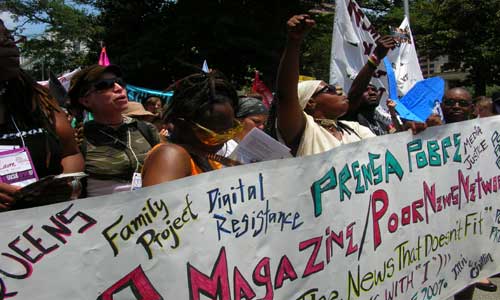
On this May Day, the first day of the Asian and Pacific Islander History Month to support my ancestors and all immigrants, I participated in not only the May Day March, but also the National Mobilization of Asian Pacific Americans. This action was made by a coalition of Asian, Pacific Islander, and Raza organizations. This powerful action with interfaith leaders, US Representatives, API Organizations and Korean drumming circles, was made by a coalition of Asian, Pacific Islander and Raza organizations. In the few days before May Day, these organizations and many Asians and Pacific Islanders lobbied on Capitol Hill to speak out on the injustices of the current immigration policies that the U.S. upholds. First there was a press conference, in which Congressman Mike Honda stated, “" There is a stereotype that Asians are quiet, We aren’t going to be quiet about this right? "

I found it fascinating that there were so many preachers of color out supporting immigration reform. I spoke with Reverend Eun Sang Lee of Warren United Methodist Church, and asked him to comment what Christianity has to do with immigration, “" In God there is no border. This is a human right. We (Christians) have an obligation to care for marginalized and oppressed… There is a biblical mandate to protect the vulnerable." He went on to speak about third world peoples’ need, especially Christians, to stand in solidarity with each other, " We, as persons of color, we are playing into the politics of fear. Pitting one group against the other. We are getting played. In God there is abundance when we lift up each other."

After the press conference, a stage was set up for the rally. There was a moment of silence given in remembrance of the students and faculty of Virginia Tech. After the silence, someone shouted out " Go Hokies! " Throughout the rally there was one constant chant, “What do we want?” The answer was always, " Immigration reform! " Solidarity from other third world communities was shown when other immigrants came and stood beside the Asian Pacific Islander community.

The NAACP came out as an organization and spoke about immigration. Hilary Shelton, Director of the Washington Bureau, NAACP, stated, We " must move from the politics of scapegoating immigrants…Indeed we must move together." Later in the rally, Congressman Guiterrez commented upon immigration reform, " We have only begun the fight." After he spoke, many started to chant, " Si se puede!"

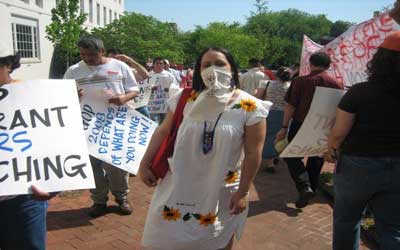
We started to march toward the Democratic National Headquarters. The Korean Drumming group led the March and provided the beat for the movement we were all a part of. When we all reached the DNC we encircled the front of the building, while chanting about Immigrant rights. The Chants never stopped. Even when the chant leaders took breaks, a Grandmother in the contingent would make sure that we continued chanting together.

People never stopped marching in that circle, even though the sun was blazing upon our backs. I felt that this march was part of and connected to all the other walks/marches/protests that had been taken place before. This was not a march that was separate from any other movement; it was one that was intertwined with all movements, especially the movement to have one’s human rights recognized, implemented and respected.

We started to march again. While heading out to march, I lead one of the chants. I chanted " We didn’t cross the border, the borders crossed us." As I chanted, I thought about this land. This land has always been and always will be First Nations land, and the first illegal immigrants were Europeans. One difference between then and now is that Indigenous peoples do not believe that a person can ‘own’ the land. It is ironic that the same people whose ancestors immigrated here are the same people who are against people they view as immigrants. They themselves are immigrants, yet they continue to scapegoat immigrants.

We finally hit the Good Old Party Headquarters; which is the home of the Republican National Party. We encircled the front of the building yet another time while chanting out " Are you tired? " The protestors always responded with a firm, loud, " NO” " It was around 3:00pm and the crowd was still strong and passionate about our voices being heard in the Capitol. I thought about my Lola and her diaspora to the United States. I remember the stories of shopping at the thrift stores, carrying bags of groceries on the bus, and everyone living in a one room bedroom with her husband and all her four kids. I remembered seeing the sign that said, " Positively No Filipinos Allowed " hung inside my Tito’s house as a reminder of the racism that Filipino immigrants survived. I was continuing this walk for my family, ancestors, and community.

As I left the march with my face covered in a rag that said "Who's the Illegal alien PILGRIM?" I crossed the street from the Headquarters of the Republican Party. I passed by two white men in suits, who I could feel were speaking about me. One looked at me directly and stated, " Don't worry darling, I won't tell anyone." I was reminded of my own Lola (Grandmother) and Nanay (Mother) and their stories of immigration to the U.S. and how they escaped the Martial law of Marcos's regime. I was reminded of how my ancestors struggled to live in this country. I looked at him, and stated " I am from this land."

Tags

Bush vetoes new hate crime bill

09/24/2021 - 10:54 by Anonymous (not verified)
Original Author
root
Original Body

Bush vetoes a new hate crime bill that would protect people with disabilities and houseless people from violent attacks.

by Leroy Moore/PNN

Since Bush highjacked the presidency for the second time, our country has been at war not only aboard but also at home. Although we have heightened our Homeland Security to protect from " terrorism ", all kinds of State, City, and County police along with the growing INS and Minute Men have not made our society safer, but in fact have made American society unsafe and increased violence in our communities and homes.

Last year alone Florida had at least three, probably more, violent attacks on individuals who were homeless. In California a White racist group attacked and beat a Black man who uses a wheelchair and a Latina transwoman was found dead in March. All of these cases and more like them tell us, people who are disabled, gay, transvestites and homeless that we need to be protected in hate crime legislation. Bush, however thinks it is unnecessary.

One recent article criticizes the bill, saying it leaves groups out like the police! Examining the definition of a hate crime explains why the police are not included and why such a criticism is unfounded.

If we had a President that read the newspaper and was in any way connected to the public then we wouldn’t need to waste time explaining why this legislation is desperately needed.

Another criticism of the bill by Bush and the Republican party, as well as some Democrats, is that this law creates a special class. Once again the blame is on the victim and not the perpetrators. The outrageous fact is there has not been any new amendment to original hate crime bill of 1968 that only covers race, color, religion, or national origin.

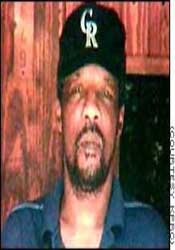
Bush and the Republican Party’s reaction to this Bill is not surprising when you realize that this is the same guy who didn’t want to talk about the case of James Bryd, a Black disabled man in Texas who was brutally attacked dragged and beaten to death by a group White non-disabled men. James Bryd's disability was only a footnote in the case.

Bush’s reaction to this bill is unbelievable considering how hard he works to fight the " War on Terror " yet won’t protect his own citizens from violent attacks in this country. We are simply asking for Bush to prevent any more unnecessary deaths and injuries in his presidency.

Leroy F. Moore Jr.
www.leroymoore.com

Tags

They have ignored the poor and now they are coming to his door!

09/24/2021 - 10:54 by Anonymous (not verified)
Original Author
root
Original Body

Bayview/Hunters Point residents continue to meet and organize for justice against Lennar Corporation
The 3rd in a series

by Sam Drew/PNN

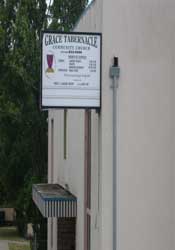
" They have stirred up a sleeping giant. This issue has awakened the community, " said Minister Christopher Muhammad as he looked intently at his audience at the Grace Tabernacle Community Church. He was talking about the continual poisoning of the Bayview Hunters Point district caused by the redevelopment project at the Hunters Point Shipyard headed by the Lennar Corporation.

The sleeping giant is the organized and unified community that is confronting negligent city and county officials. The sleeping giant has had his peaceful sleep disturbed and is now seeking retribution from those who committed this dastardly deed.

In previous townhall meetings that I have attended olive branches have been extended to the Mayor, Board of Supervisors, the Health Department and the Redevelopment Agency to come and test the community's land and water to see if the claims are true. But those fair gestures were met with indifference and the community is moving on to the next phase, as Muhammad calls it "the direct action" phase.

" They have ignored the poor and now the poor are coming to their door," he stated defiantly. " Next Tuesday we need to visit Mayor Newsom in his office, Tuesday is our D-day, D stands for decision" Muhammad continued. " We call for the resignation of the Director of Public Health Mitchell Katz and if he doesn't resign the Mayor should fire him." Muhammad firmly stated.

He went on to speak about how Katz never sounded the alarms when known health violations occurred in the Bayview. Minister Muhammad was referring to the four months from April to August that the Lennar Corporations had no monitors on site to check the levels of toxicity being put into the air. Muhammad smiled as he told the engrossed audience how haphazard the monitoring system was. " Half the time they put the monitors out they didn't work," he stated forcefully.

The sleeping giant has a few more doors to knock on, besides just the mayor's office since his rude awakening. " Archeology needs to be terminated, Archeology is a non profit entity that is suppose to inform the community when they have been exposed to health issues. It is funded by the Redevelopment Agency to the tune of $600,000. Why do you need $600,000 to do nothing, " exclaimed Muhammad.

In the audience was support from Supervisor Chris Daly who received special kudos from Muhammad, "Anyone who stands up for this community needs to have the support of this community but anyone who doesn't stand up for this community should be recalled-all it takes is 10%. No one should be comfortable in a seat when the community is dying," he added.

To show the strength and diversity of this giant various clergymen spoke on behalf of this successful effort for environmental justice. Pastor Joe Niumalelega, who has been with the cause from day one spoke of the joy he felt seeing all of Gods people coming together as one. "God, I want us to come together one time. Let all nations know. Let's do this thing for our young for our community," Pastor Niumalelega said.

Reverend Victor Santana told of his problems attempting to explain to the Supervisors the importance of this issue, as he said, " The last time I went to the civic center to explain to the Supervisors the Supervisors didn't understand."

To reiterate the simplicity of what the community is asking for, Minister Muhammad once again explained the reasonable demands the community is demanding. " We're asking for a temporary shut down of the construction at the shipyard, so we can access the levels of exposure from arsenic and lead and we can't trust the Health Department under Mitchell Katz to do it.we want an independent party."

To put a human face to this story of toxic nightmares, I spoke to local resident Pat Thomas who lives close to the shipyard. She told me how her life has changed since Lennar began digging and showering the community with toxic dust.

" For the last six months my eyes are red and itching. I have headaches and I'm short of breath. I've been breaking out in rashes. Where I live at we had green stuff on the carpet. My husband had to wash it off," she said exasperated.

Host Pastor Ernest Jackson compared the movement for environmental justice to another famous and successful movement. " In the sixties I was too young to be involved in the civil rights movement. I've always regretted that [but] this movement has allowed me to be in a cause for humanity, at least I can say I was with them," he said.

The pastor added the final words to the evening's powerful meeting, as a call to all community members and anyone with principals willing to stand up for what's right.

" The doors will remain open at Grace Tabernacle Community Church."

Tags

(Comprehensive)Notes From Eight Poverty Skolarz on the Road to Atlanta

09/24/2021 - 10:54 by Anonymous (not verified)
Original Author
root
Original Body

The Long Hot Journey to Make Media Justice

by Dee Allen, Joseph Bolden, Queennandi Xsheba, Jewnbug, Luis, Vivian Hain, Dharma, Ruyata

The trip to Atlanta by Greyhound

By Dharma

I am here at the first U.S. Social Forum, a long journey away from home seeking out a justice among all.

I am glad to be here among my peers at a time of much social change in the world. Unlike many people who are here in Atlanta for the forum, I traveled by bus for 2 and a half days straight. I got on the greyhound bus in San Francisco and traveled through the nights till the bus reached Atlanta. The trip was non-stop for sixty three hours to what feels like the other side of the world.

I felt like I was traveling through time. I traveled by bus to get a feeling for what my ancestors went through during the great Black exodus to the West. I thought back to a time when my ancestors, African descendants traveled the underground railroads out of the South to escape slavery. My mind drifted to what it must have been like to find paths through the trees and land beyond the highways to escape the south. I imagined what early black Americans went through to find a better life.

I traveled by myself. The trip was long and drawn out. I kept my mind off of the long hours by reading and starring out the window. I read about the conditions of prisons in California. I was reading letters from women in prison. from mothers who are locked up while their children live without a family.

I stared out the window for many hours. The land was desolate with dark rainy skies. Thunder and rain pounded us in all five states. At the border of each state we hit thunder storms. I felt like I was traveling on another universe. The lightning struck and reminded me of our country's bloody history. We passed through hot, muggy dust storms. We passed ghost towns, abandoned buildings, empty, boarded up and burned. Nothing but cactus plants, desert flowers, barbed wire, and heat for miles. Single oil pumps dotted the landscape in Texas. The moons I saw are like none I have ever seen before with light shining out all around us. The skies, the land everything was new and frightening. Big skies I thought would never end. But I knew eventually we would make it here to Atlanta.

I leaned my face against the cool window and stared out at the long stretch of dry barren land. I was surprised by the ghost towns between New Mexico and Dallas. I could see the broken down houses in the light of the storms. A dust bowl of memories of leftover life. You can rename poverty but all across America it looks and smells the same. Small houses, trailers, shacks and old towns. One town in Texas the sign read Population 3. We stopped in towns and all the major cities on our route. Some historical and everywhere I went the American flag was flying. I can't imagine living in these small towns with nothing around.

We passed hundreds of McDonald's, Burger King's and Wendy's. They cater to Greyhound. Fast food joints sit waiting for buses and hungry drivers trying to get back on their way. I will not eat a burger again for a long time. The only good thing about eating fast food was I knew I would not get left. I never walked far from the station. The bus would leave without you. In some places there was only restaurants. Some people on my bus were left in the rain in Alabama. Every seat was taken on the bus. Extra buses were ordered.

In Jacksonville we stopped for a moment. I stepped out into the shade. I saw a disabled man ordered off Greyhound property they said for loitering. It was the heat of the day. He was looking for bit of shade, but he was on greyhound property. He told me he lost his legs in the Vietnam war. He said he can barely get by on his veteran benefits. H told me he has nowhere to live he cannot afford a house. I met one young man who was returning to Oklahoma to his father's house. He left about two months ago to escape the beatings from his father. He was forced to return because the landlord threatened to raise the rent because of him. I met one woman traveling with her ninety year old mother. They were coming from Vegas returning home to Atlanta. They befriended me.

After we crossed the border from New Mexico into Texas the driver pulled over. I thought maybe it was a weigh station. I heard the men's boots before I saw them. They wore green suits, I immediately knew they were border patrol. They walked up and down the aisles, asking each person, "are you an American citizen. If not get out your papers." Fortunately we were allowed to keep driving without further problems.

This trip has taught me humility. This trip has taught me to be ever more understanding of the hard work and dedication of the early Black Americans who traveled to California in an effort to escape the unjust and brutal treatment of the South.

Tags

The Revolution Begins with I

09/24/2021 - 10:54 by Anonymous (not verified)
Original Author
root
Original Body

POOR Magazine's Race, Poverty, Youth and Disability Scholars reflect on their experience at the US Social Forum in Atlanta

by Staff Writer

by Laure McElroy/PNN columnist, welfareQUEEN, race, poverty and disability scholar

This is how we do it at POOR; using the " I ", the first person, we centerpiece our own knowledge. We choose to use who we are and what we’ve personally experienced as both the keystone narrative for any story we write, as well as the lens through which we interpret it. We believe that doing this is the best way to be honest about where one’s point of view is coming from, and that the journalistic cult of the third person in this country is not objective at all, but rife with hidden, mostly privileged bias. We also insist that those who experience it must create the news, rather than any non-participant journo, however formally educated; those who live the stories both interpret the stories and claim the byline at POOR.

The Ida B. Wells Media Justice center at the US Social Forum was an original proposal authored by POOR. Our vision was to create a space for non-hierarchical story generation, print, radio or blog. The USSF seemed like the perfect place to model a setup for media creation that was not elitist and that did not reflect mainstream hegemonies (powerful interviewer/passive interviewee; writer-outsider who interprets event, " expert " -outsiders who provide " facts, " and actual event participants or those affected by event relegated to pictures to give the article " color, " unheard) with its power relationships.

The National Planning committee knew what we needed because we told them, appealing to them in countless emails and exhaustive conference calls for a space that was accessible to everyone, including houseless people and physically disabled people. We needed a room that was big enough to have our Community Newsroom (which is at the heart of our process of non-hierarchical news making) with the usual suspects of big indymedia, the conference-goers, and the actual community of Atlanta involved: people like the residents of the inner city housing project that is about to be destroyed to make way for privatized " mixed use " (read: not for the poor) housing; people like the houseless folk and workers from the Task Force Shelter in Midtown Atlanta, which the city is threatening to close despite the fact that a disabled houseless man recently died from what appears to be negligence in the only other shelter (which, incidentally, is city-run). We needed a space big enough for the houseless folk who, by city ordinance, can be arrested simply for being anywhere within a five block radius of the Civic Center, to tell their stories, working with a POOR trained writing facilitator only if they chose to do so. Sadly, our media revolution was not to be, despite the fact that the USSF organizers claimed to accept our proposal.

It is my opinion that what went wrong started long before any of us grassroots independent media arrived at the forum. What went wrong first went wrong in the minds of the main organizers, the people who told us (and this was actually said to us) that maybe we could get a space to make our " little " media if there was one left, but that the " real " media would take place elsewhere. These were the people who subsequently told us that it was ridiculous to expect Pacifica Radio to broadcast out of a homeless shelter (the Task Force having been one of our early alternatives to the basement hallway that they ended up trying to put us in months later, when the forum happened). What was wrong was the idea that powerful elites, be they government, family, capitalist or NGO, would willingly share power with anyone without a fight.

Tags

By Lola Bean

09/24/2021 - 10:54 by Anonymous (not verified)
Original Author
root
Original Body

PNN Journalist/Graduate of POOR's Race, Poverty and Media Justice Institute

by Staff Writer

There are a lot of people here at the US Social Forum claiming solidarity, claiming alliance, claiming other people’s struggles for their own personal gains. At POOR, we are poor. We’ve fought through fire, illness, disease. Gunshots, poverty – you name it – to get here. To get to the US Social Forum. To this place that’s supposed to be filled wall to wall with people in “solidarity” with folks like us. And how were we treated by our privileged brothers and sisters? We were separated from the forum and relegated to a bathroom where it was impossible to share our skolarship. We were treated like an annoyance when we asked for an acceptable space. We were told we were fire hazards when we tried to actually work with what we were given. Our signs were torn off the wall because “tape is not allowed” when other organizations were allowed to keep THEIR signs on the walls.

The folks at the social forum, people claiming to be at the forefront of social change treated us no different than the folks they claim to be fighting against. We are put in basements everyday so we are not seen, not heard, not felt. Access is granted only to those with the pass of a certain color, respect is given only to those with resources and connections. If we can’t be treated like human beings at the US Social Forum, what hope do we have that these people are even capable of creating social change? What’s worse, if these people and organizations are working against us, what does that say about out chances – poor, abused, people with disabilities, people of color – what does that say about our chances of finding TRUE solidarity?

Tags

By Jewnbug

09/24/2021 - 10:54 by Anonymous (not verified)
Original Author
root
Original Body

Race and poverty scholar, digital resistor, po' poet

by Staff Writer

Undress the media

Get POOR Magazine out of the dressing room
to yo stage

Reality combined wit art

We are castaways

To play restricted parts

We are fire hazards

trouble breathing, unfair air

Airtime to
5 minute commercials

To one hour away

4 public service announcements

We are news, accomplishments & blues

Nothing but the truth

So we help God

I crossed the border early Thursday morning

Without my US Social Forum Passport

I felt I made it to the stage

On the down low tip

Undocumented

Still chanted & sang

Story quickly told

And then put out
tha back door

Cuz I'm fire hazard

And I breath unfair air

So I took over the airwaves

For public service announcements

Security at every post

Decided what pieces of bread become toast

Youth in the media

On a positive note

Wut a joke?

We are in the attic

Thru static 2 fix antenna

So the perception is clear

U marginalized me

U made no room for

JUST US

U disrespected Ida B Wells no center

U can't find us

U can't have justice

Po folks struggling to obtain

Technologies that document

Stories to educate

Only a few found

Security doesn ´ t make me feel safe

They make my heart pound

We are sound beings

Beings of sound

we create safe events

When we can build

A circle to build a community

People ´ s news

Workshops, panels, resource tables

In this for everyone-

Not just a few

We are many

Struggling to be heard

So let me kick

People had to really search

We are here

We are there

Yet even amongst

These gatherings making differences

They had no space to spare

So we had to rise up and challenge

2 get a bigger hallway

2 have our story flow through the airwaves

Painful and precious

Learning goes beyond four walls

We are media

Dispite displacement

We didn ´ t fall

Tags

By Queennandi Xsheba

09/24/2021 - 10:54 by Anonymous (not verified)
Original Author
root
Original Body

Race and poverty scholar, digital resistor

by Staff Writer

Who is the superior? You?

Who is inferior? Us?

But who’s the one infectin’ nations with poverty, wounds full of puss?

Who let the people die? You?

Who was the people you killed? Us?

This ain’t a mighty nation

Hollin’ in God we trust

If that’s the case, why I see devil all over yo’ face-

Kids being murdered, prostituted-

And ya’ll praise that disgrace

In cali we got a terminator for a governor

Stand up fo’ youz, he ain’t gonna be back

Right then and there

He gone somother ya!

Send yo’ offspring to be amongst me claimin-

They understand my pain

Knowin’ damn well if they lived in our conditions

It’d drive they ass insane

I’m homeless & po’ while

Ya’ll organize ya hoity-toity committee

If ya down wit tha’ cause

Then why can’t ya sit down and have dinner wit me?

Nose all in the air- naw

Those people are dirty

All tha money you made off me-

Ya took tha profits

Gave me the finger

Then flee

That’s fuhked up, didn’t even

Give us a blanket and sheet

To sleep on tha streets

Who said you was superior? You

Who said we was inferior? Not us

You gave a donation, yea

Tossed me a penny that collected rust

While as a whole you said

You respected immigration, racism, colonization and hurricane Katrina

Could I get some help to find my aunt, cuz after Katrina I still haven’t seen her

Don’t march wit me

You don’t want equality

Perpetrating in tha rally

Left us to die-

But hurried up and restored

Semi Valley

Takin’ billions to bring hell to millions

All over tha world

Cut my grant

Objective was to starve my baby girl

While ya sleep in silk

But my baby survived

Off my breast milk

She got up age

Asked where’s my daddy?

Damn baby girl, he got kilt

A Queen by blood

I’mma tell you what’s up

Quit smilin’ in my face

I know you don’t give a fuhk

I’mma keep spittin’ shit at white supremacy

Mr. KKK- better duck

Destroy you’ beastial mentality

Cuz I’m sick of it runnin’ amuch

Who is the inferior? You!

Who is the superior? Us!

Tags

By Vivian Hain

09/24/2021 - 10:54 by Anonymous (not verified)
Original Author
root
Original Body

Race and Poverty Scholar, welfareQUEEN, digital resistor

by Staff Writer

Thinking back on my experience at the United States Social Forum with POOR Magazine, I feel many mixed emotions. First, when we (POOR Magazine) arrived at the Civic Center in Atlanta to set up our Community Newsroom meetings, an innovation by POOR Magazine that uses an indigenous organizing model to create media, we were allocated to an isolated, dank and damp confined basement hallway space with prison-like concrete walls painted in toxic oil-based battleship gray paint. Due to the extremely narrow hallway, we were told that our presence there was a potential fire hazard. We were marginalized and completely separated from the rest of the media and most of the USSF guests and participants.

We (POOR) were unable to access and work collectively with other media sources with whom we had hoped to collaborate with. We were also unable to get all of the USSF guests and participants into our Community Newsroom and media workshops, because they had to have a special media pass in order to get to the upstairs basement like dressing room. If they even had a pass and made it through the maze of confusion to the media center, they could just stand in the narrow, half blocked off hallway space were we were thoughtlessly put by the USSF planning committee to conduct our workshops and Community Newsroom. By the second day, a few of my fellow POOR colleagues and I developed acute asthma, unable to breathe properly, due to the toxic paint fumes and lack of fresh air in the media center.

I felt truly kicked to the bottom of the barrel, separated from the rest of the forum and hidden away in the darkness, not to do important media work but just to get sick with asthma. We had to literally fight for our right to be allocated to a more humane, healthy and open space that was accessible to all USSF guests and participants. We took it upon ourselves to find one that would not continue to segregate POOR Magazine’s community newsroom from reaching all people at the USSF.

In addition, there were no proper accommodations for people with disabilities, many being forced to use a freight elevator in the Atlanta Civic Center to access the basement area of the media center. This was a thoughtless and discriminating action of the USSF. By not providing access to those with special needs, the organizers ended up marginalizing even more people.

The media- made up of poverty, race and disability scholars- should have been the first thing that those who were attending and participating in the USSF saw when they entered arrived at the social forum, not just the vendors selling their cause. It is the voices, faces and words of the people that make a social justice movement, not capitalism with a 501c.3.

At the USSF, I was also very disturbed by the extreme paramilitary security presence, which totally contradicted the whole meaning of the forum itself. This was very unpleasant and unnecessary by all means for an event of such, one that is supposed to promote social peace and justice.

In addition to this, it was a social atrocity that there were no ‘real people’ from the local community in Atlanta representing at the USSF. Many houseless folks and low and no income people were kept out of the tall iron gates of the Civic Center, marginalized and cast away in extreme heat. They stood outside on the sidewalk surrounding the Civic Center completely ignored and disregarded. As a poverty scholar myself, I found this whole social dynamic very upsetting. Watching many young, privileged and educated folks mindlessly dance about to music without a care in the world within the confines of those tall security gates as if the USSF was some sort of progressive Disneyland, made my stomach turn.

The USSF is an event that should bring people closer together to form alliances and coalitions and to create solidarity collectively, not individually and certainly not by marginalizing and separating people through class and privilege. It is clearly imperative that the USSF planning committee changes its thought process when planning for the next US Social Forum. It is most important that the USSF provides an event that includes more than just privileged activists, but also the real people struggling with issues of racism, poverty, disability etc., as well as real media created by the people. I feel that human connectivity must be the true foundation of the next USSF if we hope to create ‘a new world.’

Tags