Story Archives

The Community Speaks with the Candidates

09/24/2021 - 10:54 by Anonymous (not verified)
Original Author
root
Original Body

Poverty Scholars and residents of District 10 meet and question their candidates at POOR Magazine's Community Newsroom

by Lindsay Robinson/POOR Magazine Poverty and Media Justice Intern

The open forum was offered to provide a media and community dialogue for the District 10 candidates and their constituents. The forum was lead by POOR Magazine poverty scholars who live, work, struggle and resist in District 10. The framework for this dialogue was centered around questions from the poverty scholars regarding issues of redevelopment, youth empowerment, police brutality and the daily struggles of life in District 10; Potrero Hill, Bayview-Hunters Point, Visitacion Valley, Portola/Silver Terrace, Dogpatch, and Little Hollywood and Portola neighborhoods. As a nonprofit organization POOR cannot endorse a specific candidate for office but can provide the space for and encourage an open conversation so community voices can be heard.

All of the candidates were invited - and all of them came, except two, Sophie Maxwell and Rodney Hampton Jr. The candidates present were Charlie Walker, an African American businessman from Bayview-Hunters Point. Espanola Jackson, a community activist since 1966 who has been fighting for Welfare Rights, affordable housing and education in District 10. Dwayne Jusino, a working class family man and a 23 year resident of District 10, who is committed to safe neighborhoods, quality schools, community revitalization and local businesses. Marie Harrison, a long time community advocate who is working against Eminent Domain and towards bringing peace and prosperity back to the community and Sala-Haquekyah Chandelier, a parent and advocate for youth empowerment. The community forum was conducted as a series of questions posed to the candidates and a chance for all of them to respond.

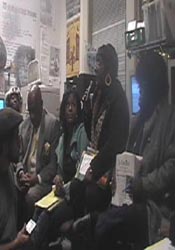
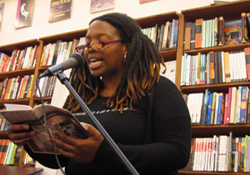
The Community Newsroom at POOR was tightly packed this past Tuesday night as the forum began. Everyone present had been asked to create a few questions to pose to the candidates so the forum could move along quickly. Byron Gafford a poet and Poverty scholar at POOR Magazine was the first to ask the question that was on so many people's minds, "What will the candidates do to stop redevelopment in the Bayview?" As each candidate responded, the room listened intently. There was a general consent among them that redevelopment needed to be stopped.

Charlie Walker and Sala-Haquekyah Chandelier both referred to the petition for a referendum to stop redevelopment that was signed by 33,000 people but was thrown out due to a lack of an additional document. Mr. Walker spoke of the situation as "pure racism at its highest form."

Espanola Jackson responded by remembering how this was not the first time redevelopment has come to the Bayview, she stressed how it must go to the courts to be decided.

Mr. Jusino began by saying that it needed to be brought back to the people. "Where is Sophie Maxwell?" he asked. Then, paused and answered his own question, "She�s in bed with the developers.�

The next question was posed by Vonder Alston, a community member, "What will be your number one priority if elected?"

Charlie walker responded with a commanding voice. He stressed the need to stop redevelopment and clean up the mess that is already there from companies like Sunset Scavengers and stated how the Southeast side of San Francisco is the most neglected in the city.

Marie Harrison agreed and added that "redevelopment is like a bull in a china shop.� She stated that she is not afraid to confront redevelopers.

Simiarly, Ms. Jackson said there is a need to stop the three combustible turbine engines that are spewing more toxins into the area than PG&E did. She wants the old shipyard, which is a superfund site, to be cleaned using the $2 billion that would be spent if the Olympics came to town.

Sala-Haquekyah Chandelier responded by stressing the need for unity and youth empowerment.

"There is a crisis of leadership and a strong need for a community advocate for the people" stated Dwayne Jusino.

Marlon Crump a Poverty scholar at POOR and a SRO resident in the Mission brought another extremely important question to the floor, one that was very real for many of the folks present last Tuesday. "What do the candidates intend to do about police brutality?"

Mr. Walker responded by addressing the lack of leadership in the SFPD. He blamed the police for increasing the violence in his neighborhood. He wants to see a more effectual police dept.

Marie Harrison made the connection between untrained officers and an already tense situation, creating, as she called it, a recipe for an explosion.

Espanola Jackson urged for drug testing of the police and states that there are serious drug problems on the force.

Ms. Chandelier stated, "The community should be involved in the interview process with perspective police and play an interactive role in who gets hired."

Mr. Jusino sees a fractured political community and feels that more police accountability will help repair that rift.

Leroy Moore, a Poverty scholar and writer at POOR, discussed the large population of Bayview-Hunters Point residents that have disabilities and how the community lacks adequate mental health services and transportation. He asked what the candidates plan to do about this issue if elected.

Marie Harrison was the first to respond as if the subject had already been on her mind. She said she has been working on a proposal that is awaiting funding, which would provide transportation from public housing to clinics or other health facilities and back home again.

Dwayne Jusino said he feels this is a basic concern for the community and "action needs to be taken to provide resources for our most vulnerable and dependent residents". The community has a responsibility to its entire people, he said.

Espanola Jackson emphasized the need for money to be allocated for the care of Bayview residents who have the highest rates of asthma and cancer in the region.

Ms. Chandelier said she sees a need for a stronger relationship with the seniors in our community and that the youths need to be engaged.

As Charlie Walker began to speak, a hush fell over the room. He pointed out an obvious trend in the candidates� responses.

"All of our answers are the same; these issues are all deeply rooted in racism. No white community would tolerate their people being treated this way," he boldly stated. He said He believes that very little has been done for the District 10 community in the last 40 years.

The group listened intently as the candidates shared their views. Ingrid DeLeon, a Poverty scholar at POOR and PoorNewsNetwork immigrant reporter, was the next to share her question with the help of her translator. "Que Ustedes hacer acerca salud de pobre gente (what are you going to do about health care for poor people?")

Marie Harrison said she believes the issue lies with educating the community about the current health risks in their neighborhood, she refers to the power plant and the many health issues associated with it and pointed out that she has served on the Restoration Advisory Board for the shipyard for 14 years.

Mr. Jusino began by reflecting on his own heritage as coming from Puerto Rican dissent. He wants fully funded health care and wants to see politics taken out of the way of adequate health care for everyone.

Charlie Walker said he is prepared to make the request that the Center for Disease Control be dispatched to District 10 to do research on the high rates of asthma and cancer.

Espanola Jackson has been working for Welfare rights for many years and said this was an important issue for her.

"Why should we trust you," asked Marvin Crutchfield, Poverty scholar, Bayview resident and POOR Press Author asked.

Dwayne Jusino stated clearly, "You shouldn't". The air in the room shifted as many folks could relate to the difficulty of trusting our politicians. Mr. Jusino continued on by stressing the need for the community to come together in forums like this one to size up and judge the candidates ourselves. "Let everyone's record show and let the community decide," he said.

Marie Harrison agreed whole hearted with Mr. Jusino, "The community needs to push us to do what we say we are going to do and create accountability."

Ms. Chandelier began by saying that she has been a community activist for 22 years, is a former welfare recipient and understands the struggles of her community. "I am unbossed an unbought and will never sell out," she exclaimed.

Charlie Walker cited his record as an activist who has fought and been jailed many times for fighting for Black rights.

Jewnbug, a Poverty scholar at POOR, Welfare Queen and co-founder of the Family Project at POOR began her question by stressing the need for more opportunities for our youth. "How are you going to create and support new opportunities for our children, and not just the type of dead-end trainings that never lead to a real job?

Sala-Haquekyah Chandelier shook her head in agreement. "Creativity has the ability to fill our children's lives with possibilities." The room reacted to her strong words.

Ms. Harrison agreed that dead-end trainings are not the answer. The youth need to be engaged and paid well when they work, she said. In addition, she stressed the importance of putting San Franciscans first as the key to bringing jobs to the area.

Espanola Jackson also believes in putting San Franciscans first and proposes that the CEO's of large companies come and work with the youth, engaging them in part-time summer jobs.

Mr. Jusino sees the situation as extremely bad for the people of his community. "The education system has a real disconnect to the real world" he pointed out. "We need to link it to the business world and our community," he said.

Mr. Walker stated that it is real hard to deal with youth unemployment when so many children�s parents are also out of work. There is no real difference between the youth and elders, he said. "When the major contractors come in and take money out of our community how can we benefit?" he asked.

Dharma, a Po' Poet and Poverty scholar at POOR was the next to ask a question. "What will you do to stop the Redlining of Black Business in District 10?"

Mr. Walker was eager to respond. He said he believes there is a crisis in the African American community. He cited Bank of America, Wells Fargo and Citibank for openly not lending money to African Americans.

Marie Harrison sees a need for more reinvestment in our community. "These are our dollars" she stated.

"Redevelopers claimed that 80% of our taxes would be reinvested in our community, but they lied" said Espanola Jackson.

"They are taking this money away from us like thieves in the night and Sophie Maxwell's prints are all over it" Mr. Jusino boldly added when the mic came his way.

Sala-Haquekyah stressed the need for community members to stand up and take back their power.

Leroy Moore was ready with the final question of the forum. "We have seen the activist board of supervisors turn their back on their community during the dot.com boom. There are many organizations that have the answers and understand the problems, why won't the supervisors listen?"

"There is a lack of leadership and the supervisor doesn't listen. The people need to force the supervisor to listen and be accountable," stated Marie Harrison.

"The city is making money from people being homeless and there are so many boarded up houses in the Bayview, it makes no sense," said Espanola Jackson. Community members nodded in agreement.

Charlie Walker stressed the fact that all of these problems are rooted in slavery and said that he sees a real disconnect in the way our disabled brothers and sisters are cared for.

Sala-Haquekyah Chandelier turned to face Leroy and assured him by saying, "You are being heard."

Dwayne Jusino finished by saying that he agreed with Ms. Jackson and said that "it is nothing but a dog and pony show, nothing gets done, it's time for action."

As the question and answer period concluded, the candidates lingered to connect one on one with community members. The space for this type of forum is rare in our community and helped provide those present with a chance to get answers from the people who wish to represent them in District 10.

Tags

The Tobacco Manufacturers Mitigation Fee- Makin ‘em pay!

09/24/2021 - 10:54 by Anonymous (not verified)
Original Author
root
Original Body

Youth community organization LEJ is home to the Tobacco Free Project that is dedicated to fighting the big tobacco manufacturers that are unfairly targeting thier neighborhoods.

by Youth Envision Project, Literacy for Environmental Justice

There are many different issues affecting urban communities such as pollution, violence, and drugs. An issue that is often overlooked and lessened is tobacco. Youth advocates at Literacy for Environmental Justice (LEJ), and Youth Leadership Institute (YLI) have been working to address this issue. Both organizations have been researching their communities to identify how the Tobacco Industry targets communities of color, specifically the Bay View Hunters Point and the Mission.

LEJ home to Tobacco Free Project (TFP) is an empowerment and environmental health and justice organization based in the community of Bayview Hunters Point San Francisco. TFP is a youth group whose goal is to create change by finding alternatives to the tobacco industry’s influence in their neighborhood. The Youth Leadership Institute is an organization that works with youth and adult allies to create positive social change. YLI designs and implements community based programs that provide youth leadership skills in alcohol, tobacco and other drug prevention, philanthropy, and civic engagement. YLI is home to Youth Organized Against Tobacco in San Francisco (YOAT SF), a Mission based youth group working to bring economic and social justice to the Mission district through tobacco advocacy.

Both groups worked most of last year collecting neighborhood residents, youth and merchants to understand the Tobacco Industry tactics used to push their products into communities like their own. In the Bayview, TFP found that 84.5 percent of merchants said that they receive incentives from tobacco companies. This included 72.1 percent of merchant who received incentives in the form of buys downs and discounts. And of all merchants surveyed in the Bayview, an overwhelming 92.3 percent said that they have contracts with tobacco companies. These survey results go to show that tobacco companies have their hands very much in the mix in the retail environment in the Bayview Hunters Point.

While in the Mission, YOAT SF found that there are a total of 120 tobacco retailers in the mission district, a geographic area of one square mile! Additionally, YOAT SF found that the average amount of money that Mission families spend on cigarettes is $10 per week or $520 per year, a high figure for a neighborhood where 39% of the Latino population in Mission is at or below 40% of the area median income AMI.

Research has proven that higher concentration of tobacco retailer outlets has been linked with higher rates of smoking. All this in the Mission and Bayview, plus the fact that tobacco companies have increased their advertising promotion in and around the retail environment since billboards were banned, is enough to show the damage being done in low-income communities throughout the state with similar socio-economic profiles.

That’s why YLI and LEJ have decided to fight against Big Tobacco and start the Tobacco Manufacturers Mitigation Fee Campaign.

The Mitigation Fee is a fee that is going to be placed on every pack of cigarettes sold in the city of San Francisco. It will be used to alleviate the consequences that the Tobacco Industry has caused our communities with the sales of their harmful products. With a per pack fee and over 36 million packs sold a year, there will be an average of almost $10 million dollars mitigated from Big Tobacco, if our policy passes. The money from the Mitigation Fee will go to fund youth prevention and cessation programs, non-profit organizations and youth groups like LEJ and YOATSF to continue the ongoing fight against Big Tobacco.

We feel that it is time for our communities to stand up for themselves and have an impact on our neighborhoods’ futures. We will not sit by and tolerate any more attacks from the Tobacco Industry through their forceful advertisements, mass promotions and sales!

Currently, we are gathering as much support as we can from our communities and neighboring communities, but until then, look out for us collecting signatures throughout the city of San Francisco or presenting at your local youth organization!

Tags

Gentrification for Dummies...

09/24/2021 - 10:54 by Anonymous (not verified)
Original Author
root
Original Body

Ten easy steps to transforming your multi-cultural, multi-generational neighborhood into a sea of shiny new condos

by By Tiny aka Lisa Gray-Garcia and Vivien Hain/PoorNewsNetwork poverty scholars and welfareQUEENS

At 3:30 p.m., under a brisk and windy blue sky in West Oakland last
Thursday, just a couple of days after the elections, stood a crowd of
people, mostly West Oakland residents, along with members of the
Oakland-based tenant's rights organization 'Just Cause' to unveil a
billboard that read: "West Oakland For The People - Stop
Gentrification", adorned with large, warm colored graphics, including an image of a male silhouette with a dollar sign on his chest and a
close up of the face of a youth.

Many people, most who live in the
community, sang protest songs and chanted slogans that they will never
be stopped, despite of the need for greed from billionaire real estate
developers, which has been gradually pushing many low-income families
of color out of West Oakland as part of ex-Oakland Mayor Jerry Brown's
gentrification agenda.

As the people spoke, I gazed off into the distance a few blocks away near
the corner of 26th and peralta, where a slightly beat-up, cream-colored
apartment complex used to live. It was an apartment my mother and I had
lived in, barely affording the rent, before we were evicted to make way
for a large terra cotta condo development that stood there now, resting
its bright steel and shiny metal legs calmly on the graves of a
thousand apartments for poor folks.

Then I gazed a few blocks to the left to a "storefront" where my mama
and i squatted right after we were evicted because that eviction
destabilized our tenuous hold on homefulness to such an extent that we
couldn't really recover.

So how do you wipe out a whole community of color - by redlining,
re-zoning, ghetto-izing, turning it into a "cool" artists ghetto.and
then eventually displacing the community that was originally there.
Gentrification for Dummies; the template of capitalism; renew, redo,
displace and re-locate

But there is one more key way to accomplish this goal that must be
mentioned, through the "buy-in" of the community members themselves.

I scanned the Corporate media (a.k.a. The Chronicle-Lies) on Sunday
only to find a picture of several supposedly conscious residents of
West Oakland standing next to the lead developer, Rick Holliday, of the
multi-million dollar Train station project, they were all talking about
how important it was to bring "market-rate housing" to west Oakland as
that would be the way to "improve" West Oakland.

Who does market rate housing improve West Oakland for? And where do all
the poor folks go when we are displaced? Like Po� Poet Laureate of POOR Magazine A. Faye
hicks so beautifully articulated in her poem The Poor Nation, "we don't
move, cause we don't have the resources to move, we just start living
in the sidewalk hotel."

"We must not be moved", a very angry Gregory Hodge, Oakland Unified
School District Director called out to the crowd flanked by Hip Hop
artists ArtinAction

As people of color we must resist this gentrification,"said Yvonne Smith, long-time West Oakland resident of 63 years.

After several community elders spoke, scholarship was spit by several local Oakland youth hip hop artists who came out to represent and perform, speaking out about the social genocide that is currently taking place in their communities, which is forcing many long-time West Oakland residents to leave and be 'set out to pasture', with many being relocated to other cities as far away as Stockton, because affordable housing in West Oakland continues to rapidly shrink to near extinction.

As part of the anti-gentrification billboard campaign in West

Oakland, Just Cause has also been working for several years on an

'inclusionary housing campaign', with an Inclusionary Zoning (IZ)

proposal that would require all new housing developments to include units for low-income families.

Every single month, hundreds of condos are being fast-tracked through the City of Oakland's approvals process, and the vast majority of them are market-rate, luxury condos for San Francisco professionals. Meanwhile, the displacement and exodus of communities of color in West Oakland continues.

Inclusionary Zoning is a policy that requires all housing developments to include a percentage of "affordable units". Just Cause has been at the forefront of calling for this policy over the past few years and last year, several other organizations joined in the campaign, like Oaklanders for Affordable Housing, in an effort to build a coalition of organizations pushing for Inclusionary Zoning.

The effort is in high gear as Just Cause's (IZ) campaign pushes Oakland's City Council to implement a minimum requirement of 20% low-income housing in all developments immediately, so that the trend of housing displacement for many Oakland communities of low and no income people of color will stop.

As the press conference came to a close I gazed up the street again, my eyes searching for another corner, this one where me and my poor mama dee used to park our car when we didn't even have a place left to live in. I couldn't find that corner cause my gaze was obstructed by yet another condo, this one even bigger than the last.

If you would like to get involved in the campaign work that Just Cause is currently working on, contact them at 510.763.5877 Email: victory@justcauseoakland.org

Tiny is a welfareQUEEN and revolutionary journalist, co-founder of POOR
Magazine and author of the upcoming memoir; Criminal of Poverty;
Growing Up homeless in America, published by city Lights. Vivien Hain,
is a welfareQUEEN, media producer and co-author of My Life x 4 - a
story of her and her daughter's homelessness in Oakland published by
POOR Press.

Tags

Little B, set him free

09/24/2021 - 10:54 by Anonymous (not verified)
Original Author
root
Original Body

A 14 year old African Descendent child is tried as an adult under Amerikkka’s “new racism” (un) just court system

by Ashley Adams/PoorNewsNetwork

"I been raised on dem corners that you scream about constantly. The hood we callin home where the father's never known to be- but still I fought the struggle kept my head up on my hustle- I had to sho a little muscle that promised me struggle"

Those are the lyrics of Little B aka Michael Lewis who has won talent shows and other contests behind prison walls. He is a name to know. He is a story to know, one that represents many.

Little B- Michael Lewis is a human being first and foremost in addition to being a prisoner of Georgia State Prison. He has been in prison for over 9 years. Now 23, he is serving a life sentence for the murder of a man named Darrell Woods; a murder in which clear evidence exists to prove Michael's innocence.

Michael was raised in Atlanta's impoverished neighborhood called The Bluff. This is a neighborhood where over twenty liquor stores litter a five mile east to west stretch of Simpson Street. The Bluff is a place where the existing markets are not selling fresh fruits or vegetables. There are no offices, bookstores, bank branches, doctors, not even ice cream stores or movie theaters can be found in the Bluff. The main form of commerce in the Bluff involves addicts, dealers, and police. By the age of 11, Michael was living on the streets of the Bluff having to fend for himself.

" I been a street nigga my whole life- while y'all niggaz ran school halls I ran the streets til midnight- I seen my moms and pops embrace the crack pipes with mo love for the blow then the kids they gave life- so the streets raised me- hood enslaved me"

At the age of 14, Michael was tried as an adult for the murder of Darrell Woods under Georgia's Senate Bill 440 which allows children ages 13-17 to be prosecuted and sentenced as adults for offenses known as the 'seven deadly sins'. The mandatory sentencing is 10 years in adult prison for the youth caught up in this bill. Not so coincidentally, 94% of the children tried and convicted under this law have been black.

Michael's court case lasted only three days; Three days of underrepresentation by his defense team who, from what I've seen, had more than enough evidence to prove his innocence. Three days of inconsistent testimonials from drug dealing and/or crack addicted witnesses. Three days of lazy defense cross examination and suppressed evidence. Three days of a charade that took away whatever freedoms Michael once had.

Unnerved and highly perturbed are probably the best words to describe my state after reading the details culminating obvious negligence in the case of Little B and the justice system as a whole. The Injustice system.
The injustice of Michael's story is beyond words I know; it's a feeling similar to tight stomach muscles, a clenched fist, a scream into a pillow, a shortness of breath. Even though I have not met Michael or spoken with him directly, what amazes me most is the positivity that beams thru his letters that were shared with me to tell his story. I have learned about hope and the power of optimism thru his writings. When reading them I would imagine the place from where the letters were written; the color of the walls, the lighting of the cell, the smell, and the echoing sounds of long hallways lined by human beings locked in cages.

As I write this from the comfort of my home- warm, cozy, sweet smelling, with cat at side- I try to understand what it would feel like to have lived 9 years in a cell that is 6 x 8 feet for a crime I did not commit. I once sat in a cell for several hours that felt like days, but they were only hours.
Exerts from Michael's letters read:

"A typical day for me is being locked in a cell for 23 hours a day, but sometimes 24 hours for weeks at a time because they (the officers) run yard call whenever they feel like it…

I only leave this cell for a shower or visitation and even then I'm cuffed until I reach the destination."
Elaine Brown former chairperson of the Black Panther Party, musician, mother, and author of several books, got involved with Little B when she was living in Atlanta during the time of his arrest. She was attentive to and outraged by the media's portrayal of Little B as a cold hard thug killer. He was a 13 year old boy. This was happening at a time when there was a lot of media rhetoric about 'urban' (meaning mostly Black or Hispanic) youth becoming America's new "superpredators".

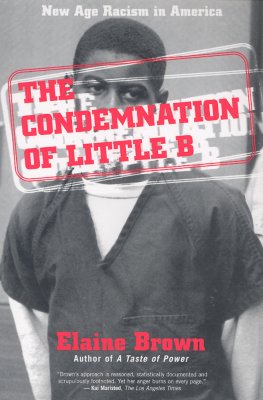
Elaine is founder and Executive Director of the Michael Lewis Legal Defense Committee. She has written a book called 'The Condemnation of Little B' which goes into the details of the night Darrell Woods was murdered, the lack of representation for Michael, the suppressed evidence in support of Michael's innocence, the deals behind close doors between the State and the drug dealers present at the scene of the crime whose unrelated drug dealing charges were conveniently dropped after Michael's conviction, and how all of the pieces fit into the current picture of New Age Racism in America.

The bigger picture that Michael's story represents is indeed multifaceted. Upon reading much of Elaine's book, I began to grasp the zoom out. Racism seems to actually support the needs of the economic system we dysfunction in known as capitalism. More prisoners equates to more labor… cheap labor, even free labor. Georgia is one of three states that do not pay prisoners for labor. Many large corporations with household names rely on prison labor for production of their goods. This system we are living in is a complicated tangled web of apparent deceit- money hungry people at all levels- prison slave labor- racism- and injustice. When crime rates drop in urban areas, new bills are passed to ensure incarceration of targeted populations such as those with melanin in their skin. Basically, the rabbit hole is deep. Hopeful people and freedom fighters are needed in every nook and cranny.

"I try to be optimistic about everything in my life because I know this place will destroy me mentally if I'm not careful, so having to be optimistic is much needed."

The truth is hard for me to digest at times. In my heart, Faith is highly complimentary to Truth. I need faith to see the truth, as I truly believe that in sharing all the stories of injustice and supporting one another in the process we collectively progress towards a healthier world in which restorative justice and healing come first before prison. In the world I visualize and idealize prisons do not exist. People are held and supported by community which embraces all skin colors, all religions, all economic backgrounds; a community where that which divides us is so much smaller and unimportant than that which connects us to one another. For this to be possible, first we are gonna have to heal thru sharing stories and listening whole heartedly to one another. I have hope and strong faith, if I did not, the truth would drive me to an early grave. It is of this hope and faith that I pray of one day, not too far in the future, that I will go see Little B tear it up on stage at San Francisco's historical Fillmore, as a free man.

An Appeal for Michael's case was filed and denied in 2005. The attorneys were incompetent. They did not want to base the case on the missing evidence and ineffective council These same self deluded 'savior' attorneys never met Michael nor did they visit him or speak to him in any way. What I cannot seem to figure out is why people (such as defense attorneys) put themselves into positions where they can REALLY help people in difficult situations who need their help and not step up. It baffles me and that's another article in and of its self.

…current situation…

Michael still has a chance at freedom and it's up to anyone reading this article or hearing this story elsewhere to put him in your prayers, spread the word, and help out in any way you can. A Writ of Habeas Corpus, a writ requiring a person to be brought before a judge or court for investigation, was recently filed at the State level. A court date is scheduled for February and funds are much needed for an investigator and attorney to bring fourth potential witnesses and to surface the many neglected facts about this case. Currently, a two woman team of Elaine Brown assisted by Melody Russell, is working diligently with fiery dedication towards Little B's freedom. If this story moves you in any way or rattles your bones like it has mine, this is a time to step up. You can contribute financially by sending check to: THE MICHAEL LEWIS LEGAL DEFENSE FUND, 4060 Peachtree Road, D324, Atlanta, Georgia 30319. You can check out www.myspace.com/freelittleb to find out other ways in which you can help or to learn the details of his innocence. I highly recommend reading Elaine Brown's book, The Condemnation of Little B for his case and the societal implications raised by his persecution. For more information on Elaine and her work go to: www.elainebrown.com.

To all people everywhere: Keep fighting for your Spirit and your Mind.

Tags

Youth Push for Discounted MUNI Pass

09/24/2021 - 10:54 by Anonymous (not verified)
Original Author
root
Original Body

Bay Area youths fight for a discounted MUNI pass for struggling young adults aged 18-24.

by Peter Lauterborn

While the legal status of young adults changes upon reaching the age of 18, their lifestyle, economic standing, academic and societal pressures do not improve, and more often than not become more challenging. Nevertheless, youth are struck with a 450% increase in their monthly transportation expense as a birthday present to celebrate their adulthood.

The fact is by turning 18 most youth do not have doors of opportunity flying open, allowing them to take on more financial responsibilities. Rather, the opposite is most often the case.

For youths 17 and younger, a modest $10 MUNI youth pass becomes a drastic $45 monthly expenditure the day they turn 18. The result of this aggressive jump in fares for youth is additional challenge for transitional youth, and lowers ridership creating less revenue for Muni.

This issue was heard Monday, December 4, at 4:00pm at City Hall, room 263. The proposal is being pushed by the San Francisco Youth Commission, which is the City body charged with advocating and advising the rest of local government with better policies, programs, and budget priorities that pertain to youths’ lives.

Shadi Elkarra, appointed by Mayor Newsom to the Youth Commission, commented on the issue, saying, "San Francisco should be promoting public transportation, but how can we if we're not making it financially accessible for young people who are already struggling?"

Commissioner Kemi Shamonda, of District 6, agrees, "I know how low the wages are for working youth. Many of us are low-income and our jobs help support our families."

Supervisor Jake McGoldrick, who is sponsoring the Youth Commission's initiative, wrote, "Young adults are 16.5% of MUNI's readership and the most economically disadvantaged 18-24 year olds are most dependent on public transportation to fulfill their responsibilities."

Legislation pertaining to this issue will be heard in the City Operations and Neighborhood Services committee before going to the full Board of Supervisors.

Youths between the ages of 18 and 24 contribute $11.7 million annually to the MTA in the purchase of adult MUNI Fast Passes, and make 34 million bus trips annually, according to the Office of the Legislative Analyst at the San Francisco Board of Supervisors (OLA). The OLA also found that a 30% discount to the Adult Fast Pass would spark a 7.2% increase in ridership among 18-24 year olds, according to the forthcoming report from the OLA.
This makes the fiscal impact of having this discount approximately $5.7 million annually.

"The statistics speak for themselves," says Commissioner Elkarra.

The upside of giving this discount is that the City could promote life-long mass-transit users. Currently, the sharp price hike deters many from continuing their use of the public transit system.

"We should be afforded the opportunity {to be life long transit riders] at a fair rate," says Commissioner Anthony Albert, appointed by Supervisor Bevan Dufty.

The National Center for Transit Research agrees, stating that, "travel habits developed at a young age could influence subsequent behavior, and that those who were not regular transit users as young people were less likely to be transit users in adult life."

But even if the benefits of the plan were undesirable, and even if the costs of the plan were unfavorable, the City of San Francisco must recognize that—in our era of fleeting families—anything that can be done to support young people must be pursued. The ability to move effectively around the city is, for young people, a question about their safety, education, employment, and overall well-being.

"With the cost of living escalating in San Francisco," says Iqra Anjum, who as Chair of the Youth Commission conceptualized the plan, "the City and the Municipal Transportation Authority must re-affirm their commitment and invest in young adults."

Peter Lauterborn was a member of the San Francisco Youth Commission from 2003-2005, and served as Government Affairs Officer. He is currently an undergraduate student at San Francisco State University. Contact him at peterl@sfsu.edu

For more information on the San Francisco Youth Commission, please visit City Hall room 345, log on www.sfgov.org/youth_commission, or call 415.554.6446.

Tags

What do we want... PEACE!

09/24/2021 - 10:54 by Anonymous (not verified)
Original Author
root
Original Body

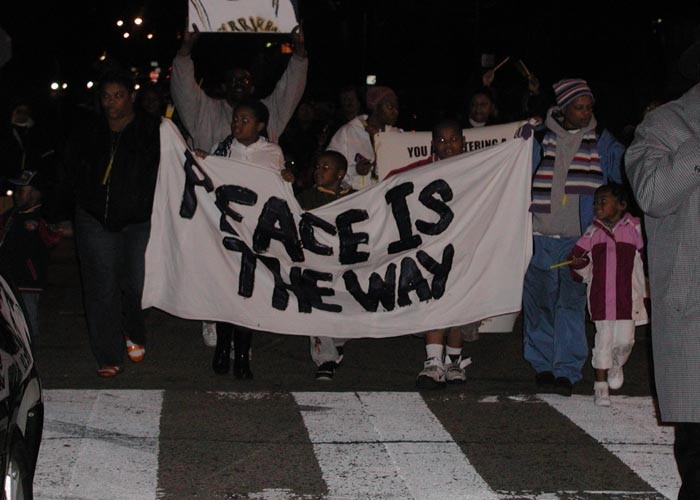
Hundreds of families and community members march in Sunnydale for peace and an end to violence locally and globally

by Anna Kirsch/POOR Magazine Community Journalist

The streetlights cast a luminescent glow over the marchers'
determined bodies. Large and small feet shuffled over the glistening black pavement. Voices in unison shouted into the brisk December air, "What do we want?" "Peace." "When do we want it?" "Now."

The streets running around John McLaren Park in San
Francisco weren't filled with cars on this chilly Friday evening, but with mothers, families and community members. All demanding an end to violence locally and globally. All saying enough is truly enough.

As I marched among community members, leaders, activists and mothers from all over San Francisco, I felt the power behind these people. I felt the strength of marching with survivors of violence. I felt the pain and anger of loss.

I gazed at the signs, reading Peace is the Way and Peace
Zone, and the pictures of loved ones lost and I remembered my own childhood friend, who was shot to death just one month ago in my hometown. I thought about the mothers in Iraq, who are losing their sons and daughters everyday. I remembered those killed on the streets of San Francisco, Oakland and Richmond only to become forgotten statistics by our government.

One woman also marching in remembrance, pain and strength
was Kraima Baptiste. "I'm here in honor of my brother, Julian Austin, who was killed three years ago," Baptiste said above the echo of the loudspeakers behind her. She spoke confidently. "I'm here to stand as a survivor," she stated.

Like so many, her brother Julian was only 18 years old when
his life was taken. He was shot outside of a Metro PCS store. It was November 1st, Kraima's birthday.

"It was unreal, it felt like someone had sucked the air our
out of my body," she said recalling the day he died as tears gathered in the corners of her soft, dark eyes. "But I know he wouldn't want me to be unhappy, he is my angel," she said.

Baptiste smiled as she remembered the simple things her
brother loved, "a clean white shirt, pizza and a ride were all he needed."

Her pain made me shudder, as I remembered the tightening in
my chest and shaking of my body when my sister's voice came through the telephone with news of Kelly's death. Across the coast and the world, so many others were feeling the same pain.

"It feels good to come together with others like me. There is
power in numbers, instead of being divided we need to build, talk and heal," Baptiste said. Her words, strength and memories gave me hope.

Organized by Community Leadership Academy Emergency Response (C.L.A.E.R.), the march brought together mothers, activists and survivors of violence like Kraima to demand a stop the violence at home and abroad. C.L.A.E.R. is an organization committed to creating a nonviolent community, so residents can reach their maximum potential and flourish. Tonight's march was to help create that safe environment.

The protestors and speakers stood along-side folks from many organizations like the staff at POOR Magazine, many of whom have been personally touched by violence in our low and
no-income communities. We all called for a commitment from the government to address the long-term causes of violence, such as rampant poverty and lack of basic human services and to end the war in Iraq.

"We really need to address the root problem, not just the
surface issues," community leader Reverend Toni Dunbar said. She preached to the crowd as they gathered around the stage and blaring lights on the corner of Sunnydale and Schwerin. She brought forth a message of hope and peace.

"We do have the capacity to change," she said softly and
thoughtfully to me after exiting the stage. "Our children have grown up with murder, poverty and desperation as the norm and this is so far from what we desire for them," she said under the glow of a streetlight. She stressed the importance of the community really coming together to defeat violence.

On this evening Reverend Dunbar's hope for the joining of
communities became true. Supporters of many different organizations, members of many different communities and people of many different backgrounds united under the common cause of the march: to stop violence everywhere.

Renee Saucedo, member of La Raza Centro Legal, said she was
there to represent the Latino community. "We are here in unity to send a message to elected officials that they need to make sure communities have enough here to not resort to violence," Saucedo confidently stated.

"We're not gonna stop until the violence stops and we're not
gonna blame the survivors, but we're gonna blame the powerful. we don't accept as the solution the criminalization of our communities," she added.

As I listened to the scholarship of these community leaders,
survivors, mothers and families and saw the determination in their faces and heard the strength in their voices, I felt the beginning of light. For Kraima's brother, Julian Austin, for my friend Kelly, for the families in Iraq, in Sudan and in Darfar, for those all over the world living in violence, we stood in unity to bring forth light from the darkness.

Anna Kirsch is a Community Journalist and graduate of POOR Magazine's Race, Poverty and Media Justice Institute. To read more work on issues of poverty and racism you can go on-line to www.poormagazine.org To get involved in C.L.A.E.R.'s powerful advocacy and change work you can call them at 415-333-3017

Tags

Hellth-Care on Potrero Hill

09/24/2021 - 10:54 by Anonymous (not verified)
Original Author
root
Original Body

Racist, classist hellth-care uncovered at Potrero Hill Health Center

by Laure McElroy

Regina Sharon is a homegirl, a third generation San Francisco native and mother with deep roots in her Potrero Hill community. She is also at present (like me) a member of California's state-funded medical insurance program, Medi-Cal. For as long as Regina can recall, her family has gotten healthcare from their neighborhood clinic, the Potrero Hill Health Center (PHHC).

Two months ago, an eight months-pregnant Regina visited PHHC, seeking to be seen as a drop-in. "I was near the end of my last trimester but I hadn't had any prenatal care. I had been planning to make an appointment anyway, but I decided to go in that day rather than wait because I had been feeling sick all week."

"Feeling sick" in this instance meant far more than morning sickness; Regina was having hot flashes, headaches, and her hands and feet were enormously swollen. "I have a history of health problems around pregnancy," she says. "I miscarried my first child, and with my second I had preeclampsia so bad, I had to stay in the hospital for almost a month. I was really concerned for me and for my baby, and I was relieved when they told me I could go in that day, because I didn't know what was going on with my body."

Hearing Regina's story made me reflect on my own health care history. My mother raised me in Oakland, CA; she was a working-class woman, a single parent by virtue of divorce. Her ex-husband, my father, had a corporate job with middle-class benefits, including a health plan on which the court ordered him to list me as a beneficiary. This meant that although we were by no means wealthy, as a child I enjoyed regular shots, check-ups and care, preventive and otherwise, administered to me in spacious, fully equipped offices by sleek, respectful, well-fed staff. My mother was just like any other mother; she wanted me clean, well-fed, and above all, healthy.

Mother-to-be Regina kept her appointment at PHHC, happy that she only had to wait a week to be seen. She took her preschool-aged son with her, since it was a weekday morning and she did not have childcare.

"I arrived, checked in, and was taken to an exam room," she said. "The exam rooms aren't really rooms, they're just spaces partitioned off with curtains. So I was in the exam room waiting and my son kept slipping out into the hallway, you know, running around like kids do. I was trying to keep an eye on him but I wasn't feeling well at all, and they don't have any toys or play area for patients' children there.

Well, about 15 minutes later, this doctor, not my doctor, comes into the room without announcing himself or asking, dragging my boy by the arm. He glares at me and snaps in a very nasty tone, 'You need to control your children when you're in this clinic!'"

The doctor left and an outraged Regina called a friend on her cell phone to describe the event. In the conversation she expressed her opinion about how the man had treated her, using some choice words. "I said to her, 'you know what this m-therf----er just
did?' I was very angry, but I wasn't shouting or even speaking in a normal tone; I lowered my voice because I did not want to be overheard. It was a private conversation. I wasn't talking to him at all when I said what I did, he wasn't even in the room! I didn't
like the way he had talked to me or the way he had mishandled my son, but I was sick, and I wanted to be seen, not cause a scene."

Despite her precautions and despite what one could call a reasonable assumption that her right to a private telephone conversation would be honored as she waited alone in the exam area, the rude doctor overheard her. "He stormed back in, carrying on about how I needed to apologize for calling him out of his name. He was yelling. He didn't care my son was there. I thought he was going to hit me."

Regina pointed out to him that since he hadn't been the room at the time and she had had no idea that he was listening to her phone call, she couldn't have been addressing him, but her goal was to visit her own doctor, not to insult another. "I told him that I was sorry if I had upset or offended him in any way, even though I had not actually been talking to him." The angry doctor finally left, and she thought the matter was finished. But 10 minutes after he exited, the head nurse came in and told her that she would have to leave the clinic or be "escorted" out by the police.


Safely ensconced in the rosy glow of pre-HMO corporate healthcare benefits, as a child I knew nothing of the kind of HELLthcare mistreatment that those of us who cannot afford increasingly expensive private care, those of us who depend on so-called "safety net" services, sometimes endure. My innocence ended one Sunday night in 1994 when I visited the hospital near my house, seeking care for a painful case of food poisoning.

This hospital happened to be private, and as a twenty-something who was (like many of us) much worse off financially than my parents were at the same age, I was medically indigent at that point in my life, no health insurance at all. When I got to the emergency room, clutching my stomach in agony, the front desk staffer looked me up and down then immediately started trying to persuade me to leave and go to the public hospital, which was a half-hour bus ride away. I insisted on being seen where I was because I was afraid that the diarrhea and the vomiting would start up again while I was trapped on the bus.

After waiting 2 hours, an inordinate amount of time considering there were only two other people in triage, a nurse led me back into a freezing exam room. She brought me a gown and an extra sheet, and then told me to strip and lie down on the exam table, a frosty metal affair covered by a stingy strip of butcher paper. An hour and forty five minutes after that, the doctor on duty entered. I smiled at him, relieved, until I noticed his glare, which was even colder than the table. "Sorry," he clipped, lip curled, "but we don't give out opiates. You won't get any drugs here."

I stared at him, nonplussed; it had never occurred to me that the man would assume I was trying to scam the place for drugs. I had been concentrating only on the burning pain in my stomach and bowels, and not the political and social realities that plague me as a Black woman with very little money trying to access medical care in the US. I begged, nearly cried, and ultimately refused to leave until someone helped me, or told me what to do to help myself. The doctor scowled even deeper and stomped out of the exam room again. He came back with a thimble sized cup half full of Pepto Bismal, and pushed it toward me, lips tight. I actually thanked him, drank down the medicine, and left.

It took me until the next morning both to get over the poisoning and to fully feel how angry and humiliated I was behind the emergency room doctor's treatment of me. But I didn't go back to complain.

Doctors are considered superior in the American collective; even for those who are well - off enough to buy into the wealthy - are - healthy healthcare system, holding doctors and their institutions accountable for bad behavior is an uncomfortable, uphill battle. I was not coming from a place of material privilege AT ALL, and I was of course, painfully aware that I didn't even have that limited amount of power. I wanted to go in there and burn the place down with my scorn and my righteousness indignation, I wanted to scream at his superiors and grind an apology from them all, but I didn't pick up the phone because I knew my place, or so I thought, and I was afraid.


Regina continued her story."I was pregnant, I was sick and I had lost a baby in the past. I asked to see my doctor, I begged them to see me, but they wouldn't listen. They just kept telling me that I had to go until the police came and took me out by either arm. There was no referral to anywhere else, no checking my vitals, no nothing."

Switching to another primary care physician under the Medi-Cal "managed care" system would take time; Regina was angry and
humiliated, but her concern for her unborn child prompted her to call PHHC back that afternoon to ask her doctor when she could see her, stressing her symptoms. Her doctor advised her to wait a week. She kept calling.

Two weeks after the incident, she received a letter from her own doctor (who had not been involved in the incident) stating that the only way she would be allowed back on clinic property was if she signed a formal letter that the hostile, offensive himself had written, which had her admitting that she had threatened him and apologizing.

"I was still sick, had gotten worse, in fact, probably because of all the stress. I was so afraid." She stared at me levelly, hands clasped on top of her belly. "I knew that what they were asking for wasn't the way it had happened, but what else could I do? I signed the letter."

Signing such a letter may seem like an inconsequential thing, but threatening or otherwise abusive behavior toward another person while on clinic premises, especially a staff person, is grounds for denial of services according to the rules of public clinics in San Francisco. Regina Sharon, who has a history of pregnancy related illness, came into PHHC sick, afraid and seeking care for herself and her unborn. Regina felt that the doctor who had behaved abusively toward her used her vulnerability, her sickness and her need for medical care, to pressure her into admitting to something she had not actually done.

Why? Maybe that admission was necessary to excuse what otherwise would've been an unprofessional loss of temper, or maybe using it to deny her services later was an act of retaliation. Maybe, as one clinic insider suggested, Regina's individual episode of abuse is part of a systematic pattern of disrespect and even outright discrimination that targets people who come to the clinic unable to pay through to the higher realms of the sliding scale.

I do know that though what happened to Regina Sharon and what happened to me may sound dissimilar, but a sinister thread connects our histories; neither Regina nor I were given even the most cursory care because we were seen as people who had no money, no recourse, and thus no entitlement to proper treatment. If any of the medical staff we encountered had thought of us as being able to fight back, to field lawyers or powerful friends, there is no doubt in my mind that we would have been treated with more respect.

Laure McElory is a digital resister, welfare QUEEN, community journalist for POOR News Network and author of the recently published zine, System Bitch , which explores humans’ interactions and relationships with the systems that exist in today’s modern society from a myriad of voices. It is an intense collection of stories, poems and artwork that evaluate and question the existence of numerous systems and their effect on human life. For more information on System Bitch or to order a copy please call POOR Magazine 415.863.6306

Tags

The West Oakland Gentrification Tour!

09/24/2021 - 10:54 by Anonymous (not verified)
Original Author
root
Original Body

Residents, politicians and community scholars take a tour led by Just Cause through rampant gentrification in West Oakland

by Joanna Letz POOR Magazine Race Poverty and Media Justice Intern

Yvonne Smith longtime resident of West Oakland said, "In the 1940's and 50's West Oakland rivaled Harlem. Right here there was a drug store, afurniture store, a Bank of America, and The Lincoln Theater with the best buttered popcorn…West Oakland was bustling with African-American families…"

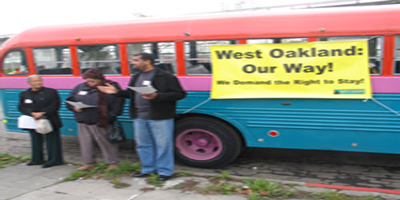
Last Saturday’s chilly morning POOR Magazine’s co-editor tiny, her son Tiburcio and I rep-ported and sup-ported on Just Cause Oakland’s tour of development and gentrification in West Oakland. Just Cause is committed to building a powerful voice for and from Oakland's low-income tenants and workers. We started at their newly commissioned billboard across the street from the Bart station on 7th and Chester. The billboard reads, "West Oakland for the People, Stop Gentrification."

The purpose of the gentrification tour of West Oakland as Andre Wright of Just Cause said, "to show city officials what’s happening and what West Oakland used to be. Wright continued on to say, "Change does need to happen. The neighborhood does need to improve. But the same people need to be here with new jobs and new houses." The tour was led through the voices and eyes of West Oakland residents themselves.

Carrie Owens also a long time resident of West Oakland spoke. She said, "My family came on a train sixty years ago to West Oakland. West Oakland used to be a hub of black business. It used to feel like home. But now people are being displaced."

The bus we boarded was modeled after buses in Mexico, with its bright colored paint, old posters adorning the sides, and plastic figures stuck to the dash-board. The bus is a symbol of self-definition and expression.

Just Cause members are demanding that in West Oakland the people of West Oakland decide what the community is to look like.

As the bus rolled away from 7th street the words of Yvonne Smith echoed and bounced off the shiny blue walls as she recalled what West Oakland was once like. I tried to picture what West Oakland must have been like fifty or sixty years ago. Smith continued and said, "The developers get richer while the poor get poorer. The developers build condos that the people of West Oakland can't afford…and people are pushed out. This is gentrification."

Oakland's black population decreased 13% between 1990 and 2000 and has accelerated to close to 25% since 2000. In West Oakland less than 10% of residents can afford the average-priced home.

Smith explained, "Long time home owners are an essential part of our neighborhood."

From 1997 to 2004 the average sale price of homes in West Oakland rose from $53,317 to $315,000. Nearly 80% of West Oaklanders are renters. More than 2/3 of renters are very low or low income.

Vanessa Moses from Just Cause said, "The earliest gentrification in West Oakland happened during the 1990's dot com boom. From 1998-2000 eviction rates increased 250%."

The bus took a turn and Smith pointed out where her Mother's house used to be. Now there sits a parking lot. Smith said the city took her Mother's house by eminent domain. Across the street a monotonous row of condos has been built. The street used to be occupied by old Victorian homes, but they were demolished and replaced with the condos.

The bus slowed and pulled over across the street from De Fremery Park. Smith's voice jumped once again back in time, she said, "The Black Panthers used to hold rallies here in the park. They called for self-determination. For us to decide what our communities look like."

We climbed down into the street, music playing from the speakers. As we stood on the corner of De Fremery Park Andre Wright said, "Decay is Caused by disinvestment in West Oakland. Which has driven down land and house prices. And now the developers are back to cash in."

Andre continued on to say, "We need more vital resources to make West Oakland a place we want to call home."

We were met at the park by DeAngelo Lemmons, also known as Dee Knock, and A'Dunyae. DeAngelo said, "We can uplift the community with music. We need to support local things, like Bump Records, rather than spend your money in Berkeley at places like Rasputin Records." He continued to say, "Developers shut us down out of our own community."

Both DeAngelo and A'Dunyae gave us a glimpse of what they create by spitting some inspiring words of wisdom. DeAngelo and A'Dunyae are both part of Covenant House in West Oakland. Covenant House works to create a different vision of West Oakland and to get homeless youth off the streets.

The sun was shining bright now, but the air was still cold and crisp. As I stepped on the bus I looked back over my shoulder thinking about the Black Panther rallies that took place in De Fremery Park.

We stopped at the Pacific Pipe Factory where a 1500 unit luxury housing development has been proposed. The luxury units would not be affordable for West Oakland residents.

We met with Oakland council member Nancy Nadel. We stood in front of the large structure that was once the Pacific Pipe Factory. Nancy Nadel asked, "What exactly do we want here?" She went on to say, "We need to develop our city in a sustainable way."

The land parcel where Pacific Pipe sits is owned by housing developer Peter Sullivan. Sullivan owns a number of land parcels in Oakland. Sullivan has been telling the Oakland city council that there are no industries interested in the land. But Nancy Nadel explained that she has personally sent interested industry to Sullivan. One such group was Semifreddi's Bakery, but Sullivan would only agree to a five-year contract. The housing proposal at Pacific Pipe does not include a single affordable housing unit. Nadel also explained that the housing proposal does nothing to address the need for jobs in West Oakland.

Nadel said all the large parcels of land in Oakland are being sat on by housing developers.

Nadel showed the correlation between unemployment rates and homicide rates in Oakland. With increases in unemployment, homicide rates increase as well. Nadel said when there are not enough jobs people resort to the black market and this continues violence. Nadel said, "West Oakland needs manufacturing jobs that match the income and education levels of the people that live here."

Ian Kim, the policy director at the Ella Baker Center for Human Rights spoke in front of Pacific Pipe. He said, "There are two forces at work when people meet and the group with the plan wins. The City of Oakland has been going without a comprehensive economic development plan. Some factors include job creation, zoning, and education. The city needs to be able to pull the reigns on real estate development."

He went on to say West Oakland needs to build green industry. He gave some examples such as solar and wind energy businesses, and expanding recycling in Oakland. Kim said the Port of Oakland sees massive amounts of scrap metal and wood pulp paper. Kim said, "We need creative ways to create jobs." Recycling programs create many more jobs. We also stopped at Bobby Jones' house. We stood in front of his home and he greeted us all with a hug and began to speak about his experiences in West Oakland.

Bobby Jones said, "The city must put sanctions on development. We must keep rents low and have a concrete rent control plan."

Jones also said, "We must open our eyes and see what we miss. We only have sight and no vision. If you don't know your rights than you will not have a single one."

Bobby Jones and others are trying to start streetcars running in West Oakland again. Back in the day streetcars were a usual occurrence. For more information about the street cars go to soulinthecity.org.

We took the bus a short distance to the historic West Oakland TrainStation. The train station opened in 1912 and was a primary transit center before it closed in 1989. Many African-American families and immigrant families came through the station. The International Brotherhood of Sleeping Car Porters, the first African-American labor union, began at the Station. CL Dellums, mayor-elect Ron Dellum's uncle was part of this union.

We met at the station with Greg Hodge. He said, "Here was the West Coast center for the labor movement. We need to keep this history alive, young people need to know." Hodge also described how the station sits at the geographical center of Oakland as well as the greater Bay Area.

There we were standing outside the train station, in the heart of West Oakland and the heart of the Bay Area, the very place where many West Oakland residents first came. The train station is surrounded by barbed wire. Sea gulls dipped back and forth between where we stood and the station casting their shadows as they went.

Hodge is a part of the 16th and Wood Street Train Station Partnership. They released a development plan report in October. Hodge summarized some of the development plans for the train station, which include, "education, business, self-sustaining restaurants, history, green jobs, and an incubator and home for non-profit organizations." For more information about the Train Station Partnership contact, Margaretta Lin, margarettalin@ebclc.org.

As the bus descended back on 7th and Chester I had a sense that I had traveled in between time. The tour spoke of the struggles and of the resistance and history of resistance in West Oakland. The bus ride was a tribute to resistance as both young and old residents spoke about their experiences living in West Oakland and their visions for their own community.

Bobby Jones said, "We need affordable housing, better jobs, and more opportunity for Oakland residents. The voters have spoken-- It's time to put an end to Jerry Brown- style predatory development."

Before we all dispersed many of us signed Just Cause's Policy Framework to Fight Gentrification and Predatory Corporate Development, which states the following:

- To Advance the rights of working-class West Oaklanders to stay and thrive in their neighborhood.

- To Encourage growth and development in West Oakland that serves the people living here, not that just makes profit for wealthy developers.

- To help secure the resources that will make West Oakland affordable for its renters and homeowners, and that will prevent displacement.

- To be bold and innovative in defending the interests of working-class West Oaklanders of Color against Predatory Development.

For more information about Just Cause visit their website at
justcauseoakland.org

Tags

The First Annual Tenant Convention: Voices of Poverty Scholars

09/24/2021 - 10:54 by Anonymous (not verified)
Original Author
root
Original Body

Community and poverty scholars join to discuss tenant rights, police brutality and the criminalization of poverty at the first tenant convention

Marlon Crump Poverty Scholar POOR News Network
Wednesday, December 20, 2006;

'It is literally a crime to be poor in this country, the United States of America.' Rene Saucedo's words reverberated across the auditorium, at the First Annual Tenant Convention, held in November at the Luna Sea Theater. Saucedo's words are all too familiar for those of us who are living poor in this country.

One of the most important goals, for tenants, like myself, was to be heard. Many issues were raised at the Convention including issues around tenant rights, senior and disabled rights, and the criminalization of poverty.

I had been a tenant at the All Star Hotel only a little over a month when my room was invaded and intruded by twelve armed police officers. The All Star is a Single Room Occupancy Hotel (SRO) or as Tiny from POOR Magazine calls them, Poor People Housing. In October of 2005 a group of armed police, coercing a key from management, came through my door in the middle of the night with guns aimed to fire. The police officers wrongly accused me of a robbery I did not commit. I am still reeling from the aftershock of this event, and trying to bring these officers to court. This horrible encounter with the SFPD has led me on a struggle to fight injustice personally, as well as on a greater level within the community of San Francisco.

As I walked towards the Luna Sea Theater I thought about the many Police Commission hearings I have attended. I thought about my involvement in the Idriss Stelley Foundation (ISF), and the role ISF’s Director, Mesha Monge-Irrizary, has had in my life. Mesha Monge-Irrizary has been an important part of my life as my friend, collaborator, and strong supporter of my work and my mental well being. I thought about the hard work myself, Tony Robles, Christina Olauge, and Susan Marsh of the Mission SRO Collaborative have done to make this day come together.

As I entered the auditorium, Matt Gonzalez was just beginning his speech. He said, "The Green Party has never been given the political clout or even the opportunity to serve the needs of the United States Citizens by taking majority in Congress. If they were ever given the chance, the party would surely make some changes in the economy beneficial towards those that struggle." As Gonzalez stepped down from the podium he was greeted by a thunderous applause.

One tenant, who spoke during the first panel titled "Know Your Rights," said, "Landlords seem to hate the fact that a tenant can run to advocate organizations" and they really hate it when members and advocates come onto the premises making inquiries about a violation of their tenant's rights."

Mario Odema from the Department of Public Health brought up the issue of bedbugs. Bedbug infestation is a major health issue in San Francisco. Bedbugs live in nearly every low-income residential hotel and even in expensive hotels. I myself have been unfortunately acquainted with bedbugs. For two days I felt those bedbugs biting my body as I tried to sleep. On the third day I informed my landlord of the problem. He immediately got involved and brought pest control. It took two insect bombing applications to rid them and stop them from reproducing and populating my room. I look back jokingly and think thankfully my blood was only spilled by bedbugs and not by bugs dressed in blue.

Renee Saucedo opened the panel I facilitated, which was called, "The Criminalization of Poverty" Saucedo captured everyone's attention with the vibrant velocity and passion in her voice. Saucedo touched upon some of the current legislation in Congress and explained how there are direct acts of aggression against those who live in poverty, and particularly against undocumented immigrants.

Petra DeJesus from the San Francisco Police Commission said the SFPD has been prohibited from engaging in the debate around illegal immigration. DeJesus and the rest of the San Francisco Police Commission are working towards making major changes in the way that the SFPD interact with the larger San Francisco community. DeJesus also stated the Police Commission's willingness to work in conjunction with the community and community organizations in resolving problems within San Francisco's neighborhoods.

Bruce Allison, who is a former SRO tenant, asked, "Why can't an SRO tenant get involved in the training of a police cadet, including trainings at the sensitivity levels?"

Many of us agreed that more citizens should be able to take part in the training of law enforcement from a moral and mental health perspective. Police officers should know the people of San Francisco; especially those of us who are living in poverty, are the same people the SFPD so easily and quickly respond to with violence and abuse.

Myself, along with many of the other tenants who attended the convention have experienced or witnessed abuse by police officers and landlords.

One tenant brought up the issue of police being brought in too often and too quickly when any conflict occurs in low-income buildings or SROs, especially when it concerns evictions. Christina Olague, from the Mission SRO Collaborative recalled an incident at the El Captain Hotel, where a dispute occurred between the landlord and a tenant.

The landlord tried to prevent the tenant from having an overnight guest. The landlord allowed the overnight guest to stay and then proceeded to call the police to have the guest removed from the premises.

My experience in October of last year of having twelve armed police officers barging into my room has sent me on a path searching to expose and stop the criminalization of poverty. Since November of last year I have rarely missed a Police Commission meeting. The mere fact of showing up at the Commission is one way to start to bring police accountability.

One of the other speakers was Lisa "Tiny" Gray-Garcia. Tiny has greatly helped me resurface my confidence as a writer, journalist, and creative person. She continues to be a source of much support. Tiny is forever an inspiration to keep doing good work and to keep resisting. Tiny and her mom, Mama Dee founded POOR News Network. For over a decade POOR has been working towards educating people living in poverty, and giving the voice of Poverty Scholars an outlet.

Tiny spoke at the convention. Her voice demanded the attention of everyone present. She said, "Listen to the Tenant Scholars, the Poverty Scholars. They are the ones who need to guide the Police Commissions, and policy proposals." Tiny's voice echoed through the building. The hope of the convention was, as Tiny called for, to bring our voice, as Poverty Scholars and Tenant Scholars out into the open.

As Poverty Scholars and Tenant Scholars we all have powerful voices and are all witnesses to the criminalization of poverty. It is time we speak out.

In the words of one Poverty Hero and Poverty Scholar, "Mama" Dee, "We have used what little resources we have to reach out and help other people like ourselves. Some say that just "surviving" is a form of resistance, but while it is occurring it does not feel like resistance inside. The Western culture in which we have been raised and it's Euro-centric values, in our opinion do not translate well for poor people."-------- Dee "Mama" Gray

Resource List

KNOW YOUR RIGHTS:

As tenants, and as residents of the city of San Francisco we have rights, Constitutional Rights, and rights we deserve. As myself and many other tenants have experienced and seen, we must not only be aware of our rights, but we must demand them. As residents and tenants we must see to it that action is taken on our behalf.

-Tenants have the right to object when they feel their rights are being violated.

-Tenants should bring all health violations to the attention of the landlords and if need be directly to the Department of Health

-Retaliation by police officers or landlords to those making complaints is illegal and thus subject for court appeal.

-Under the Uniform Visitor Hotel Policy every SRO tenant has the right to at least eight overnight guests a month.

Resources: Organizations and Speakers

Housing Rights Committee of San Francisco (HRC),
Sara Shortt,
427 South Van Ness, SF, CA
Phone: (415) 703-8644,
email: info@hrcsf.org_,
URL: www.hrcsf.org

Department of Public Health (DPH)
Mario Odema,
URL: dphsf.ca.us

Saint Peter's Housing Committee
Lupe Arriola,
474 Valencia St., Suite 156, SF, CA 94103,
Phone: (415) 487-9203

La Raza Centro Legal
Renee Saucedo,
474 Valencia St., Suite 295, SF, CA 94103
Phone: (415) 575-3500

Office of Citizen Complaints (OCC)
Kevin Allen,
480 2nd Street, #100, SF, Ca 94107,
Phone: (415) 597-7711
URL: www.sfgov.org/site/occ

Senior Action Network (SAN)
Lotchana Souriuong,
Phone: 415-546-2088,
URL: www.senioractionnetwork.org/

SAN's new program: Health Insurance Counseling Advocacy Program(HICAP). HICAP is supposed to assist and provide people with supplemental insurance, as a partial solution to the problems of Medicare. HICAP also provides assistance for those that run into problems accessing Medicare.

Mission SRO Collaborative
(415) 553-6284
514 South Van Ness

Police Commission
Petra DeJesus, David Campos
Thomas J. Cahill Hall of Justice
850 Bryant St # 505, SF, 94103
(415) 553-1667
Meetings Every Wednesday, location and times vary.
Email: sfpd.commission@sfgov.org

Public Defender, Clean Slate Program
Demarris Evans,
URL:www.ci.sf.ca.us/site/pd_index.asp?id=143,
email: cleanslate@sfgov.org

Walk-In Clean Slate Clinic Times and Locations:

Every Monday, 2pm-4pm, 1850 Mission Street (Arriba Juntos Office)
Every Tuesday, 9am-11am: Public Defenders Office, 555 7th St (near Bryant)
1st and 3rd Wednesdays, 2pm-4pm, 1075 Fillmore St., (Up from Darkness Office)
4th Wednesdays, 2pm-4pm, 1099 Sunnydale Ave. (The Village Community Center)
Every Thursday, 9am-noon, 1800 Oakdale Ave. (Southeast Community Center)

Check Out:

California Tenant Law: http://www.caltenantlaw.com/

California Tenant Handbook: http://www.dca.ca.gov/legal/landlordbook/index.html

Tags

Tenants Resource List

09/24/2021 - 10:54 by Anonymous (not verified)
Original Author
root
Original Body


by Staff Writer

KNOW YOUR RIGHTS:

As tenants, and as residents of the city of San Francisco we have rights, Constitutional Rights, and rights we deserve. As myself and many other tenants have experienced and seen, we must not only be aware of our rights, but we must demand them. As residents and tenants we must see to it that action is taken on our behalf.

-Tenants have the right to object when they feel their rights are being violated.

-Tenants should bring all health violations to the attention of the landlords and if need be directly to the Department of Health

-Retaliation by police officers or landlords to those making complaints is illegal and thus subject for court appeal.

-Under the Uniform Visitor Hotel Policy every SRO tenant has the right to at least eight overnight guests a month.

Resources: Organizations and Speakers

Housing Rights Committee of San Francisco (HRC),
Sara Shortt,
427 South Van Ness, SF, CA
Phone: (415) 703-8644,
email: info@hrcsf.org_,
URL: www.hrcsf.org

Department of Public Health (DPH)
Mario Odema,
URL: dphsf.ca.us

Saint Peter's Housing Committee
Lupe Arriola,
474 Valencia St., Suite 156, SF, CA 94103,
Phone: (415) 487-9203

La Raza Centro Legal
Renee Saucedo,
474 Valencia St., Suite 295, SF, CA 94103
Phone: (415) 575-3500

Office of Citizen Complaints (OCC)
Kevin Allen,
480 2nd Street, #100, SF, Ca 94107,
Phone: (415) 597-7711
URL: www.sfgov.org/site/occ

Senior Action Network (SAN)
Lotchana Souriuong,
Phone: 415-546-2088,
URL: www.senioractionnetwork.org/

SAN's new program: Health Insurance Counseling Advocacy Program(HICAP). HICAP is supposed to assist and provide people with supplemental insurance, as a partial solution to the problems of Medicare. HICAP also provides assistance for those that run into problems accessing Medicare.

Mission SRO Collaborative
(415) 553-6284
514 South Van Ness

Police Commission
Petra DeJesus, David Campos
Thomas J. Cahill Hall of Justice
850 Bryant St # 505, SF, 94103
(415) 553-1667
Meetings Every Wednesday, location and times vary.
Email: sfpd.commission@sfgov.org

Public Defender, Clean Slate Program
Demarris Evans,
URL:www.ci.sf.ca.us/site/pd_index.asp?id=143,
email: cleanslate@sfgov.org

Walk-In Clean Slate Clinic Times and Locations:

Every Monday, 2pm-4pm, 1850 Mission Street (Arriba Juntos Office)
Every Tuesday, 9am-11am: Public Defenders Office, 555 7th St (near Bryant)
1st and 3rd Wednesdays, 2pm-4pm, 1075 Fillmore St., (Up from Darkness Office)
4th Wednesdays, 2pm-4pm, 1099 Sunnydale Ave. (The Village Community Center)
Every Thursday, 9am-noon, 1800 Oakdale Ave. (Southeast Community Center)

Check Out:

California Tenant Law: http://www.caltenantlaw.com/

California Tenant Handbook: http://www.dca.ca.gov/legal/landlordbook/index.html

Tags