Story Archives

Made To Be Broken

09/24/2021 - 09:45 by Anonymous (not verified)
Original Author
root
Original Body

by RWS/PNN

Revolutionary worker scholar I am--that's what POOR Magazine calls me--and I am out of work again. You might remember an article I wrote a few months back where I spoke of the non-profit organization in the city that gave me the boot after a year of altruistic service to my fellow man and woman. The organization is still there--in fact I saw the woman who fired me. She came through the front door of a donut shop on Market Street. I darted to the rear of the donut shop like a mouse. All the verbs and adjectives and expletives I'd saved for a chance meeting with this woman disappeared. I waited for her to leave. She took her time. Some revolutionary worker scholar I turned out to be.

Funny thing about being unemployed is that I keep running into the people I used to work with--people I helped get jobs. I see them on the streets. To be honest I try to avoid them but I can't escape 100% of the time. It's not that they are not pleasant, good, personable human beings--they are but they ask me inevitably if I have found a job yet. I tell them no and they start telling me of positions that might be available. They take out napkins and wrinkled business cards, scribbling on them with pens low on ink. One fellow gave me the phone number of a friend who runs a towing service in South City. "You'd be good at it" I was told. "Be good at what?" I asked. "Towing cars" he replied, incredulously. This was a guy I had helped get a job as a janitor in a church. He was cleaning the toilet in the house of the lord and giving me a tip for a job in hell. I took the number and tossed it.

Despite my ducking and dodging and meandering ways I ended up finding a job at another non-profit organization (a temporary assignment). My title was vocational rehabilitation counselor in a job-training program serving people with various mental and physical disabilities. On my first day I walked into the bathroom. Inside was a Chinese guy at the urinal with his pants down at his ankles letting it go. He stood with his hands on his hips staring at the ceiling whistling that US Marines tune:

From the halls of

Montezuma

To the shores

Of Tripoli

I turned around and walked out thinking, my God, what have I gotten myself into? My job was teaching job skills to the participants--about 25-30 of them--some of who were monolingual Chinese speakers. My co-teachers were young, in their 20's, and I wondered if they had ever been fired from a job. We covered various topics such as job interviewing techniques, skill assessment and how to make a good impression at a job interview. I would be at the front of the class, giving my bullshit lecture, drawing from my bullshit experience that really wasn't bullshit at all. I would watch the reactions of the participants. Some of them--no, most of them would doze off. I didn't take it personally though. I just figured that these folks were tapping into their subconscious minds; perhaps they were cultivating solutions to the world's problems such as houselessness, police brutality and world hunger. Rather than rudely and abruptly wake them, I watched as they dreamed.

The job-training program included hands-on work in the warehouse where participants sorted through boxes of mosaic tiles destined for hobbyists who use them to spice up bland picture frames or make coasters for frosty libations. I watched as the workers counted mini tiles that resembled cheez-it crackers into cellophane packages. Some folks weighed the tiles and others heat-sealed the cellophane packs while others stuck labels on cellophane packages. The division of labor was concise and everyone did their jobs. On occasion, a worker or two would break into a fit of laughter out of the blue. I would watch these folks from the corner of my eye, laughing inside. I caught the eye of a fellow in the midst of a laughing fit; I smiled at him in a display of laughter solidarity. He quickly lost his laughter and asked me, "what the hell are you laughing at?" I turned away and tried to walk with a supervisory gait (which generally means, without grace).

The workers were paid piece rate. Some had not worked in decades and some had been in the training program for a decade.

Initially I was told that I would be filling in at this program for a woman on maternity leave. My job was to end upon her return--which was scheduled for December 24th, Christmas eve. I began to enjoy the job and the people I was around. The guy I saw in the urinal on my first day whistling the US Marines anthem turned out to be a pretty revolutionary guy. He blurted out the following one day in class: Just because you were born in America or have a job in this country doesn't make you better or your work more valuable than anybody else's. I thought, here's a guy with some balls; how often do you ever hear that on a gig?

Another participant of the program going by the name of Big Mack approached me and asked me if I were a client. I told him that I was the new trainer. He then asked me if I liked old school music. I answered in the affirmative and he reached into his pocket and produced 3 cassette tapes. He told me of his side business making "mix tapes". "Yeah man" he said, "I got the stylistics, Blue Magic, Switch, Bobby Womack, all that shit". He offered me a deal--3 tapes for 5 dollars. He had that look in his eye that told me music was his life. I signed up for 6 tapes. He informed me that the other tapes might take a little time to produce because he is buying a new cassette player to replace his broken one. He told me what songs he was going to put on that tape and I could taste that music as he spoke. It didn't matter that I no longer listened to cassettes or I hadn't owned a cassette player in years--it was in his eyes, the music of life. He asked me to loan him a dollar for cup o' noodles. My tapes are pending.

I spent some of the classroom time reading poetry. I read Langston Hughes, Bukowski and a little bit of Raymond Carver. It was hit and miss. Sometimes the poetry went well and sometimes folks dozed off. Some of my coworkers probably wondered what poetry had to do with a job-training program. It had everything to do with it. Making a poem is the hardest work of all. All those cellophane bags stuffed with poems; all those heat sealed bags filled with poems; all those punch presses punching out poems--what a beautiful thing.

One funny thing I remember were the stickers that were used on the cellophane packages destined to hold those mosaic tiles. The stickers were small, like the kind you see on bananas. They read: Made to be broken. I got into the habit each day of putting that sticker on my chest above my heart. My co-workers laughed and I'm sure the clients thought I was crazy. I sat among the workers, some laughing to themselves, some swaying and rocking back and forth. I fit in like a puzzle. Never had I known such peace at a job.

Christmas Eve finally came. I was summoned to the boss' office and told how much they liked me and how they wished they could retain my services. The woman who I filled in for had resigned but due to the budget crisis at city hall, the organization had been forced to eliminate the position.

I bid everybody farewell. I never got my mix tapes and to be honest I never would have played them anyway. What I got was something better: laughter and poetry and true revolution on the job with folks who supposedly had mental/physical disabilities. Those people were among the most sane I've ever met and on a job that's rare to find. I left that place with my discharge letter and my final check. As I approached the door for the last time I peeled the "Made to be broken" sticker off my chest. I went outside.

Tags

Recreation is Rife with Racism, Classism and lies in Amerikkka

09/24/2021 - 09:45 by Anonymous (not verified)
Original Author
root
Original Body

by tiny aka Lisa Gray-Garcia/PNN

“When they faced a work shortage they brought in the Chinese- they proved to be great workers, highly productive and steadfast, and the only difference is they wanted to be paid with food!”

The deep green pine branches and soft white snow massaged my weary eyelids through the train window. I was on a little tiny vacation, a train ride to Reno, Nevada,. An unbelievable luxury for me who had struggled with poverty all my life and only started traveling last year with the release of my book The trip was on the Califonia zephyr line of the Amtrak and is a truly breathtaking route which travels through and between the snow-covered, river threaded mountains of California and Nevada where Asian, Irish and native American workers did back-breaking underpaid or unpaid labor and had to strike to be paid close to a subsistance wage. It is an amazingly beautiful trip that I would highly recommend to everyone, children and adults alike.

Just don’t listen too carefully to the volunteer historians from the California state Railroad Museum

As my eyes rested in the lush scenes, my ears were bombarded with a guided tour through the history of trains, labor and the depths of old school capitalism. The idea was great, an audio tour through the very trains we were on and the routes we were going through by people who actually worked the trains and archived the history. There was only one problem, these elder volunteers were washing the brutality, racism, classism and bloody labor struggles out of US history with each raspy paragraph they tentatively whispered into the PA system.

After the insanely egregious lies about the railroad workers struggle I challenged the elder historians on the train in a respectful way. Suffice it to say it didn’t go so well.

This wasn’t the first time this had happened. I was invited to be keynote speaker for the local to global justice conference at University at Arizona. After my talk was completed A friend set up a ride in the famous Sedona train excursion run by a private company that climbs through the native lands in Sedona, Arizona.

The first frightening part was the ride past migrant workers stuck in the rocky ravines of the mountains. Migrant raza day laborers, indigenous people who were reduced to seeking day labor in the cold, barren mountains. “They like to wave at people” the hyper- excited announcer proclaimed. Like they were some kind of cute animal who lived in the mountains

“See that land outside the window, that was homesteaded by a settler from Mexico when this was still mexican land. He settled the land and raised a whole family with no electricity or running water Then a couple of years ago, the land was taken from the family by a multi-national corporation. Now the family takes you on a tour of the land by horse. One of the descendents of the family is our porter”

By the time this horror story was completed I was in tears, how could this story be told as a part of a travel narrative. Why was the destruction of a family reduced to one part of a guided tour.

The two hour ride through stolen land, exploiting stolen people and using stolen resources logically culminated in a huge rendition of Star Spangled Banner with a huge video of George Bush and a gigantic waving flag

Local Museums and Archives

In museums across the US this same cleansing happens to the point where I am always ready to cringe when I walk in to anything called “museum” or archive. Im always surprised when truth is told and silenced voices of herstory and history are truly represented, such as the case of the African-American Library and Archive in Oakland and The Tenement Museum in New York ( where they go out of their way to hire native New Yorkers with a social justice lens on poverty and immigration.

But since the advent of the internet, more and more public archives are trying to compete for the tourism dollar by launching massive public relations campaigns on-line. These are at once very successful financially for the cash strapped public institution and clear example of the gentrificaiton of recreation. In San Francisco we have the Academy of Sciences, not so many years ago you could get a hot dog , a soda and a visit with an alligator.

A few years back, The Academy of Sciences in San Francisco underwent a huge remodeling and re-vamping job. Now this massive site boasts attractions such as the live garden and the zoetrope tour, repping large donors’ names like the donors were themselves scientists and scholars, rather than people with a lot of money in need of a tax write-off and an invitation to a phat donor party.

Ticket price$25.00 – who can afford $25.00? Certainly not poor folks. My family and I have been dying to go for months but couldn’t afford it. I was recently able to buy group tickets for my family because my job offered a discounted rate. When we arrived on an early Sunday morning after Christmas, we stood in line with literally thousands of people for several hours while we watched as the members of the museum were escorted in first, making one wonder if it really was a “member”s only institution. Once we actually got in all of the daily “tours” were filled. My partner also noted that there were two black folks in the line and he was one of the two.

The alligators were trying to leave

There was a big “swamp” in the middle of the museum which held alligators and turtles. One of our family members noted that it was the same alligator who was there before – the sad thing is all three of the alligators and all of the turtles looked very eager to leave, their heads buried in the retaining wall while their legs seemed to be reaching in a perpetual state of frozen departure. My partner noted that the albino (read: white) alligator seemed quite happy in his tank being the object of thousands of people gawking while the darker-skinned alligators seemed to want to get the hell outta there.

As we counted out our meager dollars to pay for food in the over-priced buffet of the Academy of Sciences which one had no choice but to eat in as you were starving from the over four hour wait in the entrance line, I pondered the situation. First they move us (working poor, people of color, folks) out, “clean us out” to be exact with redevelopment, gentrification, sneaky lawyers, speculating realtors, sleazy landlords and removal. Then they turn our neighborhoods, our land, our parks (and our tanks) into over-priced “attractions” that none, least of all us, can afford to be in and then once we are truly extracted, removed and/or destroyed they lie, re-define and/or revise our stories for their archives about when we were there and how we left.

Tags

Single Room Occupancy (SRO) Hotels- SWEET and SOUR

09/24/2021 - 09:45 by Anonymous (not verified)
Original Author
root
Original Body

One Poverty Scholars tour of poor people housing aka SRO's and what needs to be done!

by Thornton Kimes/PNN Poverty Scholar in residence

From 1995 to 1999 I lived in the Curtis Hotel, a Single Room Occupancy building on Valencia Street between 16th and 17th Streets in San Francisco’s Mission District. A friend, call him Joe the Bummed-Out Tenant (J.BOT? Joe-BOT? Just Joe? I dunno…), lived and worked there as a desk clerk for 14 years before quitting, experiencing houselessness for 9 months and moving into a Tenderloin Housing Clinic (THC) SRO, the Vincent—the same year I moved into the Elk Hotel, a few blocks away, in March of 2004.

We reconnected recently at the Wednesday weekly free food pantry at the Elk, and remembered those years. Anyone with SRO experience can tell Hollywood-worthy social injustice horror stories, among other tales, and the Curtis surely was one—though it isn’t the main focus here.

To illustrate, an absurdity: She Who Must Be Obeyed, also known as the manager of the Curtis, often tried to stop our Seinfeldian conversations about nothing (or books), even when Joe-bot didn’t have anything to do other than read. Since I was well past the then-current you-haven’t-been-here-more-than-30-days…GET OUT! SRO regime, I politely resisted her “isolate the employee” campaign.

The Curtis had toxic management, bad electrical wiring, self-destructing tenants—Joe-bot and I saw one set fire to his own sink one evening, through an office window sharing an air-well during a conversation about nothing—and The Loud Construction Noises Of The Restaurant Appearing Under Our Noses that eventually contributed to my vanishing act from the place.

Joe-bot and I have been relatively comfortable with the management of our SRO homes, but the only thing that lasts is change. The Elk, like the Curtis and other SRO’s, has been a place where a Patel family from India could get a foothold in the mythology of the American Dream of Success. She Who Must Be Obeyed enjoyed her power over tenants who had none—unless they had done a lot of time in their hotel room—a little too much.

Harry Patel, now the ex-manager of the Elk, is a good man who made as much lemonade as he could from what harvest was available. That phrase “ex-manager” is important.

One of Joe-bot’s friends told me, one Wednesday, he wanted to sue THC. Musing on sueing is apparently a long-standing hobby, but after talking with Joe-bot I understood and sympathized. Until January of 2008, the Vincent (the building isn’t named, the sign outside just says “Hotel”) was a somewhat stable place to hang your hat.

From January through October, Joe said many people, including THC Director of Property Management James Holland, played the roles of Manager, Assistant Manager, or Acting Manager (a modern update on Musical Chairs—Musical Managers…). He named 14 of them, including at least one desk clerk, and one who voluntarily reduced himself in status to same, from the Boyd and Jefferson Hotels—and the assistant manager of the Elk, who hopes to be named Manager Manager there.

I hope the Elk Hotel does not go through the same chaotic game of Musical Managers the Vincent has enjoyed.

Joe-bot also said the Vincent, which acts as host to THC administrative staff in its basement, has become a noiser, more chaotic, less safe living environment with almost daily fights between tenants happening. October 2008 was an interesting month.

The television room in the lobby was stripped—no tv, chairs, or tables, and the common-use microwave was relocated under a fire alarm closer to tenant rooms. The inevitable result of microwaving bags of popcorn: the Fire Department visited the hotel 3 days in a row for microwave popcorn false alarms (my acquaintance at the SRO Collaborative knew about those incidents), plus an unrelated visit the next day for a bonus.

“The desk clerks don’t know how to deal with fire alarms, accidental or real,” Joe-bot told me, “they don’t know what to do or who to call when the alarm goes off.”

March 2009 will mark my fifth year living in the Elk Hotel, but THC only counts the years since they started managing the place. I’d really be upset if my tenure at the Elk was 10 years or more—was I living with imaginary friends?

When THC moved in, the Elk got spiffed up--new carpets, reinforced assault-proof (but not bullet proof) work hut for the desk clerks, and other improvements. They spent some money, but not nearly enough, and they didn’t focus on what I’d like to call my The Way Things Ought To Be List For SRO Hotels.

I briefly lived in the All-Star Hotel (16th and Folsom Streets), now a THC building (much to my surprise) several times. The All-Star has a community kitchen on each floor. The only other place like that I’ve ever seen is the very very clean SRO hotel The Arlington Residence, on Ellis and Leavenworth, run by The St. Vincent de Paul Society; the Arlington is for substance abusers in recovery; in 1995, my case manager at the shelter now called Next Door Shelter, thought I was a good fit since I don’t abuse substances (except food…).

SRO tenants can’t cook in their rooms. Too small a space, too easy to start a fire. Coffeemakers, Crock pots and microwaves are cool, but hot plates, toasters, rotisserie thinguses—nope, nah, nada, no way. I use my coffeemaker for coffee, tea, or me—that is, the hot water does the job for turning Top Ramen noodles and other things into a meal.

Top Ramen is, of course, a rite of passage many Americans most likely recall from their “salad days” (when salad was all they could afford living in their first home away from home—read William Shatner’s autobiography, before he became Captain Kirk he was a starving actor in Canada. If any Trekkers want his autograph, don’t say the word “salad” to him), but it is a staple on my diet now.

Community kitchens are on the top of my The Way Things Ought To Be List. A Laundry Room is snuggled up close, the second item. I lived next door to the one washer, one dryer laundry room at the Curtis, and paid less rent because the manager thought it was a hardship for me. It wasn’t, and the rent wasn’t either.

A Curtis Special, one washer/one dryer, would be a step up for many SRO tenants, including those with disabilities that restrict their movements. One of the tenants at the Elk is often unable to leave her room due to chronic pain problems. I know her as “Star”. Community kitchens and laundry rooms would require a sacrifice—the willingness to give up rooms that would house tenants and make money for the SRO’s management.

The digital television conversion those of us who care about television are all going through, the low-income coupons-to-buy-the-digital-signal-converter-boxes program, are not the only limbo SRO tenants experience daily. Even before the digital television thing started looming larger on the horizon, SRO hotels have been in a grey area for television service, cable and satellite in particular.

Some THC building are very cable friendly, Elk residents went through a very confusing process leading to the establishment of a community satellite television in the lobby. Satellite tv is cool, as long as the bills are paid. Ahem, cough cough.

Of course, if you aren’t low-income (you probably don’t live in a SRO—unless even “affordable housing” hoses you), more personal money certainly talks pretty loudly. Still, a television in every room, a chicken in every pot…actually, I am serious about that. This is one of those “I’d rather Opt Out Than Be Made To Seek The Service I Should Automatically Have” situations.

Another one is telephones. Put the low-income Lifeline phones in every SRO room, put the phone bill on the monthly (or every 2 weeks, the way I paid until achieving downward mobility this past summer to welfare) rent payment so nobody has to think about it unless someone at the phone company does something “unfortunate”. Simple. The Way Things Ought To Be.

SRO tenants in San Francisco have traveled some ways since The Bad Old Days, but there’s some distance to go to be living in The Promised Land. Organizations like Tenderloin Neighborhood Development Corporation, CoHousing Partners, and THC provide significant steps up the Ladder of Liveability, but SRO hotel managers and owners still have to be pushed and prodded, often by tenants working for the SRO Collaborative, POWER and other groups.

Next on my The Way Things Ought To Be list: showers and bathrooms. The best showers I’ve ever taken were in the county jail in Great Falls, Montana after cutting the fence around a missile silo outside of town.

Many SRO tenants use shared bathrooms, showers, and bathtubs. The Elk’s showers are all different in size, equipment, and water pressure. I spent long minutes in the county jail shower. Global warming? Me was bad boy. As I said, THC spent a lot of money on improvements for the Elk, but not much on the showers except for the frequent repairs that are the inevitable consequence of 80+ people living in the building.

One problem, a leak, required a Sherlock Holmesian effort to trace the path the water took to the mom and pop store under us. It also shut down my floor’s shower for several weeks.

Another problem, which may have been solved (I’m crossing my fingers…) is the Elk Hotel’s heating system, which turned on full blast during the hottest days of the summer and, after much complaining, didn’t come on much, if at all, as the season turned especially during the recent Bay Area deep freeze. Verbal complaints didn’t get much more than responses like “That’s a maintenance thing”.

I’ve never experienced anything like this in an SRO hotel before. How many tenants are too used to this? It was nice to learn that the Rent Board would have reduced my rent if I filed a complaint—all I want is an environmental control system that hasn’t lost its mechanical little mind!

A written request from a number of tenants, organized by the tenant rep, appears to have gotten results. We’ll see. I do like cooler weather, despite growing up in Texas, but I’m not a member of the Polar Bear Club that swims in the cold waters of San Francisco Bay!

THC and other non-profit-entity-run SRO hotels (including the Arlington) have on-site case managers available for low-income tenants who need help gaining access to social services and other things. Joe The Bummed Out Tenant and others I’ve spoken to at the Wednesday food pantry almost universally say said case managers are rarely available and there isn’t much they can do for them anyway—the assistance available is (well-known to those of us who’ve been around the social services block a few times) a trickled-down limited supply sought by a heapin’ helpin’ of people in need. That limited supply of help is under harsh attack in the Filthy McNasty economic conditions we’re living in now.

One more thing for the Way Things Ought To Be List: honesty. Tell folks there isn’t anything new available if they already know the ropes, maybe do the same anyway for the new kids on the block.

How did I find out the All-Star Hotel, which I thought was run by the City of San Francisco, is a THC building? Nate Holmes, shop steward of the union representing THC workers, told me. Nate’s an interesting guy, seems to know everyone, from SRO Collaborative tenant reps to someone from the San Francisco Organizing Project to Tony Robles and Tiny from Poor Magazine to who knows whom else.

I met him at what used to be Wild Awakenings Café, but is now the…Celtic Coffee Company. I’d love to have the old name back, but never mind. Nate Holmes is the best kind of shop steward (I’ve known one other, a single father of three I used to know in Seattle who worked for the postal service), the kind that gets in trouble with management for doing what a good union dude is supposed to do.

He is a caring, and very practical, pragmatic man. He told me, among other things, to do whatever it takes to get out of the Elk and into better housing. “I’ve seen too many people die in SRO’s,” he said. He’s happy to see Barack Obama be the next President, but realistic about the fact that there still is and always will be a lot to do to before conditions improve to (in my words) The Way Things Ought To Be.

Holmes also said “THC can do more to help tenants on GA find work—or create that work; they were trying to do more but they stopped for no apparent reason.” A six-months-long desk clerk training program that kicks the trainee to the curb to find another job elsewhere isn’t enough in his opinion. THC could get more people off of welfare, but only if, Holmes counseled me—tenants combine forces with the SRO Collaborative tenant rep organizaers to fight for more simple, practical mass employment, to push THC and encourage the San Francisco Board of Supervisors to add their voices and influence to such an effort.

“THC says there’s no money for it,” Holmes continued, “but they had it to start with” and just stopped spending it on that task.

Okay. Practical solutions versus semi-hemi-demi-pie-in-the-sky something-from-somewhere impractical (maybe) stuff. I have a very hard time disagreeing with Nate Holmes, but for one humongous obstacle in the way: “affordable housing” and its cousins, “low-income” and “very low-income” housing—there ain’t enough and there will be much less of it if San Francisco’s schizoid city planning process, married to the even worse “10 Year Plan To End Homelessness” (a.k.a. Care Not Cash), is allowed to continue making what amounts to fetal alcohol syndrome/crack baby-style urban policy.

Practical solutions working to end under and unemployment and houselessness will get nowhere if City Hall not only doesn’t know what its right and left hands are doing—it doesn’t act like it wants to know!

Wendall Davis is the assistant manager of the Elk Hotel, a known product to his employers and still has to go through a multiple interview interview process to get hired as the Manager Manager. Wendall is pretty popular, a nice guy too—you’d think THC would notice how the San Francisco 49ers got a clue and hired Mike Singletary to be Head Coach after proving he’s Da Man and a good leader too.

During a December 29th tenant meeting at the Elk, in response to conversation about kitchens, laundry rooms, etc., Wendall commented: “THC put in new carpets and other stuff before taking over officially, but washers, dryers and kitchens are major improvements that would increase the value of the building and if THC did that where would we be at the end of the 10 year contract with Mr. Patel, the owner? Ass out!”

The Catch-22-ish rock and hard place here is absotutely amazing, fascinating, frustrating, insert-your-own word for it (but don’t say it in front of the kids unless they’re used to it…). The economy is part of this madness too, I totally understand, though everyone hopes things improve.

THC’s contract with SRO owners is slightly long-viewish, but where’s the beef? Wendall was answering a comment/question from me about THC being a non-profit in good standing (I hope) with other non-profits like St. Anthony Foundation, Catholic Charities, St. Vincent de Paul and others that help tenants move from shelters to SRO’s or apartments, securing appliances and furniture.

I would have thought that the non-profit attitude would be more it’s-the-right-thing-to-do, so-why-not-do-it-no-matter-what-happens-at-the-end-of-the-contract. THC and other non-profits are a buffer zone between low-income citizens and the streets, near-total destitution and worse. Should I be impressed?

Another addition to The Way Things Ought To Be List: An “SRO Project”. Is there anyone out there who could or would accept the challenge of doing what ATHC and others apparently won’t do? Find and/or spend money, organize volunteers and tenant sweat equity—á la Habitat For Humanity—turning them into improvements to SRO hotels just becuz this Do The Right Thing is the rightest thing to do? (This is one of the main goals of POOR Magazine’s HOMEFULNESS project –still un-funded)

Every few years I do on-line searches of Habitat, Americorps and Vista. What stops me from seriously going after positions in those organizations—and others that they support—is a combinatikon of feeling personally inadequate to the tasks at hand and being unwilling to be philosophically crammed between some very hard rocks ‘n hard places of built-in hostile Care Not Cash attitudes of some of those efforts.

One position I examined on December 30th, 2008, is located in Sacramento. It’s a “10 Year Plan To End Homelessness” schtick, like the thing Gavin Newsome allowed to follow him home one day and has been trying to sell San Franciscans on its cuteness ever since.

HELP WANTED! I’ll beat down my self-doubts if there’s a Fairy Godmother/father out there. I need a job. I also want to do something that makes sense, that means something, even if a little head-banging on stone walls is the order of the day. I’ve always wanted to find out how good San Francisco Renaissance (the non-profit that teaches folks small business basics and incubates many that have become, or will become, players in the small business universe in this city) is, or whatever training regimen makes sense to actually be capable of doing what I’d like to do.

Practical versus impractical, that is the question. When it comes to SRO hotels, I think the answer should be—make those places as good as they can be for folks who need them. They, and others like them, will need them for a good long while to come.

It is personally rather frightening how easy it would be for me to become one of those people Nate Holmes spoke of (the dead ones)—an SRO hotel hermit. Despite what I said about in-house SRO case managers, I’ve watched at least one good one in action: Beth Sadler, the Elk Hotel’s c.m., spent some serious time talking through a crack in the door of one hotel hermit one day (I was in the bathroom across the hall—fly on the, uh, wall…).

Practical versus impractical, that is the question. Is there an answer?

Tags

Heaven and Earth-

09/24/2021 - 09:45 by Anonymous (not verified)
Original Author
root
Original Body

Growing Roots and Farmers

by Joanna Letz/ PNN

Heaven and Earth Farm

dive into soil, look around and admire.

I dive into the clouds. Take a look.

I press the sun into my forehead and rain collects in my palms.

Smoke is my tail, and wind is my eyes.

I am the moon, I gather up my shinning dress

And slowly walk out again to greet myself.

And I continue.

Frogs jump out of my throat

And call to the directions.

Open arms- dance- twisting and pulling.

And winding back out again.

Stretching out our arms and running head first

As the earth turns

Chasing the sun

The earth swallowing me up and spitting me back out.

Questions fly as I re-write the sky on my arms

In freckle constellations

Staring down the throat of okra flowers- hearing their whispers

Sweet mulberry juice sticking to my face

Re-learning what it means to be alive

My first experience in a garden was in my grandpa's yard. Zucchini and cucumber vines going wild, yellow flowers everywhere. Honey bees and tree houses. This mysterious, magical garden my grandpa kept. Big compost pile I heard once caught fire. My grandpa kept growing tomatoes on his porch until he passed away at 94. It was to my grandpa I thought of as I journeyed to working on an organic vegetable farm in the Sierra foothills.

As a grand daughter of Eastern-European Jews, and a grand daughter of holocaust survivors, my connection to a cultural identity has mostly been based on a history of victim-hood. Many of the healing traditions of my grandmothers and great-grandmothers have been lost. I feel now is the time for me to reconnect with these lost traditions as well as other rich cultural knowledge and herstories about agriculture, wild foods and herbs, and how to take care of myself and those around me. The time I got to spend with my grandpa in his garden was transformative; peaceful and magical. The time I spent seeing my grandma knead her dough for cookies and cakes, and chop onions for soups, I was at ease. Now, with my grandpa passed and my grandma no longer able to make her sweets and barley soups, I must turn, look back and try to re-member what has been lost, but not totally forgotten.

Food has always been about bringing people together. Food is our health, nutrition, connection, and love. The kitchen, the farm, and the plants and trees around us, our environment, and our bodies, need to come back into the forefront of our movement building, and our lives. A world we can sustain- with our hands in the soil and fresh greens and carrots on our tongues and in our bellies. With the continuing growth in cities, and growth in agri-business and massive mono-cropped farms people are more and more disconnected from nourishing traditions and foods. The constant assault and harassment by police and corporate culture of poor communities and communities of color who are struggling to keep traditional healing and ways of being alive is a crime against humanity. Now is a time to create another vision and look to those struggling to keep other ways of knowing alive and be the alternative to a culture of commodification, of grocery stores, shopping malls, and highways. We have strayed far from our intuitive selves and we need to come back home to our bodies and traditions.

Every person, child, mother, father, sister should have the opportunity to experience life on a farm. The daily routine; getting up with the sun, feeding the chickens, watering the plants, playing in the dirt, weeding, and weeding, the repetition, and meditation. Shoveling compost, preparing beds, transplanting and fertilizing. Watching as seeds germinate and take root. Contemplating food, nourishment, seasons, and our health and well-being. Sitting between beds of beets and carrots, beet greens courageously reaching for the sun, and carrot roots just below the surface. Winters nearness in fall greens- blanket of cabbage, broccoli, fennel, collards, and kale.

Working outside in the soil something magical is happening all the time. Watching bees and flowers, hearing birds cry, listening to our heart-beats, and seeing seeds sprout. In the first few months I was at Heaven and Earth farm I felt like the little kid again in my grandpa's garden. I never imagined that what I planted in the ground would actually grow. Taking a moment to stare at a corn stalk, the silk pollinated and dry, the cob, the female ovary beginning to take shape. Nature is abundant. Watching the life-cycles of plants.

Flowers opening and closing. Learning the relationships between plants; Cucurbitaceae- winter squash and melons. The brassica family- the mustards, cabbage, kale, collard greens, broccoli. The Aster family- complex flowers. The mallow family, Malvaceae- cotton, tobacco, and okra. Learning about the soil, and compost. The evening sky at the farm filled with stars, planets, galaxies, questions, patterns, and imaginative creatures. Standing tall, the morning sun, stars and dreams in my eyes. Looking out over mountains, questioning and balancing time and space. Rising up like a wild fire, growing, sustained and cooled by the constant flow of blood, water, oxygen, nutrients, love. Goddess corn stalks. California grasses.

Back in the earth, the rhythms, the cycles, the sun and moon, stars and clouds. Back in my body, my home. The joy, and the hard work, the dance around the blueberry patch, the taste of just picked vegetables, smells of cooking oil and garlic and fresh greens. The sheer delight you just want to jump and kick and scream, and dance.

In a time of much instability what matters most? At the end of the day all we have is ourselves and those around us, our family, the trees, the living, breathing soil, and sky. The seasons change and we change.

In the Bay Area, with so much talk about local foods and green products we have to actually start living in a radically different way. As Frank Cook says, it's not about food miles, but food feet. We have to eat from our backyards. Let's celebrate the seasons, the harvests and moon cycles. Demand that all communities have farmer's markets- farm stands, and gardens. What's the point in elitist style clubs that only talk about organics for the people who can afford it. Every home needs a space to grow herbs and roots, tomatoes, and lettuce. The sidewalks could be turned into a farm. Manufactured lawns could be rows of greens and berries. Every home needs a compost pile. Every block a chicken coop and milking goats. Every block, a community farm and garden space. Kids and grandparents, mothers and fathers could be inspired by the bees, by the zucchini flowers. Who knew plant sex could be so exciting? Instead of putting money for more walls and bars, lets demand money for gardens and education. Dismantle the concrete separating us from the soil and the food we eat. We need to support more people to work on farms like Heaven and Earth and share in the knowledge and lifestyle of growing our own food.

Just as the saying goes, "it takes a village to raise a child," I believe it takes a village to raise a farm. Farmers work a lot and get paid a little. Many farms, especially the ones run by large corporations are employing "guest-workers" or undocumented workers who are working extremely hard jobs and getting paid nothing, and not even being recognized for the work they are doing. The "farm" - the food we eat, needs to come back into the hands of everyone. We can supplement what we eat from the farms with wild foods like acorns, mushrooms, fruits, and whatever is around us.

Lets demand more produce stands and grocery stores in neighborhoods cut off from the talk of green and local, like West Oakland. We need to bridge the gaps between Berkeley residents who daily have access to fresh, local produce, and residents of West Oakland for whom the world of organics is worlds away, caught somewhere between liquor stores, freeway's, elitist slow food movements, and a culture hooked on discussing the newest food fad without making it accessible. Let's not just talk about the best carrot of the year, or the newest heirloom bean, but about how to bring this goodness to everyone. Let's boycott the big grocery stores and challenge them to bring the produce and stores to low-income communities. Support organizations that are trying to bridge the gaps, like People's Grocery, City Slickers Farm, and the Free Farm Stand in the Mission.

As I journey back to the city, the rows of cabbage and broccoli, turn into rows of cars, and freeways, rows of lights, and telephone wires, billboards, and TV screens and screams. What are we growing here in the city? What are we growing inside ourselves and in the ground? The chatter drowning out our intuitive selves our knowledge we were handed down to us- from our mamaz, the mitochondria in our cells. Lets drown the chatter, the noise, with our heart-beats, our dances, our roots, as groups gather to re-member our traditions. As POOR magazine and others creates space for elders to tell their stories and teach their traditions.

Well-being. Taking care of each other and ourselves and realizing the abundance around us of all we need to live, love, nourishment, fruit, vegetables, music, song, building materials, water. Redefining the world we find ourselves in. Refusing to accept the culture of fear and of scarcity. Taking care of each other and ourselves, learning about the plants around us, about how to build, how to sing, how to heal, how to cook nourishing meals. This is culture. This is well-being, life, living.

Organizations like POOR magazine are creating new ways, and building upon old ways of being in the world. POOR through community newsroom and the vision of homefulness project is working to bring people together to share knowledge, stories, healing medicine, and food. POOR is speaking, and reporting on another way of living that is constantly under pressure from corporate media, gentrification, and the prison industrial complex. From the streets of Oakland to Gaza, we are demanding justice and demanding a right to live in peace- and in harmony with our intuitive selves and ancestral and cultural knowledge.

Take the time, and money if you have it, to support the farms and gardens in your area, make one in your backyard or on your sidewalk.

Please consider making a donation to POOR Magazine’s HOMEFULNESS project which is a sweat-equity co-housing project, multi-generational, multi-lingual school and small sustainable farm for houseless families . Checks can be sent to: 2940 16th Street, #301, San Francisco, 94103. Or call: (415) 863-6306

Check out Tiny's article- Is it true that a healthy body is a wealthy body?
http://www.poormagazine.org/index.cfm?L1=news&category=40&story=1955

Resources and Links:

East Bay:
-
*West Oakland - People's grocery: www.peoplesgrocery.org
-
*City Slicker Farms: www.cityslickerfarms.org
-
Bay Area Farmer's Markets: www.sfgate.com/food/farmersmarkets
-
Oakland green map info: http://www.greenmap.org/howto/isee.html
-
Berkeley green map: http://www.greenmap.org/greenhouse/es/node/47
-
www.alledibles.com: all edibles offers the collaborative design and installation of custom edible landscapes and gardens.
-
Oakland based urban gardens: www.obugs.org
-
www.ecologycenter.org
-
www.greywaterguerrillas.com
-
Edible Schoolyards: www.edibleschoolyard.org
-
What can you harvest in your backyard/street/Neighborhood, check out: www.forageoakland.blogspot.com
-
East Bay Food Not Bombs: www.ebfnb.org

San Francisco/u>
-
Alemany Farms: http://www.alemanyfarm.org/
-
www.freefarmstand.org: The Free Farm Stand: Sundays 1-3pm in Treat Commons Community Garden-Parque Niños Unidos-corner of 23rd St. and Treat Ave. For more information/to volunteer/ or know of a fruit tree that needs picking- call Tree (415) 824-5193
-
Free eats chart: www.freeprintshop.org
-
San Francisco Food Not Bombs: sffnb.org
-
San Francisco green map: www.sfgreenmap.org
-
Learn more about mushrooms: Mycological Society of San Francisco: www.mssf.org

Other Educational Farming/Outdoor programs for kids:
-
Slide Ranch: www.slideranch.org
-
Hidden Villa: www.hiddenvilla.org
-
Pie Ranch: www.pieranch.org

Farming apprenticeship websites:
-
attrainternships.ncat.org/
-
www.organicvolunteers.com
-
www.wwoof.org

Other Resources:
-
www.localharvest.org
-
www.eco-farm.org
-
Community Alliance with Family Farmers: www.caff.org
-
Community Food Security Coalition: www.foodsecurity.org
-
Check out Common Vision's fruit tree tour in California: www.commonvision.org
-
Organic Seed Alliance: www.seedalliance.org
-
Equity Trust: www.equitytrust.org- helps communities to gain ownership interests in their food, land, and housing
-
Regenerative Design: Wild Crafting Series: www.regenerativedesign.org/courses-events/wild-crafting-series

Books
-
Healing With Whole Foods: Asian Traditions and Modern Nutrition, Paul Pitchford
-
Nourishing Traditions: The Cookbook that Challenges Politically Correct Nutrition and the Diet Dictocrats, Sally Fallon
-
Wild Fermentation: The Flavor, Nutrition, and Craft of Live-Culture Foods, Sandor Ellix Katz
-
Botany in a Day, Thomas J Elpel
-
Mycelium Running, Paul Stamets
-
Mushrooms Demystified, David Arora

Tags

Singed Tongue

09/24/2021 - 09:45 by Anonymous (not verified)
Original Author
root
Original Body

Israel. Enough. Not in my name

by Joanna Letz/ PNN

Held tight. My throat singed with the colonizers language. But it's what I grew up on. Suckled on English letters as my grandma sang Yiddish lullabies in my mother's ear. And argued with grandpa over little things I could never understand.

I can't blame my family. By losing the shtetl language- the language of resistance- my family could pass- could become white. And all the privileges that came with this.

Yiddish words my mom scolded me with.. what's that shmutzin on your shirt. You are totally crazy- meshugga. My grandma's terms of endearment- my little bubele.

Bits and pieces strung together without any order. A way of connecting to a Jewish identity and at the same time rejecting it.. Yiddish- the "shtetl" language. Rejecting a rich past. What of the lives before the war - I know little- my grandparents from Eastern Europe, Poland- the towns of Zlochev and Sokol.

Clinging to a Jewish identity on the one hand and rejecting a rich past on the other. Clinging to an identity- based on victimhood- the holocaust- a sense of outsiderness- "the chosen people"- the only ones who know suffering. Upholding an image of the victim to support the false need for a state. And at the same time also assimilating to Amerikkkan life and the privileges of white skin, but denying the existence of these privileges.

I am left with a singed tongue. Grasping, struggling to cough up words to describe my lived experience. Straddling worlds. Left uprooted. Searching. My family became white when they crossed over- landed in New York City on Ellis Island. Shed names and language.

My mom only 6 months old. A new life in the U.S--anywhere but Europe. How could my family stay? Why would they want to? All my family and their friends were dead. No Jews left in Sokol or Zlochev. Anywhere but Europe. As the plane flew over the water. my mom didn't know, but apart of her was lost in Europe. My family killed and buried in Europe- our struggle not lost- but little of how they lived- before the war- remains. A whole way of being- forgotten. My grandma carries what is left of my roots. Her words sung in Yiddish accent.

My mom was baptized in Amerikan waters. White.
Why not accept privilege if it can be had. New Jewish immigrants with white skin entering the U.S. of Amerikkka.

History of slavery. Blood seeping out of every orifice. Piece of paper- statue- piece of soil. Jewish immigrants with white skin entering Amerikkka. Granted privilege. All you had to do was play along.

Cut your tongue. Cut your tongue. And throw it away. Close the door on a long history of resistance. Lock it up and throw the key in the ocean. Along with a greater sense of knowing- a deeper connection to family. But then pretend your privileges don't exist.

Europe and Judaism - the Holocaust, victimhood, suffering, Period. Throwing away and turning our backs on our Polish Jewish identity. Instead claiming a Jewish identity of suffering, and separateness, a falsely unified, single Jewish identity. What of Jews who resisted, who never wanted to leave Europe? What of Jews who did not experience the holocaust? What of Moroccan Jews and Ethiopian Jews?

Most of what I know about Europe- is the stories I hear about how my family survived. And the guilt of survival. My closeness with these stories with the fight. I am a granddaughter of survivors.

Then again…

Aren't we all in some form.

I want to know about the Europe before all the killing. I want to know about the Judaism before my family came to the U.S. I want to know about the people who never wanted to leave their homes and move to Israel.

I want to know what its like to feel Yiddish vibrations on my tongue.

I am left straddling worlds of contradictions. A renunciation of the "shtetl language" a shedding of European clothes, sounds, ways of being..

At the same time packing Judaism, Jewish identity into a neat little bag, victim..

A claim to Israel- to a Jewish homeland.

I am left feeling space- air between my feet and the ground. I cannot comprehend an identity based on victimhood.. used as a means to mask white privilege .. and colonization.
I am left wanting Yiddish words to say enough. But all I have is English and another colonizers language.. Spanish. Basta.

Enough. I must speak to the skin privilege I have as well as understanding the loss that came with becoming white. And this loss has scarred my body. It scarred my mother without her knowing. Took away her blankets. Her love and left her standing in a doorway. Her head continually looking backwards.. to see whose coming. A frightened body. But stern, set face. Life said- here. Amerikkka said here- eat me- have me- but in the process the ability to heal- mend wounds will be lost.

This loss, this severance leaves scars. Leaves scars we cannot see and don't know exist. For the loss is not seen as loss, the severance not seen as violence.

Israel ripping Palestine to pieces and calling it a homeland for the Jews.

Israel, not in my name.

Israel- another colonist trick- to divide and conquer. Israel stifling the screams, the grief. Israel, military outpost.

Israel- A way to bury the complicity, to bury the story of Amerikkan support of the Nazi's.

Israel. Enough. Not in my name.

Israel- dividing and conquering, separating all our stories of struggle, and survival. My family did not heal. No, stifled screams, and dreams, drowned by Amerikkan and Israeli lies. So much to unearth, bring to the surface, unbury, what a world of shadows. Amerikkka said- If you become like all the other people with white skin- who have assimilated -than maybe you have a chance at making it. And keep your mouth shut. Amerikkka- continuous process of divide and conquer

How do we begin to heal? And all I hear- is English words ringing in my head. As I ask for something more.

I pray for-

Realizations of the heart

And to see each other as one

In our many prayers. In our many universes of love songs, and dances, and nutritional healing.

Prayers into the night sky- abundant sky.

Arms linked heads leaning on the sun, barefeet on the earth.

And recognize- what I have lost- in benefiting from a system of white supremacy, a system of institutionalized racism.

We cannot be free

Until everyone is free

Our freedom is tied to the freedom of all peoples.

I breathe into these scarred spaces and begin to heal.

Begin to connect the missing pieces.

I wish to open my heart.

Reconcile the disparate part of my life.

Try to create bridges, with the words I am left

With what I can find forgotten underneath old clothes

A kind of desperate search

I am calmed by our collective voices rising up

Varied tones, timbers, words.

Stories of resistance and persistence

Accepting and giving love

Realizing we all deserve love and happiness

Tags

Platinum Period/Visitor From Lil' America

09/24/2021 - 09:45 by Anonymous (not verified)
Original Author
root
Original Body

What A Day!

Balling For Hours.

Now,On With The Work.

by Joseph Bolden

Platinum Period: Visitor from Lil’America

It is a far distance I’ve traveled and many others unknown since “The Day.”

When people say that we all know what it means from our eldest citizens to children in nursery school.

As an elder, I’m supposed to have looked this up in the archives, where it is permanently in my eidetic memory.

Most people alive today have eidetic memory.

My case differs in that I’m one of the few to have been alive and lived through that great time.

At the time all I could understand was the sheer magnitude of Senator Barack Hussein Obama’s Presidency meant to citizens
who had been slaves and never had much trust in America because of America’s ongoing mistrust and hatred of her freed citizens.

Tears of joy, pride, accomplishment fell from me and everyone whichever spectrum of the rainbow we were from.

Yes, there is still disbelief and hate from those few refusing to see this new day and those unable to comprehend and live suicide seemed the only way out of their peculiar dilemma.

All I can say is from that day forward infused with a new direction somehow I became a better person making few errors along the way.

In my travels met many people who’s someday be new leaders, scientists, researcher’s, artists, and entertainer’s.

Applied science quantum leaped from Biotechnology, Therapeutic Cloning, Medicine, Cybernetics, and ultimately the global improvement of human species.

We stumbled but kept rising.

I couldn’t explain how eight years of one Presidency meant so much but it did and after the initial quantum jump of President Obama every literally changed!

In my early 50’s to 135 or 2089.

I had enjoyed great health, married, had children, grand children but before this had decided if given a chance, return to life is what I wanted.

Though the science of Cryobiology had vastly improved still it was a gamble.

I was old,worn out but wasn’t ready to die without a fight.

Way back in the 2015 had decided to be whole body frozen.

As a member of A.A.R.P. Association of American Retired Peopleand the Common Wealth Club I knew both of those organizations and a few others would be around watching over one of their own.

On org. said good luck sarcastically while the other already had other beloved members on ice waiting.

It was my last adventure and I was ready to depart for the unknown shore.

First I am cold and shivering and back to sleep the next moment-Young! Strong, overflowing with energy yet groggy.

“Hey old guy, ya’ made it!

It was another member of the Common Wealth Club who had taken the deep-post-death-sleep years before me.

What skills had I for this new age of 2211 over one hundred and some odd years?

My choice massage, writing, languages, and the hard fantastic sciences of molecular nanotechnology.

After acclimating to this new age by reading through the archives it is less difficult by 2215.

There are elder groupies young people born of the current century fascinated with elders of past era’s.

Young or middle aged they all eventually asked one question:
How, when, can you pinpoint how the world changed way back in 2009?

With money from investments while I lay dead I emigrated off world manmade planetoid to live out my life which would be long because life extension technologies has passed into medical immortality. Man!

To have lived, grown old, died, be revived and now medically immortal!

What can possibly top this?

Only time travel!

I,by having lived in the timeline of Obama was picked for possibly a one way journey to 2009.

I told them the exact date but gave myself a two week window because of the paradox of meeting my past self.

I want a glimpse of him but that’s all but he is not to see me.

My advanced thermal tech clothes will keep me toast warm in that cold Washington day.

The motel is near the state capital and my restored youth made it impossible to be recognized then a though came to me
“I may not be the only space-time traveler observing this event then again I wasn’t there for them but to observe, take part, and participate in this historical event.

Over two centuries have past yet hear, now as President Elect Obama spoke I began to weep from overflowing pride, emotion,feeling honored to again witness this great day.

Curses on those who made Photographic Memory a norm,the images too crisp,new,and way too clear.

Though not having a seat near the dignitaries it is humbling to be part of something new even for a few weeks.

My time is up as I waited for a normal looking Audi with an iridescent paint job.

When it turned the corner it goes into mirrored-cloaked mode before its silent cancelling anti gravity engines lifts us off speeding to my new home in 2215.

My report will be clear concise full of emotional touchstones.

What a life and ordinary guy like me to lead.

It was called a platinum age beyond golden.

The disguised car-spaceship lands on “Little America” where I now reside away from the planet of my birth old Earth.

One day I may return to stay for a century or two avoiding paradoxes of people time and events but for now its time to remind my neighbors what it really meant in the far gone past the true meaning of the Obama Presidency and all that happened afterward.

Send Comments to
telljoe@poormagazin.org or

deeandtiny@poormagazine.org

Tags

Tribal Corruption Is Not Traditional

09/24/2021 - 09:45 by Anonymous (not verified)
Original Author
root
Original Body


Press Conference and Public Testimony

11:00-3:00pm, Thursday, February 5th

State Capitol Building North Side 10th st & Capitol Mall, Sacramento, California

by Adrienne Aguirre/PNN

American hands pry into other nations, wagging their fingers at all colonization that isn't their own. In this transparent pretense of a post-imperialist world, the United States insists on preaching against the evils of non-democratic states when back home, true democracy is myth. As American resources are funneled out of our country to aid the United States' reconstruction of countries abroad that have been continually raped by American greed, closer to home, the 500 year old colonization of the indigenous people of North America goes overlooked and unaddressed.

Before Israel vs. Palestine, before the injustice in Gaza, the Indigenous peoples of North America were robbed of their homeland by white colonizers who decided that they had to commit mass, systematic murder instead of sharing the land peacefully with its rightful owners. Since then, the Indigenous people from North America have been forced to inhabit the 3rd world corners of the United States, perpetually constricted and relocated due to the ever-homeland-shrinking policies of the US government. The lands of their ancestors, the sacred sites where spirits once thrived, have fallen victim to libidinal greed. These sacred sites that once held the legacy of the culture and spirituality now lie in ruins as golf courses or made to bleed uranium for money hungry miners.

Today, new oppressors have joined forces with the old. These oppressors bear the same faces, have the same blood coursing through their bodies and face the same burdens as their victims but greed has infected their vision. Now, for the love of money, they have systematically been executing cultural genocide upon their own people. It is called disenrollment. With the Indian gaming industry raking in billions of dollars every year, it's disturbing that Indian universities lay in ruins. D-Q University, the only Indian university in California and the site of the Longest Walk”the historic event that basically paved the way for casino development in 1978, is direly underfunded while the Indian gaming industry in California alone generates billions in revenue each year. We've all seen the casino commercials, heard the claims that the money generated from these resorts goes towards helping the community ; what isn't stated is that the community mentioned doesn't seem to include indigenous people, doesn't care to invest in their education. On top of that, while the vast majority of Indian gaming occurs on either coast, all Indian universities, with the sole, extremely underfunded exception of D-Q University, lie between coasts. So where is all this supposed community funding going?

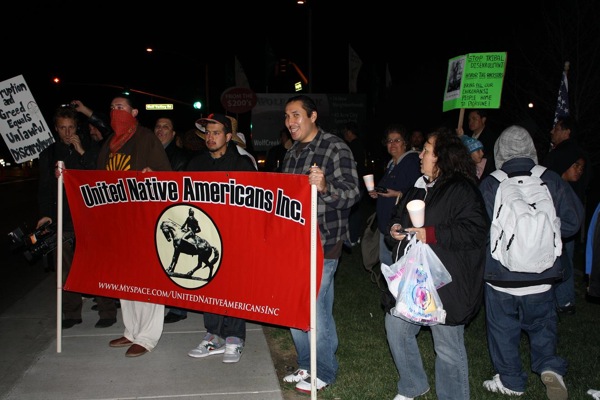
With rampant classism amongst the Indigenous people, resulting from the greed generated by the gaming industry, casino owners on tribal councils feel that it is necessary to strip the citizenship of certain tribal members, effectively deciding who is and who isn't Indian. One of the main reasons this is coming up now is because these leaders controlling our tribal nations today are sellouts, said Quanah Brightman, VP of United Native Americans. We have had illegal occupation over here [in the United States] for 500 years but no one cares because of these casinos. The people who control most of the money aren't even Native American!

As more and more tribe members are disenrolled and disenfranchised, the Indian movement to preserve what's left of Indian sacred sites is divided and ultimately weakened.

On February 5, 2009, United Native Americans will demonstrate in at the Capital in Sacramento, CA. We want to give platform to the Indian movement, for our demonstration to call to thousands of people nationwide who have been disenfranchised, disenrolled, and hurt by our leaders who have basically sold us out. We want to expose them for what they are and we want to put an end to disenrollment. We want to build our tribal colleges and invest in our healthcare education and our general well-being, Brightman said in closing.

Tags

The Day White People Turned Into People of Color

09/24/2021 - 09:45 by Anonymous (not verified)
Original Author
root
Original Body

by RWS

Uncle Anthony always said funny things. When he coughed he coughed up words, names, dates and visions, some of which were wrong but somehow always right. Uncle Ant is my father's younger brother. Dad named me after him. Uncle Anthony is fearless, never afraid to say what's on his mind aloud for anybody to hear. I wish I were fearless.

Uncle Ant, tell me that story

He had a thousand stories, some untold. He had a way of getting names wrong but in his unintentional wrongness made the names better, gave the mundane some spice, the murderer a shard of laughter. He once related to me a story about a man responsible for the deaths of millions of people in Southeast Asia. He was the top dog in the country's ruling party. What's his name? I asked my uncle.

"Pot Pie"

"Pot who?"

"Pot Pie. That cat slaughtered millions of folks, a real son of a bitch. They even did a movie about him. I think was called "A killing in the cane fields" or something like that".

I sit as my uncle described the torture, the suffering. His eyes dampened in the dark glow of his living room. He shook his head and poured a drink. I sat near his conga drum near the wall. He'd just gotten it out of the pawnshop. It ached for my uncle's touch. My uncle poured brandy into a glass, making the ice crackle and melt. As he spoke my internal voice started a monologue:

No Uncle Ant, the man's name wasn't Pot Pie, it was Pol Pot. And the movie was called, "The Killing Fields", there wasn't any reference to sugar cane in the title. You always get the names wrong--always. Oh no? Remember Saddam Hussein, when he got captured? You phoned me in the middle of the night, your voice wrought with urgency, as if a relative had just committed suicide. You said, "Man, they just caught Sadat! Found him in a rat hole under the ground. The Americans got his ass now". I thought to myself, there you go again, butchering the names; it's not Sadat, it's Saddam. Sadat was the president of Egypt who was assassinated, shot dead through 14 layers of security. He's been dead almost 30 years, remember?

Uncle Ant sits next to me. He still looks young, like he did in the 70's. The dim light falls upon his skin, the color of sweet coffee. His eyes are small and see the smallest things. He never ran from a fight, or a mirror. I look around the room. Pictures of black and brown people blanket the walls. Everywhere you look there is a face in a picture. There is a picture of Jesus on the wall. He's black too.

"Come on Uncle Ant tell me that story again"

He puts down his glass.
"Ok, this is what happened. I was about 25 or 26. It was 1968 or 69. Anyway, I was in my prime, solid. I had 16-inch arms, narrow waist. I was in shape, weighed 135. I could move too. When I was a kid I used to knock dudes out twice my size. Bing! I'd lay 'em out with either hand, lay 'em flat out. One time I got into a hassle with this motorcycle dude, some kind of Hells Angel. He cuts ahead of me in the line at the liquor store. I was polite. I said, excuse me but I was here before you. The guy just smiled and put his beer on the counter."

"What did you do?"

"I lit him up. It was a beautiful right hand to the jaw. He flew across the counter. That was the way I was back then. I grew up with black and brown warriors--blacks and Filipinos back in the 50's and 60's. Anyway, after I knocked that guy out I went out to the park by the lake. I was never into drugs, you know, not heavily anyway. My friend Dave gave me some LSD, some acid you know. He told me it would give me wisdom if I took it, that it would open up my mind, some kind of bullshit like that. So, I dropped that acid, put it on my tongue. I'm sitting there looking out at the lake and all of is peaceful when things start breathing."

"Breathing?"

"Yeah man, the leaves were breathing. I could see the cells of the leaves and the liquid pulsating like blood. I said, damn what's this all about? I looked at the ground and it was covered in diamonds and gold. It was beautiful like some kind of palace. I was just looking at it all, going with it. Didn't feel like knocking anybody out either. I just felt love, you know, the way you're supposed to feel. The air was nice and cool like I could drink it. I got up and started walking."

"What happened then?"

"I felt like a king walking on golden streets heading home. I walked for a few minutes when I saw a black man and an Asian lady. They looked normal, the way a black man and an Asian lady should look. Then I saw a white man and I almost shit my pants."

"What did the white man look like?"

"He looked like a clown! He had a face that was red, white, yellow, blue. He had a rainbow colored wig on his head. I started laughing. I kept walking and I kept seeing more white people. They all looked like clowns out of the circus, their heads looked like balloons, one of the heads even popped! I'd stop and look at them and laugh. They looked at me like I was crazy. I even saw a cop. His face looked like one of those droopy clowns of the 1950's. I looked at him and I couldn't stop laughing. The cop looked at me hard. It's not a crime to laugh. He wanted to beat me, I could tell. I've survived that in the streets, you know. I keep walking and stop by the liquor store. There's this white dude who works at the register, a chickenshit kind of racist, always looking at me funny but he gives me credit so he ain't all bad. That dude looked like a clown too! I never laughed so hard in my life. The man just looked at me and asked me if I was high on drugs. I was high on life but I didn't bother telling him that."

"What happened after that?"

"I went home. I got to the bathroom and looked in the mirror. I wasn't no clown, that's for damn sure. That was a long time ago, I can't believe how long it's been, thirty years? Clowns come in all colors. I've been around them all my life, the bosses especially. All clowns. I never touched LSD since. You don't need no LSD to see clowns all over. That was the last time I ever saw gold in the street."

Uncle Anthony and I sit in silence for a while looking at all the black and brown people on the wall. Finally he breaks his silence.

You know, I found God--I mean, he found me. He talks to me. It was never really about color, man. When you die do you think God's going to ask you what color you were down here on earth?

Uncle Anthony looks at the pictures on the wall then at me. The ice in my glass has melted. My uncle gets up and grabs his conga drum. He takes a sip of brandy. He tells another story. With his hands this time. And again I listen.

Tags

Up Against the Wall: MotherF**cker

09/24/2021 - 09:45 by Anonymous (not verified)
Original Author
root
Original Body

A book by Osha Neumann

by Phil Adams/PNN

Up Against the Wall Motherfucker is the story of how a man made the transformation of privileged Jewish college student attending Columbia University to a civil rights attorney working in South Berkeley and all the birth pangs that go with it. Most of story is concentrated on Osha's days as a "MotherF*cker" living in slums of New York in the 60's fighting for ideals that nobody had a complete grasp of yet. The honesty with which Osha writes about his feelings and beliefs at that time is truly inspiring. It was obviously a confusing time not only for himself but for the country in general, as it seemed the whole nation was trying to figure out which way to go. I think Osha did a good job capturing the feeling and spirit of those days.

This book does have a lot to teach younger activists just stepping into the game. The whole reason people get involved with social justice and activism is because they sense some type of inequality in the social system that we live in. Those emotions that come with that can easily be morphed into anger and rage. What Osha did in Up Against the Wall Motherf**ker was he told his story on how he dealt with those feelings and how he matured and got over them. He also acknowledges how much all of those Motherfuckers who survived "sold out"and settled down. Over all the book is brilliant and how honest Osha is about conveying his emotions at the time is truly inspiring.

However, Osha does acknowledge the immaturity and naivety of the 60's revolutionary thought process. For all the wealth of knowledge and righteousness these young revolutionaries had the immaturity in the way they expressed it isolated them from the society they were trying to liberate, eventually causing the downfall of the Motherfuckers.

The mark of the immature man is that he wants to die nobly for a cause, while the mark of a mature man is that he wants to live humbly for one
-William Stekel (Austrian Psychoanalyst 1868-1940)

I had problems with this myself. Originally when reading Up Against the Wall Motherfucker I felt like I identified a lot with Osha's younger days. I understand the rage at the injustice of our social system and the need to destroy fallacies that shackle the minds of people, whether physically or through language. In fact, he was about two years older than I am now. I think it's natural that young men who feel inequality want to attack and physically fight those who facilitate the injustice. The thing is the majority of the world is not young men; the world includes our elders, women, and children who don't identify as much with these feelings and who just want to live peacefully. So through acts of physical violence we are in fact exposing those who should be protected to danger. Violence may sometimes be necessary, just because you play fair doesn't mean others do, but trying to prove an intellectual argument through violence makes you a fascist yourself.

However Up Against the Wall Motherfucker was not about a bunch of violent hippies running around the lower east side. The Motherfuckers did a lot of valid revolutionary actions. Such as the take over of the Bill Graham's Fillmore East amphitheatre in response to the gentrification of the community:

Discarded sandwiches, cigarette butts, cans and bottles littered the carpets. Much wine was drunk, much dope was smoked. The program, such as it was, proceeded amidst a chorus of boasts, threats, brags and rambling fantasies shouted out from every corner of the auditorium. Bill Graham's green-shirted ushers stood by, attempting to make themselves inconspicuous, utterly powerless to control the magnificent chaos of the event.
-Osha Neumann "Up Against the Wall Motherfucker"

I don't think activism has changed much through the years. In the long view we are all people and we all have similar emotions and thought processes. Up Against the Wall Motherfucker is basically Osha's autobiography and how he dealt with the inequality he saw in the society we live in. It's the story of how a young hippie matured and became a civil rights attorney and true revolutionary

Tags

Biggie,, Biggie, can't you see....?

09/24/2021 - 09:45 by Anonymous (not verified)
Original Author
root
Original Body

ReVieWsforTheReVolUtion reviews Notorius

by Marlon Crump

"Biggie Biggie Biggie can't you see."

"Sometimes your words just hypnotize me."

"And I just love your flashy ways."

"Guess that's why they broke, and you're so paid.
"

(Lyrics from legendary rapper, Christopher Wallace a.k.a, The Notorious B.I.G in his hit single "Hypnotize" from his 1997 album, "Life After Death."

The mid-1990s, found the entire rap and hip hop world being divided between the fame, rivalry, and media exploitation(s) of two leading legendary rap artists on two different coasts, with two rap names, two death similarities, both with one youth group of proteges, with one goal in mind:

Making it big. (No pun intended.)

They accomplished this goal (even after their untimely deaths.) by using their vibrant verbal ability into the art of rap.

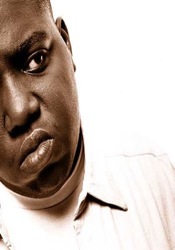
One of those legendary rap artists was Christopher Wallace, a.k.a "Notorious B.I.G" also known as "Biggie Smalls." On Friday January 16th, 2009 found hip hop fans (including myself) storming to movie theaters, nationwide to catch the motion picture film premiere of "Notorious."

Notorious is about the life of Christopher Wallace and his road to becoming the legendary rapper, "Notorious B.I.G" a.k.a "Biggie Smalls."

It briefly narrates his childhood experience, his dis-interest from having any further interests of high school, his open arms to the drug dealing, the life leisures that motivated him, running from the common cop on the block, brief incarcerations, bearing a daughter, marriage, his ultimate rise to the top of rap fame in the rap game (industry), until his fall from grace into unknown gunfire, are all wrapped up into this film.

Violetta Wallace, (mother of Biggie Smalls) and Sean "Puff Daddy" Combs (founder of Bad Boy Records.) helped produced "Notorious" during its October 2007 casting call for the movie production.

"Do or die Bedsty."

Bedford-Stuyvesant is the section of Brooklyn, New York where Christopher Wallace (played by Jamal Woolard, a real life Brooklyn based rapper.) was born and raised. My ears snatched these words, as they boomed into movie audience, alongside of the sound quality of "surround sound" that deafened people's ears, in addition.

The movie begins with Biggie's death, on March 9th, 1997. Biggie, his friends, and other artists of the record company called Bad Boy, are planning to attend an after-party hosted by Vibe Magazine and Qwest Records, in Los Angeles. While the sounds of their happiness could be heard distinctively as they drive along an intersection, the sound of a car pulling up to Biggie's, with a gun, a single shot, then Biggie's head jerking sideways were heard up close.

Woolard narrates throughout the entire film, of his character portrayal's life story, beginning with Wallace's childhood, and the cruel comments made by a couple of girls at him because of his large weight size and unattractive looks. Though saddened by these remarks, Young Christopher Wallace (played by the actual real Christopher Wallace Jr, Biggie Smalls son.) turns his attention toward writing rap lyrics on his notepad, and practices rapping the lyrics, aloud.

"$100, is that all he's worth to you?" scowls Violetta Wallace, in a scene (played by actress, Angela Basset) to the father of their son. After the father leaves, Miss Wallace comforts Christopher and assures him that she would take care of him, no matter what.

The movie accelerates into scenes where Christopher longs for the finer things in life, as he began to view the world around him. Young men like him were wearing expensive clothing, coats, jewelry, shoes, etc, immediately enticed him into wanting to make big dollars, which found him on the neighborhood block selling drugs.

He ignores the pleas/warnings/face slaps from his mother to stop his criminal activity in the streets. In school, Christopher solves a seemingly-difficult algebra math problem, at the surprise of his teacher, then clowns him when he does a math problem of his own, on the blackboard.

After Christopher does a comparison between the difference between what he, a professional worker and than the other would make on their salary; Christopher subtracts the problem and gave his sarcastic thought to the answer: "I'd be making $4,000 more than his dumbass!" The classroom erupts in laughter, while the teacher erupted with anger telling Christopher to leave.

When Christopher gets busted, his mother refuses to bail him out of jail. Along with administering "tough love" she asks him to recite the Bible verse, "Yay though I walk through the shadow of death......" Those words seemed to echo at Christopher, causing him to read more verses to the Bible, as well as commit to improvements towards writing down his lyric skills as he lay in his jail cell.

Christopher finds himself in a rap confrontation competition with a well-known neighborhood rapper. Proving that he was worthy of being the future "Greatest Rapper of all time" Christopher's words swiftly spit out like rapid ammo from an AK-47, resulting in his opponent's rap beat defeat much to the delight of the onlookers on the street.

After a second arrest occurrence for illegal possession of a firearm, Christopher is arrested along with his friend, D-Roc. D-Roc takes the blame for Christopher because he sees his ability to one day become successful. "If you make it, we ALL make it!"

Notorious shows the women in Biggie's life. Jan, mother of Christopher's first child, T'yanna his sexual relationship and verbal assaults to rapper and female vocal artist of Bad Boy Records, Lil Kim (played by Naturi Naughton), and his marriage to R&B singer Faith Evans.

"Don't chase the paper, chase the dream!"
(Sean "Puff Daddy" Combs to Biggie."

Notorious mildly shows the intimate relationship between Christopher Wallace and Sean "Puff Daddy" Combs (played by Derek Luke). Their first encounter begins with a bit of uncertainty because Combs is concerned about Christopher's "steady income", and how he gets it.

Despite the barriers that gets thrown in their face, such as Combs getting fired from Uptown Records A&R, Christopher's mom diagnosed with breast cancer, and his depression; they both finally make the big time after Combs establishes his own record label, which came to be Bad Boy Records, along with the big success of Biggie's "Ready to Die" album, where he quickly shot to the top of the music charts, and appeared on many big named magazines publications.

It is here where Christopher Wallace truly becomes the Notorious B.I.G, a.k.a Biggie Smalls to the world.

As I continued watching the film, the most anticipated scene I awaited in Notorious arrived: Biggie Smalls and his friendship-turned-rivalry with another legendary rapper, Tupac Shakur!

I think that it was here when I believe people's excitement began to rise onto movie theaters everywhere, and not just in the movie theater that I was in, in anticipation of this film's depiction of the feud between these legendary rap artists that fueled the"East Coast vs West Coast" rap war phenomenon.

Those that might have been sleeping, going back and forth to the bathroom, or making out with their girlfriend became immediately attentive in this scene and the ones that followed, throughout the film.

Even just from the film's depiction of Biggie and Pac's relationship and rivalries on the big screen, raised some emotions for survivors, members, and observers of the "East Coast vs West Coast" rap war, which died (or at least died) down down when its rap lyric leaders died.

Tupac Shakur a.k.a 2Pac (played by Anthony Mackie) is already well-known in the rap and movie industry. For a few short scenes, and occasions, Shakur and Biggie talk about how much admirations they have for each others success. It was almost hard to believe how these two rap titans would become mortal enemies.

Although Tupac believed and contended even to his death that Biggie and Puff Daddy had prior knowledge as to the information of the man that robbed and shot him, as he entered the lobby of Quad Recording Studios, in Manhattan, New York; Biggie and Puffy always denied Pac's accusations.

From the "Notorious" version of that event, Biggie questions Tupac of how well he knew of the man that was hanging around him, who wore army fatigue. Tupac said he was cool, but Biggie felt otherwise.

I felt the surround sound in the movie grow louder indicating something intense was getting ready to happen in the next scene, where Pac was shot in the 1994 New York robbery shooting.

Lil Cease, Biggie's cousin (member of Bad Boy's Junior M.A.F.I.A and Biggie's protege rap youth group.) happily greets Pac from the rooftops, and Pac returns the same love.

The scenes of Lil Cease going back downstairs via elevator, hearing shots ring out, having a gun and and an angry voice instructing him to get back on the elevator, Biggie being informed of the commotion by Lil Cease, Biggie grabbing his gun to investigate, N.Y.P.D Police members appear brandishing their own firearms, became the emotional embodiment for everyone worldwide that loved Tupac in what took place next.

"Which one of ya'll motherf@#%% shot me?! Ya'll motherf!@# set me up!!" Tupac screams, as he struggled from his bullet-wounds to get to his feet, and as he struggled to light his cigarette in front of a crowd of onlookers. Puffy comes to his aid, but Pac screams at him to get away from him.

It was at this moment where the rap war of "East Coast vs West Coast"is born. One thing that I noticed from this entire situation was that corporate mainstream media IMMEDIATELY seized the advantage to perpetuate the so-called "Black on Black." (A derogatory term by media in defining the homicidal deaths between young African Descent men.)

Rather than give exposure to the onetime friendship of these two talented rap artists and performers; corporate media hyped, elevated, and exploited the rivalry to further encourage even more violence in communities of color, by a way of competition.

Media furthermore blatantly refused to view and acknowledge them as two multi-talented artists with a feud, to justify its negative definition of rap/hip hop as being nothing more than "gangsta rap" in their campaign to destroy a cultural art.

From that time on, from the 1994 Tupac shooting, his release from jail on a sexual assault conviction after being bailed out by Death Row Records co-founder, Marian "Suge" Knight (played by Sean Ringgold), Pac and Biggie were verbally vicious at each other throats, by ways of hit song singles, music events, and even television onstage appearances. (One of those was the 1995 Source Awards.)

"So I f@#$$ your bitch
You fat mutha-@@#$ {Take Money}

West Side

Bad Boy Killers {Take Money}

You know who the realist is
Ni@@# we bring it to {Take Money}

[ha ha, that's alright]"

?

Lyrics from 2Pac's hit single, "Hit Em Up!" This song attacks Biggie, and Bad Boy. Pac boasts that he had a sexual intimate encounter with Biggie's wife, Faith Evans.

"Who shot ya?"

West coast mother@#$s...

West coast mother@#$%s... hah!

As we proceed, to give you what you need

As we proceed
to give you what you need

Get live mother@#$%s

9 to 5 mother!@#$#$s

Get money mother@#$%s"

Lyrics from hit single by Biggie Smalls, "Who shot ya?" from his 1994 album, "Ready to Die." 2Pac, Suge Knight, and many fans believe this was a subliminal diss (attack) by Biggie following the 1994 New York shooting, but Biggie and Puffy deny these allegations.

Notorious began to come to a close with the shooting deaths of 2Pac on September 7th, 1996 and the death of Biggie Smalls, six months later on March 9th, 1997. Biggie finds hardship in dealing with the shocking death of 2Pac, his dying relationship with his friend, Lil Kim and wife Faith Evans.

"I'm going, going.

Back, back

to Cali, Cali."

Lyrics From the Biggie Smalls hit single, "Going back to Cali" off of his 1997 album, "Life After Death."

Just the way "Notorious" started, is the way it ended. Though Biggie found himself in a car accident, life flashbacks, telling his daughter to never let a man disrespect her by calling her a "bitch" or his ignoring the constant death threats he received, or the pleas from his own mother to not to go to Los Angeles; Biggie was determined to move forward with his rap career.

Biggie says "We're in L.A, I want to give it all back, and "I felt that on this night, God was giving me a clean slate."All I could hear was that same surround sound level quality in the movie that alerted you when something bad was going to happened.

In the remarkable similar scenario as his hip hop rival 2Pac had encountered just six months before, Biggie is tragically felled by bullets, unknown, probably never even hearing the first shot.

All could be heard next, is the distinct yells, pleas, and cries for help as his friends of Bad Boy rush him to a nearby hospital, and the sound of his signature dark brimmed top hat hitting that dark deserted intersection of L.A.

After Puff Daddy asks Violetta Wallace if there was anything he could ever do for her during Biggie's funeral, her eyes met his, still clouded with her tears.

"I just want to take my son home."

In that, she returned his body to his birthplace where she and her son were quickly greeted with a hero's welcome. The sounds of "Hypnotize" could be heard among the deafening cheers of the massive fans that suffocated her and her son, Biggie Smalls.

Notorious is not only just a film about a legendary rapper, but it is also a film that exposes struggles for every young man of color everywhere to climb out of poverty, and many wanting to be rich.

It reveals their struggles to be seen and heard while trying to earn a shot in the hip hop spotlight, the extra-barriers and hurdles thrown their way, their combat against the coverages perpetuated by media's racist stereotypes, their engaging or resisting temptations that will corrupt their careers, and their prayer to Almighty God that they live to continue on with their work.

Tags