Story Archives

Exactly Wrong

09/24/2021 - 10:54 by Anonymous (not verified)
Original Author
root
Original Body

An essay on Educational Inequities, Art and Access

by Summer Brenner

These days "exactly wrong" is an expression I employ way too often. But it has nothing to do with spatial dyslexia. It refers to policies that are profoundly consequential. They are not mistakes or accidents. They do not occur from entropy or indifference. On the contrary, they are precisely deliberated and financed -- and in my opinion, exactly wrong.

Here's an egregious example. President and Mrs. Bush entered Washington with education reform at the top of their agenda. From the beginning the logic of the No Child Left Behind Education Act (NCLB) was exactly wrong: reward schools that do well; penalize those that perform poorly.

The typical low-performing school in a low-income area lacks basic resources that only additional funding can rectify. Textbooks often have to be shared, and neither schools nor families can afford supplies. Underpaid teachers frequently use their own money in the classroom to buy necessities.

In one of the Bay Area's poorest neighborhoods, the local school district cannot fund school librarians. School libraries are closed; or hours highly restricted. The paltry art programs are funded through private grants. The schools are filled with students who speak English as a second language and require special tutors. Many children have illiterate or limited-English caretakers at home who can't help with homework or who work at night in the lowest-paying jobs. Under NCLB poor schools can only get poorer and poor children fall farther behind.

Recently, Santa Clara County (San Jose and environs) completed a "school readiness" inventory of nearly 20,000 public school kindergarten students: motor, social, and emotional development, communication and language usage, cognition and general knowledge, et al. The article states that household income is "more closely related to readiness scores than any other factor." (Dana Hall, "Ready or Not?" San Jose Mercury News, March 8,2005).

California just released rankings for its 8,329 public schools. Based on the Academic Performance Index (API) exams, the scores range from 200 to 1000 (or 1-10). A score of 800 (or 10) is considered "excellent," and real estate agents use these measurements to make their properties more attractive. Only 21.4% of all California schools achieved 800, slightly down from last year.

"As a general rule, a school's test-score success correlates to the family income of its student body. In Oakland, for example, where there is a high level of poverty, half of the 99 schools rank just 1. In Palo Alto, where family income is much higher, all but two of the 17 schools rank 10." (Nanette Asimov, San Francisco Chronicle, March 16, 2005).

Third grade is a watershed year: if a child does not perform at grade level in reading, it is predicted they will fail throughout their entire school career. Eight years old and already written off!

Schools and children are both penalized by NCLB for faring poorly. Under the former system, schools could set realistic goals for themselves; but NCLB requires that goals be met not only for the entire school but in various subset categories (according to ethnicity, income, etc.). If any of the categories fail to meet the standard, then the school is sanctioned (no matter how it's faring overall). If it continues to fail to meet these standards, sanctions increase and control of the school can fall to the state. There are no funds to mitigate the problems for these schools and their students, only bureaucratic impositions that demonstrate their failings.

Here's another shocker. California "graduates only 71% of its high school students -- not the 87% it claims"....and "just 50.2 percent of black ninth-grade boys received a diploma four years" after the study began (reported from the Harvard-based Civil Rights Project). The state Superintendent of Public Instruction (Jack O'Connell) "blamed the federal government for ordering California to change its method in 2003 to conform with the national No Child Left Behind Education Act. Under the national formula, California's graduation rate soared from 60.6 to 86.9 percent." (Nanette Asimov, San Francisco Chronicle March 24, 2005).

NCLB has made California's graduation rate look great on paper, erroneous or not. Fortunately, lawmakers are now questioning NCLB's effects. A bipartisan Congressional panel recently pronounced it "a flawed, convoluted and unconstitutional education reform initiative that has usurped state and local control of public schools" (Sam Dillon, "Report Faults Bush Initiative on Education," The New York Times, February 24, 2005).

What their indictment means for the future is uncertain, but the Bush solution for classroom accountability is exactly wrong.

*

Over the past few years, a coalition of elected officials and community groups (myself included) has worked to make bus fare either free or affordable to low-income youth who depend on public transit to get to school. While affluent school districts (few) may still hire buses (often subsidized by participating families), youth in many urban areas (across the country) have to pay to ride public transit to school.

No Child Left Behind takes on a different and literal meaning when you consider that some kids can't afford to get on the bus.

Picture this: low-income youth from a large, densely populated flatland (in Richmond, California) must ride two buses to reach a middle school in the distant hills. In these households there may be no car or family member available to drive kids to school. Nor is there always money to ride the bus.

You perhaps protest. Surely there's a jar of quarters lying around for bus fare. Take a single parent with four children and multiply the quarters on a daily basis. A monthly pass is designed to be more economical than paying for single rides. Currently, a monthly youth pass on AC Transit costs $15; San Francisco's MUNI $10; and San Jose's VTA $49. Now do the math. And check out the interview with Wu-Tang Klan's The RZA" ("Fresh Air," NPR, March 7, 2005). He grew up in New York City (one of eleven children) and estimates he missed 40 days of school a year, attributed in part to lack of funds.

In 2001 through the combined efforts of three elected officials (Aroner, Carson, Gioia), community groups, AC Transit, and public testimony, a two million dollar grant was awarded from the Metropolitan Transportation Commission to pilot a free bus pass program for low-income students in the East Bay (from Fremont to Richmond, including Oakland). Eligibility would be determined by the federally funded free/reduced lunch program. In the pilot, whoever qualified for the lunch program could qualify for a free bus pass.

At the public hearings, many teenagers testified about their plight: they might have money to get to school, but at noon they would have to choose between a $1 lunch or a bus ride home; the walk might be more than two miles; and the route traverse unfriendly, gang-infested neighborhoods. In addition, they not only needed bus fare for after-school activities but also after-school jobs. School counselors, teachers, district superintendents, and parents corroborated that at certain times of the month families had to make hard choices between groceries and bus fare.

School funds are calculated by the formulas of ADA (Average Daily Attendance); and schools are docked for student absences (even if it's an excused absence!). Here's the cycle: poor school districts can't afford to bus kids; poor families don't always have the means to insure their children get to school; when kids don't go to school everyday, the school loses ADA money and the kids lose learning opportunities; yet students are expected to achieve certain levels of academic proficiency; and when their test scores are substandard, their schools are sanctioned by NCLB.

In fall 2002, the free youth pass pilot program began. It met with the usual bureaucratic complications. However, at the end of the first year, over 25,000 middle and high school students carried a free bus pass.

However, the pilot program was grossly underfunded and although scheduled to continue a second year, AC Transit's finances could not support a free pass. Free rose to $15 a month for a pass. Hearings are currently underway to raise fares.

Surveys from an Oakland-based after-school program (Kids First) indicated that flexibility and access afforded by free bus passes were invaluable for low-income youth. Once the cost of fares rose, attendance in their program declined. A study from Transportation Studies (University of California-Berkeley) reported that although the free pass made no statistical difference in school attendance, a single year was insufficient time to draw conclusions.

Unfortunately, federal and state legal precedents do not require schools to provide transportation for their students to school or after-school programs (with the exception of "special needs"). Whilethe federal food programs may provide the only nutritious meal(s) a low-income child receives, there is no guarantee the child can get to school to get the lunch. Exactly wrong.

**

Let's turn to the spanking new renovation of the Museum of Modern Art in New York. Calculation of costs vary (from $425 million for reconstruction to $858 million for the capital fund). As John Updike observes, "Nothing in the new building is obtrusive, nothing is cheap. It feels breathless with unspared expense" (The New Yorker, November 14, 2004).

In "This New House" (NewYorkmetro.com), Alexandra Lange describes each floor of the renovated MOMA in detail. She writes, "Visitors will be greeted on the fifth floor by Rockefeller's [the owner] Paul Signac [the artist] portrait of Felix Feneon, collector critic, dealer....[Feneon was actually an anarchist and editor of radical journal; refer to David Sweetman’s Explosive Acts about art/anarchy at turn of the last century]....The painting, on loan for four months, brilliantly represents the nexus of art and money that is the basis of the modern and the Modern." [brackets – SB]

The view of the garden has also been enlarged and enhanced -- if you're inside the museum. Adrian Glover (for MSNBC) drools over the "indoor-outdoor spirit" where what could be more sublime than eating "diver scallop tartare while gazing upon Claes Oldenburg's Geometric Mouse."

Along with the expanded gallery space and sculpture garden, the price of admission has risen 60 percent to $20 per ticket. Protests and picketing have occurred over the entry fee.

When I was last in New York, shortly after the opening, I declined to visit the museum. I simply walked by the sculpture garden (excuse me, the Abby Aldrich Rockefeller Sculpture Garden) which I first visited at ten (my family stayed at the Dorset Hotel since sold as part of MOMA's expansion project).

From the sidewalk on West 54th Street, you can barely see a thing through the tight grates of the high metal fence. It conjures art prison and insures that no one (by god) will (accidentally or otherwise) have even a sliver of experience without paying for it. So much for a world-class, tax-exempt museum for the tax-paying denizens of a world-class city.

A few years ago I escorted a lovely gentleman to the Museum of Modern Art in San Francisco. He was 55 years old and had never visited a museum. An intelligent, curious, semi-literate adult (bus driver by profession) who at the time confessed to me: "I don't know how to go to a museum."

Was he interested in art? Why not? He looked at each painting, read each title, date, and artist's name, and offered his opinion on what he liked and didn't. If he lived in New York, he might have walked by the new MOMA and caught a glimpse of LaChaise or Moore or Oldenburg through a transparent fence. He might have wondered about process, form, materials, and motivation; his intellect and senses aroused and expanded.

In planning jargon that's called "public access," a shrunken vision of the Commons but nonetheless recognized as the most vital element of urban life. It's about an accidental encounter with the marvelous. Without it, need I say -- exactly wrong.

Tags

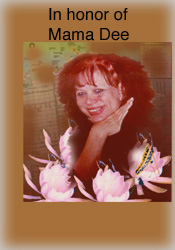
In Honor of Mama Dee- African/Taino/Roma Skolar for without whom there would be no me

09/24/2021 - 10:54 by Anonymous (not verified)
Original Author
Tiny
Original Body

The Passing of POOR Magazine's Mama Dee

The Passing of POOR Magazine's Mama Dee


by Tiny

As chips of ice fell from the sky, my Mama, Mama Dee, African/Boricua-Taino/Roma orphan from the streets of Philly, passed on her spirit journey

Mama Dee, co-editor of POOR Magazine, Grandmama to Tiburcio, disabled artist, conceptualist and story-teller.

Mama Dee, corporate media critic and independent media producer, singer, and dancer to all rhythms.

Mama Dee, torture victim, fighter for social justice for mamas, children, families and folk locally and globally.

Mama Dee, mother of tiny for without whom there would be no me�

On the snow-laced San Francisco night of March 10th - Mama Dee toiled on a segment - for PoorNewsNetwork's monthly radio show at POOR Magazine's office. At 7:19 PM she called me to say she was going home to the tenderloin apartment we have shared ever since we stopped being homeless not so many years ago. We laughed together about what she called Dick Cheny's new scam to sell Amerikkka to Halliburton (i.e. the "Dubai" issue)

That was the last time we spoke. She died suddenly without feeling any pain while in a catnap on our couch at 8:45 PM

Mama Dee has been suffering for the last four years from a heart condition that she believed stemmed from her days as a child who was starved and severely beaten in a series of brutal foster homes. She has been suffering for as long as I can remember with psychological disabilities and fear from those years.

As a very low-income single mother she struggled through welfare, low-wage jobs and motherhood to earn her masters degree in Social Work so she could help children like she had been. Battling with conventional forms of "treatment" and service provision, she became a champion of Black psychology and other forms of non-western treatment modalities for poor mothers, poor families and folks of color

In her role as co-editor of POOR Magazine, she co-authored the WORK issue which explored unrecognized forms of labor including panhandling and motherhood, the MOTHERS issue which looked at the experience of poor mothers locally and globally and she launched COURTWATCH, an extremely innovative media advocacy project which stemmed from her own personal hell with Child Protective Services and their bedfellows The Juvenile Dependency Court. Through this project she helped countless low and no-income families of color who had been abused by this very racist and classist system.

She was also one of the lead artists on the fascinating Poverty Hero Project at POOR which incorporated her love of literary art, visual art and advocacy as well as countless other media projects. But the one that she would want me to mention beyond all others was her hilarious children's book series; The Po' Cats- A coupla low-income cats talk back! - for voice that's never heard. Through the allegorical lens of two felines, Hands and Lester the reader gets a critique of issues such as indigenous colonization, orphanages, eldership and more.

As her sole caregiver since 12 years old, her daughter, her best friend and her collaborator I have supported her in every way I can. As her collaborator I have had the privilege of making art, performance, video, and poetry through her lens. As her partner in dance and song I have had the privilege of learning how to dance, sing and see people, life and community with, through and along-side her brilliant world view.

A creative artist and innovative thinker in death as in life it was her clear wish to not be buried in the ground. Coming from a long line of poor women who didn't even have the money to buy a burial plot, it was her wish to be strapped to the top of a car and driven around for at least a year. Barring that option (which I did explore) and on the advice of close friends and fellow artists, Gerry A., Robin S., and Barry S, Mama Dee was cremated and her urn was strapped to the car in an interactive life-art installation.

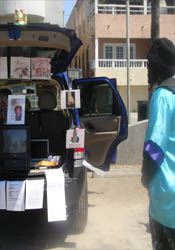
The installation included a multi-media shrine in her honor with pictures, videos and mediaInAction performances that she created over the years. The installation departed on a road trip at 6:00pm on Friday, March 24th from UN Plaza in San Francisco - this was the the official Bay Area ceremony in honor of Dee.

Excerpts from the ceremony can be seen on channel 29's news broadcast throughout the months of May and June.

To hear some of Dee's incisive art and political commentary on issues of race, class, culture and consciousness as well as a poetic tribute from her POOR Magazine family you can listen to PoorNewsNetwork's March 20th radio broadcast on KPFA's morning show which you can access on-line any time by going to www.kpfa.org and clicking on the morning show for March 20th

Tags

its beauty wot killed the beast

09/24/2021 - 10:54 by Anonymous (not verified)
Original Author
root
Original Body

STORIES of Animal Resistance-

by Dee

Gollum the lazy vulture who had to go to flying school

By Stewart Payne

Gollum the idle vulture had no reason to fly. His meals were delivered by hand, so for four years he has simply furled his mighty 6ft wings�and hopped everywhere.

Chocks away: but Gollum still cannot get off the ground

Until yesterday, that is. In what might seem a rather dramatic attempt to make him to do what should have come naturally, his owner took him to a vertical wind tunnel in the hope that a powerful blast of air might awaken a dormant instinct.

Gollum, an African white-backed vulture born in captivity, at first just perched impassively on his owner's outstretched arm. But then some primeval call of the wild reached him. Gollum outstretched his wings and�well, that was about it.
Gollum

We have lift-off: Gollum is introduced to the wind tunnel

But for Steve Eales it was a breakthrough. Having tried everything he could think of to get his pet to fly, the wind tunnel was the last-ditch attempt. "He took his entire weight off my arm," he said. "I had to keep hold for his safety, but he was as close to soaring as you can get."

Mr Eales hopes that Gollum's brief flying lesson may be sufficient to encourage him to take to the wing without the need for a second visit to the Airkix wind tunnel at Milton Keynes, Bucks, which is used to train sky divers.

Mr Eales, 43, who runs Hawk on the Wild Side in Milton Keynes, which gives people a chance to get close to birds of prey, said: "Gollum simply never learnt to fly. He knows where his tea is coming from each day and clearly just thinks, 'What do I need to go up there for?' "

Tags

The Death of Small Town America

09/24/2021 - 10:54 by Anonymous (not verified)
Original Author
root
Original Body

Reflections on the journey to Atlanta

by Bruce Allison

I started my 3 day journey on the Greyhound bus early Sunday afternoon. I was taking the bus from San Francisco to get to the US Social Forum in Atlanta with Seniors Organizing Seniors. Along the way, I noticed the death of small town America.

There are very few family farms left in middle America. Farms have died. They have been killed by the corporations. Main St. America, too is dead. There were vacant houses and bulidings for miles. Signs everywhere read for rent or sale.

This is due to the building of big box stores like Wal-Mart and Home Depot. Their low-cost and imported products are locking people into poverty all across America. Low pay and non grossing jobs as greeters and clerks at these big box stores also force people to stay in positions of poverty with limited education. These folks are also prohibited from earning livable wages and actions such as striking that might lead to livable wages. This is how the serf class has been and continues to be created in America.

The death of middle America has also been caused by big corporate farms. You can see this clearly in Texas. These large corporate farms pay low wages to employees and often use prisoners as laborers.

The death of the working class in middle America signals the rebirth of the middle ages where the chamber of commerce rules.

Tags

This School Must NOT be moved

09/24/2021 - 10:54 by Anonymous (not verified)
Original Author
root
Original Body

African descendent students, parents and families of the Fill-no-mo the Fillmore or Western Addition neighborhood are facing more displacement and removal. This time its from the San Francisco School Board.

by Dee and tiny

"I am a member of the get-along club," the excited voice of 17-year-old Tamicka Baker, blasted through the phone. POOR staff had been referred to this powerful young woman by her mother, Anitra Baker, mentor, teacher and parent liaison at John Swett Elementary School.

John Swett is one of the schools slated for closure and then subsequent merger with John Muir Elementary School by a 4-3 San Francisco School Board vote. For the dedicated, involved and engaged family and friends who make up the innovative, multi-cultural, multi-generational mix that is John Swett, this decision came as more than a blow; this is the devastation of a community.

There are other words that come to mind for the closure of this majority African descendent school, located at ground zero of the Fill-no-mo�, from which 5,000 Black families and 200 Black-owned businesses were removed not so many years ago under the myth of �redevelopment� � more accurately described with words like Diaspora and discrimination and destruction.

As parent and grandparent of a 2-and-a-half-year-old boy, my worldview and that of Dee, my mother and co-editor of POOR, are informed by Afro-centric values, which means we are already feeling the struggle to be involved and stay involved in the lives and education of children once they enter a Euro-centric public school system. A system based on Western values of separation and independence, which inherently does not respect the direct involvement of parents and grandparents in the learning, teaching and mentoring process of a child while he or she is on school property is not based on respect for elders and interdependence. John Swett Elementary School is different � very different.

�We are on campus with the kids as paid parent liaisons,� said Anitra Baker. �I teach them dance; my husband, Dawayne, is a coach, yard monitor and mentor. And then we open our home to kids on the weekend to help them with their homework. The school is an extension of our home.�

After Dee read about the slated closure of the amazing John Swett, she was stunned. John Swett, Dee realized, was in fact an example of the Afro-centric �village� in action, complete with eldership and interdependence of families, children, teachers and community. The �village� that everyone refers to but never really understands � a village that is taking care of its people, its children, its families � this village is about to be dismantled.

�The older girls who graduated (from John Swett) act as mentors and tutors to the younger kids,� the dynamic Anitra Baker told Dee. Anitra and Dawayne Baker have seven children who are either attending school there or are alumni of the school and continue to act as mentors to the younger children in the Get Along Club, the Little Sisters with Soul and/or the choir that Anitra leads on campus.

�Eldership,� explained Dr. Wade Nobles in �The Nature of Mama,� an interview in POOR Magazine Vol. 4, �says that everyone older than you is responsible for your well-being and welfare. So it makes no difference whether it�s your 16-year-old cousin and you are 9. That person is responsible for looking out for you, for teaching, for guiding. Everyone in the village is responsible for making sure that the next generation advances to the next higher level, to a person of good character.�

�Closing this school is a crime,� declared San Francisco School Board member Mark Sanchez. In our search for answers about the closure vote, we sought out Mark, who, along with Sara Lipson and Eric Mar, voted to keep Swett open.

Mark outlined the stated reasons for the proposed merger of Muir and Swett elementary schools: �First, it�s overall budget cuts and the loss of several thousand students from the system. Second, it�s a proximity issue. There are two schools in the Western Addition: John Swett, a somewhat small school which has an 81 percent enrollment, versus John Muir, which is a large school which is under-enrolled with 55 percent capacity.�

Mark went on to describe another more problematic, highly controversial use for the John Swett School: Its proximity to San Francisco Unified School District headquarters makes it attractive for conversion to office space.

�If the proposed merger goes through, it would be very difficult to replicate the programs and teachers and community that exist now in John Swett. I know of at least one dynamic teacher who is not planning to move (to Muir),� Mark added.

Tragically �lost in the merger� would be Swett�s extremely innovative arts-based curriculum, which, unlike John Muir�s, is not based on the No Child Left (Alive) Behind scripted curriculum-inspired mandates that many conscious teachers and parents find harmful to students.

�Mergers are not the only way to deal with these kinds of issues. For example, Ortega and Sheridan were not merged, because they are going to pursue becoming K-8 schools,� Mark concluded. �A sustained amount of protest can urge the board to bring the school up for discussion.�

Looking further into the kinds of sloppy and uncaring education policy that could allow the devastating closure of Swett Elementary, I spoke to Susan Sandler, executive director of Justice Matters, a policy institute that works on racial justice in education,

�Schools have social capital. They can be communities where people build up trust for each other over years of knowing each other. They may be places where people have ownership and passion for a project or program they created that makes it come alive.�

�John Swett,� Susan continued, �seems to have created an environment where Western Addition parents embrace the school and are contributing their time and offering its students their gifts of love, wisdom and talent. That kind of presence can make a huge difference in students� educational experience.�

Reflecting on Susan�s words, I was drawn back to the original conversation with Anitra and her daughter, Tamicka. Almost simultaneously, they�d both said, in reference to what they do and believe about their school, its students and families, �It�s all about the love.�

Community, do not let this school be moved! Get involved with the fight to keep it open.
Call the School Board at (415) 241-6427 and ask them to reconsider and discuss the merger of John Swett. To support the parents and teachers of John Swett, call Dawayne Baker at (415) 424-6515.

Tags

School Board Fails its Students!

09/24/2021 - 10:54 by Anonymous (not verified)
Original Author
root
Original Body

West Contra Costa County school board fails its low-income students of color by voting NO on a landmark alternative proposal to the California Exit Exam.

by Lisa Gray-Garcia/PNN

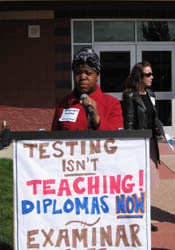
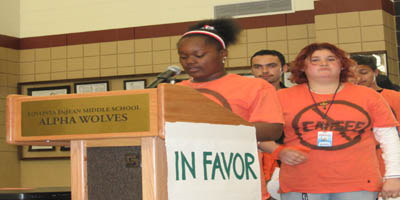
“Si Se Puede!” (Yes we CAN!) Caramel, honey, white and dark chocolate arms and multi-lingual voices rose in unison as they marched down the rain-slicked streets of Richmond and San Pablo toward a school board meeting deciding on a landmark challenge to the California High School Exit Exam (CAHSEE).

On Monday April 10th, the West Contra Costa Unified School District (WCCUSD) voted no on a proposal brought forth by school board member Dave Brown which would have acted as an alternative to the California High School Exit Exam (CAHSEE). The proposal included granting high school diplomas to students in the district who successfully completed all of their high school requirements as well as a “Senior Year Demonstration” even if they did not pass the much-maligned California High School Exit Examination (CAHSEE).

Hundreds of students, parents, teachers and advocates spoke in favor of the proposal in the two hour packed meeting of the board, while only a handful of mostly white administrators, businesspeople and residents of other parts of the county spoke in opposition.

School board member Karen Pfeifer also expressed opposition. "We are not a diploma mill. We don't just give them away," she lectured. "You earn them."

Notwithstanding Pfeifer’s comments directed at the students present, which were peppered with references to the students’ future lack of employability as “janitors and plumbers,” the Senior Year Demonstration includes a rigorous combination of portfolios, research and presentations

According to Multiple Measures Approaches to High School Graduation published by the School Redesign Network at Stanford University, alternatives such as the proposed demonstration are currently being enthusiastically used by several states such as Oregon, Vermont, Washington and Maine. The Stanford Study stated that rather than being detrimental to student learning, alternatives such as the Senior Year Demonstration encourages an ambitious range of thinking and performance skills in students who participate.

“Teaching is Not testing, “ said Olivia Araiza, program director from Justice Matters, a research and policy institute that works on creating racially just schools for low-income students of color.

Olivia continued, “The only thing we know for sure that the exit exam is doing is that it is creating a state-sanctioned underclass by denying hard working, smart students of color their diploma.”

The demographic backgrounds of the youth of West Contra Costa County who have not passed the CAHSEE mirror the overall demographics of students across the state that have not passed the test. Statewide, 19% of low-income students, 31% of English language learners, 18% Latino students, and 20% of African-American students have not passed the CAHSEE.

"I had to take a test to graduate,” said Al Kirkman, coach at Pinole Valley High. Kirkman’s shirt and legs matched, emanating a monochromatic sheen of whiteness into the dimly lit meeting room. "You (Karen Pfeifer) had to take a test to become a nurse, and you (Charles Ramsey) had to pass the bar to become a lawyer,” He concluded by saying that students who do not pass should be held back.

“I have completed all my classes, I got good grades, and yet I still can’t get a diploma,” said Trina Montgomery, 17, a high school student in the district.

“The Exit Exam is a distraction that takes us away from the crisis that exists in student learning, which is what we need to focus on before we institute more tests ,” said Rochelle Spence, parent of children in the district.

“This is not about abolishing the exit exam,” said Dave Brown in his closing arguments. “It’s about creating multiple measures so students can demonstrate proficiency,” he said. “This is about preventing a crime against our students and the constitution of the U.S. having precedence over the government violating their own laws.”

“We are hard-working students, we have earned our diplomas, this is not just,” said Richmond High School student Ronald Gaydan.

As the final vote was taken, there were several references made by Board members Karen Leong Fenton and Charles Ramsey to “abiding by the law” in regards to State Superintendent’s Jack O’Connell’s threat of legal action made to any school district that does not enforce the testing requirement.

The room became silent. Only the voices of politicians filled the thick air. ”The proposal fails 4 to 1.”

Simultaneously they stood. Brown and black eyes burning with the conviction of students who fight for their rights, who spend time every day doing homework, while also caring for their sisters and brothers, hermanos y hermanas, mothers and fathers, abuelitos y grandparents. Simultaneously they left the room.

Tags

Espiritu De Mama Dee - The Roadtrip

09/24/2021 - 10:54 by Anonymous (not verified)
Original Author
root
Original Body

Eldership, Ancestor Worship, Interactive Art, and a Very FunKy Roadtrip in honor of Mama Dee (Gray) of POOR Magazine; Poverty Scholar, Artist and Media Activist.

by tiny/PNN

Before Mama Dee,an African Puerto Rican and Irish orphan from the north side of Philadelphia, had passed, she told me that she never wanted to be buried in the ground, she, coming from a long line of poor women who didn’t even have money for a burial plot. In fact, in a post-modern hindu-cum-chrisburden-cum-live-art performance, my mama wanted her body to be attached to the top of our car and driven around for a year.

The struggle to come up with a ceremony/tribute that would please my mama’s spirit was crucial as I, like my mama, ascribe to and follow indigenous family values of interdependence and collectivity rather than western capitalist notions of separation and independence, and actively practice eldership, ancestor worship and ancestor veneration. These beliefs mean that it is very important that one listen to the wishes of your ancestors and follow their instructions, as their contentment in this life is as important as their contentment in the next life.

After discussing mummification with Po’ Poet and Poverty Scholar, ‘Auntie’ Jewnbug, and other options with a few of my mothers closest friends I was convinced that my mama’s spirit would be ok with cremation as long as her ashes would be taken on a lengthy road-trip laced with art, humor and wild-ness befitting my wild and crazy, hella ghetto, artist/activist mama. I asked a family friend/metal artist to create a kinetic sculpture which incorporated all the wonderfulness of my mama and the things she would want to take with her to the Other Side to place her ashes in and attach to the top of our car. This was the Lucky Po’Cats Urn.

With the Urn finished we had the official San Francisco road-trip send-off at UN Plaza On March 24th.

The Launch at UN Plaza

The rain pounded down on the red brick floor of an eerily quiet UN Plaza at 6:00 pm. Subscribers, Community Support Members, Conscious Politicians, Poverty Studies Interns, Po’ Poets and Poverty Scholars alike huddled under a drooping blue tarp slightly affixed to the lift-back door of the POOR Magazine Van.

As befitting Mama Dee – it was a multi-media interactive ceremony, including some video clips from her powerful MedinAction pieces, spoken word and poetic testimonies from several of Dee’s students and men tees as well as words of solidarity from POWER members, and Po’ Poets. The night concluded with a song sung by me and Tiburcio in honor of my rhythm, music and song making mama.

The next morning we traveled to Sacramento to visit one of my mama’s best friends; Gerry Ambrose a mama, grandmamma, poverty scholar and San Francisco gentrification survivor, and her several children and grandchildren.

Other than a strange encounter on the way back with my son, a friends's son and Chucky Cheeses Pizza Palace, it was an uneventful and peaceful trip.

Espiritu de Dee Road trip – Part 2- The Los Angeles Journey

{Bee gee’s Stayin’ Alive}

Well, you can tell by the way I use my walk,
I'm a woman's man, no time to talk.
Music loud and women warm.
I've been kicked around since I was born.
And now it's all right, it's O.K.
And you may look the other way.
We can try to understand
The New York Times' effect on man.
Whether you're a brother
Or whether you're a mother,
you’re stayin' alive, stayin' alive.
Feel the city breakin'
And ev'rybody shakin'
And we're stayin' alive, stayin' alive.
Ah, ha, ha, ha,
Stayin' alive.
Stayin' alive.

It had been raining for 40 days and 40 nights. Drops of icy water glided down the soft windshield. The fleshy rubber wipers caressed its surface.

If you only looked once the 4 foot tall golden lucky cat urn that held mama dees carefully wrapped cremated
remains seemed to be gazing down from its mount on top of the POOR Magazine van.

It was 9:00 am Friday, March 31st, Cesar Chavez day, and me, Dee’s daughter, and tiburcio, her grandson
and friends embarked on El Espiritu de Mama Dee Road trip.

But to tell the now story I need to tell the before story- which began many years ago when my homeless
Mama and I drove Beverly hillbilly’s style up from La
to San Francisco with all our belongings on the top of
our car.

The original drive up from LA took 7 days and 7 nights. I heard once that it took seven days and seven nights to create the world. So maybe me and my mom were really re-creating the world instead of just driving to the Bay Area from Los Angeles.

It was in this trip that the Dee and Tiny myth began, i.e. life imitating art imitating life, tragedy becoming reality, becoming performance, becoming art, or maybe just a really long miserable drive. My mother hated driving, even if she wasn't the actual driver, she just hated being in the car for more than two hours at any time.

And then because we really weren't sure of our destination, and we had no home and no clear prospect of where to go my mother would consider each and every corporate California freeway stop as a possible town to reside in. One such town was Pea soup Andersons

"I wonder what life here would be like", she proclaimed one day, her spoon wading through a green pile of green mush.

"Where?" I asked, shocked that she could be considering a motel known for its pea soup and pea soup accoutrements as an actual home, which is why we included pea soup Andersons as a stop on the Espiritu de Dee road trip- which is also when things started getting strange.

Whether you're a brother
Or whether you're a mother,
You're stayin' alive, stayin' alive.
Feel the city breakin'
And ev'rybody shakin'
And we're stayin' alive, stayin' alive.
Ah, ha, ha, ha,
Stayin' alive.
Stayin' alive.

After we pulled into the pea soup store/restaurant motel conglomerate and sat down to consume a pea filled lunch my son jumped out of his chair and ran to see some random thing in the dining room – in the process he bumped his head on a chair and began bleeding profusely from his forehead. I rushed him to the bathroom where a nurse just happened to be standing with her adult daughter who proceeded to create a butterfly bandage out of paper towels and saved my son from an emergency room visit. After we sort of recovered from our Carrie movie experience at the pea soup store– The lucky cat urn and us re-entered highway five.

Within minutes on the highway we heard a knocking coming from the roof..(pop popop pop pop pop!!!) We looked up and suddenly a piece of the very securely fastened urn had jumped off of the roof of the car and hopped into the freeways middle grassy lane.

Mama Dee did always want to see how it would be to live in pea soup Andersons…

Further Down Highway 5

120 miles later down highway 5 as we coasted out of the grapevine – again we heard a deep scary sounding knock – this time it was coming from the engine…( knock knock knock)

we barely made it off the freeway into a town called Valencia. It was 5:55 pm on a Friday and we were supposed to be arriving in LA in one hour for Mama Dee’s ceremony on Venice Beach. It didn’t look good. Within minutes we found out the car as someone said was ”toast” irreparable – useless-over - and that’s when we met Sal in the parking lot of WALMART. Sal is– short for Salvador, which means savior in Spanish, “Hey guys he said as he approached the car – do you need help?

For no good reason at all except that he knew we needed help – Sal agreed to drive us the 45 miles to LA in his car so we could carry out mama Dee’s ceremony with a rented car in La - we found out later that Sal was a user friendly coyote – helping families and friends over the border just cause he thought he should help as many people in the world as he could muster- Sal was the kind of direct service provider my mama Dee would have loved…

Due to our midnight arrival in LA That night’s ceremony was canceled. After much debating about what to do and whether to abort the whole project. I realized I had no will in this process and again consulted with many of my mamas friends in La. They urged us to keep on going.

So at midnight with the help of Sal we attached the lucky cat urn to a rented car and drove to Venice Beach.

The next morning the sun was shining. The first day of sun after so many days of rain. Shining in the morning glare, attached to a budget rent a car –the lucky cat urn pulled into the Venice Beach parking lot where me and my mother had lived, housed and un-housed, made art and community for many years of her life.

The moral of the story; always listen to your ancestors wishes. You see – the night of the 31st I had invited a close friend of mine that mama Dee had always clashed with because she didn’t respect her mother or her elders. This friend was unable to make the Saturday ceremony due to a scheduling conflict…

...And of course my mama did need to take a car with her into the next life… …

Stayin' alive.
Stayin' alive.
Ah, ha, ha, ha,
Stayin' alive.

{ Ancestor worship in some cultures seeks to honor the deeds, memories, and
sacrifice of the deceased. Much of the worship
includes visiting the deceased at their graves, making
offerings to the deceased to provide for their welfare
in the afterlife. For instance, a toothbrush, comb,
towel, slippers, and water are provided by the coffin
so that the deceased will be able to have these items
after they have died. Spirit money (also called Hell
Notes) is sometimes burned as an offering to ancestors for the afterlife. In many Asian funeral ceremonies a car is given to the deceased to “take to the to next life”.

The living may regard the ancestors as "guardian angels" to them, perhaps in protecting them from serious accidents, or guiding their path in life.

In Shinto belief, "Ancestorhood" is a state of being
that everyone can attain upon death.

Tags

Exit Exam Challenged!

09/24/2021 - 10:54 by Anonymous (not verified)
Original Author
root
Original Body

POOR Magazine Youth intern who didn’t pass the Exit Exam reviews the legal challenges that were recently decided on.

by Antonio William/PNN Youth in Media

"How can they talk about us standing on corners, using drugs, we are hard-working students trying to get an education," a Latina Richmond High School Student wiped tears from her eyes as she spoke into the corporate media lens. She was speaking outside a school board hearing in April on the California High School Exit Exam(CAHSEE).

Earlier this month two major legal challenges to the CAHSEE were heard and adjudicated on in California courts. The first one: Liliana Valenzuela, et al v. Jack O’Connell, which was fought by attorneys Arturo Gonzalez and Chris Young from Morrison and Foerster on the basis of the educational, due process and equal protection rights afforded to students under the California Constitution. We won this one. Alameda County Judge Robert Freedman decided on Friday May 11th to delay diploma denial for the class of 2006.

When issuing the injunction, Freedman said he was swayed by Gonzalez's argument that low-income of color students, English language learners in particular attend low-performing schools that do not prepare them adequately for the test.

Of the 46,700 seniors who have failed the test, 20,600 are designated as limited English learners and 28,300 are very lo-income. I am one of those 28,300 students.

We lost the second challenge. Brought on by Californians for Justice, represented by attorney John Afeldt from Public Advocates, It alleged that the California State Board of Education and State Superintendent of Public Instruction Jack O'Connell had violated a state education law which required them to study alternatives to the CAHSEE after initial administrations of the exam back in 2001 and 2002.

State education officials did not complete the study of alternatives
until March 2006, just a few months before graduation day and far too
late for the Legislature to have time to enact any alternatives in time
to benefit the class of 2006.

I am a 17 year High School Senior. I failed the Exit Exam. Due to the delay ruling of the first challenge I might have a chance to receive a diploma as I am in the class of 2006. But what about my younger brothers and sisters? This question brings me back to the April action in West Contra Cost County (WCCUSD).

The California High School exit Exam (CAHSEE) was being challenged by West Contra Costa School Board member, Dave Brown. The young woman I quoted and hundreds of other youth and community members who marched into the hearing that day were speaking to the media after the WCCUSD rejected a proposal which would have acted as an alternative to the California High School Exit Exam (CAHSEE).

Brown had worked for many weeks with members of the policy Institute, Justice Matters, who works on racial justice in education, as well as conscious youth activists from Youth Together, to create an alternative to the CAHSEE which included completing all of their high school requirements as well as presenting a “Senior Year Demonstration”.

According to Multiple Measures Approaches to High School Graduation published by the School Redesign Network at Stanford University, alternatives are currently being used by several states such as Oregon, Vermont, Washington and Maine. The Stanford Study stated that rather than being detrimental to student learning, alternatives such as the Senior Year Demonstration encourages an ambitious range of thinking and performance skills in students who participate.

So why can’t Jack O’Connell understand that? Or better yet why doesn’t Jack O’Connell listen to us, the students struggling with resource-poor, arts-poor and skilled- teacher poor schools. Struggling under endless test preps and no real teaching.

My editor, tiny, at POOR/PNN who also works as the Communications Director at Justice Matters encouraged me to watch, listen to and read all the Exit Exam coverage with a critical eye. Who is heard on this issue, and who is listened to, she queried, as those voices, as we have been taught at POOR, helps to frame the issue to society at large.

As I, a young African/Latino PoorNewsNetwork reporter watched the young Latina student of Richmond High School capture a corporate media minute in April and spit truth, I felt hope. As I, a young African/Latino high School student watched a young person of color question a stereotype to thousands of corporate media viewers, I felt possibilities. As I, a young brother of color who failed the exit exam watched resistance to the racist and classist Exit Exam. I didn’t feel like completely giving up. At least through the media lens, I felt like we were listened to. Maybe sometime in the future we will be heard.

Tags

The Day Robin Hood Kidnapped John Wayne

09/24/2021 - 10:54 by Anonymous (not verified)
Original Author
root
Original Body

Honoring Our Global Poverty Scholars, and Poverty Heroes...

The Veerappan and Rajkumar Story

by Janak Ramachandran/ PNN Community Journalist

On April 12, 2006, the man some have dubbed the John Wayne of South Indian cinema passed away. Rajkumar, whose given name is Muttaraj, was born April 24, 1929 in the small remote village town of Gajanur. Proud fellow villagers boast of the boy from the village, born in a dilapidated hut on the side of a dusty road, who grew to become a superstar. Encouraged by the example of his father, who was a dramatist, Muttaraj joined his father’s troupe, where he learned his initial skills as an actor and singer. He entered the film industry at a young age and, as Rajkumar (meaning Prince), starred in his first ‘big break’ film in 1954. Considered one of the most versatile actors in Indian cinema and with over 200 films to his credit, his character depictions ran the gamut from drama to action to comedy to romance and he had a penchant for choosing films with social messages addressing societal evils. Also an accomplished singer, Rajkumar won a national award for one of the many songs he sang in his films.

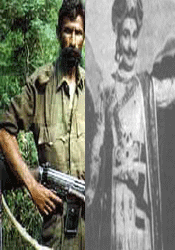
But fate had more in store for the self-titled Prince. Less than ten years back, Rajkumar decided he wanted to live the remainder of his life with his fellow villagers in Gajanur. Lauded not only for his superstar status but also for a personality given to simplicity, generosity, kind-heartedness, and peace-loving ways, his fellow denizens were happy to welcome him home. But, as India’s John Wayne returned to the new house built across the road from the hut where he was born, he was paid an uninvited visit by the man many of the villagers in the area praise as a modern day Robin Hood. Veerapan, known for sandalwood smuggling and poaching and hailing from the same village as Rajkumar, reportedly conveyed to Rajkumar’s wife, Parvathamma, “Please do not worry. We assure you we will never harm Rajkumar but we have some serious demands (of the government). We are compelled to use these means to make ourselves heard.” Veerapan then kidnapped Rajkumar.

When the state police chief was asked about the Robin Hood image of Veerapan and if the locals see him as a criminal, he retorted candidly, “…he is seen as a do-gooder. He helps the locals by paying for their marriages, renovating temples, helping poor people, getting a poor widow a square meal, and so on…” In the same breath, he continued that, “Everybody is afraid of him.” Since the villagers see themselves as aided by Veerapan’s actions, it seems unlikely that the ‘Everybody’ to which the state police chief refers includes them. More likely he means the wealthier interests and their governmental comrades who send the police to enforce those interests. Indeed, Veerapan has supposedly killed a number of police and other government officials in his pursuit of justice. In addition to his political motives on behalf of the poor in his area, Veerapan may be motivated by personal experience. His brother and sister both died in police custody.

So the day that Robin Hood kidnapped John Wayne, all of South India came to a standstill: neighborhood shops closed, distraught fans worried, and Bangalore, the heart of India’s Silicon Valley, ground to a halt for several days. After 108 days in captivity, Rajkumar was released by Veerapan when he was assured through negotiations that atrocities committed by government police and its Special Task Forces would be pursued and that efforts would be made to release those innocents detained under the Terrorist and Disruptive Activities Act. One of the negotiators for the team that included human rights activists and journalists opined, “Everybody knows how Veerapan became a big problem…the socio-economic factors played a major role in his rise.” Of the crimes attributed to Veerapan, he added, “Why do you accuse Veerapan alone? The guilty are living happily in our society. Why do you pardon them? What we want first is action against all those who…have committed atrocities on the poor villagers.” Detailing the evidence of 90 people in jail without access to trial, 60 women subjected to sexual assault, and more than 300 men handicapped by police torture, he called for action against those responsible in the government and concluded, “Action against Veerapan can be taken after that.”

For his part, Rajkumar, on his release, reported, “Veerapan did not harass me.” And in an earlier message, he declared, “I am being taken care of with great love and they are behaving with great trust.” When referencing that Veerapan and his group have a point of view, with which he agreed in many ways, Rajkumar stated, “There is actually much that we have to learn from them. Having lived with them like an elder brother to younger brothers, I have had a lot of opportunities to…understand them well. It’s my fate that I was abducted by Veerapan.”

And so it was that Robin Hood and John Wayne became brothers. Two men from the same village with very different life paths yet with a common devotion to the local poor who protected them. For those curious, Robin Hood Veerapan was eventually found dead with a bullet in his head—the police story of how he was captured and killed appears to contradict the circumstances of his death—and the evidence of the possibly execution style bullet in his head would not have been found had the police not been stopped from prematurely cremating his body. In any case, both Rajkumar and Veerapan are no longer with us. The question remains though, ‘Are we with them?’ Are we committed to a world where a rich success can meet a poor bandit and see his brother…his sister? If so, perhaps Robin Hood and John Wayne together can topple the King.

Tags

They can't keep blaming our Families!!

09/24/2021 - 10:54 by Anonymous (not verified)
Original Author
root
Original Body

South Los Angeles Parents and Children Demand Decent Education as a Human Right

by Gretchen Hildebrand/PNN L.A. Correspondent

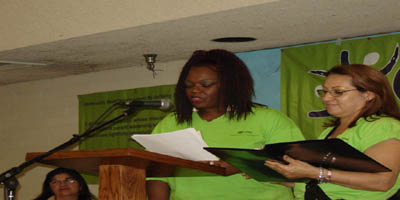
"The stories you will hear tonight are not supposed to happen.” Parent and CADRE (Community Asset Development Re-Defining Education) member Naomi Haywood stood on the low stage at the front of the packed meeting room. The parents and students from the South Los Angeles community that filled the room mirrored Haywood's frustration and outrage. They exploded into applause for her and co-facilitator Linda Sanchez as they set the stage for last Wednesday's People's Hearing on the institutionalized "push-out" of children of color from the Los Angeles public school system.

"This is a human rights crisis," continued Haywood, engaging the almost entirely African-American and Latino crowd in rhythmic alternation with Sanchez, who spoke in Spanish. "students and parents - have a human right to dignity, education and participation!" The crowd responded with passion. Each seemed to have their own story of how District 7 schools in South Los Angeles had pushed their children out of public school, through the systematic application of punishments intended to humiliate and suspensions and "opportunity" transfers that often exile students from their own education.

Many in the crowd wore CADRE's bright green t-shirts, and had already come to this community organization with their struggles to obtain a respectful and meaningful education for their children. Haywood herself was one such parent. When her son was in middle school, partial blindness in one of his eyes was slowing down his learning. Despite this, his teacher made him sit far from the board and insisted that he was "just lazy."

Haywood was only notified of the situation when her son had already been suspended, after he had been disciplined several times by the teacher for acting out. When Haywood brought in a doctor's note describing her son's disability, her son's teacher brushed her off, saying she didn't care. Eventually her son missed two weeks of school before the administration agreed to meet her son's needs. "It wasn't til I went to CADRE that I learned that I have a basic human right to participate in my son's education. The school just treated us like WE were the problem.

Luckily Haywood's son is still in school, although she still worries about the threats of suspension and discipline that are leveled at him because of his disability. Beyond her concern, she is also angry that her son could be so easily denied an education by a system that prefers to punish rather than educate low-income students of color.

CADRE was formed in 2001 by low-income parents of color in South Los Angeles who believed that decent education for their children was a basic human right that was being systematically denied to them by the Los Angeles Unified School District (LAUSD). While working to educate parents in their community about their right to be involved in their children's education, CADRE parents found they all had stories similar to Haywood's and often worse. And the results of the discipline procedures are what CADRE calls a direct path to poverty or prison.

The hard data collected by CADRE supports this theory. Public high schools in South LA have the highest suspension rates in the city. These schools also have the lowest graduation rates. For every 100 ninth-graders, as few as 24 receive diplomas, with the average graduation rate in schools like Fremont, Locke, Jordan ranging from 24% to 42%. This crisis is happening in districts that are primarily African-American and Latino. In nearby Whitney High School, in a district where Black and Latino people made up less than 20% of the census tract, the suspension rate was 0%, and the graduation rate 93%.

Many from the audience were there to share heartbreaking stories of the pain they and their children have experienced at the hands of this system. A shy woman in a long a flowing skirt told in Spanish of how her daughter had been suspended 5 times because the school felt that they couldn't stop the other children from hitting her. Even though she was the victim of other children's behavior, her daughter received no help in making up her work and is now so far behind that she may not graduate. Worse was that her daughter, who once loved learning, has "turned into a person full of resentment."

Another parent told the story of a CADRE member who tried several times to arrange a meeting with administrators and teachers to discuss her son's suspension. After being stood up twice, finally one teacher showed up to a third meeting. Instead of listening to the parent's frustrations at this treatment, the teacher called security to have her removed from the school. "If they don't want to deal with angry parents, they need to give us the proper respect, to let us know when a red flag goes up.

All outrageous, the parents stories have common themes, the sense that their children are being humiliated by their punishments, one parent told of her child being subjected to taunts while picking up trash in a courtyard. Parents also find themselves excluded from decisions made for their children, while schools show little effort to address the problems that may be interfering in their education, whether they are learning disabilities, behavior issues, or a lack of safety and support available in the school. The commonality between all these students was that they lost access to education when punished, and not given a chance to catch up – and many of them are encouraged give up.

In CADRE's recent report, More Education, Less Suspension, data on school drop-out rates is backed up with a survey looking to find out why students leave school before graduation. In a study of 120 such former students, CADRE found a systematic pattern of suspensions being extensively overused in the absence of other disciplinary techniques, which were applied in disregard to the impact on the child's education. Many of the students who left school did so after a series of suspensions and many were advised to leave by teachers and school administrators.

Parents and students who had undergone school suspensions were also interviewed, uncovering the mistreatment that many felt subject to in the public school system. Their children weren't listened to or respected in the discipline process. One of the students at the hearing told a story of a classmate being dragged in handcuffs to the dean's office because he wouldn't pull up his pants. Angry at this treatment, he made the point, "The principles of behavior and respect that they want us to use should apply to staff, too." Tellingly, the report also found that African-American students in particular were subject to a higher proportion of suspensions.

The implications are clear: low-income students of color are subjected to a system that denies them respect, and in many cases, an education at all. The "drop-out" crisis in their community is really a "push-out" crisis supported by these institutionalized disciplinary practices.

The parents of CADRE were present to stand up for their children's right to an education with dignity, as well as their right to be a part of decisions that impact their children. "We do not have to accept this, and nor do our children," insisted Haywood, "as primary stakeholders of our children's futures, we deserve to be a part of the process."

Will the LAUSD listen? Perhaps. One Board Member-elect, Monica Garcia from District 2, sat through several hours of testimony and then addressed the crowd, saying,"I'm listening." While she gave respect to CADRE and the students present, no specific promises were made. And in the absence of more official power in the room, most media outlets passed over the event.

But CADRE isn't waiting for promises, they are urging the LAUSD to pass a resolution implementing a Discipline Foundation Policy, now a draft bulletin at the Board, that would reshape the principles behind the school district's policy and implementation. Their demands are simply that the LAUSD commit to a policy preserving students human right to dignity, a right to education, and a right to parent participation and monitoring in discipline implementation. CADRE is in effect, demanding accountability from the system that prefers to blame students and their parents for its own failure. They will be at the LAUSD's next meeting on Tuesday, June 27th from 4:30- 6:30 (333 South Beaudry Ave.) to present their demands with parent power.

An insightful note did come from Board Member-elect Garcia, who insists, "I got it." She does seem to, as she noted that urban education in America has been underserved for centuries. To make a goal of 100% of kids graduating from high school in LAUSD schools, she added, is nothing short of revolutionary.

As one parent led the room in the chant "Parent - Power!" it was clear that there was revolution in this room, in the righteous and insistent voices of parents who have seen their children suffer and be denied enough and will not back down. And in the face of such staggering educational inequities, their movement will only grow.

Tags