Story Archives 2000

PROPOSITION E FOR Evil, Extravagant, and (un) Ethical Expenditure.

09/24/2021 - 11:44 by Anonymous (not verified)
Original Author
root
Original Body

POOR Magazine investigates the generous financial backing by the Hilton Hotel and the Hotel Council of Propostion E.

by PNN Staff

Why did the San Francisco Hilton and the Building Owners and Managers' Association (BOMA) contribute so generously to Earl Rynerson's Propostion E campaign?

Proposition E is an initiative that will be on the March 2000 ballot. It's main function is to cut public assistance checks by 85%. It mandates vouchers for housing and other services but does not ensure that these services exist. The proponents of this measure, themselves in the hotel business, have lied about the vacancy of hotel rooms in San Francisco. Everyone actually attempting to get shelter in San Francisco knows that there is a severe housing crisis, and in fact, no available single room occupancy hotel rooms.
The backers of this initiative; The Hilton Hotel, ( $1, 900.00), the Business Owners Management Association ( $2,500.00 ), The Marriot Hotel ( $1,500.00) and many more, seem to have a conflict of interest in regards to the hotel vacancy rate. They falsely claim there are 3,400 vacant rooms in San Francisco. What would they have to gain by disinforming the public about the real vacancy rate in San Francisco? What do they really have to gain by creating an inititatve that would empty all the downtown SRO's. Perhaps more hotels that they could buy? Perhaps more opportunities to gentrify the Tenderloin, making these once affordable neighborhoods permanently unaffordable to low income San Franciscans. This is the first in an ongoing series on Propostion E.

Tags

Psychotic Break

09/24/2021 - 11:44 by Anonymous (not verified)
Original Author
root
Original Body

Who’s Really Brainfried?
Dept of Public Health or The Protesters

by Joseph Bolden, staff writer,

I do not like getting out of a warm bed where my pills, cough syrup, hot tea ‘n honey is, because going on an assignment sick is bad form for both the interviewer and interviewee. Mr. Allan Ball is around somewhere on San Francisco’s sunshiny day. I feel miserable today as people all over the city, across the Bay, and across the street from that blinding golden dome atop City Hall.

Many speakers are suffering and continue to suffer from the stigma of mental illness but since the Reagan Administration [1980 -’84-1984 to1988] when most of the hospitals, sanitariums were closed, mentally ill persons are on the streets or hidden away as if they are crimi-nals. I lay on the grass, feeling queasy and feel as if I’m about to throw up my split pea soup on those red christmasy plants. After the rally/protest on the grass all the organizations converged in an orderly if loud march to-ward the Department of Public Health on 101 Grove Street in San Fran-cisco.

Inside the building the physically challenged use the elevator while the able bodied use stairs entering a meeting of commissioners al-ready in progress. Of course it only seems like political theater but many people in the march are really pissed off and angry at how many S.F. Health Department Policies do the exact opposite in stead of help persons with mental illness, physical disabilities, elderly, or people with on-going slow debilitating diseases. Someone called the cops even as voices lessened.

After more chants, speeches, public speaking from real people suffering under these policies, and a protest version of “The Twelve Days of Christmas” Everyone stayed longer than the some of the health commis-sioners, cops, or seated citizens in the meeting deemed equitable.
Translation: [Protester left when they deemed their voices were heard and not before.]

The Commission leave before the protesters only then did every-one protesting in The Department of Public Health in San Francisco. My flu broke as my nose bled profusely, and where’s Allan?
He slipped out when the police entered.
It’s satisfying seeing cops try to arrest people doing legitimate civil disobe-dience and a commissioner or two being steadfast stubborn on it not hap-pening. Has it helped, Did other commissioner get the message, will poli-cies change?

I have no answers to these questions but focused heat must re-main on the health system until the very people affected can show how po-lices and be change, improved, and become a more fluid process and not set in stone, unchanging, and blind to answers coming from the very vic-tims of this system. Bye.

Tags

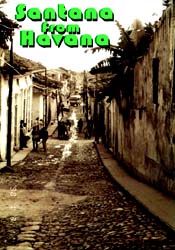
Santana from Havana

09/24/2021 - 11:44 by Anonymous (not verified)
Original Author
root
Original Body

How one man, unable to get his mental illness acknowledged, has been cast as a pariah within the shelter system.

by Gordon Hilgers/PNN Texas Correspondent (Endless Choices)

It wasn't all that difficult to see that sooner or later Santana from Havana, as he called himself, was going to get into trouble with the people who ran the homeless shelter where he lived. It couldn't have been more than a week from the time that I met this wide-smiled, homeless man that I first noticed the problems he was causing. I really hadn't noticed that there was all that much wrong with the guy.

Of course, I treasure my eccentric acquaintances. It doesn't bother me if one of my friends seems a little off the rim, or seems to be operating a couple of French fries short of a Happy Meal; mainly because some of the most accomplished people I know—artists and poets in Dallas' burgeoning creative community—could, with a push and a shove, look quite a bit like Santana from Havana at his very best. Or worst. Judgments like these depend upon how you look at these human aspects of God's own best judgment.

Like many who suffer from depression, I have trouble sleeping soundly. Sometimes I'll wake up in darkness, fully awake. But if I'm patient with my own behavior, I know I can relax and let the once-disorderly aberration of the norm slip by as I slide back into oblivion. This particular night, however, the night Santana's disease revealed itself to me, I rose up off my cot, wended my way through a literal sea of sleeping men and pulled up a chair in the shelter's smoking area. It was there that I found Santana from Havana, holding court, if you will.

Since it was late, and dark, most others at the huge round table sat quietly, half-asleep, the majority sucking on roll-up cigarettes, each one alone with his own aching thoughts. But Santana was neither smoking nor keeping to himself. Instead, as he fractiously sorted through hundreds of wrinkled and dog-eared papers, he seemed to be acting. Indeed, Santana was conducting a private theatre of the absurd and talking louder than necessary, doing his stand-up routine from a sitting position. If he caught you listening, he'd start gesticulating more eloquently than the conductor of the New York Philharmonic would.

"What's up, Santana? Besides you?" I asked.

"Man! I was thinking of that monster movie on TV tonight. I used to just love them monster movies. I used to watch monster movies all the time when I was a kid in Los Angeles. I'd get so scared I left the room. But I always came back," he answered.

"Me, too," I replied. "I used to sit in the front row at the Casa Linda Theater, and when the monsters came on the screen, I'd get so scared I'd scrunch way down in the seat. Sometimes I was so scrunched up I could barely see the movie. But at least those monsters couldn't get me."

All of this seemed pretty normal as far as conversations go. Aside from Santana's loud voice, I neither saw nor heard anything out of the ordinary about it. At least until Santana got up out of his seat and began acting out Frankenstein. Not just one movie scene. The entire movie.

But out of his seat Santana was, walking stiff-legged across the floor, his sticklike arms flailing left and right, his face contorted, and his mouth yammering a mile a minute, a sort of play-by-play summary of the film's classic climactic scenes. As something like 250 men slept like corpses around us—tired men, frustrated men, simple men who rarely seem to understand episodes of stark individuality or abnormal behavior other than as an affront—Santana began bellowing as if he'd been set on fire. It was an apt scene. Some of the men at the table seemed to me to be just the kind of man eager to persecute those different from themselves. In fact, I had almost no problem at all imagining these men marching up a mountain to torch an outcast's home. And Santana was the outcast du jour. A pariah. An idiot.

If it wasn't the monster noises that were grabbing the attention and ire of the others at the table, it was Santana's exaggerated and abnormal movements and expressions that, for whatever reason, seemed to be literally rocking the worlds of men who seem to like to cultivate reputations of callousness, hardness, imperviousness to the circumstances they don't like. Several at the table, however, were amused. They rolled their eyes. Others laughed silently to themselves. The unspoken verdict at the table that night was that Santana was crazy as a loon. There were no accusations of narrow-mindedness or intolerance among the members of this self-appointed judge and jury, either. But what's important were the reactions among the ignorant and uneducated to aberrant behavior. Everyone knew Santana was due any day to be accused of being disorderly. Everyone knew what happens in emergency shelters when people are so branded.

One of the shelter's longtime characters—a really together guy who'd been living on the shelter's dole for three years going on four—spoke up, "Why don't you shut up, you—." And, no, the man's language was not nice. But it didn't deter Santana at all. For the next several evenings, or so it seemed to me, Santana went out of his way to annoy and undermine the man who'd collared him that night. Aside from his bizarre behavior, Santana was angry. And hurt. Anyone could see that.

Santana is like many homeless people who suffer from mental illness. He simply appeared at the shelter's door one day. Soon, once Santana learned that his exploits weren't considered acceptable—especially to the emergency shelter's longtime victims of long-term and extended stay emergency—he began a campaign of instigation. The more he was called on his behavior, the more he caused trouble for the shelter's rulemakers and enforcers.

Of course, Santana wasn't really a troublemaker. He was, and is, mentally ill. Sure. It seemed at times that he was intentionally making himself unwelcome. But could it have been that he was drawing attention to himself to get someone to notice that he was asking for help? What really bugged me came in the form of other questions. How many situations like this had Santana already endured? How many towns had he gone through? How many shelters kicked him out?

More worrisome to me, however, was how casually the shelter's supervisors handled Santana's disorderly conduct. When he was kicked out, he was kicked out as if he was any other personally responsible and supposedly adult troublemaker: drunk, stoned, violent, whatever. Despite admonitions that Santana see a doctor and adhere to treatment plans and regimens of medicine, when the time came to give Santana the boot, the shelter's supervisors treated him as if he were suddenly normal. No other steps were taken to help him. He wasn't referred to a clinic. He wasn't taken to Dallas' Parkland Hospital for observation or treatment. He wasn't interviewed by mental health caseworkers who might have been able to agree that the streets are no place for mentally ill men like

When I asked one of the shelter's security staffers why such a thing had been allowed to happen in a supposedly Christian institution—and many area shelters are quite vocal about their faith-based mission and moral diligence—I was told the directors simply don't believe it's their responsibility to go any further than offering residents a bed, a bath, and a meal for the night. Everything else is considered the responsibility of the inmate—I mean, resident. While most of the shelter's residents agree that the streets are no place for mentally ill men like Santana, many simply don't see the glaring misconnection between punishing normal people for rule violations and punishing the mentally ill for behavior they just can't control.

Worse, shelter directors—and, as personal experience shows, every shelter in Dallas misbehaves like this—rationalizing their often misbegotten decisions in order to protect the bottom line, tend to wash their hands of the matter in unconscious imitations of Pontius Pilate.

Santana, of course, isn't alone on the streets of downtown. There are plenty of pariahs just like him—men and women who were not rational enough to obey rules they probably couldn't comprehend anyway. Many, like Santana, live on the streets. They've been kicked out of all the shelters. They've been oppressed by tough policies that were never designed to accommodate them.

But this is how the homeless/industrial complex actually operates. While there's plenty of talk about creating a continuum of care that links troubled shelter residents with effective treatments and appropriate care—plenty of compassionate prattle about the victimhood of the homeless—the proof is in the pudding. Nearly every homeless man and woman with an obvious behavioral problem—these are the people we see living on the streets every day—more than likely has been thrown out of shelters simply because they are mentally ill. No one can deny this. Where does the responsibility for this actually lie?

Tags

Good/Bad Alchemist's Cont. I'm Expressing My Freedom Of Speach.

09/24/2021 - 11:44 by Anonymous (not verified)
Original Author
root
Original Body

Joe, do 'ya think
you have too much time
on your hands?

No, not nearly enough...

But it beats being Mesmerized
by TV, Oil War.

by Joe B.

Where was I? Oh, yes-good or bad Alchemists.

Before and during Easter and Spring Break vacation besides the Lord’s crucifixion and resurrection it also got me thinking about exact opposites of good and evil.

As children most of us were told and literally scared into believing that both God, Satan, Saints, and Angels existed and an eternal battle for our priceless human souls and not to sell or barter it at all but if we did be aware once sold rarely will we get it back!

On those lines a thought pops into my brain.

If minions of demons are Satan’s to command then Alchemist’s are under spiritual command of God.

If a few demons wish to be good then why not the same hold true for accomplished enlightened Alchemist’s who’ve achieved the great work.

If demons or mythical Vampires fighting their evil side and brethren, sister’s wouldn’t alchemist with dark sides also turn?

Yes, avoiding so called war talk, a macabre empty victory dance over in Iraq’s blood soaked oil and sand while scientist’s, researchers, brightest students around this globe find hydrogen and other alternative renewable energy sources beyond dead decomposed dinosaurs.

Back to God’s few but powerful soldiers.

I know most Alchemist’s were long suffering men and women seeking portents or signs in astrology, numerology, even the Cabala. Some use pure primitive science.

For the majority death by explosion or suffocation from mercury gases or other fumes.

Those surviving, testing the, lead/brass into gold and succeeding found after taking a terrifying drink of what could’ve been poison gagged a little and found them selves not only alive but changing in ways they never imagined!

Their minds afire with there own past lives confronting them, everything they ever saw, felt, heard, learned, supposedly forgotten, all the joys, hurts, pains, physical/mental flash immediate all clear crisp as their whole being expands.

Not only that but voices of living or long dead friends, lovers, surround them, other alchemists, and cutting through it all God’s voice and vision both female/male telling you "Careful Child; Sit, Rest, Do Nothing But Relax - The Changes Will Take A Few Moments And Only When I Say Its Time Explore Your Being."

What does on do when hearing God’s command for one to rest, relax, pause, as your body, mind, spirit changes?

You do as the Lord says as you change from mortal to a being if not eternal but closer to immortality than most mortals will ever be.

Days, hours, months, or years however long it takes you rest as commanded as your powers are slowly revealed to you.

After this long rest where you might have to isolate from others the real adventures begin as death is less an adversary more an annoyance there are plan: long range plans you have to rethink everything because your life span is so long you cannot see its end which is still disconcerting if not downright frightening.

The mysterious alchemist Fulcanellie and Nandita (Mohuya Mellamphy) comes to mind.From www.alchymie. net/english_version/critiques/fucanelli_uk_.htm. You folks will find a title there too.

If they both drank from it a man’s virility is restored and for women besides youth they become prolific who knows how may children came from them or if they decided to stay a physical loving twosome without progeny.

After a long rest what happens? That’s another thought for another day… Bye.

Please send donations to

Poor Magazine or in C/0

Ask Joe at 1448 Pine Street,

San Francisco, CA. 94103 USA

For Joe only my snail mail:

1230 Market St.

PO Box #645

San Francisco, CA 94102


Email: askjoe@poormagazine.org

Tags

Marlon Crump, Poverty Scholar....on the Legistlation

09/24/2021 - 11:44 by Anonymous (not verified)
Original Author
root
Original Body

by Gloria Esteva--Voces de Inmigrantes en Resistencia

Scroll down for English

Como tantas supuestas leyes y políticas aquí en los EUA, muy pocas de ellas son forzadas cuando se da a los derechos humanos, especialmente cuando se referían a la gente pobre y de color. La edad de la esclavitud demostró un heroísmo de muchos de los esclavos negros que descubrieron sus propios derechos para la libertad y la igualdad de sus propietarios de ninguna otra manera mas que:

Desarrollar una estrategia económica clandestina que se vino a conocer como El Ferrocarril Subterráneo.

En el día presente, la misma estrategia económica subterráneo todavía existe, manifestado como S-A-N-T-U-A-R-I-O; el derecho de ser libres de la eliminación por desear una vida mejor de la que fue provenida. La política de San Francisco “Ciudad Santuario” aparentemente no tiene ningún peso legal, ni como una supuesta legislación por el gobierno por la ciudad.

Aunque, la edad de la esclavitud y la edad del inmigrante son un pocos diferentes, en términos de situación. Los cazadores de esclavos todavía existen en la forma de la policía, oficiales de la frontera, la migra, y los políticos.

Muchos funcionarios del gobierno y mucha gente en este país se vuelven institucionalizados con la noción negativa que la objetiva principal por gente emigrante (cuales siempre son referidos con el titulo racista y delincuente de ‘ilegal’ es de derrotar a los ciudadanos americanos de las oportunidades de trabajo, ayuda, y recursos fundamentales. La realidad es que los inmigrantes indocumentados ayudaron construir la misma economía que los esta deportando, y es algo muy ignorante.

El castigo cruel e inusual siempre es inminente donde el gobierno corrupto y corporaciones gulosas siguen aunando a la gente en la pobreza y poniendo a la gente de color a contra de cada uno, quienes solo luchan para la vida, libertad y prosperidad.

¿Hay que preguntarse uno, si no existiera el racismo, la opresión o la pobreza, seria este tema un problema?

Ingles Sigue

Like so many so-called enacted laws and policies here in the U.S.A, very few of them are seldom strictly enforced when it comes to the rights of human beings, especially when they're pertaining to people in poverty and people of color. The slave age showed the blatant, bold heroism of many black slaves having to discover their own rights for freedom and equality from slave masters and catchers, by the only means possible:

An economic underground strategy that became The Underground Railroad.

In the present day, that same economic underground strategy still exists, manifested into S-A-N-C-T-U-A-R-Y; the right to be free from removal for wanting to have a better life that was not provided before. San Francisco's 'Sanctuary Policy' is apparently not legal and binding, even as an alleged legislation by the city government.

Although the slave age, and the undocumented immigrant age are somewhat different and reversed in regards to the situations, the slave catchers still exists; plastic surgerized into the form of police officers, border patrol agents, I.C.E (Immigration and Customs Enforcement) and politicians.

Most government officials and many people in this country become institutionalized with the negative notion that the primary objective by migrant peoples ( always referred to as the criminalized/racist title of "illegals") are to overthrow American Citizens from employment opportunities, aid, and fundamental resources. The reality that undocumented immigrants helped build the very economy that wants to deport them while caring for their families, like black slaves and foreigners did is irrelevant from the minds of the ignorant.

The cruel and unusual punishment is always imminent where corrupt government officials and greedy corporations continue to pit people in poverty and people of color against each other, who only seek the right to life, liberty, and prosperity.

One can only ask themselves that if there were no poverty, racism, oppression, etc, etc, would this really even be an issue?

Tags

Precious- A Soliloquy for Survivors

09/24/2021 - 11:45 by Anonymous (not verified)
Original Author
root
Original Body

A Womynist Movie for all tortured women

by Tiny aka Lisa Gray-Garcia, Daughter of Dee

The pain of a thousand mamaz and daughters - the pain of isolation, capitalism, racism, sexism, violence and poverty - the pain of women, the pain of children- too much pain for a film screen, a book, or a dream...-

Hot , thick tears consumed my face carving deep rivers into my skin, deep rivers with no bottom. As i stumbled out of the new movie Precious; based on the novel Push by Sapphire last night an empathic usher held out his hand as i passed him to comfort me- his eyes holding mine for a just a second - a long enough second for me to know he is one of us - one of the many quiet humans who roam the earth with half filled cups of sanity and over-filled cups of sorrow from the abuse at the hands of our mothers and/or caregivers.

I went to the theatre to see Precious in trepidation of a movie filled with harmful depictions of poor black mothers and children on welfare, poor women, poor people, racist, classist images that constantly fill the pages, mouths and broadcasts of corporate media channels, politicians and ignorant US citizens by the minions. I went in trepidation of something my own brilliant and tortured African/Boricua/Irish mama coined "Motherism" the blaming of all ills in a US capitalist system that criminalizes poor women rather than support them, on the mama. I went to the theatre ready to be indignant , mad, and critical of more outsider art about us - without us.

Instead i found a movie about my mama, my mamas mama, and most devastating of all, about me A movie so layered and complex and beautiful that had so much to do with the struggle of poor women, and women period in this patriarchal, racist, classist, society that intentionally isolates people from each other - women from their matrilineal lines, families from their support systems. A movie that is about women and their constant onslaught of abuse by predators - not just predatory men - but predatory non-profit industrial complexes and predatory education systems and predatory shame.

Early on the movie centers us in the perpetually dark apartment of Precious and her mama lighted almost solely with the running lie of a television screen piping in images of game shows offering quick entrance into wealth and whiteness. We see the seemingly horrible ( and oscar -winning) depiction by Mo'Nique as an abusive hateful mama to her own daughter, attacking her own because of jeously over a man. An attack so common in a society that has us competing with our own girl-children for love, survival and perhaps the worst thing of all, so we wont fall into the logical progression of capitalism, aloneness and desperate isolation.

We watch the alone-ness of 16 year old illiterate Precious adrift in her high school classroom passed between grades without so much as a glance. A very real portrayal that happens much more often that one would want to know in Amerikkka over-stuffed, under-funded classrooms filled with poor children of color long ago sorted, separated and forgotten by linguistic domination, racist and classist funding streams. You watch Precious have a crush on her white male math teacher because he at least calls on her and expects her to finish her work.

The camera rests on the beautiful and textured face of the actress Gabourey 'Gabby' Sidibe moving across her deep chocolate features from below. With this angle you not only see her admixture of pain, confusion, and fear, but her pride and clarity and ultimately her deep heroism .

Eventually we find out that Precious is pregnant with her second child from rape by her father - an act of abuse carried out with her mama looking on impotently. The depth of this horribleness and director Lee Daniel's gaze sets the viewer up to be extremely angry with the mama - and that's where the uncomfortableness begins. Like all silenced and hated people my welfare dependent, mixed race, daughter of poor woman of color skin crawls when i see one dementional racist characterizations of african descendent mamas on welfare being crazy , abberant demons like the embodiment of every racist stereotype that would make Daniel Moynihan* proud.

But then something happens, something that has to do with the power of women-centered narratives and the power and love of women - women of color healing, silencing men and white people in their wake-

We as viewers, together with Precious, discover sister-hood, sister-hood of her mandated alternative high school- sisterhood of her teacher. and sister-hood of her new-found friends all in struggle to somehow "make it" and with the teachers help, heal through the art and love of writing and reading and talking and thinking.

At its core Precious is about women. women in all our beauty and horrible-ness brutality and strength. In one scene this theme was underscored by a filmic "trick" a filmmaker friend once told me about, that whenever one fillmmaker shows another film in in his or her movie- its a metaphor for the theme of the overall movie, In one typically destructive scene - this time rooted in food and its relationship with mama and daughter they watched a televised rerun of the Fellini film The Women, a perfect metaphor for this powerful womyst movie.

This movie was also about the gaze between people- a gaze filled with so much more than the moment- filed with fear, and hope and desperation and dreams and hope and hate and above all desire, Every-time the camera rested on precious- as she rested her eyes on mama - you saw everything she wanted to see- didnt want to see - dreamed of seeing - couldnt stand to see- - you also saw everything her mama couldnt be- wanted to be- wasnt - u saw the pain of a thousand nights and days and mornings beween a mother and daughter in struggle - between a family in crisis - between two women who were at once in love and in hate with each other - and at once deeply dependent on one another the way only family can be.

This movie was also about consumerist media and the depth of its power to reach us and speak to us in our isolated, capitalist apartments and rooms, houses and corners and lie to us and make us want - make us desire everything us poor people never have access to but always are taught to want.

But above all this movie was about the strength of our mothers and our daughters to get through an endless onslaught of "little murders of the soul" as my mama used to call most of her life.

At one point towards the end of the movie, Precious says a line in a narration to herself that will resonate with all abuse and torture survivors. "Nowadays, all that (pain) seems like a really bad dream that i dont really remembe.r"

As she says this line i listen and nod in immediate understanding and then catch myself with the irony, until, I say quietly through more tears, you see a brutal, terrifying and brilliant wake-up call like this movie.

* Daniel Moynihan helped shape welfare code with his "Study" of single mother-headed households in the projects in New York in the 1960's. With one sweep of his "outsider" pen he criminalized and pathologized our matrilineal households as abberant because they didnt fit his idea of a sane and healthy nuclear family

Tags

Harry Jones and the H.O.M.E.T.E.A.M. (Part Two)

09/24/2021 - 11:44 by Anonymous (not verified)
Original Author
root
Original Body

The second part of the story of a very poor San Franciscan who died on the streets after being subjected to abuse in the shelters and harassment by a new branch of the San Francisco Police Department.

by Vlad Pogorelov and Harry Jones

When Harry finally made it to a shelter he saw a long line of people standing outside the building. Harry recognized the familiar faces of his ex-neighbors from his last stay under the 101 Freeway. A few people said, Hello, to Harry, but he was barely able to greet them back. At one point he collapsed onto the sidewalk. Out of the corner of his eye Harry saw a fashionably dressed yuppie couple hurrying towards a fancy nightclub a block away. There was an expression of disgust and fear on their clean, white faces. For a second Harry felt ashamed of something, he wasn't sure what. He should have hated them for what they were but strangely he didnt feel much animosity towards them.

As Harry was lying on the steps of the shelter, his eye caught sight of dozens of rough army boots, cheap dirty sneakers, and skinny white legs dressed in silver pantyhose and red, shiny high-heeled shoesósize 7 1/2ówalking away. Harry thought of his own family, and how he was not able to support them because of his broken back. He also felt some regret for not telling them of his present situation. Maybe if they knew how bad I was, they would accept me, he thought. But somehow, he felt that it was too late, that he had lost his chance and the circumstances were against him.

Fellow homeless in the shelter line, seeing how weak Harry was, let him go ahead of them. Shaking, Harry approached the clerk. He was asked for his Social Security card. Harry searched through his pockets but couldnít find his wallet. He could not show any ID to the clerk. Harry was asked to wait until his Social Security number could be verified. There was no place to sit down so Harry had to sit on the cold cement floor. Harry felt dead tired but he couldnít just close his eyes and take a napóa terrible pain in his back prevented him from sleeping.

After almost two hours his status was verified and he was let into a room filled with rows of wooden seats. Harry was given a dirty blanket and shown a chair. He tried to tell someone that he needed to lie down, that he needed a real bed, but no one was listening to him. Within a few minutes the lights went out and the doors were shut. Harry tried to make himself comfortable, but it was impossible. A hard, wooden seat was pressing against Harryís hurting back. Harry felt betrayed by the whole world. He felt that his pain was only his and no one in the world would help him.

At times, being in the total darkness, surrounded by the hardñsmelling, sobbing, and snoring people Harry started hallucinating. Memories of his childhood came back to him. He saw his deceased parents. They were levitating above the 101 Freeway and calling Harry to join them, ìCome with us Harry, we miss you.ÖÓ Harry tried to touch them. He reached for his mother but suddenly he felt as if he were falling down. When he became more alert, he realized that he was on the floor and the neighbors were yelling at him and telling him to be quiet. With difficulties, Harry got back into his ìbedÓ and covered himself with a thin stale blanket.

No matter how hard he tried to get some rest it was not possible. Harryís desperation reached a point where he could no longer remain in the rough, wooden chair that was supposed to be his ìbedÓ. Still very weak and quite disoriented, Harry left the building and went towards the China Basin area. He crossed Mission Rock Road, slipped through an opening in the fence along an industrial area beside the Bay, and entered through a hole in the cement floor of an abandoned dock. It was dark in there, and as he was lying on the mix of gravel and sand he could hear the water splashing on the shore and the distant sound of an ambulance. They must be coming here to help me, he thought. They must be coming for me. as he was slipping into unconsciousness. Before complete darkness descended upon him, Harry saw flashlights and police officers, who were ordering him to, ìFreeze.Ó

ìShit, this bum is dead,Ó said one of the officers to another after checking his pulse.

ìYep, thatís how all of those hobos are going to end up,Ó replied another policemen. Shortly, an ambulance arrived and Harry Jones, a 53-year-old homeless resident of San Francisco, was pronounced dead.

As the sun was rising above the horizon a group of disheveled men with red sleepless eyes were exiting a ìMenís ShelterÓ. Somehow, they survived another day of their miserable existence, but for Harry Jones it was all over. Harryís name joined hundreds of othersí on the Homeless Death List of San Francisco. Yet, I hope that Harryís case will not just become statistic. Harryís voice deserves to be heard even after his tragic and untimely death.

There are thousands of homeless residents in this city who are facing the grim prospect of standing in long lines leading into overcrowded shelters, where they are forced to sleep on rough, wooden chairs. Or they have the option of sleeping outside and facing the risk of being criminalized by Southern Station's Gestapo UnitóH.O.M.E.T.E.A.M., as well as being exposed to the elements, the risk of serious diseases, and frequently, death.

I am urging all of you, who are now aware of what happened to Harry Jones, to contact the mayor and your elected officials to demand the abolition of H.O.M.E.T.E.A.M. and to demand better conditions in San Francisco shelters before itís too late for another Harry Jones.

To read Harry Jones and the HOMETEAM part I-
go to;http://www.poormagazine.org/index.cfm?L1=news&story=249&pg=1&preview=1

Tags

A New Ooze, Red, White, and True Blue... Is He?

09/24/2021 - 11:44 by Anonymous (not verified)
Original Author
root
Original Body

Green, gray, or clear whatever.

Is Mr. Sup.Gavin Newsome the flavor
of 2004 ..

The latest prepackage version of
what's the word that rhymes with time,
crime, grime or lime it begins with an
S but I forgot.

by Joe B.

Who is Mr. Gavin Newsom?

Where does he come from?
Who or whom are his friends, business contacts, former girlfriends?

And why is it so important for him to be mayor in 2004?
Why the rush of his "Cash Not Care" on the ballot?

I really don’t know about him, don’t care all that much but if he’s gonna improve or muck up my or other people’s lives then a few things should be known about him.

Handsome, charismatic, from a powerful dynasty and that’s it.

Some of you folks know the real dope on the guy as he’s send out feelers, trial balloons for a possible run for City Hall’s top spot the same should be for him.

There is more of you readers out there that know bits and pieces of his life talk to each other tie them together and the whole story will be known long before the day of election.

Good, guy, bad guy, dull, or mundane either way it is only fair we know about him as he assumes he knows about the houseless, working poor families, or individuals.

That’s a fair deal and it seems more than Sup. Gavin Newson is doing.

My next column will be on how this Newsom guy can really help if his plan was more innovative, creative, and imaginative than what he’s borrowed from Alpha City.

Yes, readers may have to wait a day or two for what I have to write but all you have to do is read it; its me, the poor boob that has to think and write the stuff up… Bye.

HouseCare-Pro Price range:
$25 per day or 100 a week for
1 bdrm. Apt, small House.
4 to 3 bedrooms, $50 to $100 a week,
$5,000 a week for 20 to 40 rm. Homes.
$25,000 by the week or $100,000 for
50 to 100 rm Mansions
Prices are negotiable.
Non drinker, smoker, drugs (unless its aspirin & vitamins)
Not a party animal, Boredom, works me.

For Joe only my snail mail:
PO Box 1230 #645
Market St. San Francisco, CA 94102
Email: askjoe@poormagazine.org

Tags

We will Be Educated!!

09/24/2021 - 11:44 by Anonymous (not verified)
Original Author
root
Original Body

City College of San Francisco Students WALK out of classes in protest of tuition hikes and demand Education Not Incarceration!!

by Tiny/PNN

He Needs to stop playin' his role and listen to the people" Determined words of resistance poured from the mouth of Arjuna Sayeed in response to my question about what he would say to Schwarzenegger ( aka Herr Govenator- The Terminator)

I strained to listen to him as the minions of students passed us on their way to class at City College Of San Francisco's (CCSF) Phelan Campus. Arjuna, with CCSF’s Associated Student Council was there passing out flyers about a rally and march that was happening that day, April 20th, on campus - but this wasn't any march and rally, this was a WALKOUT - from that day's noon classes in protest to the $33.00 fee hikes proposed by the State Legislative Analyst Office.

"I feel responsible as a student to be here. City College is the ground level entry point for poor and working class students, this fee hike which is also proposed for the UC and State Campuses will make it impossible for many of those students to attend school" Arjuna, who is in school to become special Ed teacher for disabled children worries that working class students of color like himself will be lose access to education entirely

As he spoke I was reminded of my own very low-income, formerly homeless families’ non-income which would feel the impact of these hikes and make it increasingly difficult for me to attend school at all.

The hikes are being proposed while increases of over 7 billion are proposed to fund Californias' prisons, this is a 31.9% increase to the criminal Unjustice systems' budget in the last two years

With the across the board cuts to social services and education proposed I am reminded of the fact that the people of California are always targeted as the way to "find" the surplus rather than the Corporate Welfare recipients (Enron, Halliburton, Chevron, PG& E and of course, Dick Cheny) who stole our state surplus with their (fake) energy crisis in 2001-02 and to this day have not paid our state back what they owe us thanks in part to the govenator's own interest in energy stocks

"He is loverboy for WALMART" Shouted Ed Murray, President of the American Federation of Teachers at the rally that followed a huge march of more than 700 students, teachers and administrators who walked out of their classes at noon and marched through the campus. " He won’t tax the rich, because he is one of them, but the good news is, he is a coward and if he gets pressure from the people – he will back down" Ed reminded me of the huge rally outside of Schwarzeneggers most recent rich people "fundraiser" at the Ritz Carlton Hotel by thousands of working people and educators across the state protesting his rape of Californias pension plan which was so effective that he did in fact shelve his nasty pension plan, For now, anyway, But stay alert, cause last year he proposed to gut and then rescinded those cuts to the the In home Support Services Program, one of the few ways that disabled folks and elders can get help. He did in fact shelve those cuts after a huge outcry (I was one of the outcriers) and now he is starting that up again, proposing to drop the almost living wage salary of ten dollars an hour that ihhs workers receive statewide to the minimum wage!

"He is not just cutting our school’s budget he is cutting our childrens schools' budgets" Tracy Faulkner from the Students Parents United and director of CCSF Family Resource Center brought the issue of how his cuts are across the board not just affecting ‘us’ but all of our poor children, trying to learn, trying to survive and trying to come up and out of poverty.

"WE shall overcome from being dumb…some… Day" spit Javier Ruiz, fellow poet and poverty scholar from Colored Ink was one of the last speakers at the rally, which included the scholarship, words and music of students, teachers and administrators of all communities and cultures. He did his We Shall Overcome poem in honor of all the "dumb" liars and politicians trying to ruin our lives or he so eloquently put it, "we have a man in the white house who is a cokehead and a straight up liar"

Tags